
Administrator by China Associction for Science and Technology
Sponsored by China Society of Automotive Engineers
Published by AUTO FAN Magazine Co. Ltd.
Sponsored by China Society of Automotive Engineers
Published by AUTO FAN Magazine Co. Ltd.

Automotive Engineering ›› 2025, Vol. 47 ›› Issue (10): 2004-2015.doi: 10.19562/j.chinasae.qcgc.2025.10.016
Zexi Tang1,Xiangning Liao1,Fusheng Bai1( ),Hao Luo1,Jie Li2
Received:2025-02-28
Revised:2025-04-16
Online:2025-10-25
Published:2025-10-20
Contact:
Fusheng Bai
E-mail:fsbai@cqnu.edu.cn
Zexi Tang,Xiangning Liao,Fusheng Bai,Hao Luo,Jie Li. A Robust Sound Field Zoning Control Method Based on Error Probability Model for a Car Cabin[J].Automotive Engineering, 2025, 47(10): 2004-2015.
"
"
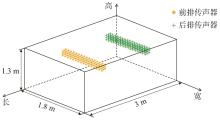
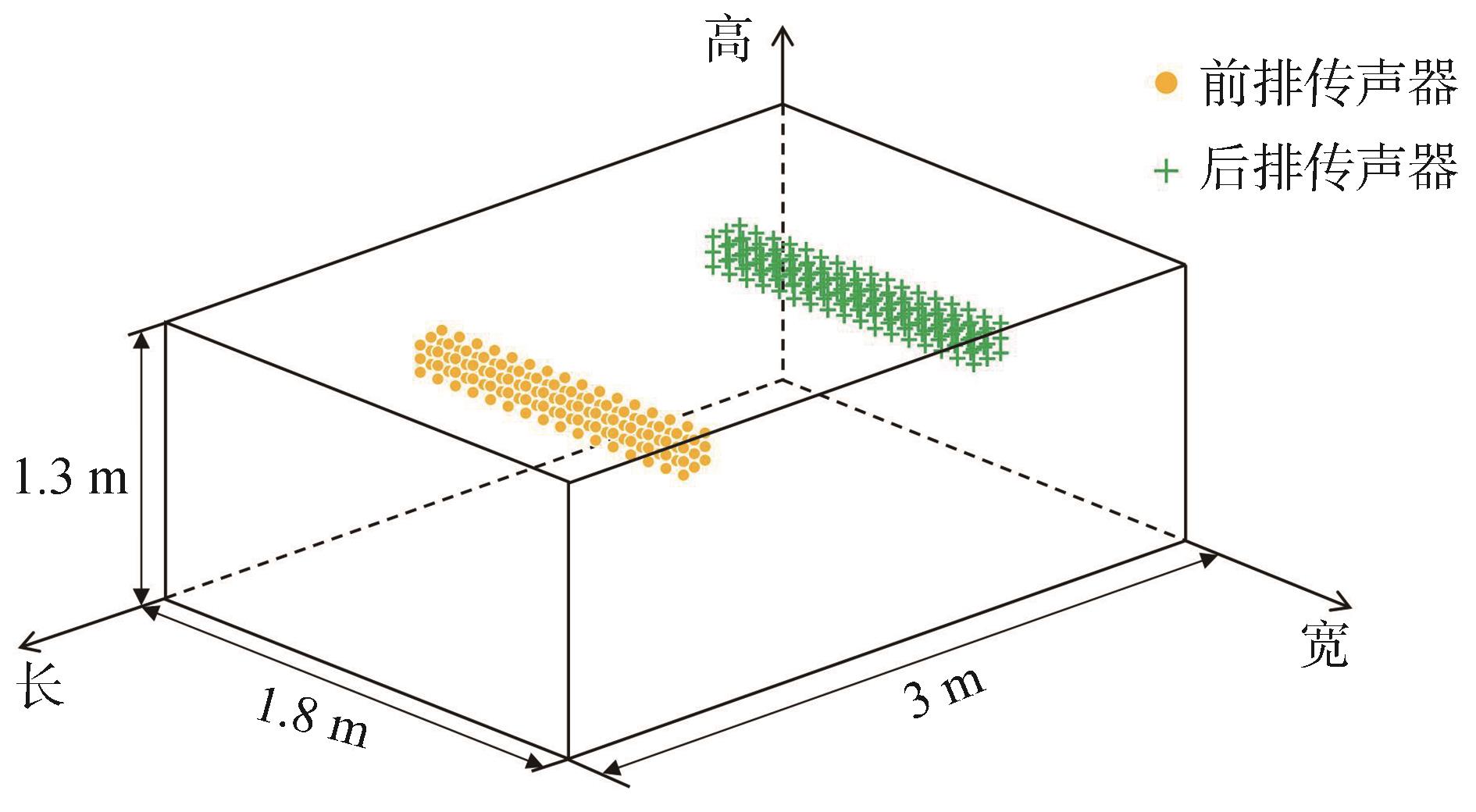
"
"
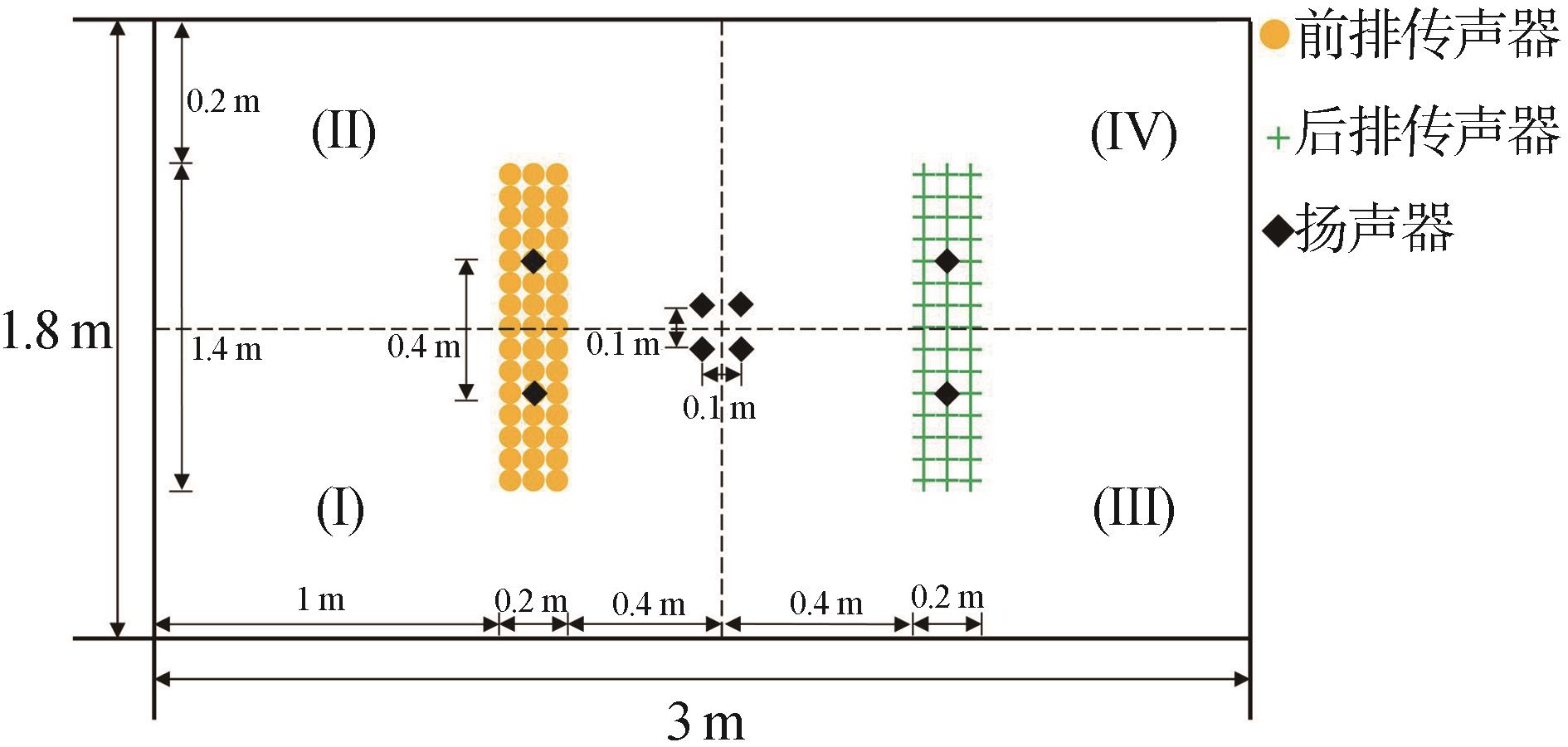
| 长 | 宽 | 高 | |
|---|---|---|---|
| 前排传声器 | 1:0.1:1.2 | 0.2:0.1:1.6 | 0.8:0.1:1 |
| 后排传声器 | 2:0.1:2.2 | 0.2:0.1:1.6 | 0.8:0.1:1 |
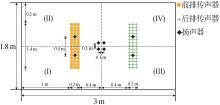
"
"
"
"
"

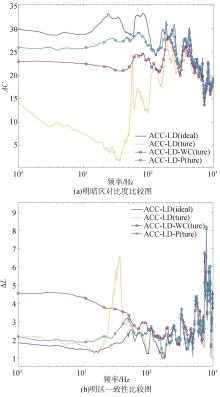
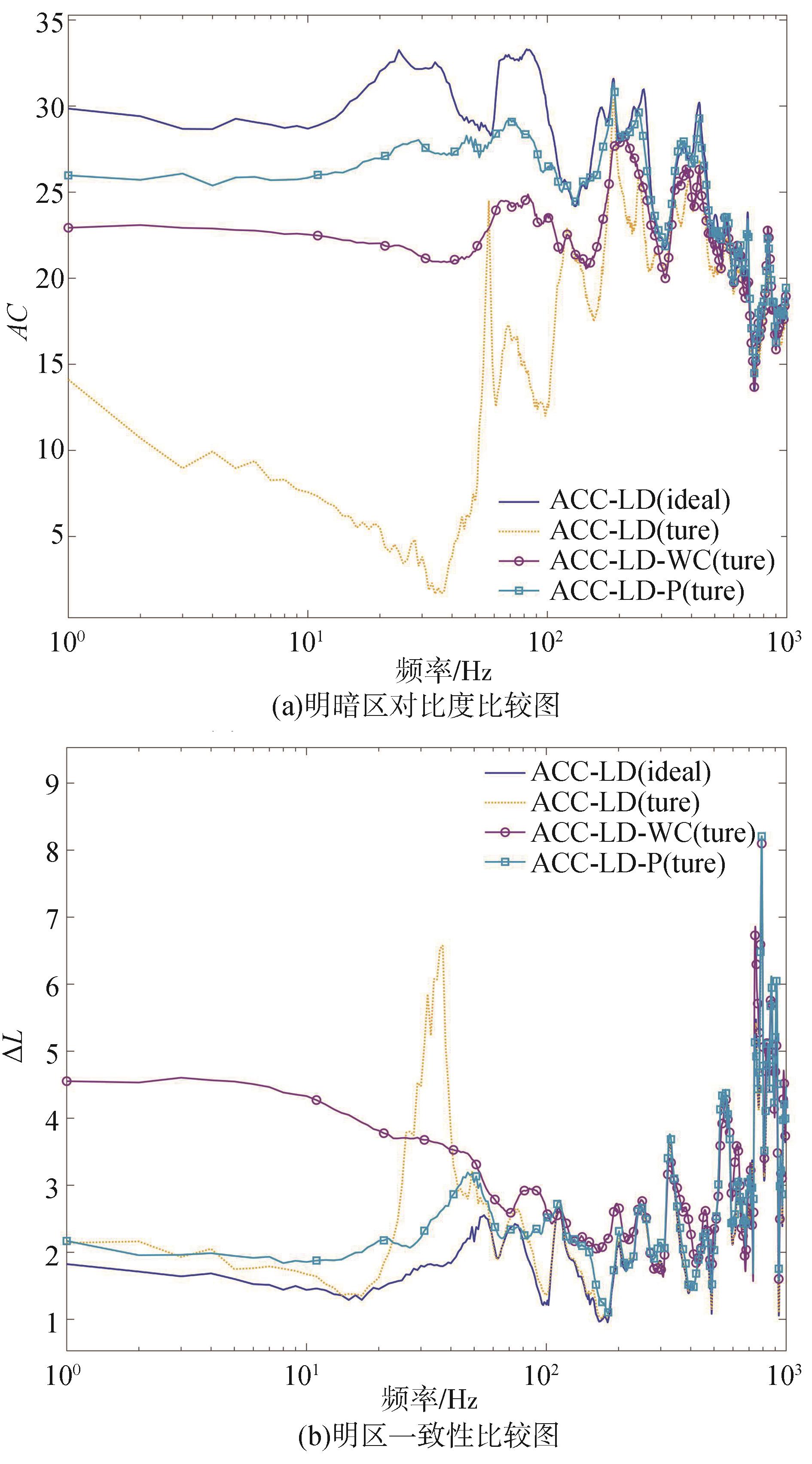
"
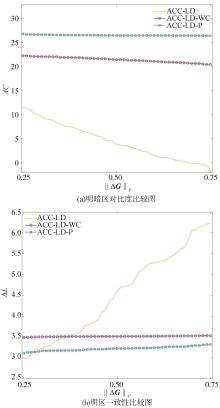
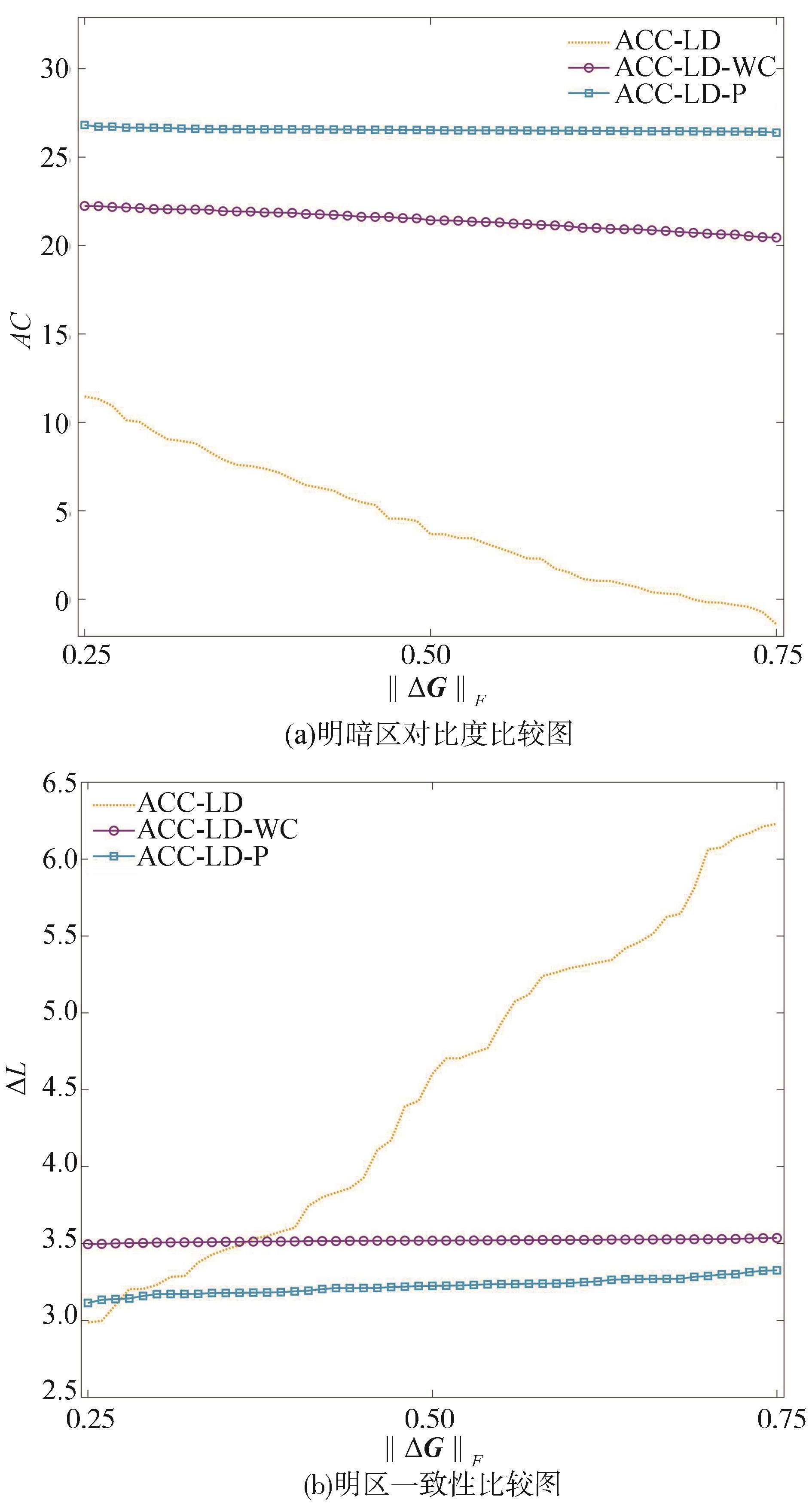
"
"
| 方法 | ACC-LD方法 | ACC-LD-WC方法 | ACC-LD-P方法 | |
|---|---|---|---|---|
| 明区 | 理想情况 | 实际情况 | 实际情况 | 实际情况 |
| I | 28.65 | 17.70 | 23.89 | 26.53 |
| II | 29.23 | 19.71 | 24.29 | 27.11 |
| III | 29.95 | 21.58 | 25.35 | 28.26 |
| IV | 26.31 | 19.51 | 23.00 | 25.01 |
| I, II | 31.49 | 17.95 | 24.04 | 28.11 |
| I, III | 27.95 | 17.54 | 22.28 | 26.09 |
| I, IV | 25.52 | 16.43 | 20.47 | 23.65 |
| II, III | 25.65 | 19.08 | 21.94 | 24.61 |
| II, IV | 25.47 | 17.62 | 22.88 | 24.53 |
| III, IV | 28.75 | 20.20 | 24.10 | 27.18 |
| I, II, III | 30.54 | 18.11 | 22.86 | 27.43 |
| I, II, IV | 26.43 | 17.72 | 21.88 | 24.92 |
| I, III, IV | 29.14 | 16.69 | 21.86 | 26.95 |
| II, III, IV | 29.06 | 19.32 | 23.86 | 28.12 |
"
| 方法 | ACC-LD方法 | ACC-LD-WC方法 | ACC-LD-P 方法 | ||||
|---|---|---|---|---|---|---|---|
| 明区 | 理想 | 实际 | 实际 | 实际 | |||
均值 | 均值 | MD | 均值 | MD | 均值 | MD | |
| I | 1.83 | 2.50 | 4.02 | 2.64 | 3.58 | 2.43 | 2.01 |
| II | 0.90 | 1.39 | 1.69 | 1.58 | 3.03 | 1.36 | 1.27 |
| III | 1.32 | 1.69 | 0.84 | 1.99 | 1.86 | 1.71 | 0.65 |
| IV | 1.12 | 1.61 | 0.80 | 1.99 | 2.17 | 1.63 | 0.56 |
| I, II | 1.97 | 2.50 | 2.28 | 2.46 | 3.61 | 2.49 | 2.18 |
| I, III | 2.15 | 3.02 | 2.75 | 2.75 | 4.93 | 2.80 | 1.60 |
| I, IV | 2.63 | 3.65 | 2.81 | 3.50 | 4.73 | 3.47 | 1.75 |
| II, III | 1.45 | 2.66 | 4.39 | 2.42 | 4.66 | 2.41 | 2.09 |
| II, IV | 1.34 | 2.47 | 2.16 | 2.45 | 3.53 | 2.32 | 1.58 |
III, V | 1.52 | 1.91 | 2.43 | 1.99 | 3.87 | 2.00 | 2.25 |
| I, II,III | 2.28 | 3.32 | 3.82 | 3.13 | 3.44 | 3.24 | 1.27 |
| I, II,IV | 2.47 | 3.43 | 8.26 | 3.30 | 4.05 | 3.41 | 1.38 |
I, III,IV | 2.84 | 3.47 | 2.26 | 3.60 | 6.62 | 3.45 | 1.66 |
| II,III,IV | 1.78 | 3.08 | 8.68 | 2.71 | 6.26 | 2.67 | 1.67 |
| [1] | DRUYVESTEYN W F, GARAS J. Personal sound[J]. Journal of the Audio Engineering Society, 1997, 45 (9): 685-701. |
| [2] | TU Z, LU J, QIU X. Robustness of a compact endfire personal audio system against scattering effects[J]. Journal of the Acoustical Society of America, 2016, 140 (4): 2720-2724. |
| [3] | JEON S, CHOI J. Personal audio system for neckband headset with low computational complexity[J]. Journal of the Acoustical Society of America, 2020, 148 (6): 3913-3927. |
| [4] | CHANG J H, LEE C H, PARK J Y, et al. A realization of sound focused personal audio system using acoustic contrast control[J]. Journal of the Acoustical Society of America, 2009, 125 (4): 2091-2097. |
| [5] | SO H, CHOI J. Subband optimization and filtering technique for practical personal audio systems[C]. Proceedings of the International Conference on Acoustics, Speech and Signal Processing (ICASSP), 2019: 8494-8498. |
| [6] | LIAO X, CHEER J, ELLIOTT S, et al. Design of a loudspeaker array for personal audio in a car cabin[J]. Journal of the Audio Engineering Society, 2017, 65(3): 226-238. |
| [7] | VINDROLA L, MELON M, CHAMARD J C, et al. Use of the filtered-x least-mean-squares algorithm to adapt personal sound zones in a car cabin[J]. Journal of the Acoustical Society of America, 2021, 150(3): 1779-1793. |
| [8] | GÁLVEZ M F S, ELLIOTT S J, CHEER J. Personal audio loudspeaker array as a complementary TV sound system for the hard of hearing[J]. IEICE Transactions on Fundamentals of Electronics, Communications and Computer Sciences, 2014, 97(9): 1824-1831. |
| [9] | HEUCHEL F M, CAVIEDES-NOZAL D, BRUNSKOG J, et al. Large-scale outdoor sound field control[J]. Journal of the Acoustical Society of America, 2020, 148(4): 2392-2402. |
| [10] | HEUCHEL F, CAVIEDES NOZAL D, AGERKVIST F T. Sound field control for reduction of noise from outdoor concerts[C]. Audio Engineering Society Convention 145. Audio Engineering Society, 2018. |
| [11] | CHOI J W, KIM Y H. Generation of an acoustically bright zone with an illuminated region using multiple sources[J]. Journal of the Acoustical Society of America, 2002, 111(4): 1695-1700. |
| [12] | SHIN M, LEE S Q, FAZI F M, et al. Maximization of acoustic energy difference between two spaces[J]. Journal of the Acoustical Society of America, 2010, 128(1): 121-131. |
| [13] | ELLIOTT S J, CHEER J, CHOI J W, et al. Robustness and regularization of personal audio systems[J]. IEEE Transactions on Audio, Speech, and Language Processing, 2012, 20(7): 2123-2133. |
| [14] | COLEMAN P, JACKSON P J B, OLIK M, et al. Acoustic contrast, planarity and robustness of sound zone methods using a circular loudspeaker array[J]. Journal of the Acoustical Society of America, 2014, 135(4): 1929-1940. |
| [15] | POLETTI M. An investigation of 2-D multizone surround sound systems[C]. Audio Engineering Society Convention 125. Audio Engineering Society, 2008. |
| [16] | OLIVIERI F, FAZI F M, FONTANA S, et al. Generation of private sound with a circular loudspeaker array and the weighted pressure matching method[J]. IEEE/ACM Transactions on Audio, Speech, and Language Processing, 2017, 25(8): 1579-1591. |
| [17] | RADMANESH N, BURNETT I S. Generation of isolated wideband sound fields using a combined two-stage lasso-ls algorithm[J]. IEEE Transactions on Audio, Speech, and Language Processing, 2012, 21(2): 378-387. |
| [18] | MOLÉS-CASES V, ELLIOTT S J, CHEER J, et al. Weighted pressure matching with windowed targets for personal sound zones[J]. Journal of the Acoustical Society of America, 2022, 151(1): 334-345. |
| [19] | CHANG J H, JACOBSEN F. Sound field control with a circular double-layer array of loudspeakers[J]. Journal of the Acoustical Society of America, 2012, 131(6): 4518-4525. |
| [20] | YANAGIDATE N, ELLIOTT S, TOI T. Car cabin personal audio: acoustic contrast with limited sound differences[C]. Audio Engineering Society, 2014. |
| [21] | LEE T, NIELSEN J K, JENSEN J R, et al. A unified approach to generating sound zones using variable span linear filters[C]. 2018 IEEE International Conference on Acoustics, Speech and Signal Processing (ICASSP). IEEE, 2018: 491-495. |
| [22] | SHI L, LEE T, ZHANG L, et al. A fast reduced-rank sound zone control algorithm using the conjugate gradient method[C]. ICASSP 2020-2020 IEEE International Conference on Acoustics, Speech and Signal Processing (ICASSP). IEEE, 2020: 436-440. |
| [23] | CAI Y, WU M, LIU L, et al. Time-domain acoustic contrast control design with response differential constraint in personal audio systems[J]. Journal of the Acoustical Society of America, 2014, 135(6): 252-257. |
| [24] | GÁLVEZ M F S, ELLIOTT S J, CHEER J. Time domain optimization of filters used in a loudspeaker array for personal audio[J]. IEEE/ACM Transactions on Audio, Speech, and Language Processing, 2015, 23(11): 1869-1878. |
| [25] | FAZI F M. Sound field reproduction[D]. University of Southampton, 2010. |
| [26] | SIMÓN-GÁLVEZ M F, ELLIOTT S J, CHEER J. The effect of reverberation on personal audio devices[J]. Journal of the Acoustical Society of America, 2014, 135(5): 2654-2663. |
| [27] | ZHU Q, COLEMAN P, QIU X, et al. Robust personal audio geometry optimization in the SVD-based modal domain[J]. IEEE/ACM Transactions on Audio, Speech, and Language Processing, 2019, 27(3): 610-620. |
| [28] | OLSEN M, MØLLER M B. Sound zones: on the effect of ambient temperature variations in feed-forward systems[C]. Audio Engineering Society Convention 142. Audio Engineering Society, 2017. |
| [29] | AKETO T, SARUWATARI H, NAKAMURA S. Robust sound field reproduction against listener's movement utilizing image sensor[J]. Journal of Signal Processing, 2014, 18(4): 213-216. |
| [30] | TZIKAS D G, LIKAS A C, GALATSANOS N P. The variational approximation for Bayesian inference[J]. IEEE Signal Processing Magazine, 2008, 25(6): 131-146. |
| [31] | BETLEHEM T, WITHERS C. Sound field reproduction with energy constraint on loudspeaker weights[J]. IEEE Transactions on Audio, Speech, and Language Processing, 2012, 20(8): 2388-2392. |
| [32] | ZHU Q, COLEMAN P, WU M, et al. Robust acoustic contrast control with reduced in-situ measurement by acoustic modeling[J]. Journal of the Audio Engineering Society, 2017, 65 (6): 460-473. |
| [33] | 涂臻,卢晶. 散射条件下小尺度扬声器阵列声聚焦算法鲁棒性研究[J]. 南京大学学报(自然科学版), 2016, 52(2): 382. |
| TU Z,LU J. Investigation on the robustness of acoustic focusing algorithm using smallscale loudspeaker array under scattering condition[J]. Journal of Nanjing University(Natural Sciences), 2016, 52(2): 382. | |
| [34] | 章康宁, 卢晶. 指向性小尺度线性扬声器阵列鲁棒性研究[J]. 南京大学学报(自然科学版), 2019, 55(2): 180-190. |
| ZHANG K, LU J. Research on robustness of directional small-size linear loudspeaker array[J]. Journal of Nanjing University(Natural Sciences), 2019, 55(2): 180-190. | |
| [35] | 张姮李子. 小尺度扬声器阵列算法研究[D]. 南京: 南京大学, 2013. |
| ZHANG H. Research on algorithms for small-scale loudspeaker arrays[D]. Nanjing: Nanjing University, 2013. | |
| [36] | ZHANG J, SHI L, CHRISTENSEN M G, et al. CGMM-based sound zone generation using robust pressure matching with ATF perturbation constraints[J]. IEEE/ACM Transactions on Audio, Speech, and Language Processing, 2023, 31: 3331-3345. |
| [37] | GHOJOGH B, KARRAY F, CROWLEY M. Eigenvalue and generalized eigenvalue problems: tutorial[J]. arXiv preprint arXiv:, 2019. |
| [38] | 戴华. 矩阵论[M]. 北京: 科学出版社, 2001. |
| DAI Hua. Matrix theory[M]. Beijing: Science Press, 2001. | |
| [39] | BISHOP C M, NASRABADI N M. Pattern recognition and machine learning[M]. New York: Springer, 2006. |
| [40] | 盛骤, 谢式千, 潘承毅. 概率论与数理统计[M]. 5版. 北京: 高等教育出版社, 2020. |
| SHENG Z, XIE S, PAN C. Probability theory and mathematical statistics [M]. 5 th ed. Beijing: Higher Education Press, 2020. | |
| [41] | 廖祥凝. 车内分区域控制及加速声品质研究[D]. 北京: 清华大学, 2017. |
| LIAO X. Personal sound control in a car cabin and research on accelerating sound quality[D]. Beijing: Tsinghua University, 2017. | |
| [42] | NELSON P A, CURTIS A R D, ELLIOTT S J, et al. The minimum power output of free field point sources and the active control of sound[J]. Journal of Sound and Vibration, 1987, 116(3): 397-414. |
| [1] | Qilin Wu,Yuming Lin,Zhengrong Cui,Xiaomin Zhao. Formation Containment Control for Multiple Unmanned Ground Vehicles Based on Hierarchical Constraints [J]. Automotive Engineering, 2023, 45(8): 1333-1342. |
| [2] | Xinrong Zhang,Yuhang Tan,Yifan Jia,Jin Huang,Quanning Xu. Robust Control of Path Tracking for Four-Wheel Independent Drive Electric Vehicles [J]. Automotive Engineering, 2023, 45(2): 253-262. |
| [3] | Yue Zhao,Jibin Hu,Wei Wu,Chao Wei. Robust Stability Control and Its Verification Test for All-Wheel Diagonal Steering of Unmanned Ground Vehicles [J]. Automotive Engineering, 2022, 44(8): 1126-1135. |
| [4] | Jiaxu Zhang,Chen Wang,Jian Zhao. Path Planning and Tracking Control for Vehicle Overtaking on Curve Based on Modified Artificial Potential Field Method [J]. Automotive Engineering, 2021, 43(4): 546-552. |
| [5] | Zhao Zhiguo, Fan Jiaqi, Jiang Lanxing, Tang Xuhui, Fu Jing. Engine Start-up H∞ Robust Optimal Control of the Compound Power-Split System [J]. Automotive Engineering, 2020, 42(4): 417-424. |
| [6] | Yang Zeyu, Huang Jin, Hu Zhanyi, Xie Guotao, Zhong Zhihua. Distributed Robust Control of Vehicle Platoon for Strict Collision Avoidance [J]. Automotive Engineering, 2020, 42(10): 1312-1319. |
| [7] | Ma Ruihai, Wang Lifang, Zhang Junzhi, He Chengkun. Dynamic Slip Ratio Emulationon of Dynamometer Based on Adaptive Robust Control [J]. Automotive Engineering, 2020, 42(10): 1397-1403. |
| [8] | Zhang Liangxiu, Wu Guangqiang, Guo Xiaoxiao. Modeling and Hierarchical Control of Vehicle ACC System [J]. , 2018, 40(5): 547-553. |
|
||
