

汽车工程 ›› 2025, Vol. 47 ›› Issue (8): 1546-1558.doi: 10.19562/j.chinasae.qcgc.2025.08.011
• • 上一篇
谢鹏( ),蔡振豪,罗睿林,王靖飞,林程
收稿日期:2025-04-11
修回日期:2025-04-30
出版日期:2025-08-25
发布日期:2025-08-18
通讯作者:
谢鹏
E-mail:p.xie@bit.edu.cn
基金资助:
Peng Xie(),Zhenhao Cai,Ruilin Luo,Jingfei Wang,Cheng Lin
Received:2025-04-11
Revised:2025-04-30
Online:2025-08-25
Published:2025-08-18
Contact:
Peng Xie
E-mail:p.xie@bit.edu.cn
摘要:
针对严寒地区大型纯电动客车冬季运行面临的续航里程严重衰减、热车时间过长等问题,本文突破传统低温热管理技术的局限,提出了基于金属相变材料储热的整车热管理解决方案。设计了面向极寒工况的铝硅合金相变储热装置,并基于整车系统仿真,分析了储热装置容量配置对车辆低温性能的影响。结果表明,所设计的储热装置具备超过235 W·h/kg的质量能量密度和429 W·h/L的体积能量密度,储能成本仅为锂离子电池系统的5%~20%。在-40 ℃环境下,增设110 kW·h的储热单元可使续航里程提升115.5%,而仅配置8 kW·h的储热装置就能将热车时间缩短65%。本文为严寒地区纯电动客车的大规模推广提供了兼具技术可行性与经济合理性的热管理新范式,对推动高纬度地区公共交通全面电动化具有重要意义。
谢鹏,蔡振豪,罗睿林,王靖飞,林程. 基于金属相变材料储热的严寒地区电动客车热管理系统研究[J]. 汽车工程, 2025, 47(8): 1546-1558.
Peng Xie,Zhenhao Cai,Ruilin Luo,Jingfei Wang,Cheng Lin. Research on Thermal Management System of Electric Buses for Extreme Cold Regions Based on Thermal Energy Storage with Metallic Phase Change Material[J]. Automotive Engineering, 2025, 47(8): 1546-1558.
图1
储热-热泵耦合的整车热管理方案示意图"
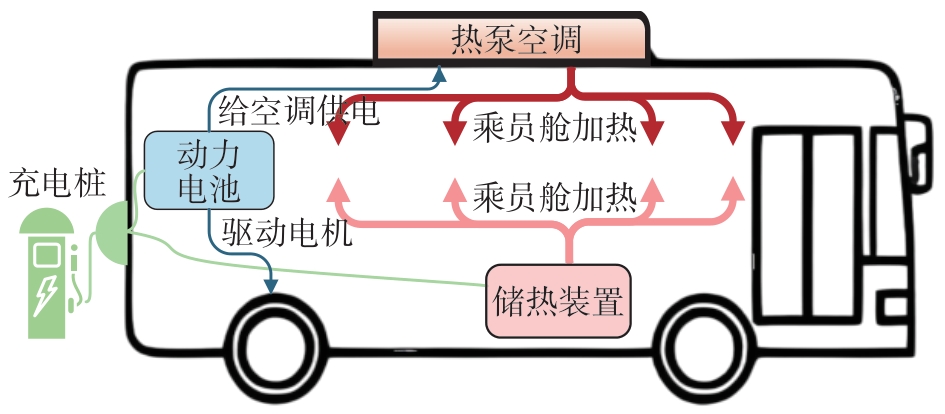

表1
汽车行驶阻力相关参数表"
| 参数 | 数值 |
|---|---|
| 长度/mm | 11 467 |
| 宽度/mm | 2 483 |
| 高度/mm | 2 343 |
| 轮胎半径/m | 0.43 |
| 迎风面积S/m2 | 6.2 |
| 整备质量m/kg | 12 115 |
| 滚动阻力系数f | 0.008 |
| 风阻系数CD | 0.493 |
表2
电机特性参数"
| 参数 | 数值 |
|---|---|
| 额定功率/kW | 210 |
| 额定转矩/(N·m) | 436 |
| 额定转速/(r·min-1) | 4 600 |
| 峰值转矩/(N·m) | 862 |
| 标称电压/V | 650 |
| 最小电压/V | 428 |
| 最大电压/V | 782 |
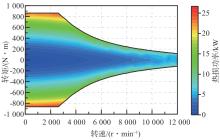
图2
电机热损功率与转速和转矩的关系"
表3
LTO电芯参数"
| 参数 | 数值 |
|---|---|
| 电芯类型 | 方形LTO电芯 |
| 电芯容量/(A·h) | 34 |
| 电芯质量/kg | 0.963 |
| 电芯尺寸/mm | 15×174×322 |
| 密度/(kg?m-3) | 1 901 |
| 比热容/(J?kg-1?K-1) | 979 |
| 热导率/(W?m-1?K-1) | 2.52 |
| 上截止电压/V | 3 |
| 下截止电压/V | 1.7 |
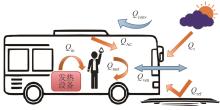
图3
乘员舱热模型示意图"
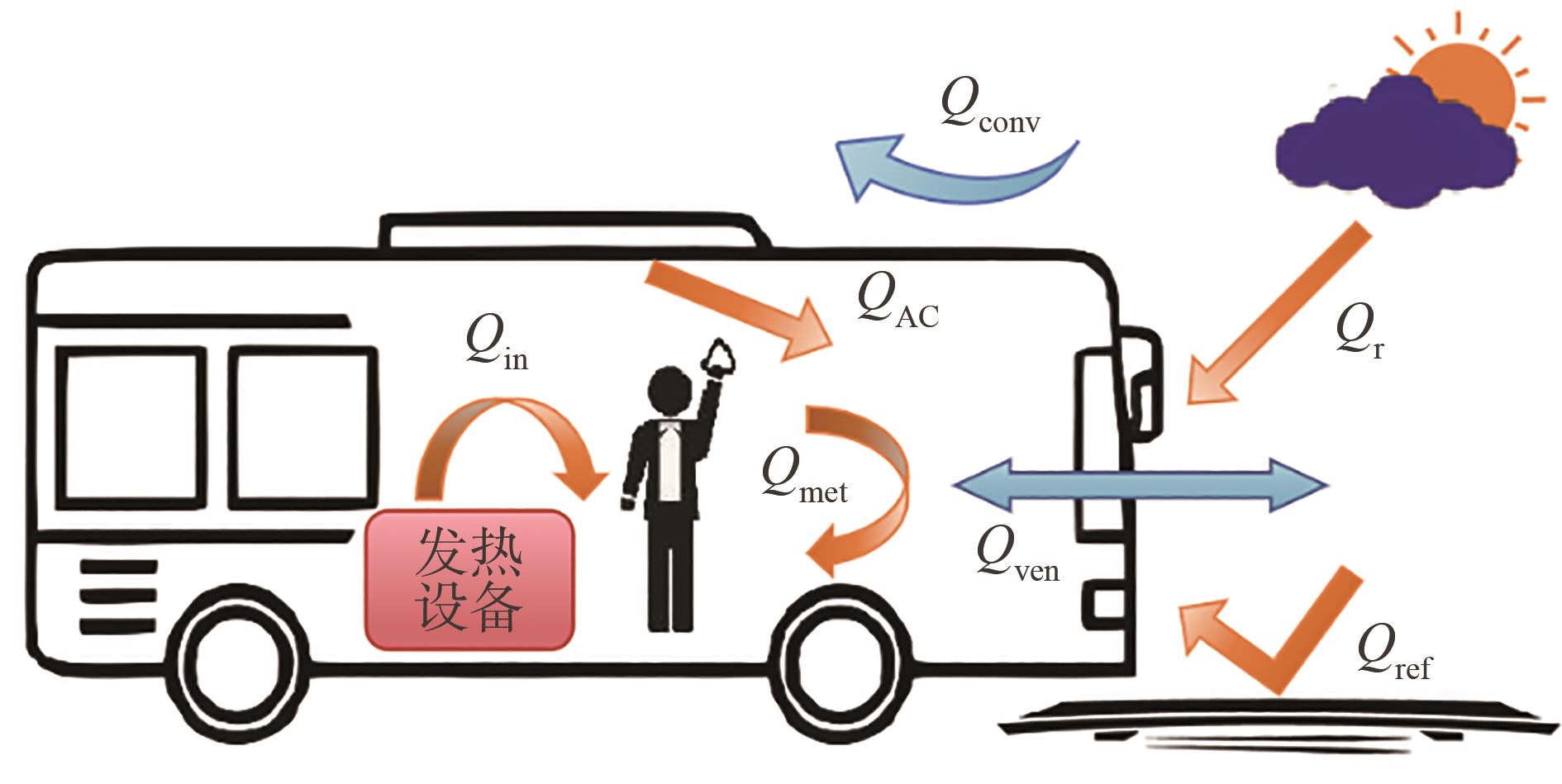
表4
乘员舱各围护结构参数"
| 围护结构 | 面积 /m2 | 材料 (从外到内) | 厚度/mm (从外到内) | 与水平面 的夹角/(°) |
|---|---|---|---|---|
| 挡风玻璃 | 3.05 | 玻璃+空气+玻璃 | 10+15+10 | 90 |
| 车顶 | 23.91 | 铝+泡沫+内饰板 | 4+60+5 | 0 |
| 侧壁 1 | 8.59 | 铝+泡沫+内饰板 | 4+50+5 | 90 |
| 侧壁 2 | 8.59 | 铝+泡沫+内饰板 | 4+50+5 | 90 |
| 侧窗 1 | 10.90 | 玻璃+空气+玻璃 | 10+5+10 | 90 |
| 侧窗 2 | 10.90 | 玻璃+空气+玻璃 | 10+5+10 | 90 |
| 后围 | 3.36 | 铝+泡沫+内饰板 | 4+60+5 | 90 |
| 地板 | 8.13 | 铝+空气+内饰板 | 10+5+5 | 0 |
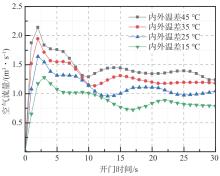
图4
单个车门的空气流量随开门时间与内外温差的变化"
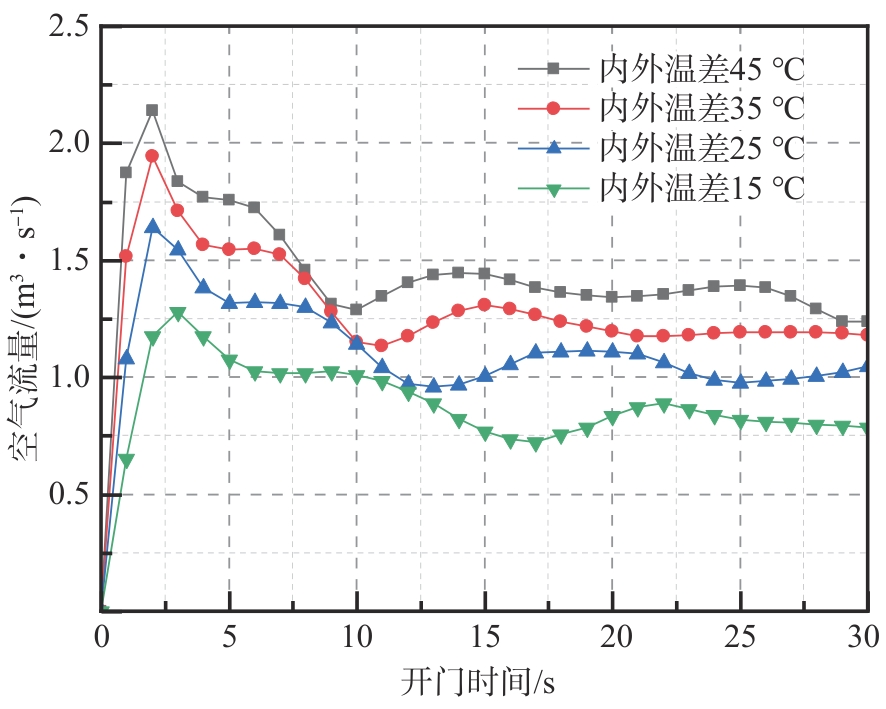
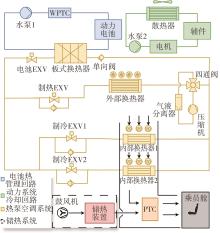
图5
整车热管理系统架构"
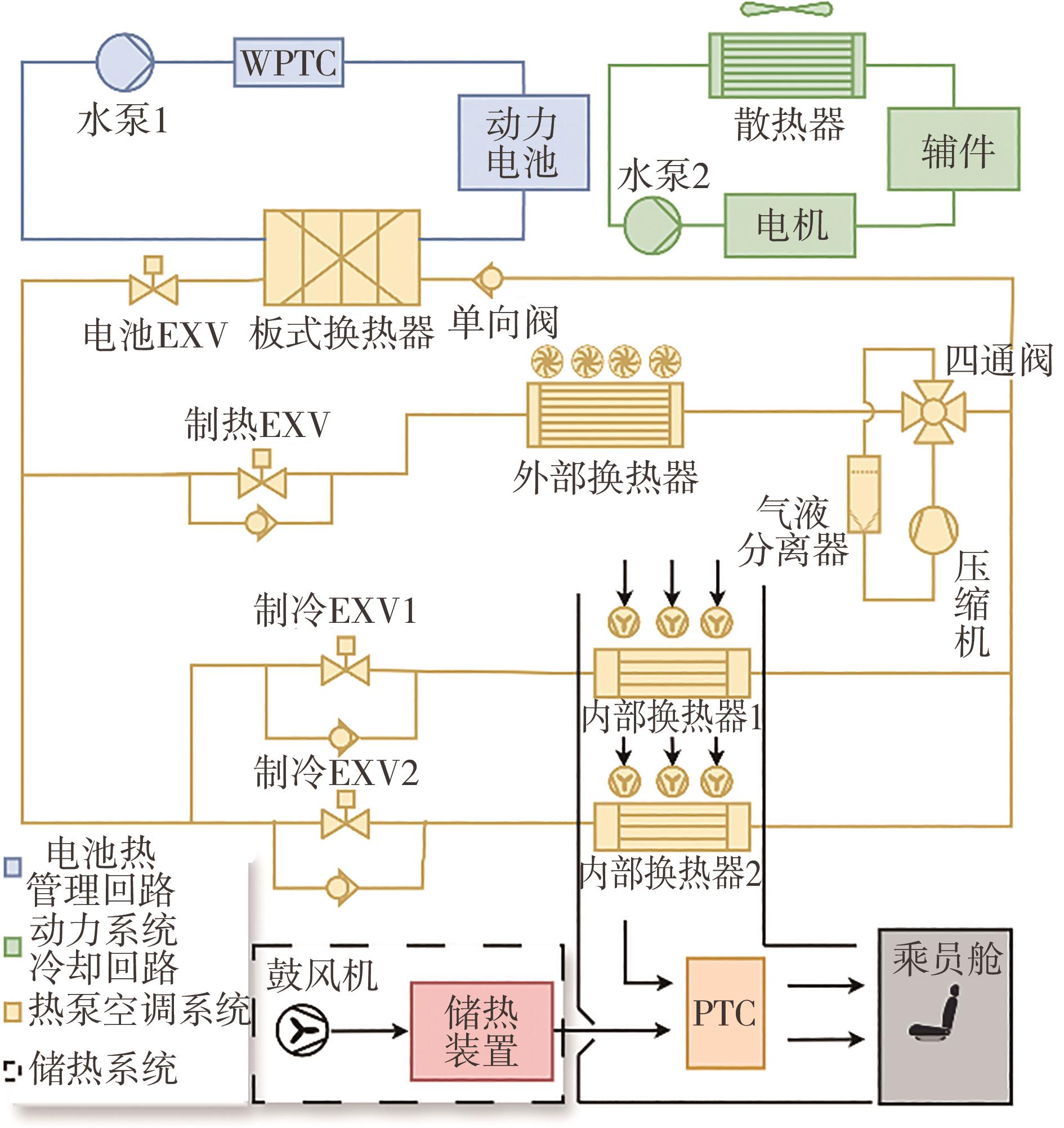
表5
热泵空调系统各组件的规格参数"
| 组件 | 规格 |
|---|---|
| 压缩机 | 类型:电动涡轮式压缩机 转速:500-4 000 r/min 排量:200 cm3/r |
| 内部换热器 | 类型:交错管片式换热器 管数:4×7 管间距:21.5 mm×25 mm 长度:1 380 mm 内径:8 mm |
| 外部换热器 | 类型:交错管片式换热器 管数:4×30 管间距:20 mm×25 mm 长度:1 600 mm 内径:8 mm |
| 膨胀阀 | 类型:电子膨胀阀 开启度:0-85% 最大直径:8 mm |
| 内部风机 | 风量:1 100 m3/h 功率消耗:250 W 挡位:0-5,0挡时关闭 |
| 外部风扇 | 风量:2 700 m3/h 功率消耗:700 W 挡位:0-4,0挡时关闭 |
表6
热泵测试实验工况"
| 项目 | 阶段1 0-10 min | 阶段2 10-20 min | 阶段3 20-30 min | 阶段4 30-40 min |
|---|---|---|---|---|
| 热泵工作状态 | 开 | 关 | 开 | 关 |
| 鼓风机挡位 | 2 | 0 | 5 | 0 |
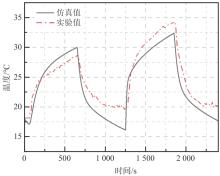
图6
车舱平均温度仿真值和实验值对比"
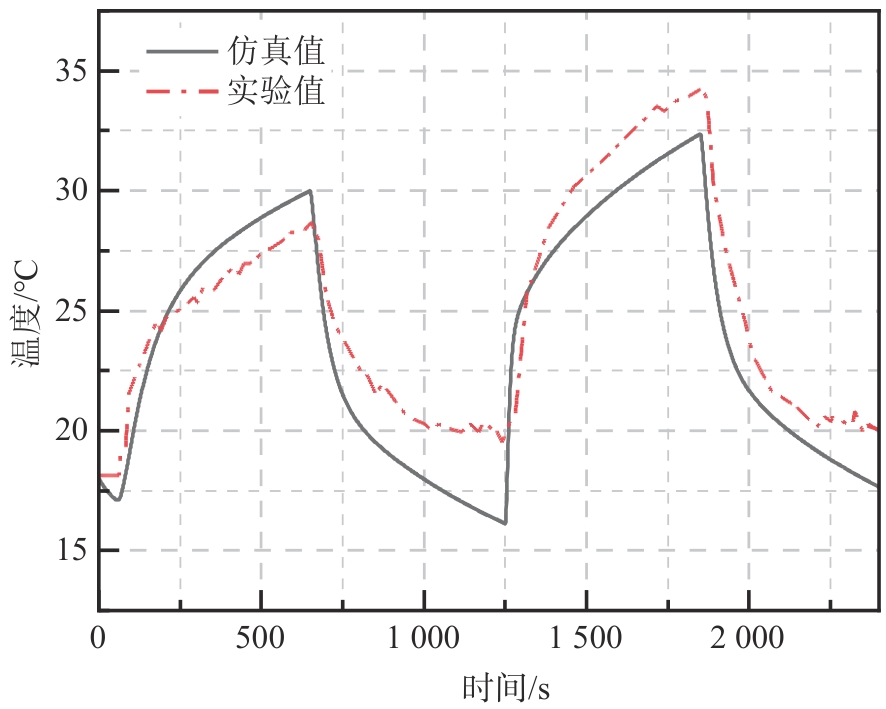
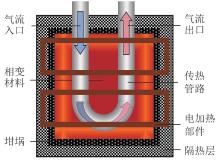
图7
储热装置原理示意图"
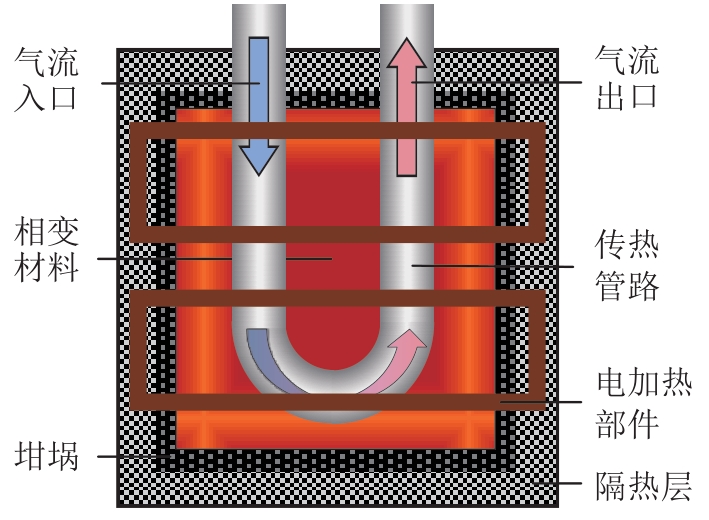
表7
铝硅合金相变储热材料的物性参数"
| 参数 | 数值 |
|---|---|
| 材料名称 | AlSi12 |
| 相变温度/℃ | 570 |
| 相变潜热/(kJ·kg-1) | 575 |
| 热导率/(W?m-1?K-1) | 固态:180 液态:70 |
| 密度/(kg?m-3) | 固态:2 642 液态:2 460 |
| 比热容/(J?kg-1?K-1) | 固态:1 100 液态:1 741 |
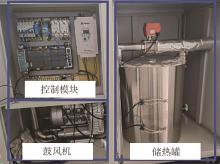
图8
储热装置实验台架"
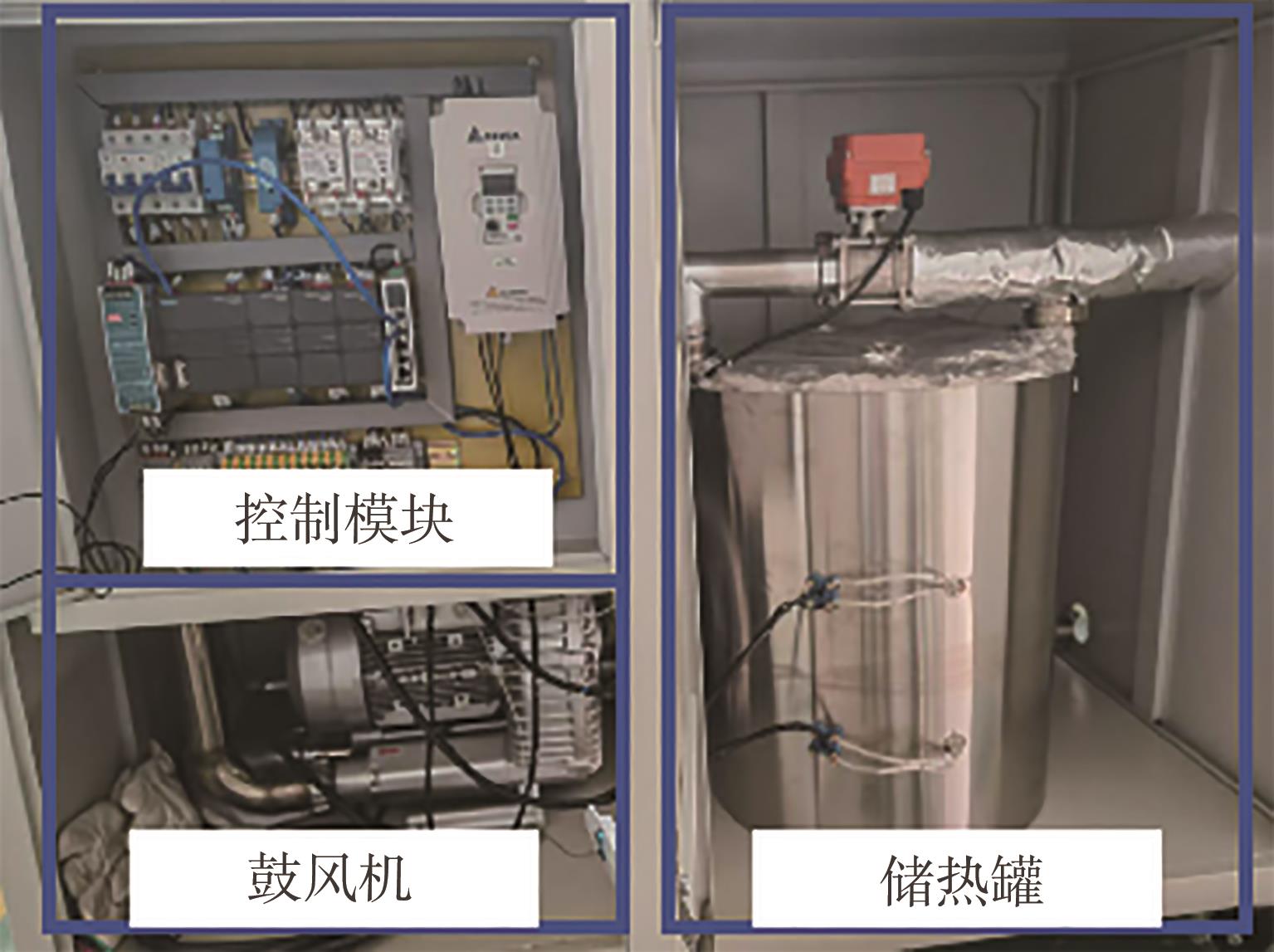
表8
储热装置的参数"
| 组件 | 直径/mm | 厚度/mm | 长度/mm | 材料 | 数量 |
|---|---|---|---|---|---|
| 电加热套 | 240 | 15 | 80 | 钨丝 | 2 |
| U型管束 | 8 | 1.5 | 537;574; 612;650 | 316不锈钢 | (2,4,4,2)×2 |
| 罐体 | 200 | 15 | 280 | 碳化硅 | 1 |
| 通风管路 | 50 | 2 | 1 500 | 304不锈钢 | |
| 法兰盘 | 240 | 30 | 304不锈钢 | 1 |
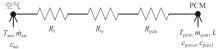
图9
空气与PCM传热示意图"
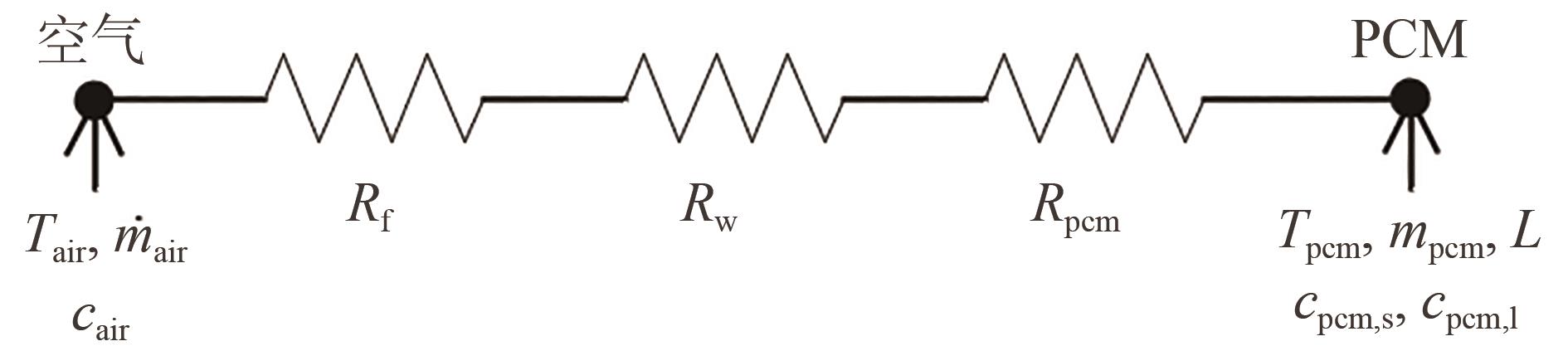
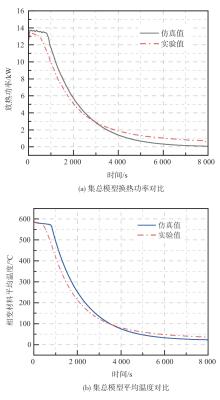
图10
储热装置放热仿真结果与实验结果对比"
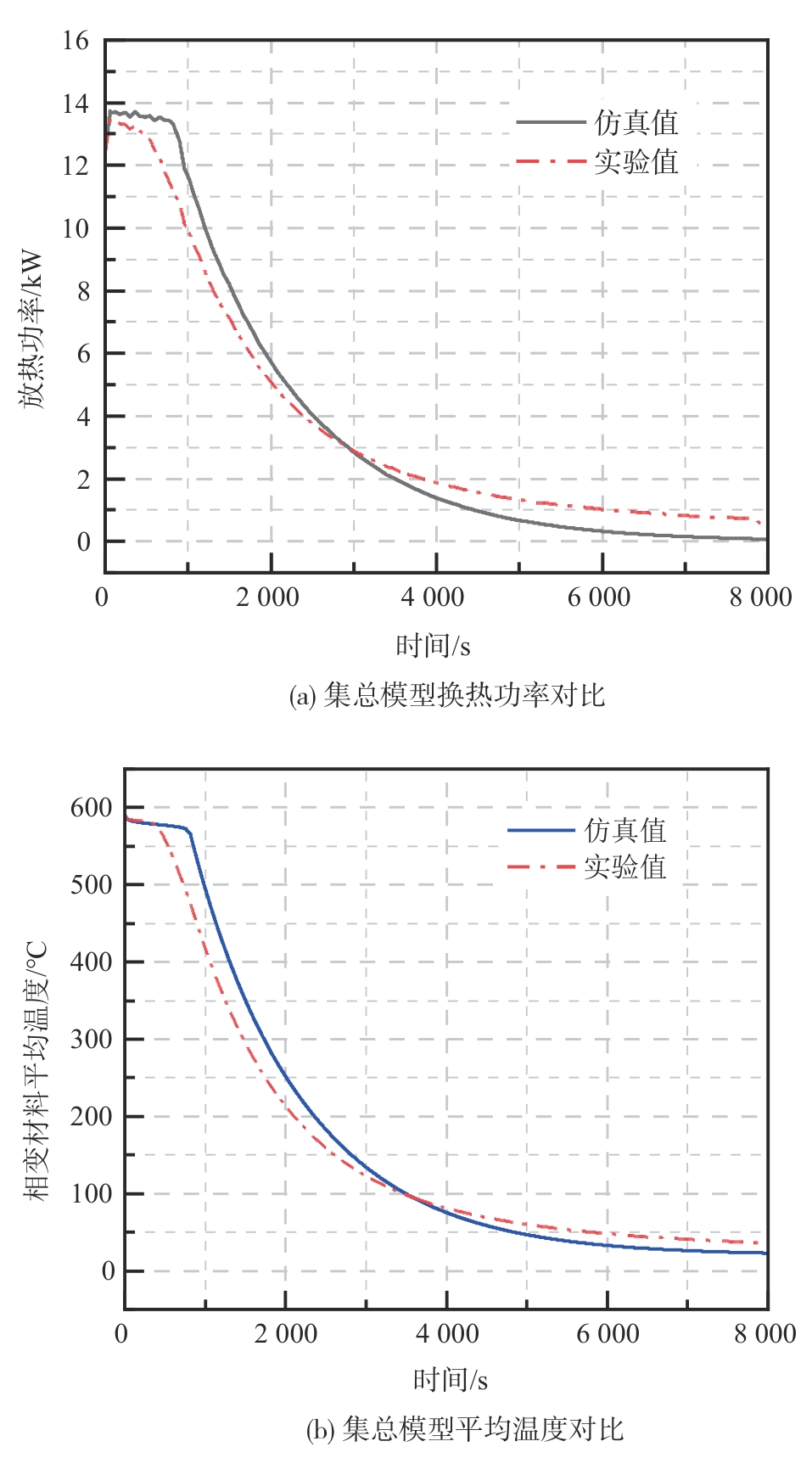
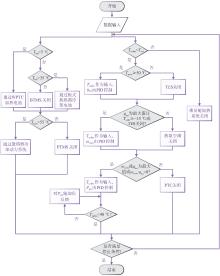
图11
整车热管理系统控制策略"
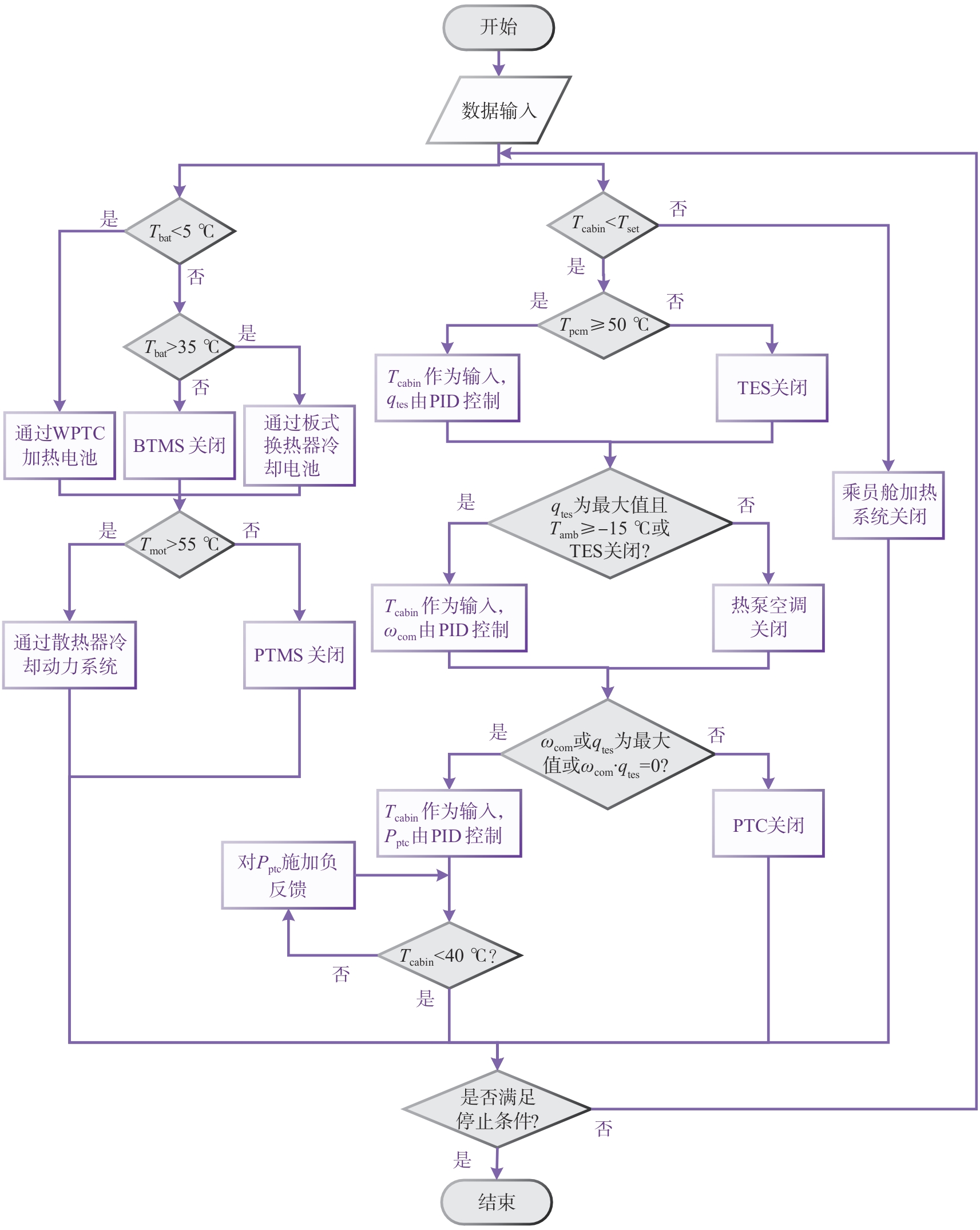
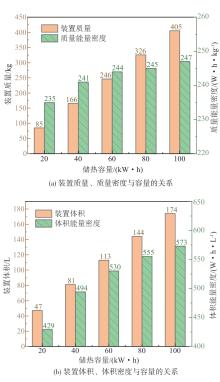
图12
储热装置质量、体积与能量密度随容量的变化"

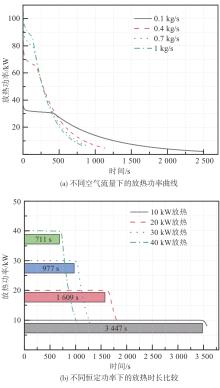
图13
10 kW·h储热装置的放热特性"
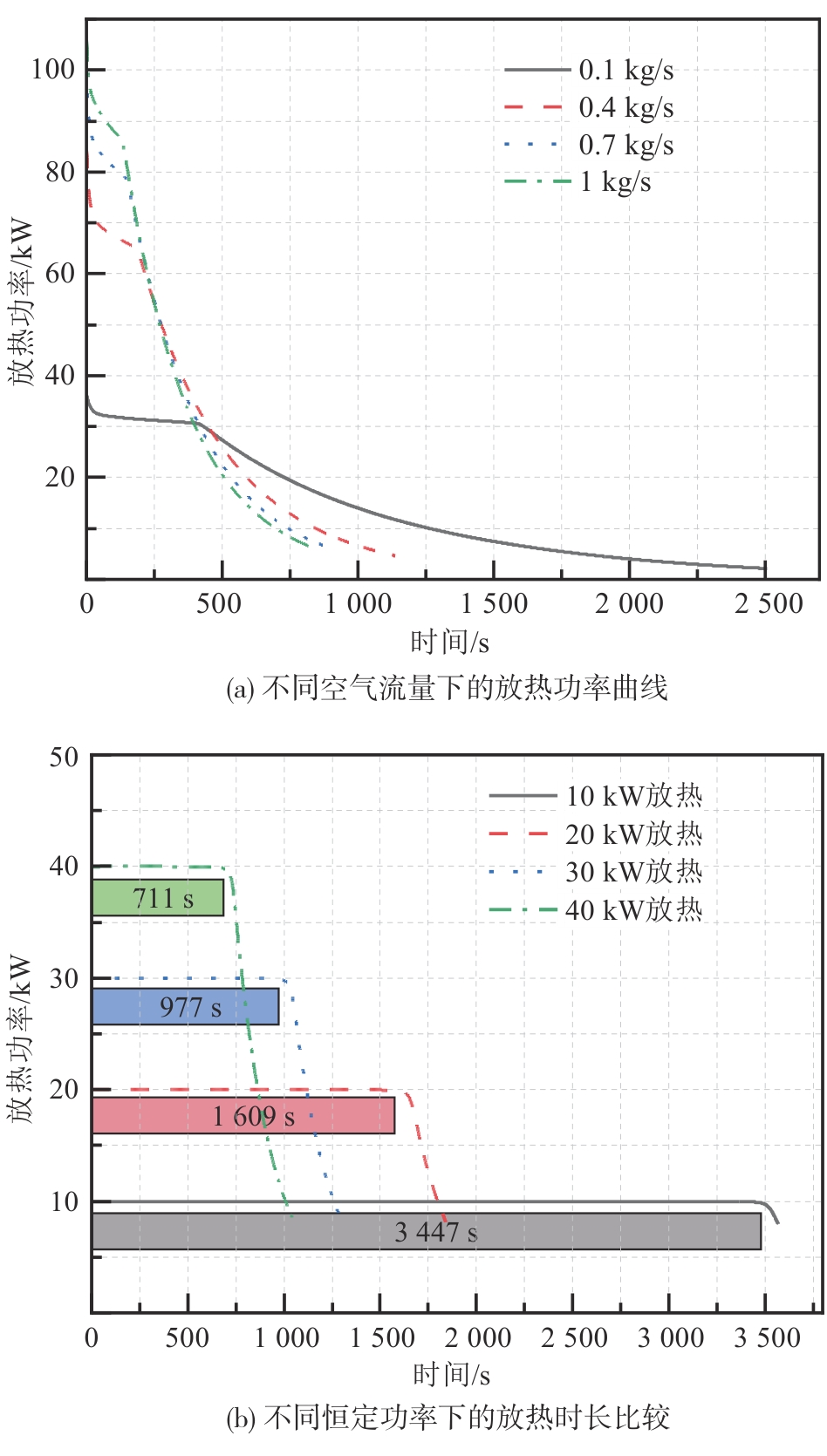
图14
储热装置与锂电池的成本对比"
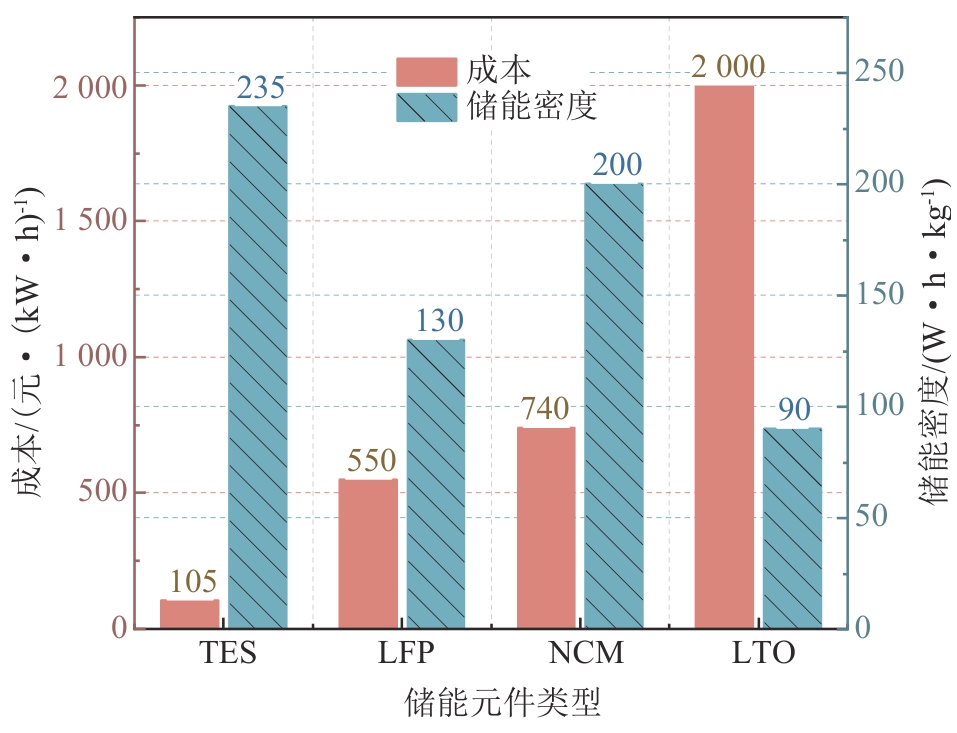
图15
CHTC-B车速工况与开门行为"
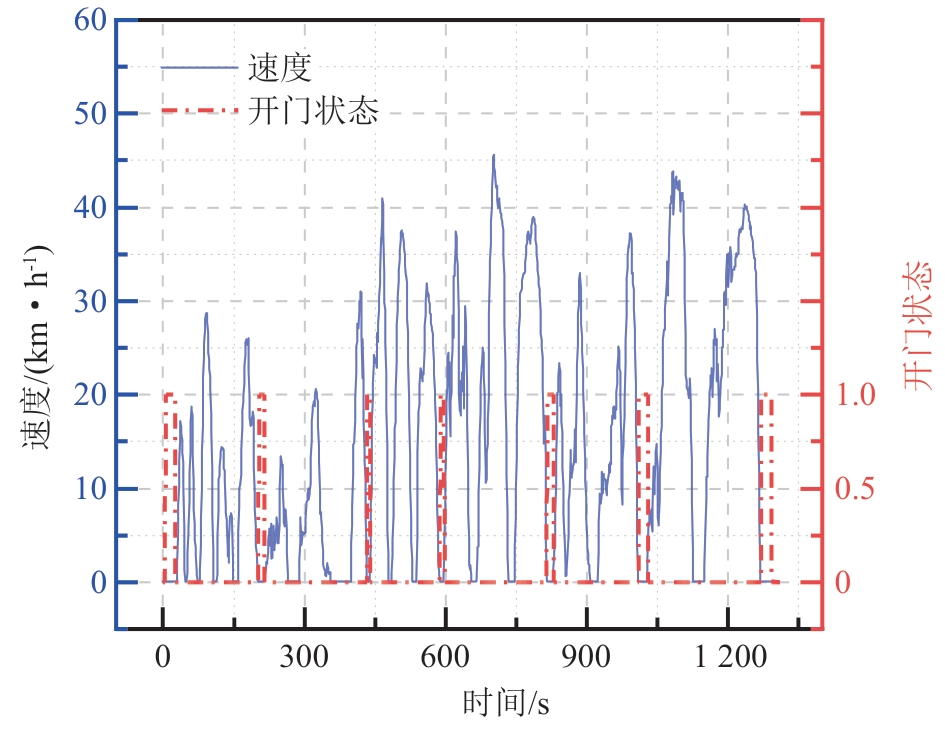
图16
不同环境温度下CHTC-B工况乘员舱热需求功率"
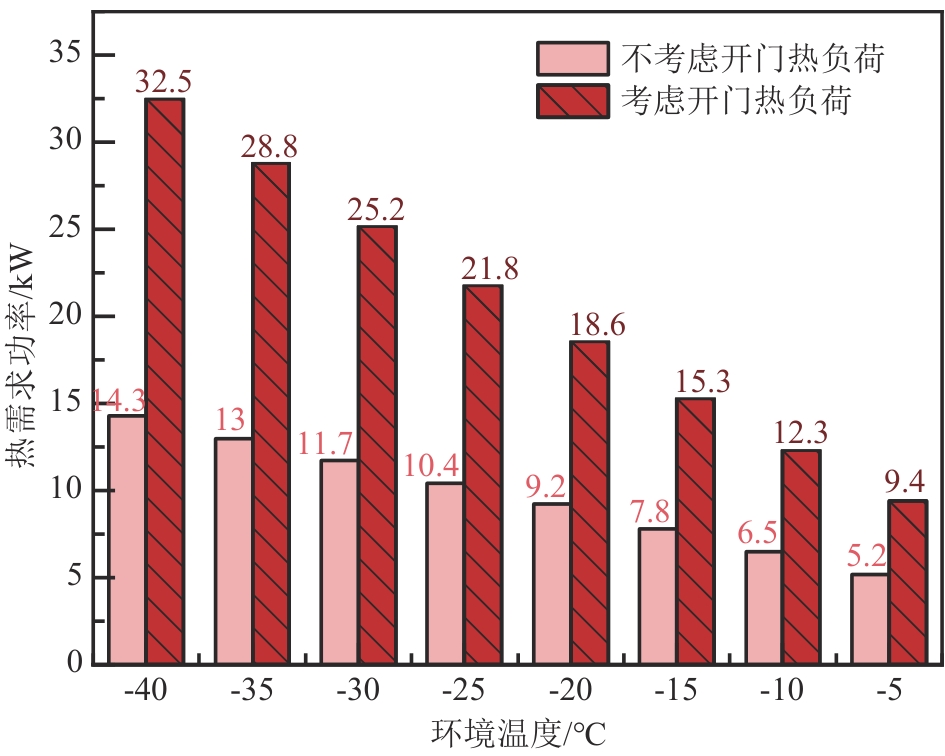
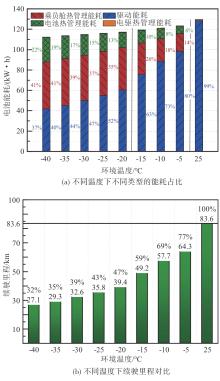
图17
不同温度下整车基准模型的能效表现"
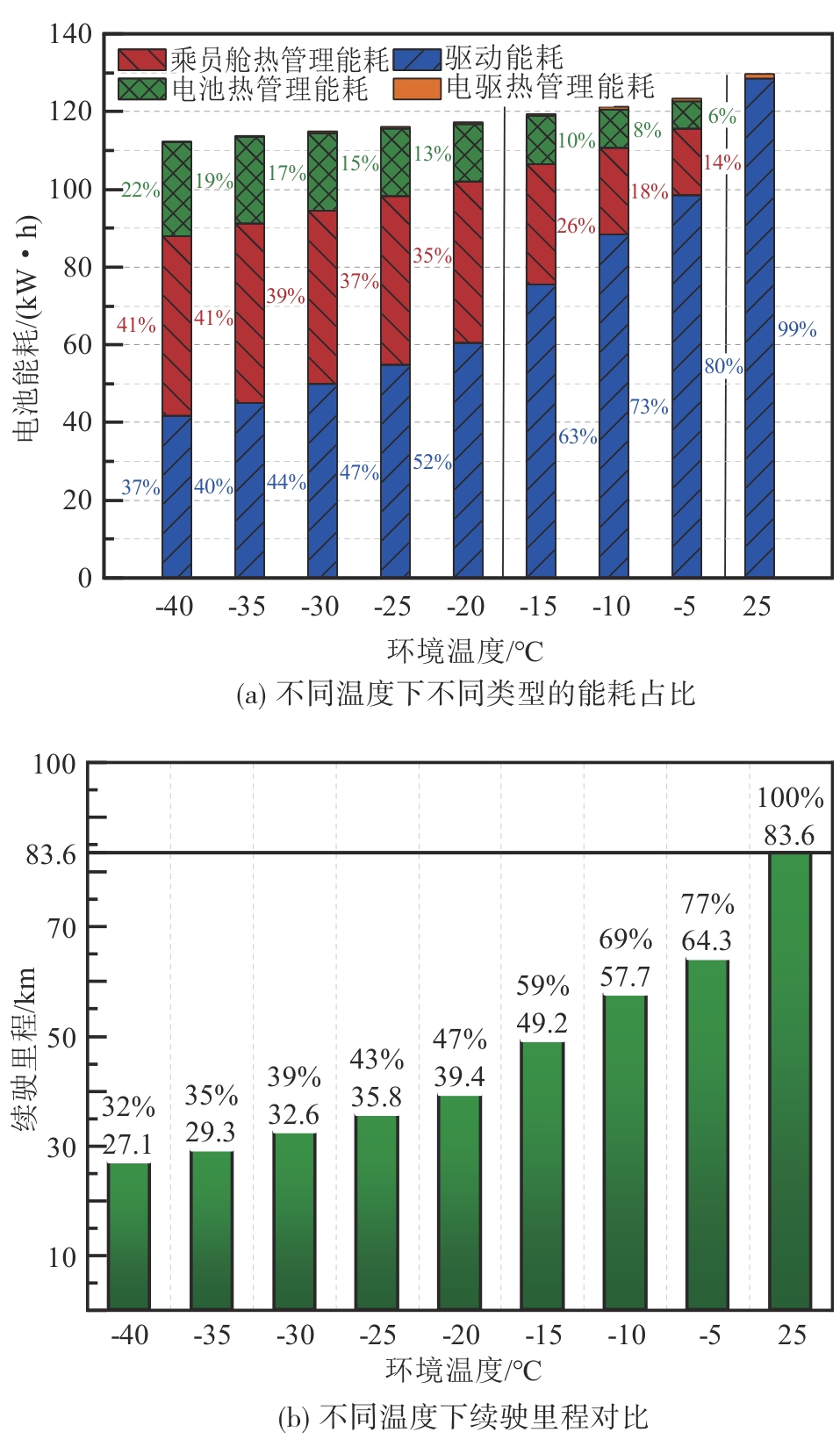
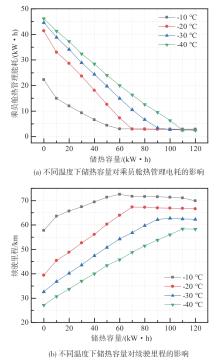
图18
不同低温环境下不同储热容量对整车能效的影响"
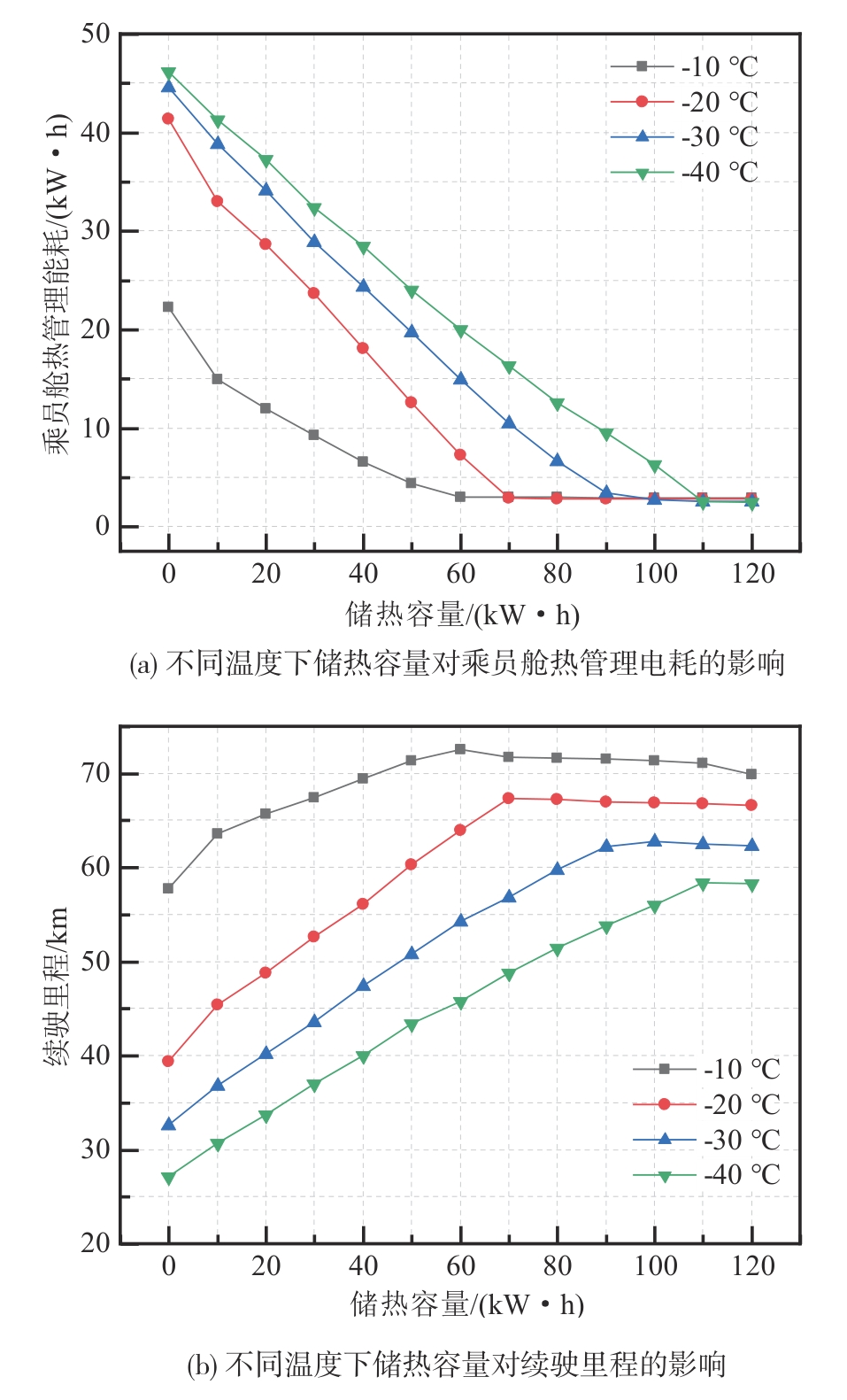
表9
不同低温环境下最优储热容量的储热装置特性参数及其对续驶里程的影响"
环境 温度/℃ | 最优储热 容量/(kW·h) | 储热装置 质量/kg | 储热装置 体积/L | 成本/元 | 无储热装置 续驶里程/km | 配置储热装置 续驶里程/km | 续驶里程 增幅/% | 配置储热装置时常温下续驶里程的损失/% |
|---|---|---|---|---|---|---|---|---|
| -10 | 55 | 226 | 105 | 5 775 | 57.7 | 72.5 | 25.65 | 0.84 |
| -20 | 70 | 286 | 129 | 7 350 | 39.4 | 67.3 | 70.81 | 1.20 |
| -30 | 95 | 386 | 167 | 9 975 | 32.6 | 62.8 | 92.64 | 1.56 |
| -40 | 110 | 445 | 189 | 11 550 | 27.1 | 58.4 | 115.50 | 1.79 |
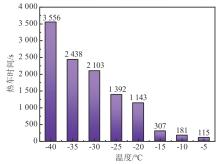
图19
整车基准模型在不同温度下冷起动的热车时间"
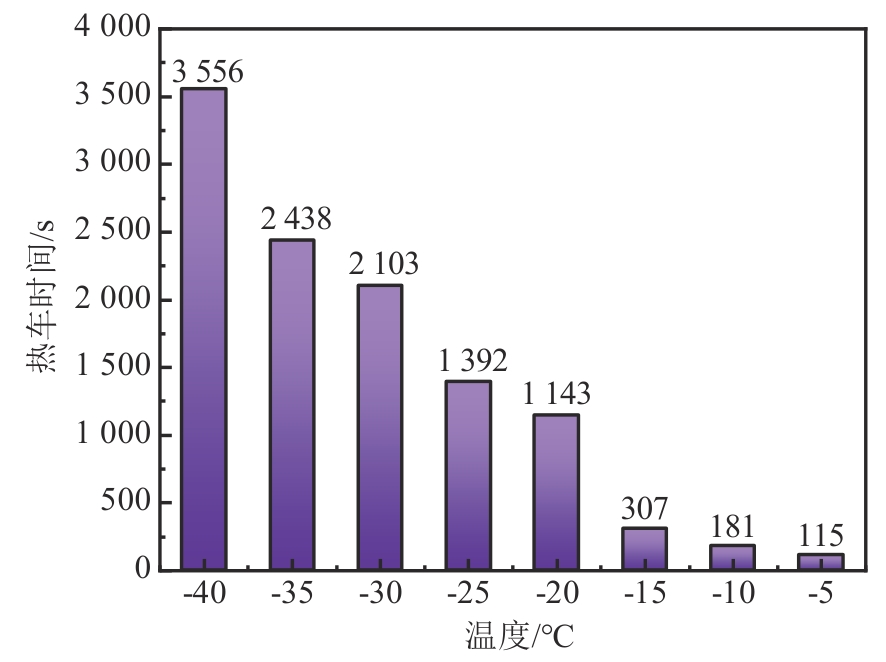
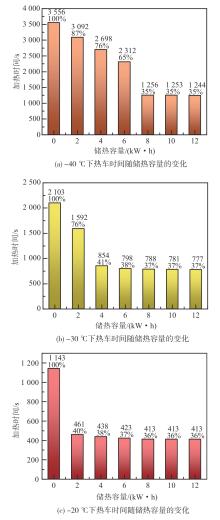
图20
不同低温环境下储热容量对热车时间的影响"

表10
极寒环境下储热装置容量配置参数及其对热车时间的影响"
| 环境温度/℃ | 储热容量/ (kW·h) | 储热装置质量/kg | 储热装置体积/L | 成本/元 | 无储热装置 热车时间/s | 配置储热装置 热车时间/s | 热车时间降幅/% |
|---|---|---|---|---|---|---|---|
| -20 | 2 | 10 | 9 | 210 | 1 143 | 461 | 59.67 |
| -30 | 4 | 18 | 14 | 420 | 2 103 | 854 | 59.39 |
| -40 | 8 | 35 | 23 | 840 | 3 556 | 1 256 | 64.68 |
| [1] | 国务院办公厅. 新能源汽车产业发展规划(2021—2035年)[EB/OL]. (2020-10-20)[2025-03-08]. https://www.gov.cn/zhengce/content/2020-11/02/content_5556716.htm. |
| General Office of the State Council. New energy automobile industry development plan(2021—2035)[EB/OL]. (2020-10-20)[2025-03-08]. https://www.gov.cn/zhengce/content/2020-11/02/content_5556716.htm. | |
| [2] | 林程, 田雨, 于潇, 等. 高性能全气候电动客车的关键技术[J]. 科技导报, 2022, 40(14): 41-50. |
| LIN C, TIAN Y, YU X, et al. Key technologies of high-performance all-climate electric bus[J]. Science & Technology Review, 2022, 40(14): 41-50. | |
| [3] | KNOTE T. Analysis of the application of electric heaters on electric buses[R]. Bremen: Fraunhofer-IVI, 2017. |
| [4] | HAN X, ZOU H, WU J, et al. Investigation on the heating performance of the heat pump with waste heat recovery for the electric bus[J/OL]. Renewable Energy, 2020, 152: 835-848. |
| [5] | ZHANG Z, WANG D, ZHANG C, et al. Electric vehicle range extension strategies based on improved AC system in cold climate-a review[J/OL]. International Journal of Refrigeration, 2018, 88: 141-150. |
| [6] | 季宏增, 蔡景羊, 裴金晨, 等. 电动汽车热泵PTC耦合制热策略研究[J]. 汽车工程, 2022, 44(10): 1563-1570, 1580. |
| JI H Z, CAI J Y, PEI J C, et al. Research on heat pump PTC coupling heating strategy for electric vehicle [J]. Automotive Engineering, 2022, 44(10): 1563-1570, 1580. | |
| [7] | 汪琳琳, 焦鹏飞, 王伟, 等. 新能源电动汽车低温热泵型空调系统研究[J]. 汽车工程, 2020, 42(12): 1744-1750, 1757. |
| WANG B B, JIAO P F, WANG W, et al. Key technologies of high-performance all-climate electric bus[J]. Automotive Engineering, 2020, 42(12): 1744-1750, 1757. | |
| [8] | LIU Z, MA L, QIAN Z. Experimental study on performance of the trans-critical CO2 heat pump with flash tank vapor injection at variable revolution ratio conditions[J]. Journal of Cleaner Production, 2023, 412: 137405. |
| [9] | WANG H, CAO F, JIA F, et al. Potential assessment of transcritical CO2 secondary loop heat pump for electric vehicles[J]. Applied Thermal Engineering, 2023, 224: 119921. |
| [10] | YU B, YANG J, WANG D, et al. An updated review of recent advances on modified technologies in transcritical CO2 refrigeration cycle[J]. Energy, 2019, 189: 116147. |
| [11] | XIE P, QIAO G, LIN C, et al. Thermal energy storage for electric vehicles at low temperatures: concepts, systems, devices and materials[J]. Renewable and Sustainable Energy Reviews, 2022, 160. |
| [12] | GUR I, SAWYER K, PRASHER R. Searching for a better thermal battery[J]. SCIENCE, 2012, 335(6075): 1454-1455. |
| [13] | NARAYANAN S, LI X, YANG S, et al. Thermal battery for portable climate control[J]. Applied Energy, 2015, 149: 104-116. |
| [14] | NARAYANAN S, KIM H, UMANS A, et al. A thermophysical battery for storage-based climate control[J]. Applied Energy, 2017, 189: 31-43. |
| [15] | WANG M, WOLFE E, CRAIG T, et al. Design and testing of a thermal storage system for electric vehicle cabin heating[C]. SAE Paper 2016-01-0248. |
| [16] | EUROPEAN COMMISSION. Optimised and systematic energy management in electric vehicles[EB/OL]. (2022-08-15)[2025-03-10]. https://cordis.europa.eu/project/id/653514. |
| [17] | STAHL V, KRAFT W, VETTER P, et al. Simulative investigation of thermal capacity analysis methods for metallic latent thermal energy storage systems[J]. Energies, 2021, 14: 2241. |
| [18] | ZHAO W, LIN X, ZHANG T, et al. Large-scale energy storage for carbon neutrality: thermal energy storage for electrical vehicles[J]. Carbon Neutrality, 2024, 3(1): 30. |
| [19] | HONG J, SONG J, HAN U, et al. Performance investigation of electric vehicle thermal management system with thermal energy storage and waste heat recovery systems[J]. eTransportation, 2024, 20: 100317. |
| [20] | DREISSIGACKER V, BELIK S. High temperature solid media thermal energy storage system with high effective storage densities for flexible heat supply in electric vehicles[J]. Applied Thermal Engineering, 2019, 149: 173-179. |
| [21] | ZHANG C, WU S, AN G, et al. Resorption thermal energy storage strategy based on CaCl2/MnCl2-NH3 working pair for battery electric vehicles[J]. Chemical Engineering Journal, 2022, 441: 136111. |
| [22] | FANG Z Z, ZHOU C, FAN P, et al. Metal hydrides based high energy density thermal battery[J]. Journal of Alloys and Compounds, 2015, 645: S184-S189. |
| [23] | MEIER K, KURTZ C, WECKERLE C, et al. Air-conditioning system for vehicles with on-board hydrogen[J]. Applied Thermal Engineering, 2017, 129. |
| [24] | KÖLBIG M, WECKERLE C, LINDER M, et al. Review on thermal applications for metal hydrides in fuel cell vehicles: operation modes, recent developments and crucial design aspects[J]. Renewable and Sustainable Energy Reviews, 2022, 162: 112385. |
| [25] | FLEMING E, WEN S, SHI L, et al. Thermodynamic model of a thermal storage air conditioning system with dynamic behavior[J]. Applied Energy, 2013, 112: 160-169. |
| [26] | KUITUNEN S. Design and development process for rapid charge storage heaters for electric city buses[C]. 7th International Conference Thermal Management for EV/HEV. Berlin, 2018. |
| [27] | COSTA PEREIRA S C, KENISARIN M. A review of metallic materials for latent heat thermal energy storage: thermophysical properties, applications, and challenges[J]. Renewable and Sustainable Energy Reviews, 2022, 154: 111812. |
| [28] | ZHAO Y, LIU H, ZHAO C. Experimental study on the cycling stability and corrosive property of Al-Si alloys as phase change materials in high-temperature heat storage[J]. Solar Energy Materials and Solar Cells, 2019, 203. |
| [29] | KRAFT W, NEES F, STAHL V, et al. Thermal high performance storages for electric bus heating - overview on the current state of development[C]. ENERSTOCK 2021. |
| [30] | 谢鹏, 金露, 谯耕. 一种金属相变电储热装置: CN202110470516.2[P]. 2022-12-06. |
| XIE P, JIN L, QIAO G. A thermal energy storage device made of meatal phase change material: CN202110470516.2 [P]. 2022-12-06. | |
| [31] | LUO C, XIE P, CHEN G, et al. Prototype design and experimental study of a metal alloy-based thermal energy storage system for heat supply in electric vehicles[J]. The Journal of Energy Storage, 2022, 51: 104393. |
| [32] | XIE P, YU X, LIN C, et al. Conceptual design and numerical analysis of a miscibility gap alloy-based solid-state thermal battery for electric vehicles[J]. Journal of Energy Storage, 2024, 86: 111389. |
| [33] | BERNARDI D, PAWLIKOWSKI E, NEWMAN J. A general energy-balance for battery systems[J]. Journal of the Electrochemical Society, 1985, 132(1): 5-12. |
| [34] | LEE H, HWANG Y, SONG I, et al. Transient thermal model of passenger car’s cabin and implementation to saturation cycle with alternative working fluids[J]. Energy, 2015, 90: 1859-1868. |
| [35] | LIU T. Thermal management solutions for battery electric buses in cold climates[D]. Aalto University, 2019. |
| [36] | INCROPERA F P, DEWITT D P. Fundamentals of heat and mass transfer[M]. 5th ed. John Wiley & Sons,Inc, 2002. |
| [37] | 全国汽车标准化技术委员会客车分技术委员会. 客车空调系统技术条件: JT/T 216—2020[S]. 北京: 人民交通出版社, 2020. |
| Bus Sub-Technical Committee of National Automobile Standardization Technical Committee. Technical conditions of bus air conditioning system: JT/T 216—2020[S]. Beijing: People's Communications Press, 2020. | |
| [38] | RAWSON A J, KRAFT W, GLÄSEL T, et al. Selection of compatible metallic phase change materials and containers for thermal storage applications[J]. Journal of Energy Storage, 2020, 32: 101927. |
| [39] | 上海第一财经传媒有限公司. 不同城市的公交“一站地”差别有多大?[EB/OL]. (2017-02-13). https://zhuanlan.zhihu.com/p/25209621?from_voters_page=true. |
| Shanghai First Financial Media Co., Ltd. How much is the difference of bus "one stop" in different cities[EB/OL]. (2017-02-13)[2025-03-08]. https://zhuanlan.zhihu.com/p/25209621?from_voters_page=true. |
| [1] | 冯桂珍,张思豪,李韶华,李鹏源. 参数动态调节的空气弹簧综合模型及电动客车动力学特性分析[J]. 汽车工程, 2025, 47(4): 734-745. |
| [2] | 李晓艳,余海燕,楚遵康. 基于静强度和侧翻安全性的客车骨架轻量化[J]. 汽车工程, 2024, 46(12): 2200-2208. |
| [3] | 张邦基,林祥,谭博欢,王少华,曾梦媛,金秋谈. 搭载行星减速器的纯电动客车振动试验研究[J]. 汽车工程, 2021, 43(1): 129-135. |
| [4] | 叶乐志, 梁宸, 李德胜, 刘增岗. 面向电动客车的新型涡流缓速制热系统研究*[J]. 汽车工程, 2019, 41(4): 475-480. |
|
||
