
Administrator by China Associction for Science and Technology
Sponsored by China Society of Automotive Engineers
Published by AUTO FAN Magazine Co. Ltd.
Sponsored by China Society of Automotive Engineers
Published by AUTO FAN Magazine Co. Ltd.

Automotive Engineering ›› 2025, Vol. 47 ›› Issue (11): 2113-2125.doi: 10.19562/j.chinasae.qcgc.2025.11.006
Zhuzi Liu1,Yin Li2,Qiqi Li2,Lin Hu2,Tiefang Zou2( )
)
Received:2025-01-04
Revised:2025-05-15
Online:2025-11-25
Published:2025-11-28
Contact:
Tiefang Zou
E-mail:tiefang@163.com
Zhuzi Liu,Yin Li,Qiqi Li,Lin Hu,Tiefang Zou. Study on the Impact of Structural Safety and Empathy Differences on the Willingness to Use eVTOLs[J].Automotive Engineering, 2025, 47(11): 2113-2125.
"
| 潜变量 | 测量项 | 因子载荷系数 | 测量项 来源 | ||||||
|---|---|---|---|---|---|---|---|---|---|
| 因子1 | 因子2 | 因子3 | 因子4 | 因子5 | 因子6 | 因子7 | |||
| 使用意愿 | 我希望在飞行汽车上市时使用它 | 0.754 | 0.204 | 0.206 | 0.097 | 0.204 | 0.281 | 0.093 | 文献[ |
| 我计划在飞行汽车上市时使用它 | 0.868 | 0.135 | 0.137 | 0.030 | 0.172 | 0.188 | 0.237 | ||
| 我打算在飞行汽车上市时使用它 | 0.864 | 0.138 | 0.135 | 0.018 | 0.213 | 0.174 | 0.214 | ||
| 结构安全 | 飞行汽车的结构越坚固,越安全 | 0.191 | 0.832 | 0.247 | 0.104 | 0.231 | 0.141 | 0.151 | 自主研发 |
| 飞行汽车的结构越坚固,越能保护好乘员 | 0.174 | 0.840 | 0.263 | 0.114 | 0.198 | 0.157 | 0.118 | ||
| 飞行汽车的结构越坚固,越能保护好电池 | 0.121 | 0.839 | 0.259 | 0.092 | 0.192 | 0.165 | 0.182 | ||
| 感知有用 | 我认为飞行汽车将有助于减少交通拥堵 | 0.136 | 0.269 | 0.755 | 0.150 | 0.160 | 0.239 | 0.232 | 文献[ |
| 我认为飞行汽车将有助于减少出行时间 | 0.192 | 0.247 | 0.796 | 0.143 | 0.174 | 0.253 | 0.129 | ||
| 我认为飞行汽车将有助于享受空中观景 | 0.163 | 0.292 | 0.807 | 0.150 | 0.183 | 0.134 | 0.074 | ||
| 感知风险 | 我担心飞行汽车的故障将我置于危险中 | 0.028 | 0.086 | 0.069 | 0.923 | -0.020 | 0.055 | 0.005 | 文献[ |
| 我担心飞行汽车的故障会导致事故 | 0.026 | 0.065 | 0.118 | 0.930 | -0.018 | 0.025 | 0.035 | ||
| 总之,我担心飞行汽车的安全性 | 0.046 | 0.066 | 0.108 | 0.920 | 0.018 | 0.003 | -0.002 | ||
| 初始信任 | 我认为飞行汽车是可靠的 | 0.280 | 0.257 | 0.267 | -0.033 | 0.728 | 0.213 | 0.275 | 文献[ |
| 我认为飞行汽车是值得信赖的 | 0.275 | 0.283 | 0.206 | 0.016 | 0.728 | 0.294 | 0.250 | ||
| 总之,我想我可以相信飞行汽车 | 0.296 | 0.352 | 0.213 | -0.055 | 0.702 | 0.258 | 0.245 | ||
| 态度 | 我认为使用飞行汽车是明智的选择 | 0.376 | 0.210 | 0.216 | 0.045 | 0.285 | 0.734 | 0.165 | 文献[ |
| 我认为使用飞行汽车是个好主意 | 0.303 | 0.223 | 0.348 | 0.053 | 0.271 | 0.705 | 0.186 | ||
| 我认为使用飞行汽车是令人愉快的 | 0.322 | 0.221 | 0.403 | 0.049 | 0.252 | 0.643 | 0.233 | ||
| 感知易用 | 我相信学习使用飞行汽车对我来说很容易 | 0.288 | 0.215 | 0.202 | 0.017 | 0.289 | 0.178 | 0.787 | 文献[ |
| 我相信如果我使用飞行汽车,对我而言会很简单 | 0.294 | 0.222 | 0.183 | 0.022 | 0.268 | 0.200 | 0.793 | ||
| 特征根值(旋转后) | 2.983 | 2.925 | 2.726 | 2.683 | 2.262 | 2.078 | 1.821 | ||
| 方差解释率(旋转后) | 14.914% | 14.625% | 13.632% | 13.417% | 11.311% | 10.392% | 9.107% | ||
| 累积方差解释率(旋转后) | 14.914% | 29.538% | 43.170% | 56.587% | 67.898% | 78.290% | 87.397% | ||
| KMO值 | 0.929 | ||||||||
"
不分接触场景 (n=752) | 乘坐空中出租车上下班(n=170) | 乘坐飞行汽车观光旅游(n=230) | 传统出行与居家生活(n=101) | 应用飞行汽车开展救援(n=181) | 飞行汽车送货上门服务(n=70) | 排序 |
|---|---|---|---|---|---|---|
| 坠落安全 | 坠落安全 | 极端天气 | 坠落安全 | 坠落安全 | 坠落安全 | 1 |
| 极端天气 | 极端天气 | 坠落安全 | 环境污染 | 极端天气 | 极端天气 | 2 |
| 信息安全 | 信息安全 | 环境污染 | 信息安全 | 信息安全 | 信息安全 | 3 |
| 环境污染 | 噪声污染 | 信息安全 | 极端天气 | 电池安全 | 环境污染 | 4 |
| 电池安全 | 隐私泄露 | 噪声污染 | 噪声污染 | 环境污染 | 隐私泄露 | 5 |
| 噪声污染 | 环境污染 | 隐私泄露 | 隐私泄露 | 隐私泄露 | 电池安全 | 6 |
| 隐私泄露 | 电池安全 | 电池安全 | 电池安全 | 交通运行 | 噪声污染 | 7 |
| 交通运行 | 交通运行 | 交通运行 | 交通运行 | 噪声污染 | 交通运行 | 8 |
"
| 项目 | 低共情(n=351) | 高共情(n=409) | p |
|---|---|---|---|
| 结构安全 | 3.000(3.0,3.3) | 4.000(3.0,4.0) | 0.000** |
| 共情能力 | 3.000(3.0,3.4) | 4.200(4.0,4.8) | 0.000** |
| 初始信任 | 3.000(3.0,3.0) | 3.000(3.0,4.0) | 0.000** |
| 感知有用 | 3.000(3.0,4.0) | 4.000(3.3,4.3) | 0.000** |
| 感知易用 | 3.000(3.0,3.0) | 3.000(3.0,4.0) | 0.000** |
| 态度 | 3.000(3.0,3.3) | 3.667(3.0,4.0) | 0.000** |
| 使用意愿 | 3.000(3.0,3.0) | 3.000(3.0,4.0) | 0.000** |
| 感知风险 | 3.000(3.0,4.0) | 4.000(3.0,4.5) | 0.000** |
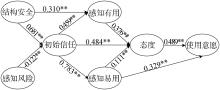
"
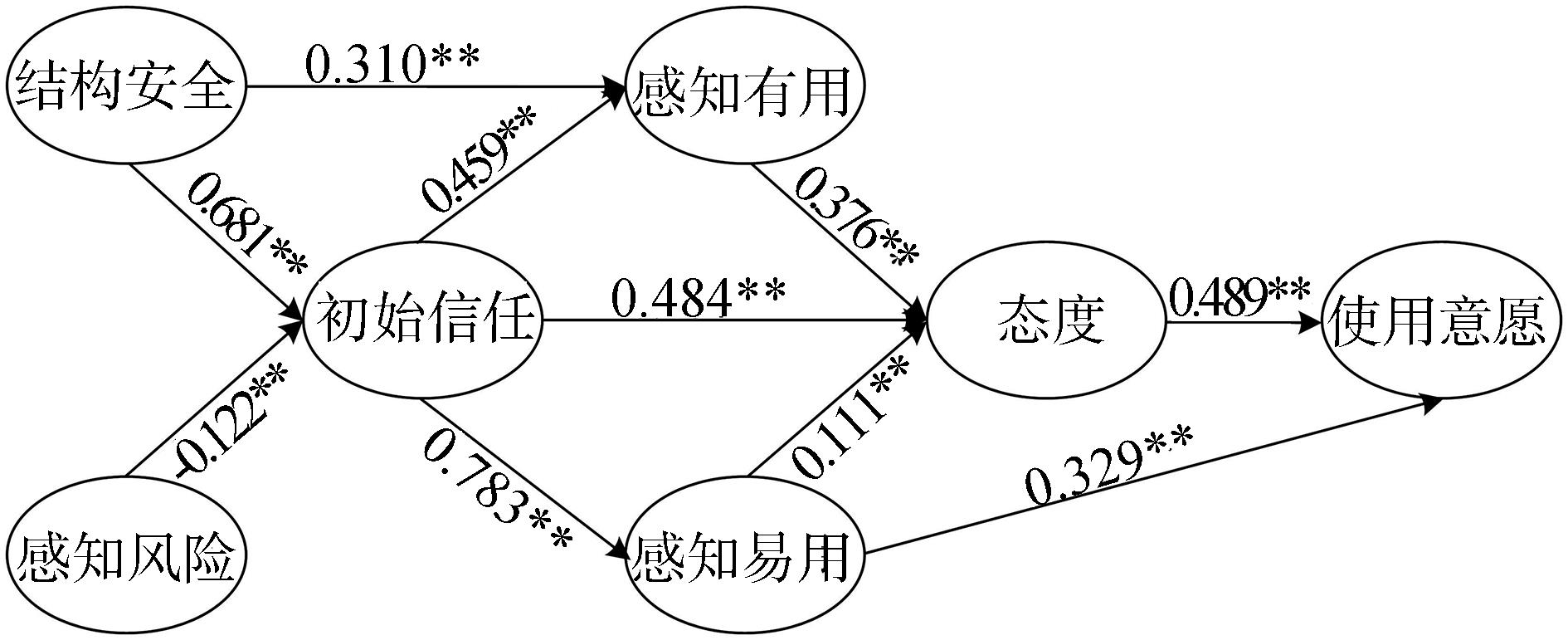
"
常用 指标 | 卡方自由度比χ2/df | GFI | RMSEA | RMR | CFI | NFI | NNFI |
|---|---|---|---|---|---|---|---|
判断 标准 | <3,很好 | >0.9 | <0.10 | <0.05 | >0.9 | >0.9 | >0.9 |
| 数值 | 1.812 | 0.937 | 0.045 | 0.029 | 0.984 | 0.965 | 0.981 |
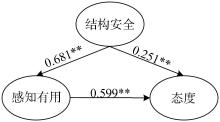
"
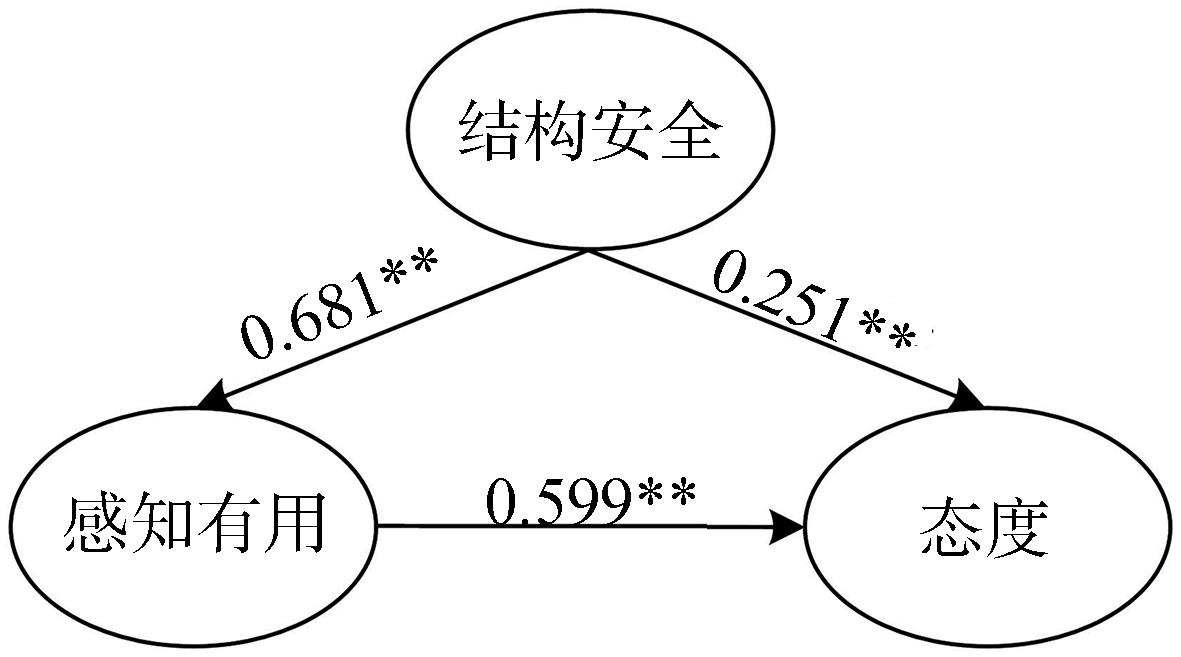
"
常用 指标 | 卡方自由度比χ2/df | GFI | RMSEA | RMR | CFI | NFI | NNFI |
|---|---|---|---|---|---|---|---|
判断 标准 | <5,可接受 | >0.9 | <0.10 | <0.05 | >0.9 | >0.9 | >0.9 |
| 数值 | 3.418 | 0.950 | 0.083 | 0.018 | 0.976 | 0.967 | 0.964 |
"
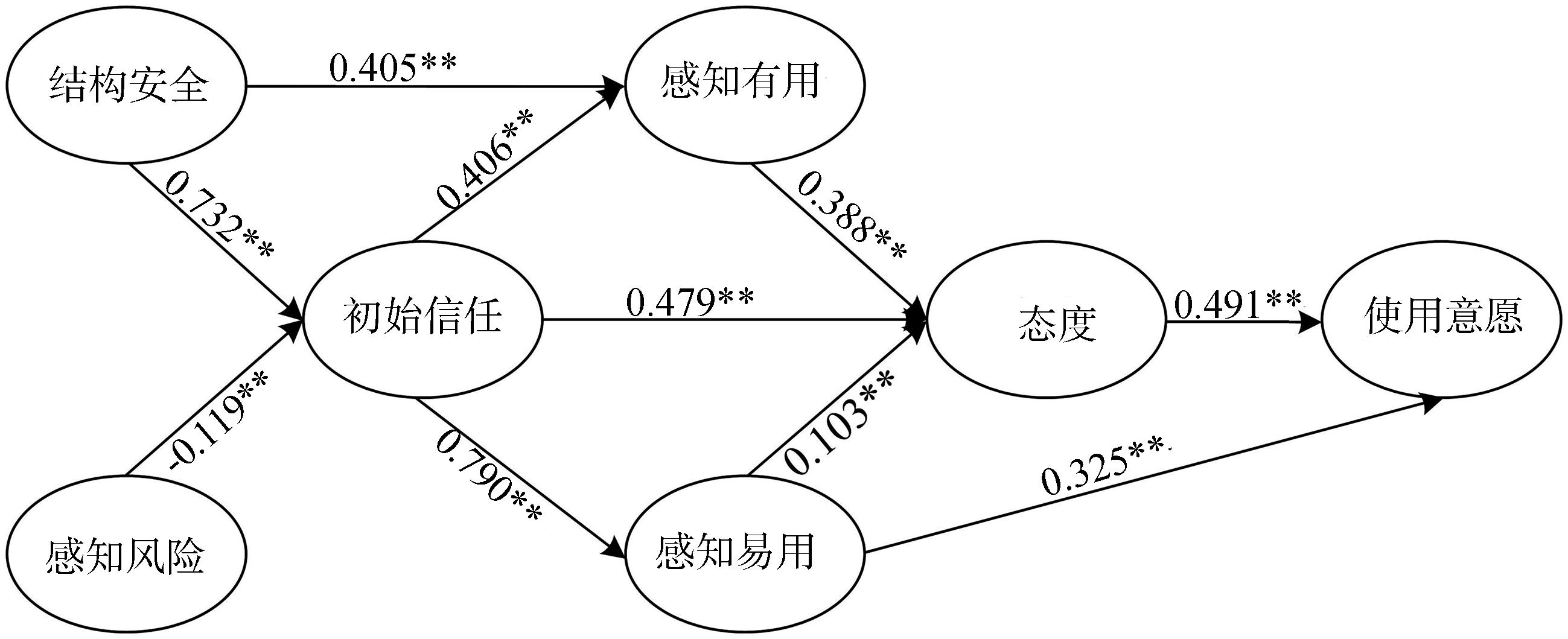
"
常用 指标 | 卡方自由度比χ2/df | GFI | RMSEA | RMR | CFI | NFI | NNFI |
|---|---|---|---|---|---|---|---|
判断 标准 | <5,可接受 | >0.9 | <0.10 | <0.05 | >0.9 | >0.9 | >0.9 |
| 数值 | 3.002 | 0.941 | 0.051 | 0.029 | 0.978 | 0.968 | 0.974 |
"
| 感知风险 | 名称 | 因子载荷系数 | ||||
|---|---|---|---|---|---|---|
| 因子1 | 因子2 | 因子3 | 因子4 | 因子5 | ||
极端天气 环境污染 | 我担心恶劣天气会对飞行汽车产生严重威胁 | 0.768 | 0.239 | 0.281 | 0.287 | 0.257 |
| 我担心飞行汽车在极端天气环境中的安全性问题 | 0.799 | 0.273 | 0.259 | 0.218 | 0.246 | |
| 我担心飞行汽车难以应对复杂的天气情况 | 0.792 | 0.263 | 0.287 | 0.310 | 0.210 | |
| 我担心飞行汽车会压缩鸟类的生存空间 | 0.789 | 0.268 | 0.307 | 0.221 | 0.176 | |
| 我担心飞行汽车会恶化鸟类的生存环境 | 0.796 | 0.249 | 0.302 | 0.253 | 0.222 | |
| 我担心飞行汽车会威胁野生动物,导致城市鸟类数量减少 | 0.768 | 0.203 | 0.338 | 0.262 | 0.241 | |
| 电池安全 | 我担心飞行汽车的电池安全水平 | 0.281 | 0.777 | 0.241 | 0.310 | 0.180 |
| 我担心电池管理系统难以保证电池安全 | 0.269 | 0.810 | 0.238 | 0.306 | 0.211 | |
| 我担心电池管理系统难以确保飞行汽车安全着陆 | 0.276 | 0.828 | 0.216 | 0.180 | 0.235 | |
| 噪声污染 | 飞行汽车飞行时,会加剧城市的噪声污染 | 0.347 | 0.244 | 0.796 | 0.181 | 0.260 |
| 飞行汽车飞行时,会产生噪声而扰民 | 0.375 | 0.250 | 0.792 | 0.226 | 0.235 | |
| 飞行汽车飞行时,会使城市变得吵闹不堪 | 0.387 | 0.243 | 0.780 | 0.174 | 0.202 | |
| 坠落安全 | 我担心飞行汽车坠落地面时,飞行汽车会伤害到地面的行人 | 0.352 | 0.348 | 0.187 | 0.750 | 0.254 |
| 我担心飞行汽车坠落地面引发电池爆炸等严重事故 | 0.429 | 0.356 | 0.217 | 0.687 | 0.268 | |
| 我担心飞行汽车坠落地面时,飞行汽车会伤害到地面的车辆 | 0.377 | 0.334 | 0.279 | 0.720 | 0.273 | |
| 交通运行 | 大量飞行汽车在空中飞行时,我担心它们之间会发生碰撞 | 0.378 | 0.334 | 0.311 | 0.315 | 0.677 |
| 大量飞行汽车在空中飞行时,我担心会发生空中交通拥堵 | 0.321 | 0.286 | 0.330 | 0.327 | 0.715 | |
| 大量飞行汽车在空中飞行时,我担心空中交通管理会变得极为困难 | 0.444 | 0.331 | 0.352 | 0.264 | 0.608 | |
| 特征根值(旋转后) | 5.234 | 3.165 | 3.049 | 2.573 | 2.154 | |
| 方差解释率(旋转后) | 29.077% | 17.584% | 16.940% | 14.293% | 11.968% | |
| 累积方差解释率(旋转后) | 29.077% | 46.661% | 63.601% | 77.894% | 89.862% | |
| KMO值 | 0.947 | |||||
| p 值 | 0.000 | |||||
"
| 测评年份 | 乘员保护平均得分 | 行人保护平均得分 |
|---|---|---|
| 2024年(19辆) | 91.65% | 74.67% |
| 2023年(16辆) | 91.95% | 73.38% |
| 2022年(15辆) | 84.16% | 72.13% |
| 2021年(32辆) | 91.28% | 72.49% |
| 2020年(26辆) | 91.42% | 72.38% |
| 2019年(30辆) | 88.53% | 70.39% |
| 2018年(14辆) | 81.89% | 65.45% |
| [1] | 张新钰, 荣松松, 李骏, 等. 智能飞行汽车关键技术及发展趋势[J]. 中国科学: 技术科学, 2024, 54(4): 601-624. |
| ZHANG Xinyu, RONG Songsong, LI Jun, et al. State-of-the-art and technical trends of intelligent flying cars [J]. Scientia Sinica(Technologica), 2024, 54(4): 601-624. | |
| [2] | 刘文学, 侯聪, 杨亚联, 等. 面向城市空中交通的电动飞行汽车关键性能指标分析[J/OL]. 机械工程学报: .http: //kns.cnki.net/kcms/detail/11.2187.TH.20240229.0854.002.html,1-19 [2024-12-30]. |
| LIU Wenxue, HOU Cong, YANG Yalian, et al. Analysis of key performance metrics of electric flying cars for urban air mobility [J/OL]. Journal of Mechanical Engineering: http: //kns.cnki.net/kcms/detail/11.2187.TH.20240229.0854.002.html,1-19 [2024-12-30]. | |
| [3] | 李颖, 王荣煊, 万成麟, 等. 分体式飞行汽车立体环境感知系统设计及试验研究[J]. 机械工程学报, 2024, 60(10): 102-111. |
| LI Ying, WANG Rongxuan, WAN Chenglin, et al. Design and experiment research of 3D environmental perception system for split-type flying vehicle[J]. Journal of Mechanical Engineering, 2024, 60(10): 102-111. | |
| [4] | 王芳, 白傑, 杨丽平, 等. 探索飞行汽车通勤新模式的城市空中交通发展分析[J]. 北京理工大学学报, 2023, 43(7): 665-675. |
| WANG Fang, BAI Jie, YANG Liping, et al. An overview on development of urban air traffic with a new mode of flying car commuting [J]. Transactions of Beijing Institute of Technology, 2023, 43(7): 665-675. | |
| [5] | UPHAM P, OLTRA C, BOSO A. Towards a cross-paradigmatic framework of the social acceptance of energy systems[J]. Energy Research & Social Science, 2015, 8: 100-112. |
| [6] | WÜSTENHAGEN R, WOLSINK M, BÜRER M J. Social acceptance of renewable energy innovation: an introduction to the concept[J]. Energy Policy, 2007, 35(5): 2683-2691. |
| [7] | ROBIN K, TOBIAS B, LILIANN F. Drones for parcel and passenger transportation: a literature review - science direct[J].Transportation Research Interdisciplinary Perspectives, 2020,4. |
| [8] | 赵传林, 靳思缘, 武海娟, 等.自动代客泊车接受度及停车选择行为影响因素分析[J]. 科学技术与工程,2023,23(35): 15259-15268. |
| ZHAO Chuanlin, JIN Siyuan, WU Haijuan, et al. Influence factors of automated valet parking acceptance and parking choice behavior [J]. Science Technology and Engineering, 2023, 23(35): 15259-15268. | |
| [9] | 刘志伟, 刘建荣. 数字鸿沟背景下老年人对自动驾驶汽车接受度[J]. 交通运输系统工程与信息, 2023, 23(2): 168-175. |
| LIU Zhiwei, LIU Jianrong. Elderly's acceptance of autonomous vehicles in context of digital divide [J]. Journal of Transportation Systems Engineering and Information Technology, 2023, 23(2): 168-175. | |
| [10] | 霍治方, 刘刚, 樊正德. 中国公众对新兴技术采纳的影响机理研究——基于自动驾驶汽车社会实验调查的微观证据[J/OL]. 科学学研:https: //doi.org/10.16192/j.cnki.1003-2053.20240723.001,1-20 [2024-12-31]. |
| HUO Zhifang, LIU Gang, FAN Zhengde. Research on the influence mechanism of the Chinese public on the adoption of emerging technologies -- based on the social experimental survey of self-driving cars micro evidence of investigation [J/OL]. Studies in Science of Science: https: //doi.org/10.16192/j.cnki.1003-2053.20240723.001, 1-20 [2024-12-31]. | |
| [11] | Al HADDAD C, CHANIOTAKIS E, STRAUBINGER A, et al.Factors affecting the adoption and use of urban air mobility[J].Transportation Research Part A: Policy and Practice, 2020, 132. |
| [12] | DAVIS F D, BAGOZZI R P, WARSHAW P R. User acceptance of computer technology: a comparison of twotheoretical models[J]. Management Science, 1989, 35(8): 982-1003. |
| [13] | SUO Y, LI C, TANG L, et al. Exploring AAM acceptance in tourism: environmental consciousness's influence on hedonic motivation and intention to use[J]. Sustainability, 2024, 16(8): 3324. |
| [14] | KARAMI H, ABBASI M, SAMADZAD M, et al. Unraveling behavioral factors influencing the adoption of urban air mobility from the end user's perspective in Tehran - a developing country outlook[J]. Transport Policy, 2024, 145: 74-84. |
| [15] | YAO E, GUO D, LIU S,et al.The role of technology belief, perceived risk and initial trust in users' acceptance of urban air mobility: an empirical case in China[J].Multimodal Transportation, 2024, 3(4). |
| [16] | KWON H, KIM J, PARK Y. Applying LSA text mining technique in envisioning social impacts of emerging technologies: the case of drone technology[J]. Technovation, 2017, 60-61: 15-28. |
| [17] | YAMIN L, CAUCHARD J. Generative adversarial networks and data clustering for likable drone design[J]. Sensors, 2022, 22(17): 6433. |
| [18] | WANG N, MUTZNER N, BLANCHET K.Societal acceptance of urban drones: a scoping literature review[J].Technology in Society, 2023, 75(Nov.): 1.1-1.21. |
| [19] | EASA. Study on the societal acceptance of urban air mobility in Europe[EB/OL]. https: //www.easa.europa.eu/en/full-report-study-societal-acceptance-urban-air-mobility-europe.2021. |
| [20] | AYDIN B. Public acceptance of drones: knowledge, attitudes, and practice[J]. Technology in Society, 2019, 59: 101180. |
| [21] | ZHANG Y, KAMARGIANNI M. A review on the factors influencing the adoption of new mobility technologies and services: autonomous vehicle, drone, micromobility and mobility as a service[J]. Transport Reviews, 2022, 42(2): 234-259. |
| [22] | KELLERMANN R, FISCHER L. Drones for parcel and passenger transport: a qualitative exploration of public acceptance[J]. Tecnociencia, 2020, 10(2): 106-138. |
| [23] | TAN L K, LIM B C, PARK G, et al. Public acceptance of drone applications in a highly urbanized environment[J]. Technology in Society, 2021, 64: 101462. |
| [24] | WANG N. "Killing two birds with one stone”? a case study of development use of drones[C]. 2020 IEEE International Symposium on Technology and Society (ISTAS), 2020: 339-345. |
| [25] | GARZIA F, BORGHINI F, CASTAGNOLO A, et al. Emotional analysis of safeness and risk perception of drones during the COVID-19 pandemic in Italy[C]. 2021 International Carnahan Conference on Security Technology (ICCST), 2021. |
| [26] | CHEN C, LEON S, RACTHAM P. Will customers adopt last-mile drone delivery services? an analysis of drone delivery in the emerging market economy[J]. Cogent Business & Management, 2022, 9(1): 2074340. |
| [27] | 褚华东,胡凤培,王宇航,等.个体共情能力对不同道德行为取向自动驾驶汽车接受意愿的影响[J].应用心理学,2024,30(3): 203-210. |
| CHU Huadong, HU Fengpei, WANG Yuhang, et al. The influence of individual empathy ability on the willingness to accept self-driving cars with different moral behavior orientations [J]. Chinese Journal of Applied Psychology, 2024, 30(3): 203-210. | |
| [28] | PELAU C, DABIJA D C, ENE I. What makes an AI device human-like? the role of interaction quality, empathy and perceived psychological anthropomorphic characteristics in the acceptance of artificial intelligence in the service industry[J]. Journal of Service Research, 2021, 38(7): 24-32. |
| [29] | WANG N, TIAN H, ZHU S, et al. Analysis of public acceptance of electric vehicle charging scheduling based on the technology acceptance model[J]. Energy, 2022, 258: 124804. |
| [30] | 涂然,薛杉,蒋思雨,等.基于技术接受模型的生态驾驶诱导辅助系统认知接受度[J].同济大学学报(自然科学版),2024,52(4): 592-603. |
| TU Ran, XUE SHAN, JIANG Siyu, et al. Drivers' acceptance of eco-driving guidance assistance system based on technology acceptance model [J]. Journal of Tongji University(Natural Science), 2024, 52(4): 592-603. | |
| [31] | 曾超, 褚家亮, 王嵩, 等. 基于TAM-CPV模型的共享电单车持续使用意愿分析[J]. 重庆交通大学学报(自然科学版), 2024, 43(6): 64-70. |
| ZENG Chao, CHU Jialiang, WANG Song, et al. Willingness to continue using shared electric bicycle based on TAM-CPV model[J]. Journal of Chongqing Jiaotong University(Natural Science), 2024, 43(6): 64-70. | |
| [32] | YOUSAFZAI S Y, FOXALL G R, PALLISTER J G. Technology acceptance: a meta-analysis of the TAM: part 1[J]. Journal of Modelling in Management, 2007, 2(3): 251-280. |
| [33] | 邹铁方, 李艳春, 刘朱紫, 等. 基于车辆运动控制的人地碰撞损伤防护新技术接受度研究[J]. 铁道科学与工程学报, 2022, 19(12): 3806-3817. |
| ZOU Tiefang, LI Yanchun, LIU Zhuzi, et al. Study on the acceptance of new technology for protecting pedestrian-ground contact injury based on vehicle motion control [J]. Journal of Railway Science and Engineering, 2022, 19(12): 3806-3817. | |
| [34] | 李振龙, 邢冠仰, 李佳, 等. 基于扩展TAM的车路协同系统驾驶人接受度研究[J]. 中国公路学报, 2021, 34(7): 188-200. |
| LI Zhenlong, XING Guanyang, LI Jia, et al. Dricer’s acceptance of cooperative vehicle infrastructure system based on extended TAM[J]. China Journal of Highway and Transport, 2021, 34(7): 188-200. | |
| [35] | ZHANG T, TAO D, QU X, et al. The roles of initial trust and perceived risk in public’s acceptance of automated vehicles [J]. Transportation Research Part C: Emerging Technologies, 2019, 98: 207-220. |
| [36] | YUEN K F, MA F, WANG X, et al. The role of trust in influencing consumers’ adoption of automated vehicles: an application of the health belief model[J]. International Journal of Sustainable Transportation, 2021, 15(11): 837-849. |
| [37] | ZHANG T, TAO D, QU X, et al. Automated vehicle acceptance in China: social influence and initial trust are key determinants[J]. Transportation Research Part C: Emerging Technologies, 2020, 112: 220-233. |
| [38] | 章锡俏, 毛伟, 洛玉乐, 等. 车路协同系统接受度建模及性别差异分析[J]. 中国公路学报, 2021, 34(7): 177-187. |
| ZHANG Xiqiao, MAO Wei, LUO Yule, et al. Modeling and gender difference analysis of acceptance of cooperative vehicle infrastructure system [J]. China Journal of Highway and Transport, 2021, 34(7): 177-187. | |
| [39] | HOFF K A, BASHIR M.Trust in automation: integrating empirical evidence on factors that influence trust[J].Human Factors The Journal of the Human Factors and Ergonomics Society, 2015, 57(3): 407-434. |
| [40] | 景鹏, 王伟, 吴麟麟. 老年人对自动驾驶汽车接受度研究[J]. 中国公路学报, 2021, 34(6): 158-171. |
| JING Peng, WANG Wei, WU Linlin. Acceptance of autonomous vehicles for the Elderly [J]. China Journal of Highway and Transport, 2021, 34(6): 158-171. | |
| [41] | 马剑, 张艺, 刘杨, 等. 考虑恐高心理的磁浮列车乘客疏散模型与分析[J]. 安全与环境学报, 2020, 20(5): 1822-1828. |
| MA Jian, ZHANG Yi, LIU Yang, et al. Passenger evacuation model and analysis of maglev train considering fear of height psychology [J]. Journal of Safety and Environment, 2020, 20(5): 1822-1828. | |
| [42] | 张艺, 马剑, 罗倩, 等. 走行高度对疏散人员运动特征影响研究[J]. 中国安全科学学报, 2020, 30(4): 135-140. |
| ZHANG Yi, MA Jian, LUO Qian, et al. Influence of walking height on motion features of evacuees [J]. China Safety Science Journal, 2020, 30(4): 135-140. | |
| [43] | 吴营杰. 虚拟现实场景下的人体运动姿态分析[D]. 杭州: 杭州电子科技大学, 2022. |
| WU Yingjie. Analysis of human motion posture in virtual reality [D]. Hangzhou: Hangzhou Dianzi University, 2022. | |
| [44] | NAN Z, ZACHARY P, JUNG L,et al.Virtual reality exercise for anxiety and depression: a preliminary review of current research in an emerging field[J].J Clin Med, 2018, 7(3): 42. |
| [45] | 俞洋钊, 何炳蔚, 白丽英, 等. 基于虚拟现实和动态加权决策融合的恐高情绪识别[J]. 计算机系统应用, 2023, 32(7): 35-46. |
| YU Yangzhao, HE Bingwei, BAI Liying, et al. Fear of heights emotion recognition based on virtual reality and dynamic weighted decision fusion [J]. Computer Systems & Application, 2023, 32(7): 35-46. | |
| [46] | 王凡. 多伦多共情问卷(TEQ)在大学生中的修订与初步应用[D]. 贵阳: 贵州师范大学, 2019. |
| WANG Fan. The revision of toronto empathy questionnaire and preliminary application in college students [D]. Guiyang : Guizhou Normal University, 2019. | |
| [47] | WISPÉ L. History of the concept of empathy[C]//EISENBERG N, STRAYER J, et al. Empathy and its development. New York: Cambridge University Press, 1987: 17-37. |
| [48] | HOFFMAN M L. Empathy and moral development[M]. Cambridge: Cambridge University Press, 2002. |
| [49] | EISENBERG N, STRAYER J. Critical issues in the study of empathy[C]//EISENBERG N, STRAYER J, et al. Empathy and its development. New York: Cambridge University Press, 1987: 3-13. |
| [50] | ICKES W. Empathy accuracy[J]. Journal of Personality, 1993, 61: 587-610. |
| [51] | 刘聪慧, 王永梅, 俞国良, 等. 共情的相关理论评述及动态模型探新[J]. 心理科学进展, 2009, 17(5): 964-972. |
| LIU Conghui, WANG Yongmei, YU Guoliang, et al. Related theories and exploration on dynamic model of empathy [J]. Advances in Psychological Science, 2009, 17(5): 964-972. | |
| [52] | VISWANATHAN V, EPSTEIN A, CHIANG Y,et al. The challenges and opportunities of battery-powered flight[J].Nature, 2022, 603:E30. |
| [53] | 张扬军, 钱煜平, 诸葛伟林, 等. 飞行汽车的研究发展与关键技术[J]. 汽车安全与节能学报, 2020, 11(1): 1-16. |
| ZHANG Yangjun, QIAN Yuping, ZHUGE Weilin, et al. Progress and key technologies of flying cars[J]. Journal of Automotive Safety and Energy, 2020, 11(1): 1-16. | |
| [54] | 王谭, 陈纯, 赵德力, 等. 面向乘员安全的飞行汽车整机设计[J]. 包装工程, 2023, 44(24): 247-257. |
| WANG Tan, CHEN Chun, ZHAO Deli, et al. Overall design of flying car for passenger safety [J]. Packaging Engineering, 2023, 44(24): 247-257. | |
| [55] | 《中国公路学报》编辑部. 中国汽车工程学术研究综述·2023[J]. 中国公路学报, 2023, 36(11): 1-192. |
| Editorial Department of China Journal of Highway and Transport. Review on China's automotive engineering research progress. 2023[J]. China Journal of Highway and Transport, 2023, 36(11): 1-192. | |
| [56] | 周青, 夏勇, 聂冰冰, 等. 汽车碰撞安全与轻量化研发中的若干挑战性课题[J]. 中国公路学报, 2019, 32(7): 1-14. |
| ZHOU Qing, XIA Yong, NIE Bingbing, et al. Challenging topics in research of vehicle crash safety and lightweighting[J]. China Journal of Highway and Transport, 2019, 32(7): 1-14. | |
| [57] | 胡林, 谷子逸, 王丹琦, 等. 汽车安全性测评规程现状及趋势展望[J]. 汽车工程, 2024, 46(2): 187-200,240. |
| HU Lin, GU Ziyi, WANG Danqi, et al. Current status and trend of automotive safety procedures/programs[J]. Automotive Engineering, 2024, 46(2): 187-200,240. | |
| [58] | 李海岩, 杨振, 贺丽娟, 等. 全球NCAP行人保护测评的对比研究及展望[J]. 汽车工程, 2021, 43(5): 730-738. |
| LI Haiyan, YANG Zhen, HE Lijuan, et al. Comparative study and prospect of pedestrian protection assessment in global NCAP[J]. Automotive Engineering, 2021, 43(5): 730-738. | |
| [59] | MOKHTARIAN P. If telecommunication is such a good substitute for travel, why does congestion continue to get worse?[J]. Transportation Letters, 2009, 1(1): 1-17. |
| [60] | DOOLE M, ELLERBROEK J, HOEKSTRA J. Drone delivery: urban airspace traffic density estimation[C]. Presented at the 8th SESAR Innovation Days Conference, Brussels, 2018. |
| [61] | DLR. DLR blueprint: concept for urban airspace integration[EB/OL] . German Aerospace Center (DLR) , https: //www.dlr.de/en/ |
| media/publications/miscellaneous/2017/dlr-blueprint-concept-for-urban-airspace-integration_2933, 2017. | |
| [62] | ANBAROĞLU B. Parcel delivery in an urban environment using unmanned aerial systems: a vision paper[A]. ISPRS Annals of Photogrammetry, Remote Sensing and Spatial Information Sciences, 2017, IV-4/W4: 73-79. |
| [63] | LI H, WU C, CHU D, et al. Combined trajectory planning and tracking for autonomous vehicle considering driving styles [J]. IEEE Access, 2021, 9: 9453-9463. |
| [64] | ABDEL-ATY M, DING S.A matched case-control analysis of autonomous vs human-driven vehicle accidents[J].Nature Communications, 2024.DOI:10.1038/s41467-024-48526-4. |
| [65] | LIU Q, WANG X, WU X,et al.Crash comparison of autonomous and conventional vehicles using pre-crash scenario typology[J]. Accident Analysis & Prevention, 2021, 159: 106281. |
| [66] | WICKI M.How do familiarity and fatal accidents affect acceptance of self-driving vehicles?[J].Transportation Research, Part F: Traffic Psychology and Behaviour, 2021(Nov.): 83F. |
| [67] | JING P, WANG B, CAI Y, et al. What is the public really concerned about the AV crash? insights from a combined analysis of social media and questionnaire survey[J]. Technological Forecasting and Social Change, 2023, 189: 122371. |
| [1] | Quan Zhou,Qing Jia,Chao Xia,Reng Mo,Huanxia Wei,Yingchao Zhang,Qiangqiang Hu,Zhigang Yang. Numerical Study on Aerodynamic Characteristics of Electric Vertical Take-off and Landing Aircraft with Lift-and-Cruise Configuration [J]. Automotive Engineering, 2025, 47(11): 2103-2112. |
|
||
