

汽车工程 ›› 2025, Vol. 47 ›› Issue (12): 2467-2482.doi: 10.19562/j.chinasae.qcgc.2025.12.019
• • 上一篇
吕辉1,严伟杰1,黄晓婷2( )
)
收稿日期:2025-03-07
修回日期:2025-05-08
出版日期:2025-12-25
发布日期:2025-12-19
通讯作者:
黄晓婷
E-mail:huangxt_gcu@126.com
基金资助:
Hui Lü1,Weijie Yan1,Xiaoting Huang2()
Received:2025-03-07
Revised:2025-05-08
Online:2025-12-25
Published:2025-12-19
Contact:
Xiaoting Huang
E-mail:huangxt_gcu@126.com
摘要:
针对复杂汽车结构可靠性分析中计算精度不足和求解效率低的问题,提出了一种基于极限状态逼近和响应标准化的主动学习Kriging可靠性分析方法。首先,基于高斯分布假设的概率密度函数和改善期望准则,推导了极限状态逼近程度发生改善时的距离期望,并结合当前最大距离提出了预期改进指数;然后,考虑了模型预测值的不确定性,结合Kriging标准差提出了修正的预期改进学习函数,用于自适应增加训练样本;接着,引入一种响应标准化方法优化收敛阈值,有效缓解有量纲学习函数收敛的不稳定性问题;最后,通过4个应用算例验证所提出方法的有效性。结果表明,所提方法能以较少的功能函数调用次数实现对极限状态曲面的较强拟合,在多个可靠性分析场景中具有良好的适用性。
吕辉,严伟杰,黄晓婷. 基于主动学习Kriging的结构可靠性分析方法及应用[J]. 汽车工程, 2025, 47(12): 2467-2482.
Hui Lü,Weijie Yan,Xiaoting Huang. Active Learning Kriging Based Structural Reliability Analysis Method and Application[J]. Automotive Engineering, 2025, 47(12): 2467-2482.
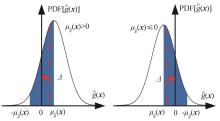
图1
待选点与LSS的距离发生改善的示意图"

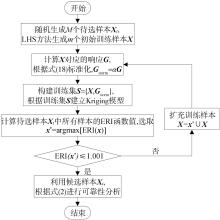
图2
AK-MCS-ERI算法流程"
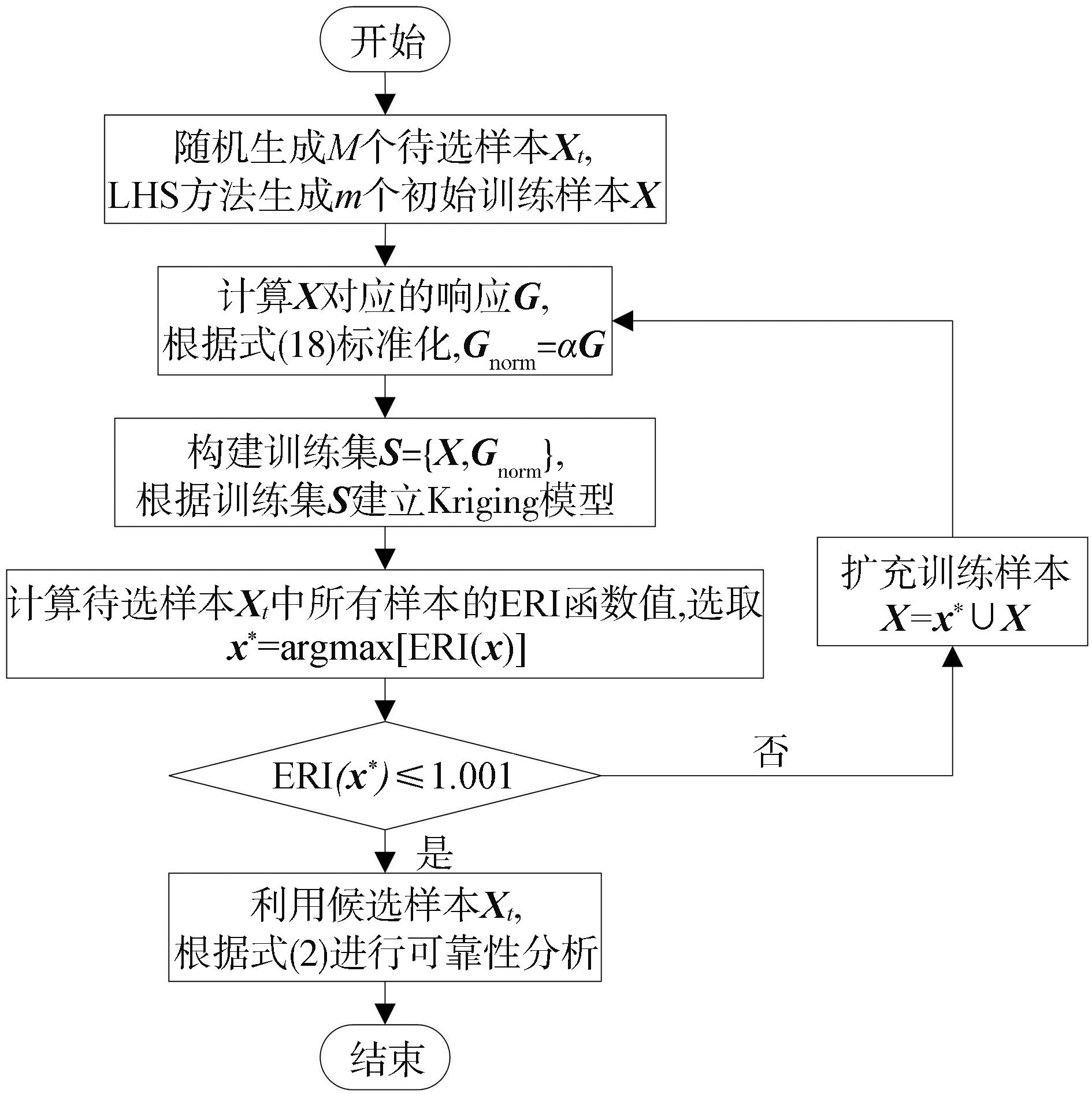
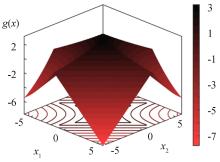
图3
四分支串联系统的函数图像"
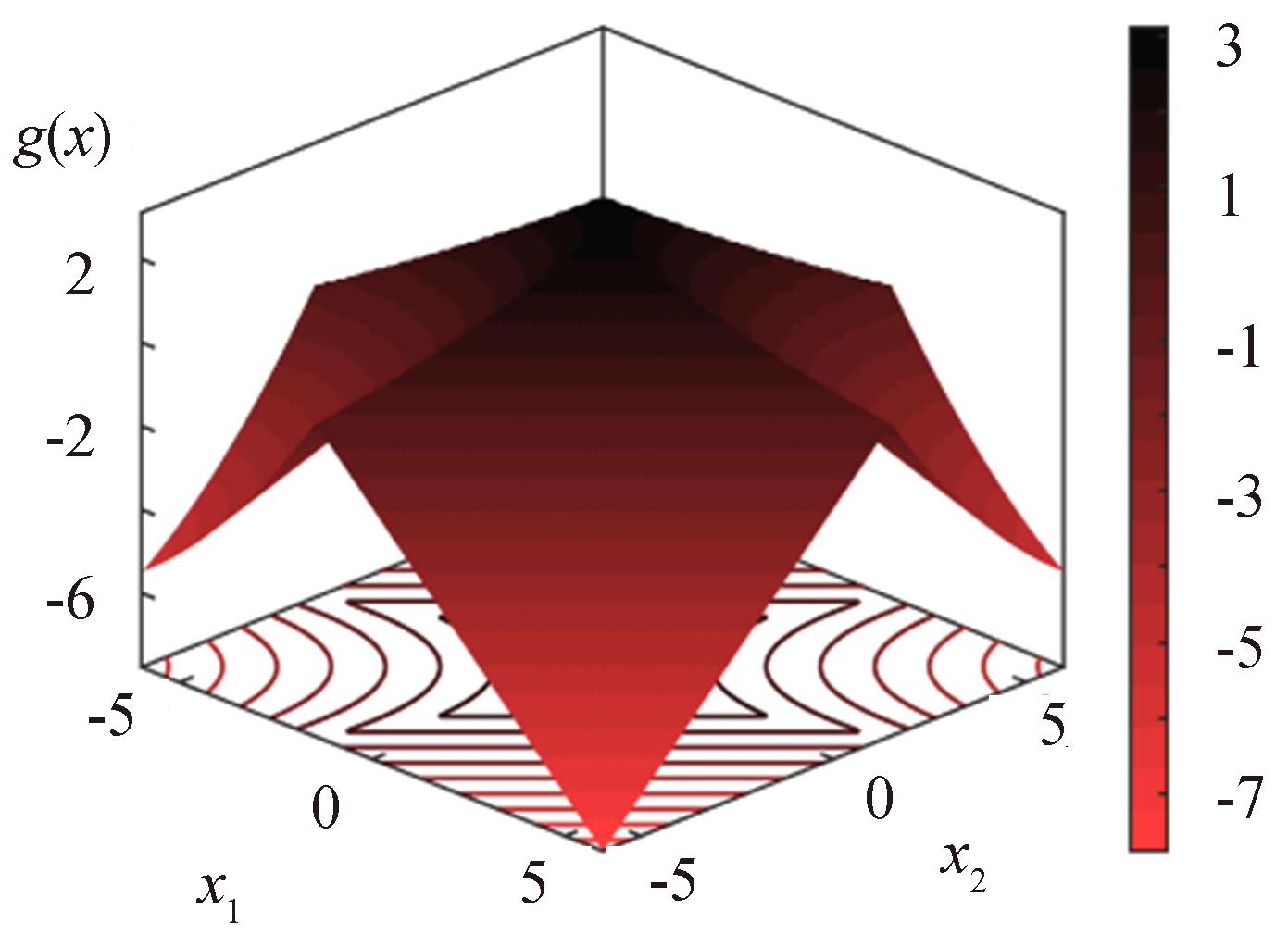
图4
AK-MCS-ERI方法对LSS的拟合"
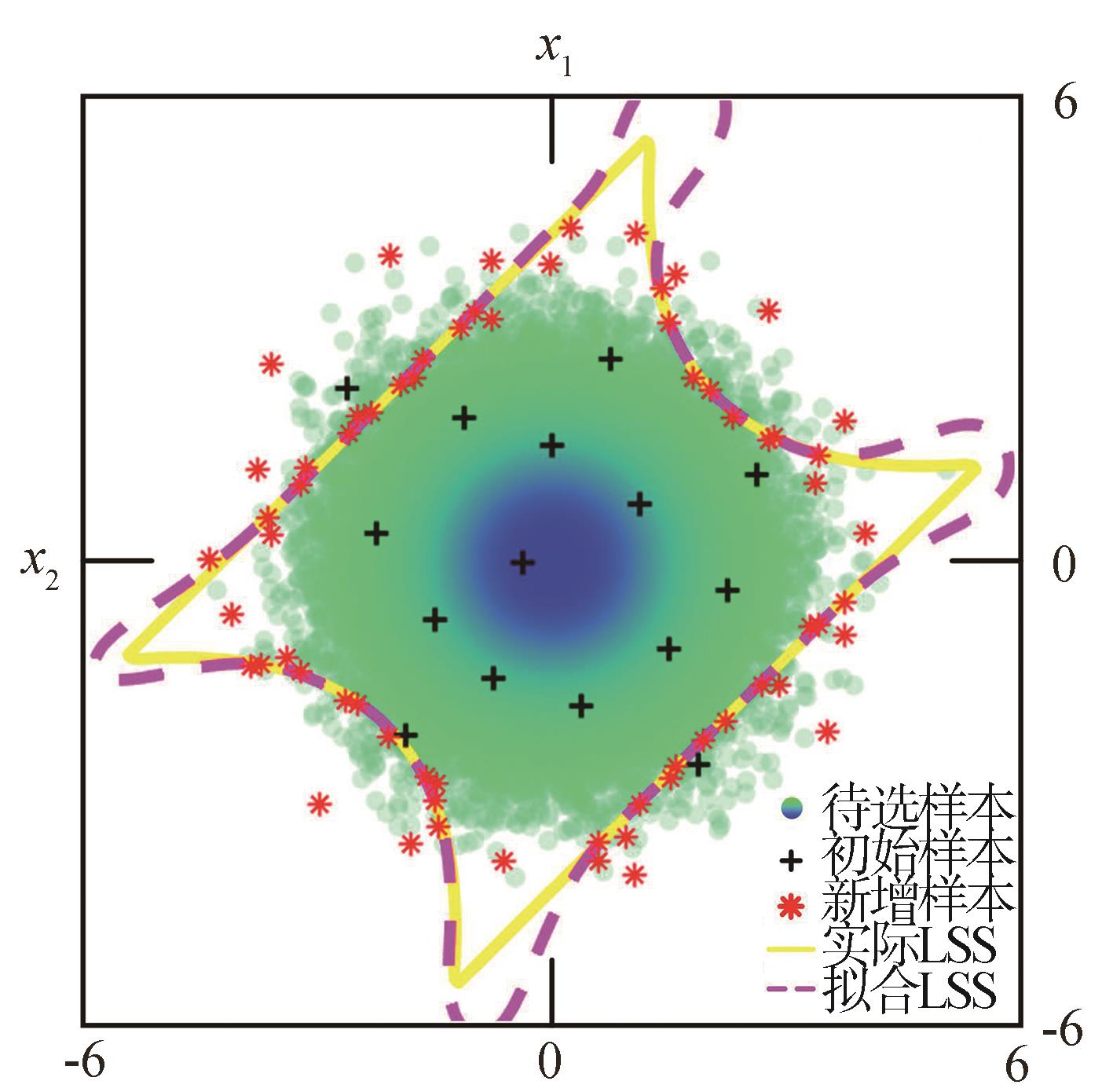
表1
四分支串联系统的可靠性分析结果"
| 方法 | |||||
|---|---|---|---|---|---|
| MCS | 107 | 107 | 4.402 | 0 | 1.504 |
| AK-MCS-ERI | 105 | 15+50.8 | 4.386 | 1.107 | 2.524 |
| AK-MCS-EF | 105 | 15+58.1 | 4.389 | 1.091 | 2.485 |
| AK-MCS-U | 105 | 15+52.8 | 4.388 | 1.115 | 2.541 |
| AK-MCS-H | 105 | 15+49.6 | 4.421 | 1.648 | 3.727 |
| AK-MCS-Hc | 105 | 15+41.2 | 4.678 | 9.255 | 19.78 |
| AK-MCS-ER | 105 | 15+54.7 | 4.389 | 1.118 | 2.547 |
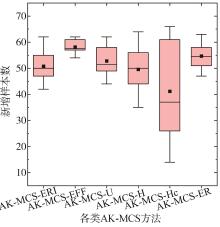
图5
算例1中各方法的新增样本数"
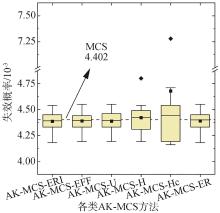
图6
算例1中各方法计算的失效概率结果"
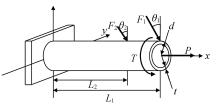
图7
悬臂梁管结构示意图"
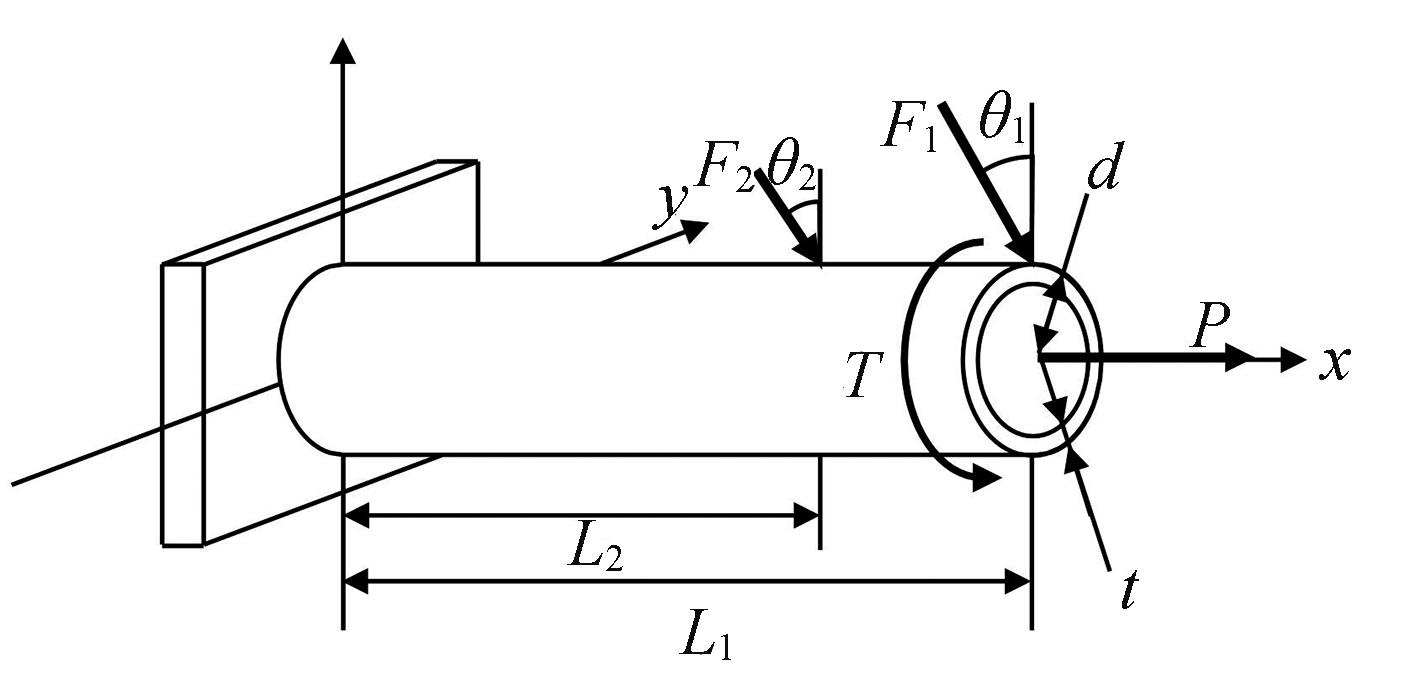
表2
悬臂梁管参数的概率分布"
| 随机参数 | 分布类型 | 参数Ⅰ | 参数Ⅱ |
|---|---|---|---|
| t/mm | 正态分布 | 5 | 0.1 |
| d/mm | 正态分布 | 42 | 0.5 |
| F1, F2/kN | 耿贝尔分布 | 27 | 2.7 |
| T/(N·m) | 正态分布 | 90 | 9 |
| 正态分布 | 220 | 22 | |
| L1/mm | 均匀分布 | 120 | 0.25 |
| L2/mm | 均匀分布 | 60 | 0.25 |
| P/kN | 耿贝尔分布 | 27 | 2.7 |
表3
悬臂梁管的可靠性分析结果"
| 方法 | |||||
|---|---|---|---|---|---|
| MCS | 200 | 107 | 4.662 | 0 | 0.326 7 |
| AK-MCS-ERI | 2 | 30+58.0 | 4.706 | 1.207 | 2.564 1 |
| AK-MCS-EF | 2 | 30+91.7 | 4.700 | 1.298 | 2.761 9 |
| AK-MCS-U | 2 | 30+86.9 | 4.697 | 1.325 | 2.820 4 |
| AK-MCS-H | 2 | 30+37.1 | 4.749 | 1.692 | 3.562 9 |
| AK-MCS-Hc | 2 | 30+34.2 | 4.977 | 6.288 | 12.634 |
| AK-MCS-ER | 2 | 30+108.5 | 4.697 | 1.325 | 2.820 4 |
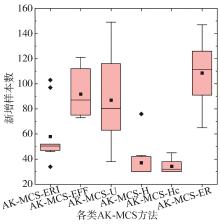
图8
算例2中各方法的新增样本数"
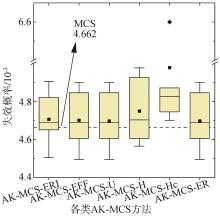
图9
算例2中各方法计算的失效概率结果"
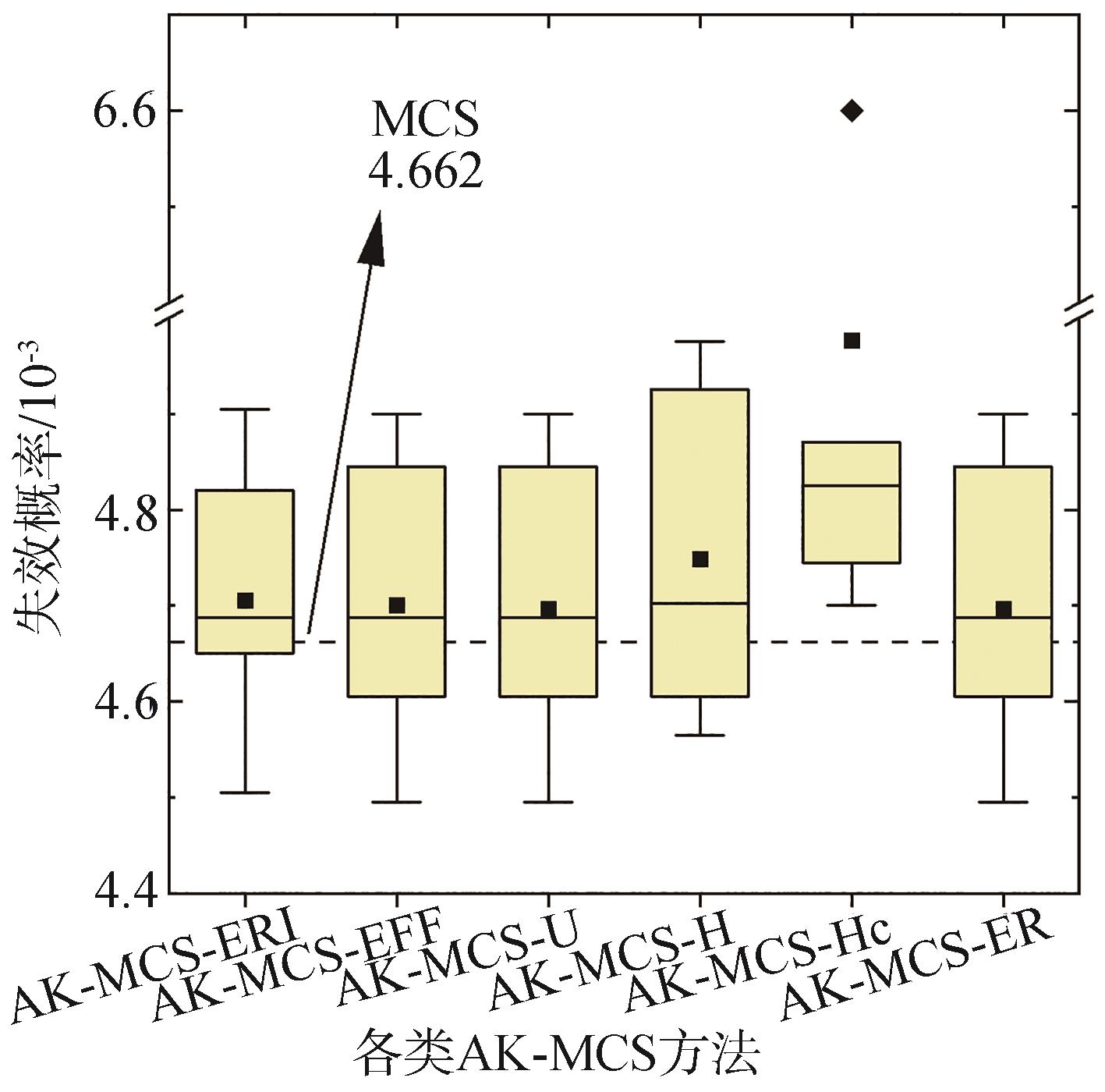
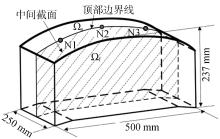
图10
结构-声场耦合模型示意图"
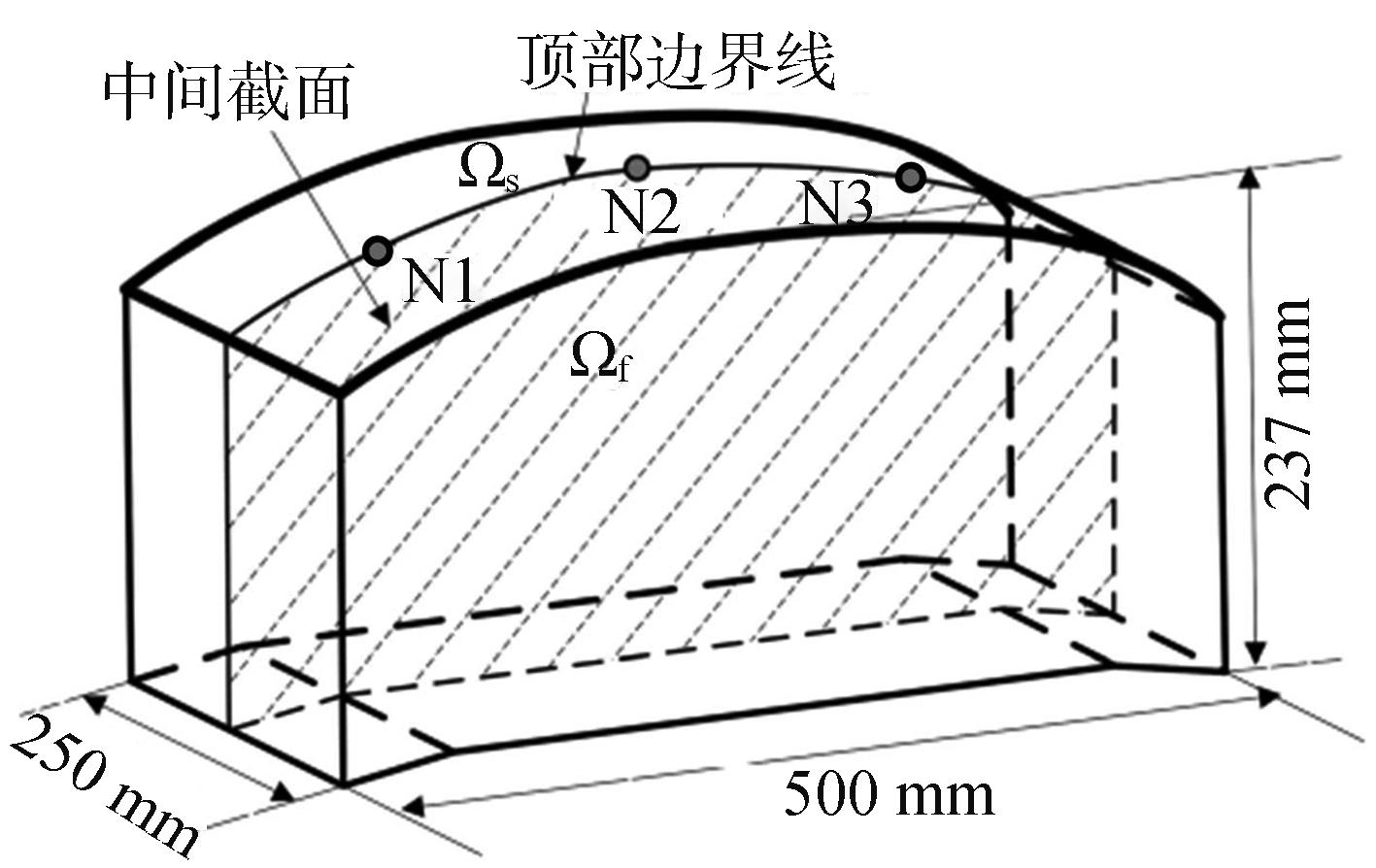
表4
结构-声场耦合模型参数的概率分布"
| 随机参数 | 符号/单位 | 分布类型 | 参数Ⅰ | 参数Ⅱ |
|---|---|---|---|---|
| 激励频率 | f/Hz | 正态分布 | 200 | 6.667 |
| 壳厚 | t/mm | 正态分布 | 2 | 0.066 67 |
| 壳密度 | 正态分布 | 7 850 | 261.7 | |
| 空气密度 | 正态分布 | 1.225 | 0.040 83 | |
| 空气中的声速 | u/(m·s-1) | 正态分布 | 340.5 | 11.35 |
| 弹性模量 | E/MPa | 均匀分布 | 210 | 21 |
| 泊松比 | 均匀分布 | 0.3 | 0.03 | |
| 剪切修正系数 | 均匀分布 | 0.833 3 | 0.083 33 |
表5
结构-声场耦合模型的可靠性分析结果"
| 方法 | 10-2 | 10-2 | |||
|---|---|---|---|---|---|
| MCS | 106 | 106 | 7.911 1 | 0 | 0.341 |
| AK-MCS-ERI | 105 | 29+437.4 | 7.911 0 | 9.601 3 | 1.213 |
| AK-MCS-EF | 105 | 29+223.2 | 8.014 2 | 26.075 | 3.253 |
| AK-MCS-U | 105 | 29+442.5 | 7.911 3 | 9.515 5 | 1.203 |
| AK-MCS-H | 105 | 29+0 | |||
| AK-MCS-Hc | 105 | 29+0 | |||
| AK-MCS-ER | 105 | 29+268.2 | 7.892 2 | 10.120 | 1.282 |
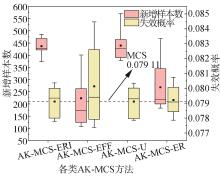
图 11
算例3中各方法的可靠性分析结果"
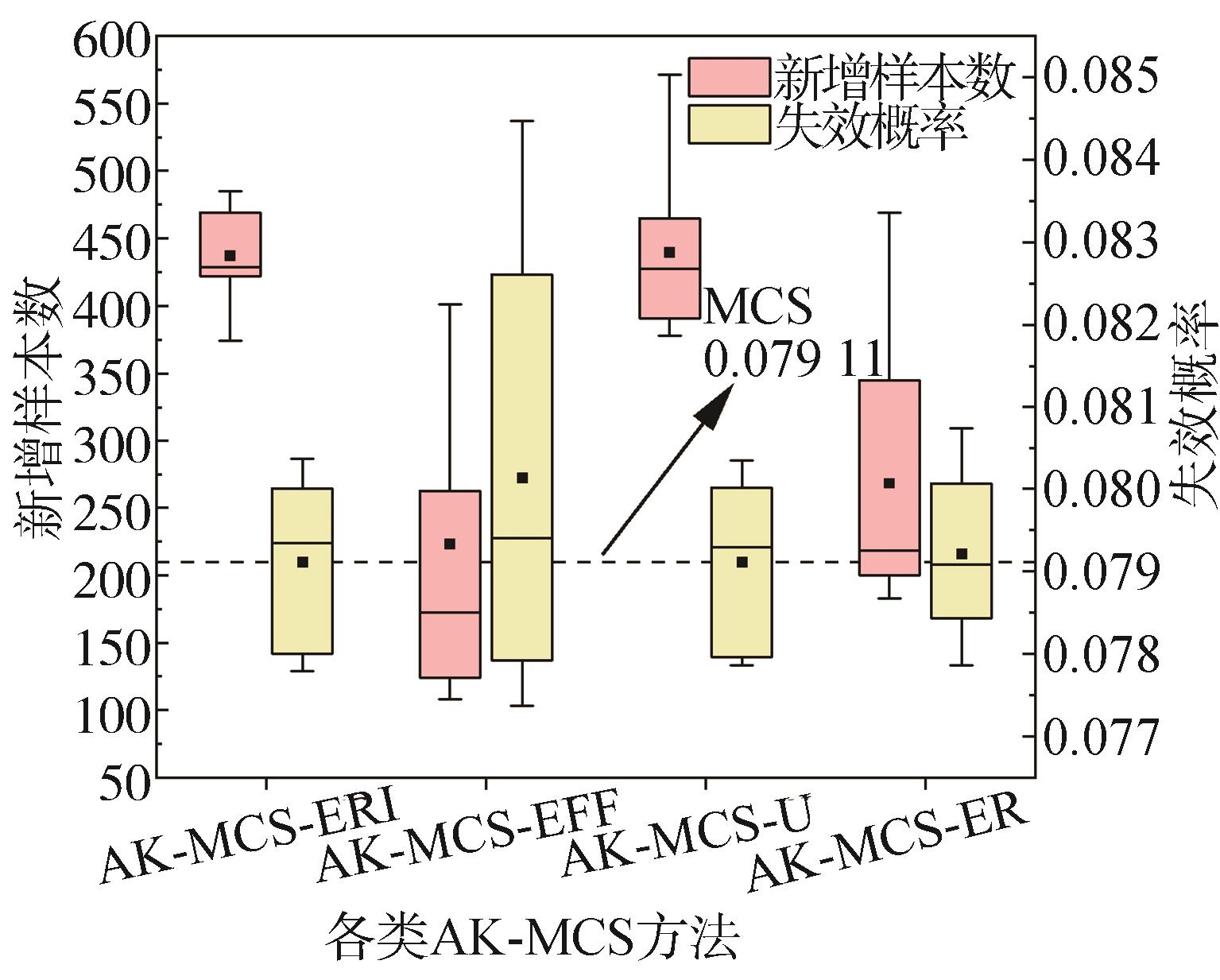
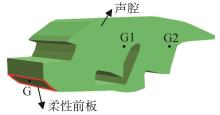
图12
汽车乘员舱模型"
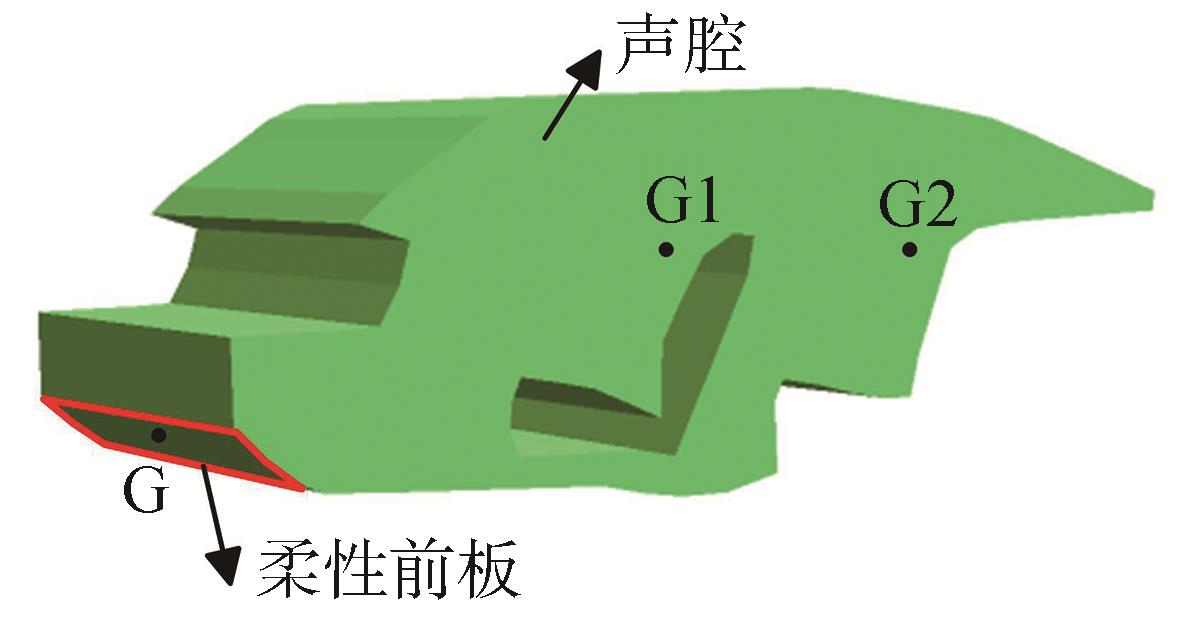
表6
汽车乘员舱参数的概率分布"
| 随机参数 | 符号/单位 | 分布类型 | 参数Ⅰ | 参数Ⅱ |
|---|---|---|---|---|
| 简谐力振幅 | F/N | 正态分布 | 10 | 0.333 3 |
| 壳厚 | t/mm | 正态分布 | 2 | 0.066 67 |
| 壳密度 | 正态分布 | 7 850 | 261.7 | |
| 空气密度 | 正态分布 | 1.225 | 0.040 83 | |
空气中的 声速 | u/(m·s-1) | 正态分布 | 340.5 | 0.170 3 |
| 弹性模量 | E/MPa | 均匀分布 | 210 | 21 |
| 泊松比 | 均匀分布 | 0.3 | 0.03 | |
剪切修正 系数 | 均匀分布 | 0.833 3 | 0.083 33 |
表7
汽车乘员舱的可靠性分析结果"
| 方法 | 10-2 | 10-2 | |||
|---|---|---|---|---|---|
| MCS | 106 | 106 | 4.062 0 | 0 | 0.486 |
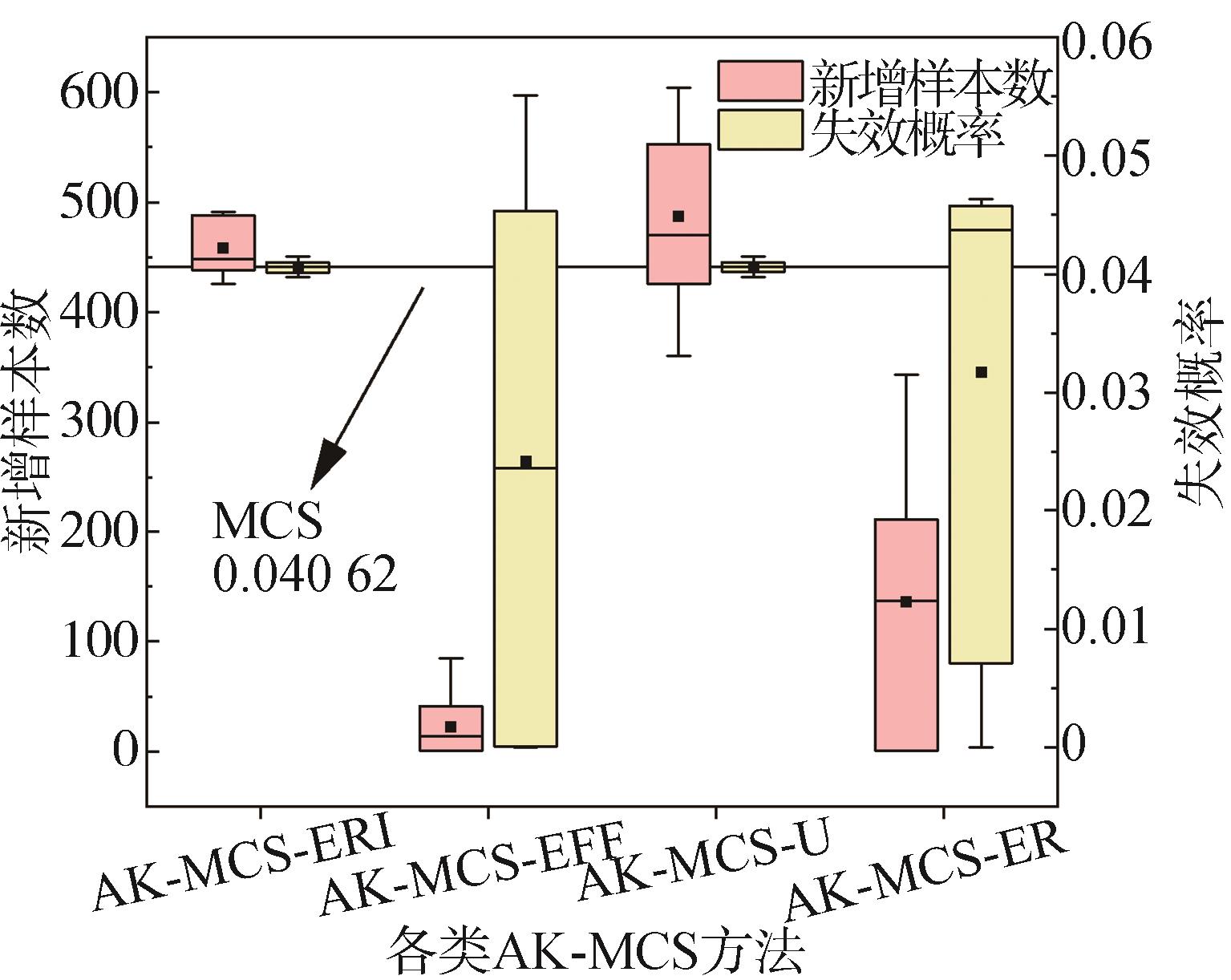
| AK-MCS-ERI | 105 | 29+458.5 | 4.061 7 | 5.438 4 | 1.339 |
| AK-MCS-EF | 105 | 29+22.8 | 2.422 0 | 283.53 | 117.1 |
| AK-MCS-U | 105 | 29+487.4 | 4.062 1 | 5.420 4 | 1.334 |
| AK-MCS-H | 105 | 29+0 | |||
| AK-MCS-Hc | 105 | 29+0 | |||
| AK-MCS-ER | 105 | 29+136.0 | 3.173 0 | 213.17 | 67.18 |
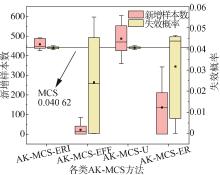
图13
算例4中各方法的可靠性分析结果"
| [1] | CHEN J, CHEN Z, XU Y, et al. Efficient reliability analysis combining kriging and subset simulation with two-stage convergence criterion[J]. Reliability Engineering and System Safety, 2021, 214: 107737. |
| [2] | LÜ H, YU D. Brake squeal reduction of vehicle disc brake system with interval parameters by uncertain optimization[J]. Journal of Sound and Vibration, 2014, 333(26): 7313-7325. |
| [3] | 吕辉, 张家明, 黄晓婷, 等. 基于概率模型和数据驱动的动力总成悬置系统可靠性优化[J]. 汽车工程, 2024, 46(3): 456-463. |
| LÜ H, ZHANG J M, HUANG X T, et al. Reliability optimization for the powertrain mounting system based on probability model and data-driven model[J]. Automotive Engineering, 2024, 46(3): 456-463. | |
| [4] | 陈吉清, 张钰奇, 兰凤崇, 等. 基于主动学习PC-Kriging模型的复杂结构可靠性分析方法[J]. 汽车工程, 2025, 47(2): 383-390. |
| CHEN J Q, ZHANG Y Q, LAN F C, et al. Reliability analysis method of complex structures based on active learning PC-Kriging model[J]. Automotive Engineering, 2025, 47(2): 383-390. | |
| [5] | PAPADIMITRAKIS M, ALEXANDRIDIS A. Active vehicle suspension control using road preview model predictive control and radial basis function networks[J]. Applied Soft Computing, 2022, 120: 108646. |
| [6] | BICHON B J, ELDRED M S, SWILER L P, et al. Efficient global reliability analysis for nonlinear implicit performance functions[J]. AIAA Journal, 2008, 46(10): 2459-2468. |
| [7] | ECHARD B, GAYTON N, LEMAIRE M. AK-MCS: an active learning reliability method combining Kriging and monte Carlo simulation[J]. Structural Safety, 2011, 33(2): 145-154. |
| [8] | LV Z, LU Z, WANG P. A new learning function for Kriging and its applications to solve reliability problems in engineering[J]. Computers and Mathematics with Applications, 2015, 70(5): 1182-1197. |
| [9] | 陈泽权.基于Kriging模型的结构可靠性及全局灵敏度自适应分析方法研究[D]. 长春: 吉林大学, 2023. |
| CHEN Z Q. Research on adaptive analysis method for structural reliability and global sensitivity based on Kriging model[D]. Changchun: Jilin University, 2023. | |
| [10] | KIM M, JUNG Y, LEE M, et al. An expected uncertainty reduction of reliability: adaptive sampling convergence criterion for Kriging-based reliability analysis[J]. Structural and Multidisciplinary Optimization, 2022, 65(7). |
| [11] | KHORRAMIAN K, OUDAH F. New learning functions for active learning Kriging reliability analysis using a probabilistic approach: KO and WKO functions[J]. Structural and Multidisciplinary Optimization, 2023, 66(8): 177. |
| [12] | YANG X F, LIU Y S, GAO Y, et al. An active learning Kriging model for hybrid reliability analysis with both random and interval variables[J]. Structural and Multidisciplinary Optimization, 2015, 51(5): 1003-1016. |
| [13] | 高进,崔海冰,樊涛,等. 一种基于自适应Kriging集成模型的结构可靠性分析方法[J]. 中国机械工程, 2024, 35(1): 83-92. |
| GAO J, CUI H, FAN T, et al. A structural reliability calculation method based on adaptive Kriging ensemble model[J]. China Mechanical Engineering, 2024, 35(1): 83-92. | |
| [14] | 杨旭锋,程鑫,刘泽清. 一种融合交叉熵自适应抽样与ALK模型的可靠性分析方法[J]. 机械工程学报, 2024, 60(16): 73-82. |
| YANG X F, CHENG X, LIU Z. Reliability analysis method combining cross-entropy adaptive sampling and ALK model[J]. Journal of Mechanical Engineering, 2024, 60(16): 73-82. | |
| [15] | XIA B, YU D. An interval random perturbation method for structural‐acoustic system with hybrid uncertain parameters[J]. International Journal for Numerical Methods in Engineering, 2014, 97(3): 181-206. |
| 202502013 车用功率模块液冷板多目标拓扑优化设计研究 2/326 | |
| 202502014 基于分数阶天棚的车辆ISD悬架动态性能分析 2/332 | |
| 202502015 侧倾角对轮胎转偏力学特性影响研究 2/342 | |
| 202502016 BFRP/AA5052胶粘接头力学性能及工艺参数影响研究 2/356 | |
| 202502017 高韧性铝硅镀层热成形钢电阻点焊性能研究 2/367 | |
| 202502018 基于能量法的薄壁管压缩失稳褶皱预测模型 2/376 | |
| 202502019 基于主动学习PC-Kriging模型的复杂结构可靠性分析方法 2/383 | |
| 202503001 车载时间敏感网络路径规划算法研究 3/391 | |
| 202503002 具有多型避障方式的智能车辆路径规划 3/402 | |
| 202503003 基于ChatGLM2大模型的座舱多模态拒识模型研究 3/412 | |
| 202503004 时滞条件下商用车队分布式MPC多目标优化控制 3/418 | |
| 202503005 PolarDet:基于位置与语义信息加权的极坐标BEV端到端3D目标检测算法 3/430 | |
| 202503006 虚实感知数据融合的智能驾驶仿真场景生成方法 3/440 | |
| 202503007 针对降雨模拟方法的机器视觉真实度对比研究 3/449 | |
| 202503008 车辆稳定域描述与求解的一种新方法 3/460 | |
| 202503009 基于混杂模型预测控制的分布式驱动电动汽车AFS/DYC集成控制 3/470 | |
| 202503010 基于多智能体模型预测(AMPC)的车辆横摆稳定性控制 3/481 | |
| 202503011 分布式驱动电动汽车多目标转矩分配策略 3/489 | |
| 202503012 新型耦合式双电机轮毂驱动系统方案设计 3/499 | |
| 202503013 基于路面识别的主动悬架自适应预瞄H∞控制 3/508 | |
| 202503014 电子助力失效后集成式电液制动系统跨系统备份研究 3/519 | |
| 202503015 高频大力值电磁作动器多目标参数分层优化方法研究 3/529 | |
| 202503016 电极偏斜对高强钢电阻点焊的影响机理研究 3/541 | |
| 202503017 基于有限元模型的轮胎胎体变形研究 3/551 | |
| 202503018 重载轮胎垂向力估计温度修正算法研究 3/565 | |
| 202503019 电动车车内多模式声浪合成与应用研究 3/578 | |
| 202504001 基于大语言模型的智能汽车仿真测试 4/587 | |
| 202504002 高通讯时延下融合车道级地图的车路协同感知定位方法 4/598 | |
| 202504003 基于实例激活图的自动驾驶实时实例分割算法 4/614 | |
| 202504004 融合机器视觉的插电式混合动力汽车预测型能量管理策略 4/625 | |
| 202504005 基于直方图特征蒸馏的密集交通目标检测 4/636 | |
| 202504006 考虑复杂地形和障碍尺度的无人车轨迹规划 4/645 | |
| 202504007 双车协同运输系统轨迹跟踪约束跟随控制 4/658 | |
| 202504008 基于P-PP的轻型商用车路径跟踪控制 4/669 | |
| 202504009 考虑非地形流体特征的三维地形高可靠性路径规划研究 4/680 | |
| 202504010 车用复合材料模压注塑一体成型关键技术综述 4/692 | |
| 202504011 考虑转矩波动的轮毂电机驱动汽车能耗优化方法 4/701 | |
| 202504012 物理-数据混合驱动的车辆质心侧偏角估计 4/714 | |
| 202504013 分布式电驱动重载车辆复合转向容错控制策略研究 4/724 | |
| 202504014 参数动态调节的空气弹簧综合模型及电动客车动力学特性分析 4/734 | |
| 202504015 电动汽车动力总成悬置系统的多输出灵敏度分析 4/746 | |
| 202504016 磁流变半主动悬架史密斯-区间二型模糊时滞补偿控制 4/755 | |
| 202504017 考虑非线性气滞的内置组合阀式CDC减振器特性建模 4/764 | |
| 202504018 基于主客观融合的轮胎与整车操纵稳定性匹配评价方法研究 4/776 | |
| 202504019 轮胎花纹深度对轻型货运车辆性能影响的试验研究 4/788 | |
| 202505001 面向狭窄环境的安全泊车路径规划算法研究 5/797 | |
| 202505002 基于稀疏注意力的时空交互车辆轨迹预测 5/809 | |
| 202505003 结构化道路下智能车时空联合轨迹规划方法 5/820 | |
| 202505004 面向自动驾驶道路场景的相机与毫米波融合的多目标检测算法 5/829 | |
| 202505005 基于能耗预测的网联电动公交车生态驾驶优化策略 5/839 | |
| 202505006 融合滑移率校正的智能车辆定位方法 5/851 | |
| 202505007 基于自抗扰控制的燃料电池供气系统协同控制研究 5/859 | |
| 202505008 车用PMSM无位置传感器控制的瞬态性能提升方法 5/875 | |
| 202505009 线控转向系统自适应抗扰转角控制策略 5/888 | |
| 202505010 考虑不对称负载的传动系统扭振特性及抑制方法 5/897 | |
| 202505011 电动汽车底部流动分离对风阻的动态影响 5/910 | |
| 202505012 一种车用高速电机循环冷却油温集总参数模型 5/920 | |
| 202505013 基于R290工质的电动汽车集成式热管理系统性能研究 5/931 | |
| 202505014 撞击强度与撞击位置对大鼠创伤性颅脑损伤后行为和病理影响的实验研究 5/940 | |
| 202505015 基于腿部sEMG的驾驶疲劳状态判别方法 5/951 | |
| 202505016 基于参数辨识的车辆风噪等效统计能量模型及预测 5/962 | |
| 202505017 车内集群式多通道主动噪声控制系统研究 5/970 | |
| 202505018 基于CAN总线参数的双工况载重车质量估计 5/982 | |
| 202505019 基于联合IHHO算法的车架轻量化研究 5/992 | |
| 202506001 电动汽车无线充电系统DDDQ型磁耦合结构研究 6/1007 | |
| 202506002 极端温度冲击下锂离子电池热失控建模及安全边界研究 6/1022 | |
| 202506003 车云协同下动力电池多级安全管理方法研究 6/1037 | |
| 202506004 融合聚类与分类的退役锂离子电池快速分选 6/1048 | |
| 202506005 基于TCN-LSTM模型的实车电池健康状态评估方法 6/1060 | |
| 202506006 动力电池包微环境湿热特性与凝露演变分析 6/1072 | |
| 202506007 高能锂电池模组新型液冷散热结构及散热优化 6/1086 | |
| 202506008 电动汽车侧柱碰安全性虚拟仿真研究 6/1095 | |
| 202506009 微正压氮气抑制大容量磷酸铁锂电池包热失控实验研究 6/1103 | |
| 202506010 基于EIS的锂离子电池内部温度估计及内短路诊断策略研究 6/1112 | |
| 202506011 MSF-Diffuser:BEV下基于扩散模型的多传感器自适应融合自动驾驶方法 6/1122 | |
| 202506012 基于LiDAR点云特征补全的雪天无人车目标检测 6/1133 | |
| 202506013 基于交互多模型的智能汽车环境感知信息统一融合方法研究 6/1144 | |
| 202506014 自动驾驶环境下车道级雷视融合SLAM 6/1155 | |
| 202506015 基于角度交并比和自适应生命周期的三维多目标跟踪算法 6/1169 | |
| 202506016 基于V2X车场协同的地下停车场全域感知方法 6/1177 | |
| 202506017 基于轻量级RT-DETR-tiny的车辆目标检测算法 6/1188 | |
| 202506018 基于极坐标的环视视觉稀疏化时序3D目标检测 6/1198 | |
| 202506019 基于轮胎内嵌传感器阵列的智能轮胎磨损检测方法 6/1207 | |
| 202506020 基于以太环网的并行刷写方法研究与实践 6/1219 | |
| 202507001 面向长途重载货运的氢能交通交能融合方案 7/1229 | |
| 202507002 质子交换膜燃料电池氢气渗透研究进展及抑制措施概述 7/1238 | |
| 202507003 燃料电池发动机空气系统旁通流量估计 7/1258 | |
| 202507004 紧凑型氢引射器设计及其对车用燃料电池性能影响研究 7/1268 | |
| 202507005 PEMFC金属泡沫流场全形态三维性能模拟及结构优化 7/1277 | |
| 202507006 车用燃料电池空气供给系统故障诊断研究 7/1285 | |
| 202507007 实际道路工况下燃料电池寿命性能衰减研究 7/1296 | |
| 202507008 基于插电式燃料电池公交车能量管理策略 7/1305 | |
| 202507009 氢燃料商用车燃料电池系统噪声性能优化 7/1317 | |
| 202507010 预燃室射流角对氨氢发动机燃烧性能影响的研究 7/1325 | |
| 202507011 基于复杂气象数字-物理融合模拟的智能汽车相机在环测试 7/1335 | |
| 202507012 智能驾驶系统实时校验机制的研究 7/1344 | |
| 202507013 基于时空走廊的非结构化环境智能车辆轨迹规划 7/1357 | |
| 202507014 半挂汽车列车关键参数对动力学稳定性影响的量化分析 7/1369 | |
| 202507015 应用于EMB系统的BLDC电机低成本正弦波驱动控制策略 7/1383 | |
| 202507016 考虑非匹配扰动的主动悬架固定时间控制研究 7/1394 | |
| 202507017 面向分布式电驱底盘与角模块的并联变结构悬架设计 7/1404 | |
| 202507018 全尺寸汽车风洞天平附加升力修正影响研究 7/1415 | |
| 202507019 锥形钢片对离合器接触压力及温度场的影响 7/1425 | |
| 202508001 基于通行规则模型的自动驾驶仿真场景构建研究 8/1437 | |
| 202508002 面向自动驾驶仿真的动态驾驶环境拓扑建模方法研究 8/1448 | |
| 202508003 基于量子密钥的无人机辅助车辆认证方案 8/1459 | |
| 202508004 基于驾驶人认知决策空间的换道意图预测 8/1468 | |
| 202508005 基于MobileViT模型和光流融合的驾驶人行为识别 8/1479 | |
| 202508006 自动驾驶车辆轨迹跟踪避撞的扩散强化学习方法研究 8/1490 | |
| 202508007 基于人机博弈的驾驶权接管控制策略 8/1501 | |
| 202508008 基于主观先验强化学习的汽车环岛驾驶决策 8/1513 | |
| 202508009 基于云控分层架构的电动重型货车预测性节能巡航控制研究 8/1522 | |
| 202508010 面向车载异构平台的多帧视图变换全景影像拼接算法 8/1534 | |
| 202508011 基于金属相变材料储热的严寒地区电动客车热管理系统研究 8/1546 | |
| 202508012 四轴重载无人车辆电液全轮转向系统设计与路径跟踪方法研究 8/1559 | |
| 202508013 平面搭接自冲铆接铝合金接头的成形质量和力学性能研究 8/1573 | |
| 202508014 面向大角度座椅研发的后倾坐姿乘员损伤仿生模型开发及验证 8/1588 | |
| 202508015 基于GAN-FCNN数据增强的特种车辆声品质预测研究 8/1596 | |
| 202508016 基于改进无延迟频域算法的汽车风噪主动控制研究 8/1607 | |
| 202508017 轻量化铝陶制动盘在新能源汽车上的应用研究 8/1616 | |
| 202508018 碳纤维共混对碳纸性能调控的影响 8/1627 | |
| 202508019 基于用户数据的整车结构耐久“试验场-用户”关联特性分析 8/1634 | |
| 202509001 自动驾驶汽车车速跟随空间预瞄跟随方法研究 9/1647 | |
| 202509002 自动驾驶车辆模型预测路径跟踪控制的FPGA硬件加速实现 9/1655 | |
| 202509003 基于跨域时空特征匹配的路端3D目标检测无监督学习方法研究 9/1665 | |
| 202509004 融合鸟瞰图的端到端强化学习决策规划模型 9/1674 | |
| 202509005 越野车辆多维耦合稳定性深度强化学习控制 9/1686 | |
| 202509006 基于场景流不确定性模型的MOT SLAM算法研究 9/1700 | |
| 202509007 一种高动态场景下视觉激光融合SLAM系统 9/1712 | |
| 202509008 十字路口视觉障碍下车辆-VRUs碰撞风险量化评估方法 9/1721 | |
| 202509009 基于路面分级的悬架参数自适应状态估计 9/1731 | |
| 202509010 基于特征熵奇异值分解的振动传递路径分析方法 9/1742 | |
| 202509011 湍流模型参数对气动力仿真精度影响研究 9/1752 | |
| 202509012 液力缓速器充排油系统的建模与特性分析 9/1763 | |
| 202509013 准晶体基固态热二极管及其热管理应用研究 9/1773 | |
| 202509014 电动汽车大功率快充线缆单相液冷特性研究 9/1782 | |
| 202509015 车载TSN流量调度系统设计及验证 9/1790 | |
| 202509016 基于多相流模型的油冷电机内部流动及散热特性研究 9/1803 | |
| 202509017 基于机器视觉的铝蜂窝扩胞CAE模型参数自动化标定技术研究 9/1814 | |
| 202509018 3D打印Voronoi梯度泡沫材料动态力学特性研究 9/1826 | |
| 202509019 超声-铸挤一体化成形高强Mg-4Y-3Zn-2Al合金研究 9/1840 | |
| 202510001 考虑执行器特性的自适应预测时域MPC轨迹跟踪控制 10/1847 | |
| 202510002 基于动态注意目标导向的车辆轨迹预测方法 10/1861 | |
| 202510003 基于改进PointNet++的非铺装路面凹凸不平识别和行车风险建模 10/1872 | |
| 202510004 基于BiLSTM-Transformer的人车多维参数融合的晕动症评估模型研究 10/1885 | |
| 202510005 基于图像显著性特征融合的弱势道路使用者检测算法 10/1895 | |
| 202510006 基于双分支实例分割网络的复杂环境车道线检测方法 10/1905 | |
| 202510007 面向非匹配语义数据的高保真度图像翻译方法 10/1914 | |
| 202510008 共视场车载激光雷达下线标定设计与实现 10/1923 | |
| 202510009 基于离线路径规划与iLQR控制的汽车自动紧急转向研究 10/1933 | |
| 202510010 基于小样本WPRBF-MEVO车用电机转矩脉动优化抑制研究 10/1942 | |
| 202510011 海豚状肋片仿生流场的PEMFC性能研究 10/1953 | |
| 202510012 容量增量与弛豫电压特征融合的钠离子电池SOH估计 10/1963 | |
| 202510013 基于输出反馈观测器的主动悬架鲁棒模型预测抗扰控制 10/1973 | |
| 202510014 基于Chaboche混合硬化模型的铝合金保险杠碰撞分析及准确性研究 10/1985 | |
| 202510015 中国体征95th百分位男性数字化测评模型开发及验证 10/1994 | |
| 202510016 基于误差概率模型的汽车座舱声场分区鲁棒性控制方法 10/2004 | |
| 202510017 智能轮胎磨损敏感区域信号特征及估算方法 10/2016 | |
| 202510018 特种车辆乘员舱分布式送风对人体热舒适改善效果的仿真研究 10/2027 | |
| 202510019 新型车用R290间接式热管理系统及其性能研 10/2037 | |
| 202511001 飞行汽车关键技术及应用研究综述 11/2049 | |
| 202511002 飞行汽车多模态任务路径高效学习规划方法 11/2070 | |
| 202511003 城市场景下飞行汽车决策-规划-跟踪分层运动控制研究 11/2083 | |
| 202511004 基于改进TD3算法的混动飞行汽车空地协调能量管理策略研究 11/2093 | |
| 202511005 复合翼构型电动垂直起降飞行器气动特性数值研究 11/2103 | |
| 202511006 结构安全与共情差异对飞行汽车使用意愿的影响研究 11/2113 | |
| 202511007 多工况下质子交换膜燃料电池物理场分布均匀性与运行状态研究 11/2126 | |
| 202511008 变海拔环境对燃料电池性能影响的仿真分析 11/2141 | |
| 202511009 基于动态特征参数和改进GOA-BP神经网络的车用PEMFC退化趋势预测 11/2150 | |
| 202511010 基于扩展状态观测的燃料电池空气供应系统容错控制研究 11/2159 | |
| 202511011 固态储氢重型货车结合热管理的动力系统研究 11/2168 | |
| 202511012 单原子催化剂赋能下一代燃料电池:从计算筛选到实际应用 11/2178 | |
| 202511013 面向用户体验改善的HMI触控交互测评方法 11/2187 | |
| 202511014 面向极限侧偏场景的四轮转向车辆无偏全状态反馈路径跟踪控制方法研究 11/2202 | |
| 202511015 分布式电驱动角模块车辆横摆稳定性鲁棒协同控制 11/2212 | |
| 202511016 基于临界转角的分布式电驱动车辆AFS+DYC协同控制 11/2224 | |
| 202511017 考虑轮胎侧偏特性的汽车线控转向系统前轮转角估计方法 11/2238 | |
| 202511018 用户数据下电动汽车驱-制动载荷特性研究 11/2250 | |
| 202511019 基于速度预测的电动无人车再生制动控制方法 11/2265 | |
| 202512001 飞行汽车运行核心支撑技术综述 12/2277 | |
| 202512002 面向eVTOL的固态电池技术路径与管理系统 12/2289 | |
| 202512003 基于采样点状态增广的飞行汽车一体化路径规划 12/2303 | |
| 202512004 半固态锂电池膨胀特性建模仿真及实验研究 12/2314 | |
| 202512005 基于负泊松比微结构的飞行汽车液冷电池包热学性能分析 12/2326 | |
| 202512006 融合PER和TL的燃料电池客车能量管理策略更新方法研究 12/2336 | |
| 202512007 运行工况对双极板腐蚀加速因子的量化研究 12/2346 | |
| 202512008 车用燃料电池系统水温在线估算模型及实验研究 12/2358 | |
| 202512009 高耐久性低铂氧还原催化剂的设计与开发 12/2366 | |
| 202512010 强光环境智能汽车相机功能仿真测试 12/2378 | |
| 202512011 极限工况下车辆的偏航稳定性控制 12/2387 | |
| 202512012 基于小波分解与重构的颠簸路面工况线控转向系统路感模拟方法 12/2397 | |
| 202512013 考虑需求不确定性的城市物流混合车队调度策略 12/2409 | |
| 202512014 车规级MCU芯片整车匹配试验及其评价方法 12/2420 | |
| 202512015 考虑接触几何的三球销式等速万向节多维动力学特性研究 12/2431 | |
| 202512016 汽车B柱热固性复合材料加强板的制造与回收 12/2441 | |
| 202512017 聚脲涂覆铝制纵梁抗冲击性能的试验与数值分析 12/2450 | |
| 202512018 车联网大数据驱动的铝合金车架多级拓扑优化设计 12/2459 | |
| 202512019 基于主动学习Kriging的结构可靠性分析方法及应用 12/2467 |
| [1] | 陈吉清,张钰奇,兰凤崇,周云郊,王俊峰. 基于主动学习PC-Kriging模型的复杂结构可靠性分析方法[J]. 汽车工程, 2025, 47(2): 383-390. |
| [2] | 王俊峰,陈吉清,兰凤崇,刘青山. 矢量-角度几何映射的方向重要抽样分布函数近似化方法及多失效模式可靠性分析[J]. 汽车工程, 2023, 45(6): 1081-1089. |
| [3] | 吕辉,钟顺江,李振聪,曹懿莎,上官文斌,赵克刚. 基于多维子平行六面体模型的可靠性分析方法及应用[J]. 汽车工程, 2023, 45(6): 1090-1098. |
| [4] | 张勇, 孟天, 王坤祥, 韩晨扬, 杨鄂川. 车内声品质主观评价模型及中频噪声优化*[J]. 汽车工程, 2020, 42(5): 651-657. |
| [5] | 郑建洲, 陈有松, 吕斌斌, 尹浩庆. 基于Kriging模型的座椅子系统安全性能优化研究[J]. 汽车工程, 2019, 41(11): 1301-1307. |
|
||
