汽车工程 ›› 2025, Vol. 47 ›› Issue (5): 962-969.doi: 10.19562/j.chinasae.qcgc.2025.05.016

• • 上一篇    下一篇

基于参数辨识的车辆风噪等效统计能量模型及预测

文跃霖1,贺岩松1(),罗旭辉1,张志飞1,张全周2,任辉2   

  1. 1.重庆大学机械与运载工程学院,重庆 400030
    2.中国汽车工程研究院股份有限公司,重庆 401122
  • 收稿日期:2024-11-07 修回日期:2024-12-19 出版日期:2025-05-25 发布日期:2025-05-20
  • 通讯作者: 贺岩松 E-mail:hys68@cqu.edu.cn

Equivalent Statistical Energy Analysis Model and Wind Noise Prediction of Vehicle Based on Parameter Identification

Yuelin Wen1,Yansong He1(),Xuhui Luo1,Zhifei Zhang1,Quanzhou Zhang2,Hui Ren2   

  1. 1.College of Mechanical and Mehicle Engineering,Chongqing University,Chongqing 400030
    2.China Automotive Engineering Research Institute Co. ,Ltd. ,Chongqing 401122
  • Received:2024-11-07 Revised:2024-12-19 Online:2025-05-25 Published:2025-05-20
  • Contact: Yansong He E-mail:hys68@cqu.edu.cn

摘要:

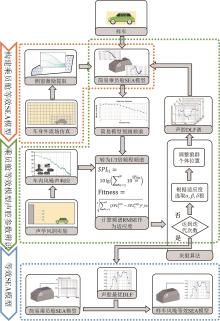
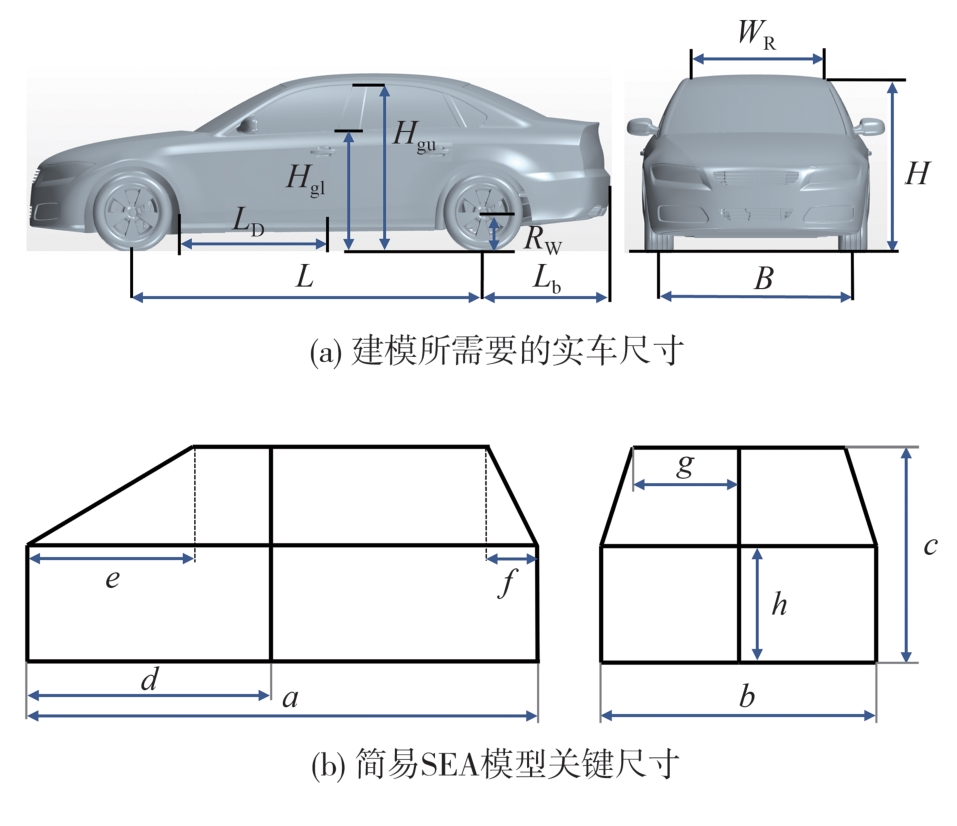
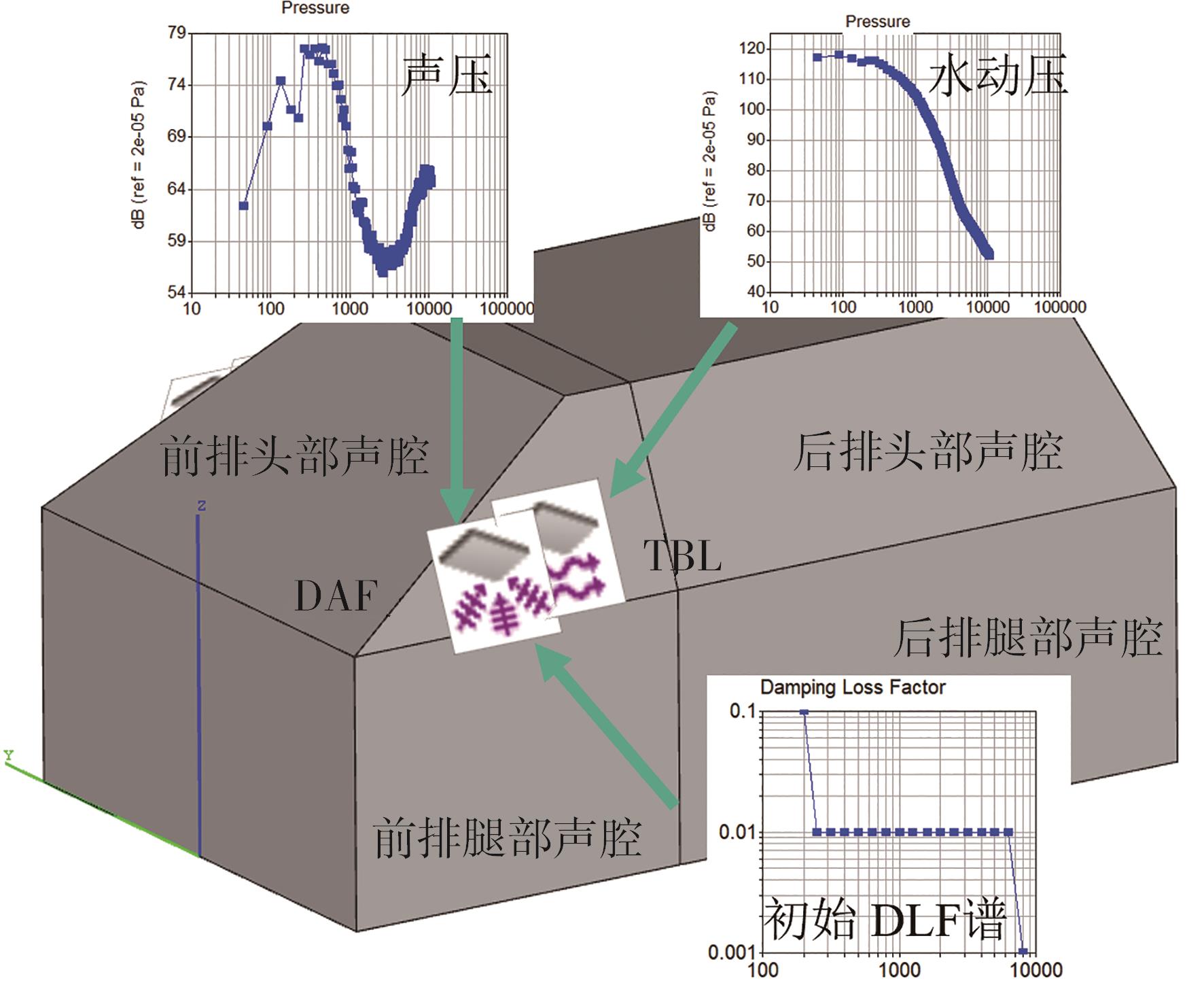
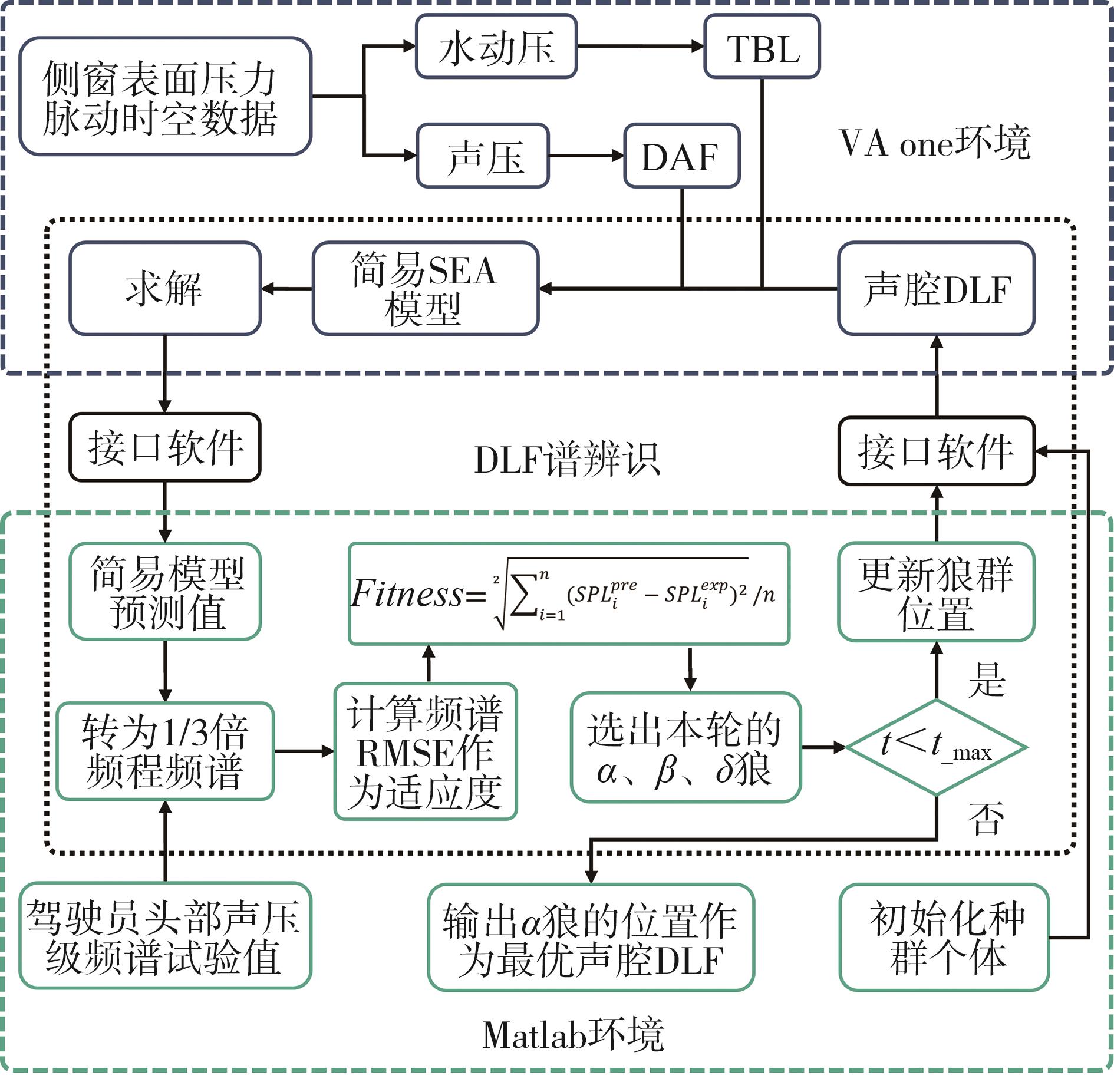
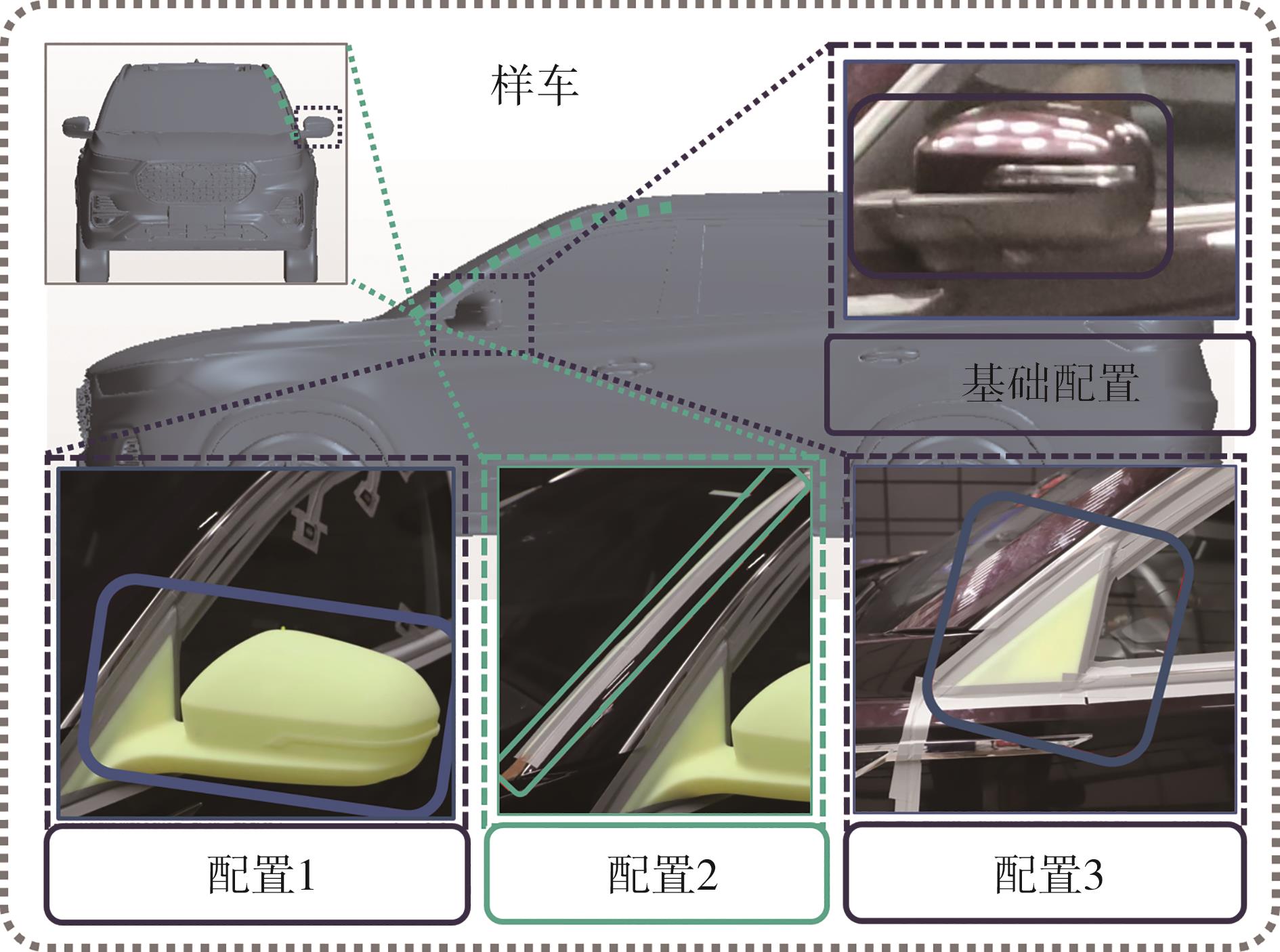
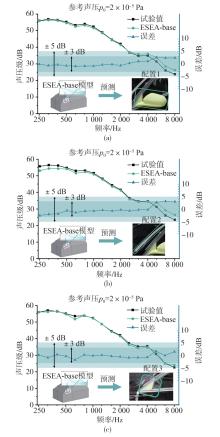
建立一个高预测精度的统计能量模型以预测车内风噪声响应需要花费大量时间成本。本文提出一种基于参数辨识快速构建车辆风噪等效统计能量模型的方法,以在简化建模过程的同时保证预测精度。根据车身结构建立乘员舱初始统计能量模型,将侧窗表面压力脉动激励和风洞实测响应分别作为模型的输入和输出,使用灰狼优化算法辨识模型的声腔参数,得到逼近真实风噪响应特性的等效模型。以某样车为例,使用等效统计能量模型预测不同造型方案下的乘员舱风噪声响应,总声压级预测误差的平均值为1.47%,频谱的均方根误差为1.23 dB。结果表明:等效模型可以准确预测不同造型方案的车内风噪声响应,从而减少风洞试验的次数,具有较高的工程应用价值。

关键词: 汽车风噪, 等效模型, 灰狼优化算法, 噪声预测, 统计能量分析

Abstract:

Developing a high-precision Statistical Energy Analysis (SEA) model to predict vehicle wind noise response requires a significant amount of time and cost. In this paper, a method is proposed for rapidly constructing an equivalent SEA model for vehicle wind noise based on parameter identification, which simplifies the modeling process while ensuring prediction accuracy. An initial SEA model of the compartment is established according to the vehicle’s body structure and dimensions, with the pressure fluctuation excitation on the side window surface and the actual wind tunnel response serving as the model's input and output, respectively. The Grey Wolf Optimizer (GWO) algorithm is employed to identify the acoustic cavity parameters of the model, resulting in an equivalent model that approximates the true wind noise response characteristics. Taking a prototype vehicle as an example, the equivalent wind noise SEA model is used to predict the wind noise response in the compartment under different design schemes. The average prediction error for the total sound pressure level is 1.47%, and the root mean square error of the spectrum is 1.23 dB. The results show that the equivalent model can accurately predict the in-vehicle wind noise response under different design schemes, thereby reducing the number of wind tunnel tests and having high engineering application value.

Key words: automobile wind noise, equivalent model, grey wolf optimizer algorithm, noise prediction, statistical energy analysis