

汽车工程 ›› 2025, Vol. 47 ›› Issue (6): 1007-1021.doi: 10.19562/j.chinasae.qcgc.2025.06.001
• •
杨阳1,章治1,许博2,董扬3( )
)
收稿日期:2024-07-23
修回日期:2025-02-18
出版日期:2025-06-25
发布日期:2025-06-20
通讯作者:
董扬
E-mail:okami3664@gmail.com
基金资助:
Yang Yang1,Zhi Zhang1,Bo Xu2,Yang Dong3()
Received:2024-07-23
Revised:2025-02-18
Online:2025-06-25
Published:2025-06-20
Contact:
Yang Dong
E-mail:okami3664@gmail.com
摘要:
磁耦合结构作为无线充电系统中的关键部件,极大程度上决定了电动汽车无线充电系统的整体性能。本文提出了一种双正交DD线圈(DDDQ线圈)型磁耦合结构,其不仅可以通过线圈间的耦合互补,提高无线充电系统的抗偏移能力,还可以兼容静态无线充电场景及动态无线充电场景。为了验证所提出的耦合结构系统性能,本文首先分别建立了静态及动态无线充电系统仿真模型进行分析。仿真结果证明,DDDQ型磁耦合结构能够提升静态无线充电系统在偏移时的耦合能力,减小了动态无线充电过程中的耦合波动;其次,选用LCC-S补偿拓扑结构对系统进行功率补偿,分别搭建并比较不同磁耦合结构的静态无线充电系统的输出特性,结果表明基于DDDQ型磁耦合结构的系统存在偏移时仍能保持良好的传输能力,继而将DDDQ型磁耦合结构应用于动态无线充电场景,通过配置相关补偿参数后实现了系统高效的谐振传输;最后,按照相关标准选取了车内外多个监测点对系统在不同场景下的电磁安全性进行了仿真评估。结果表明DDDQ型磁耦合结构符合电磁安全标准。
杨阳,章治,许博,董扬. 电动汽车无线充电系统DDDQ型磁耦合结构研究[J]. 汽车工程, 2025, 47(6): 1007-1021.
Yang Yang,Zhi Zhang,Bo Xu,Yang Dong. Research on the DDDQ Magnetic Coupled Structure of the Wireless Charging System for Electric Vehicles[J]. Automotive Engineering, 2025, 47(6): 1007-1021.
表1
不同类型线圈性能对比"
线圈 形状 | 横向 抗偏移性 | 纵向 抗偏移性 | 复杂度 | 静动态 兼容性 |
|---|---|---|---|---|
| CP | 差 | 差 | 低 | 无 |
| DD | 差 | 较差 | 较低 | 无 |
| DDQ | 较差 | 较差 | 较高 | 无 |
| BP | 较差 | 较差 | 中 | 无 |
| QD | 中 | 中 | 较高 | 无 |
| QDPD | 较好 | 较好 | 高 | 无 |
| QRPD | 较好 | 较好 | 高 | 无 |
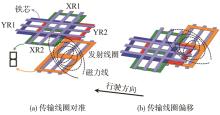
图1
DDDQ型磁耦合结构"
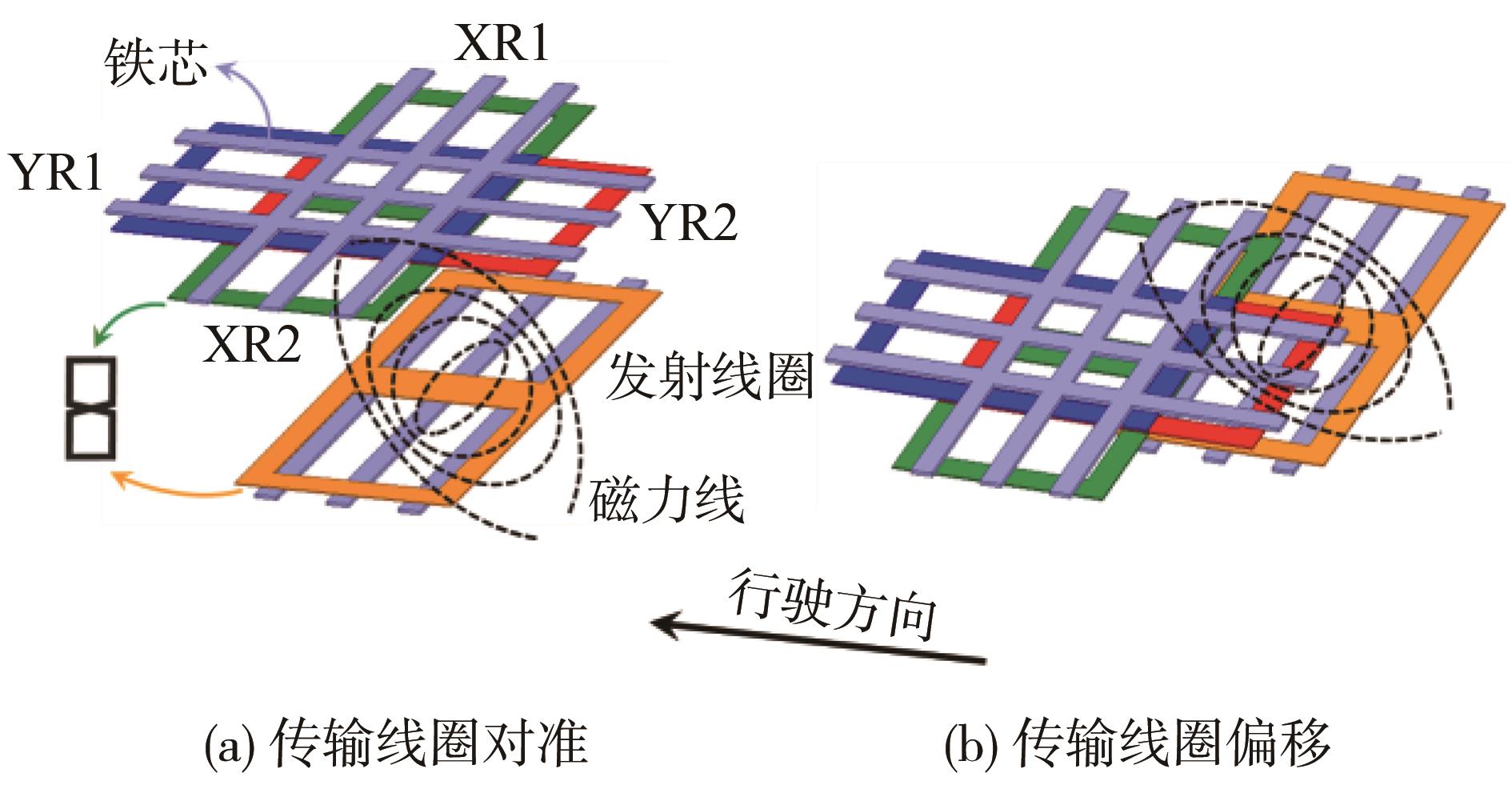
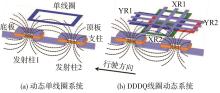
图2
动态无线充电系统"
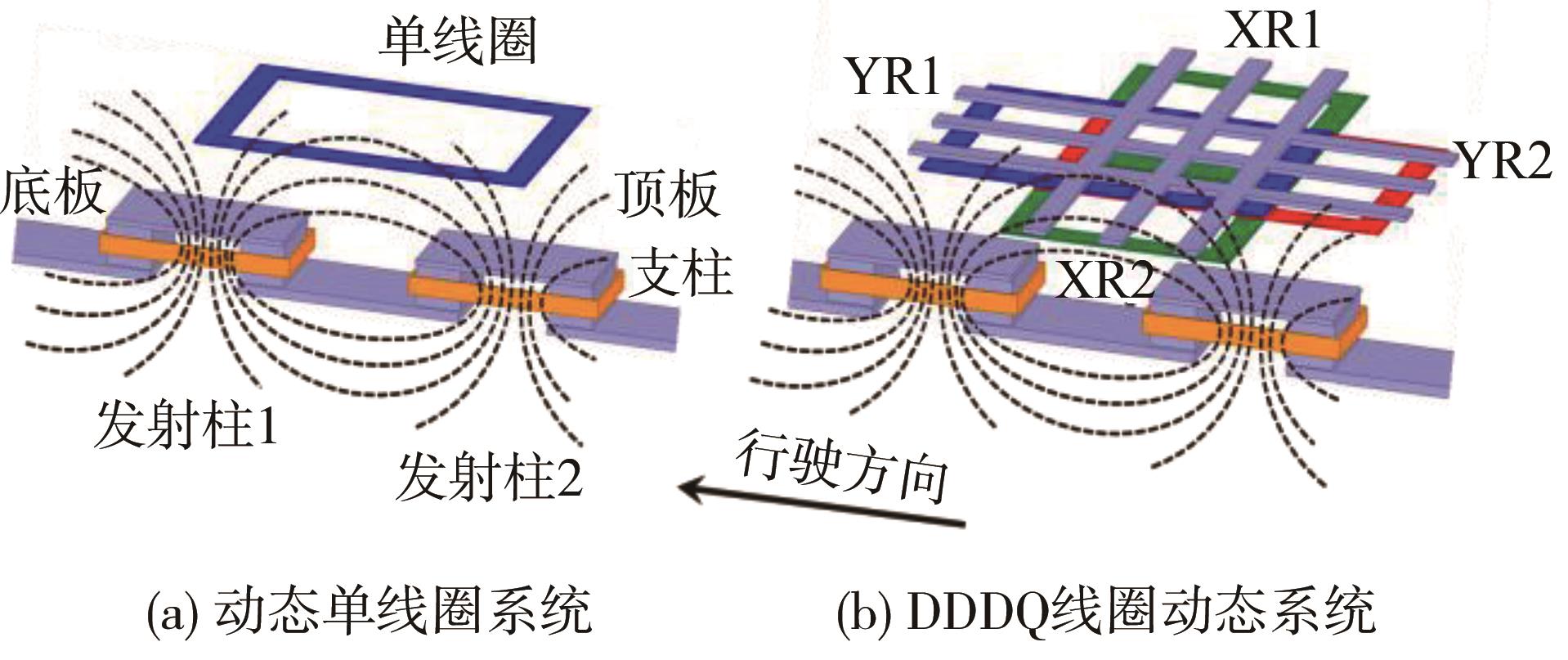
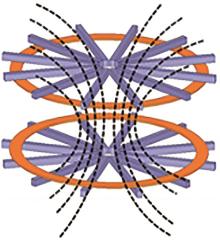
图3
CP型磁耦合结构"
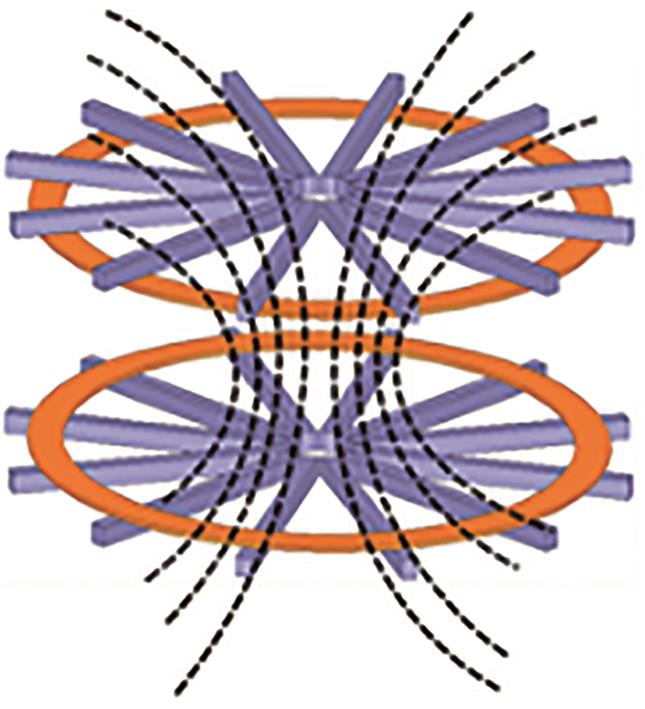
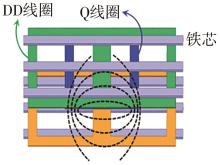
图4
DDQ型磁耦合结构"
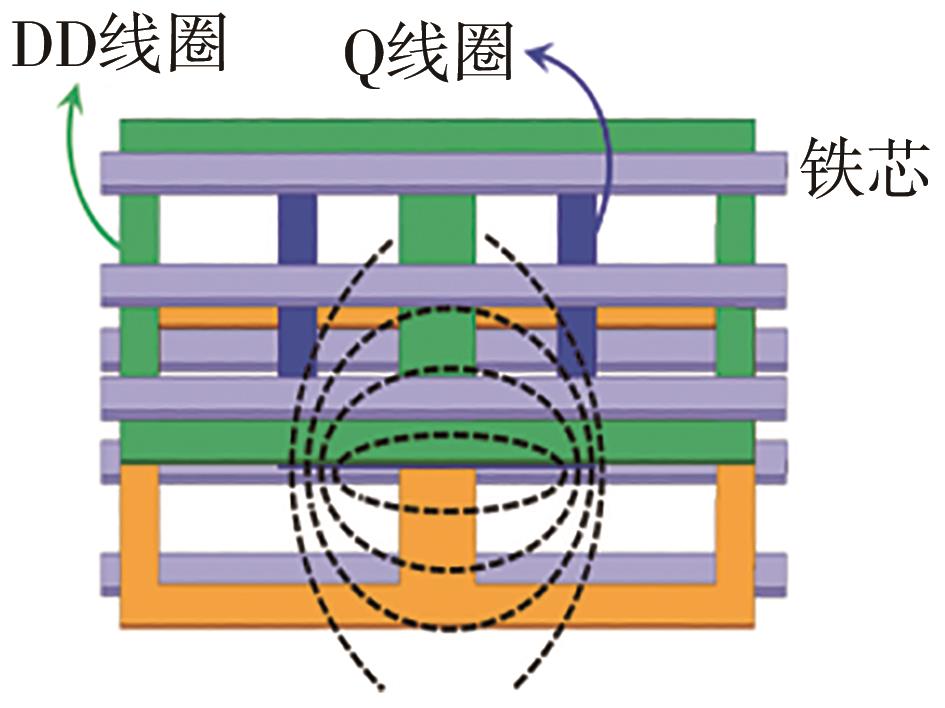
表2
CP型与DDQ型线圈参数"
| 线圈形状 | 结构名称 | 尺寸/mm | 数量 |
|---|---|---|---|
| CP | CP | R=500×4 | 15匝 |
| 铁芯 | 245×15×15 | 12根 | |
| DDQ | DD | 1000×500×4 | 15匝 |
| Q | 500×500×4 | 15匝 | |
| 铁芯 | 1100×15×15 | 3根 |
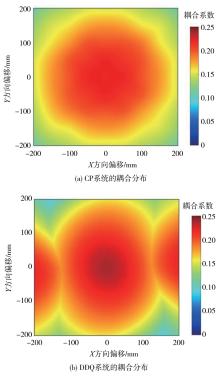
图5
CP和DDQ型线圈结构耦合分布"
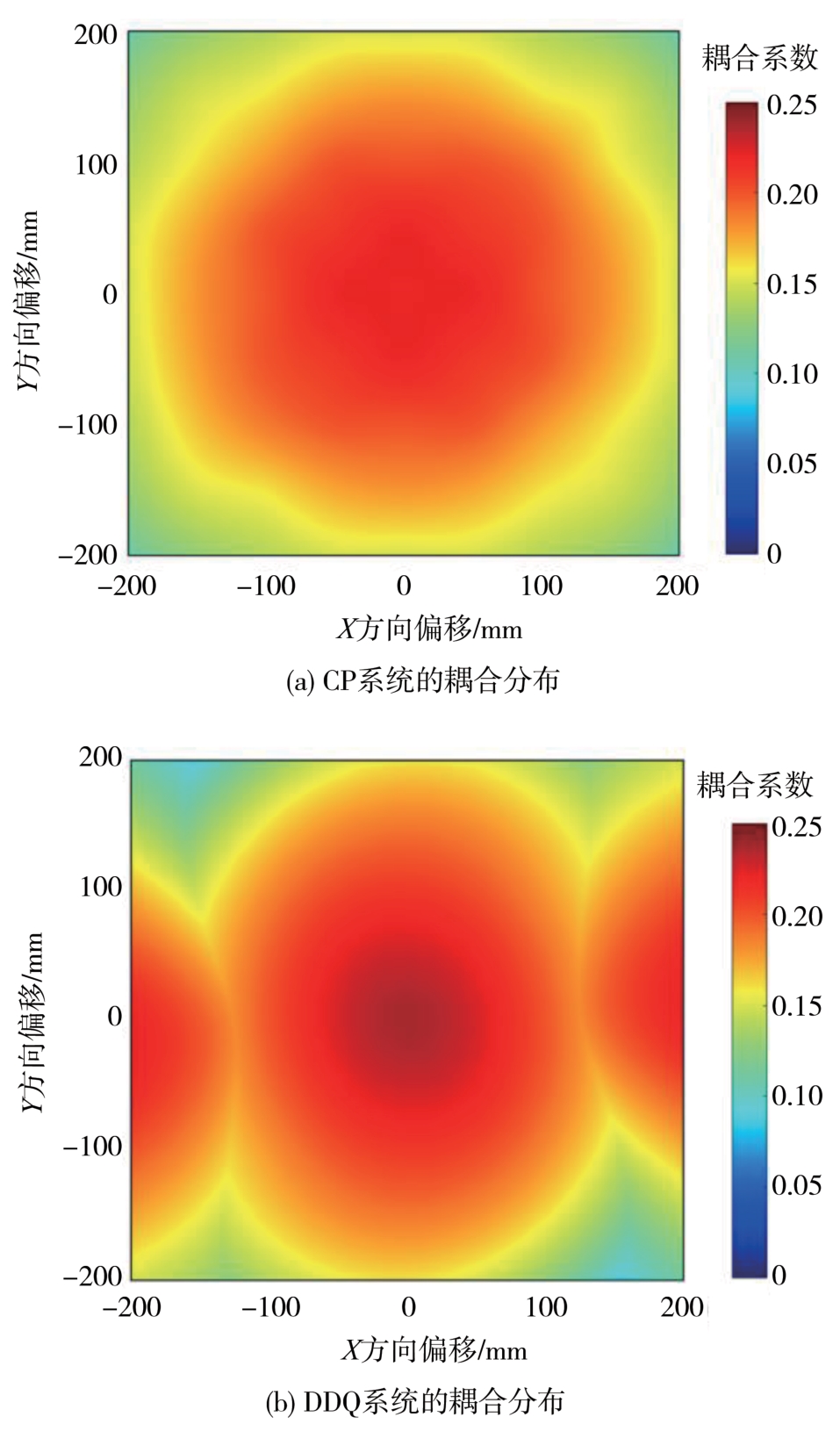
表3
DDDQ型线圈参数"
| 线圈形状 | 结构名称 | 尺寸/mm | 数量 |
|---|---|---|---|
| DDDQ | DD | 1000×500×4 | 15匝 |
| YR1 | 750×500×4 | 15匝 | |
| YR2 | 750×500×4 | 15匝 | |
| 铁氧体 | 1100×15×15 | 6根 |
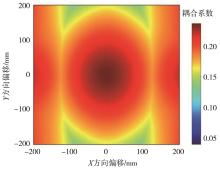
图6
DDDQ型线圈结构的耦合分布"
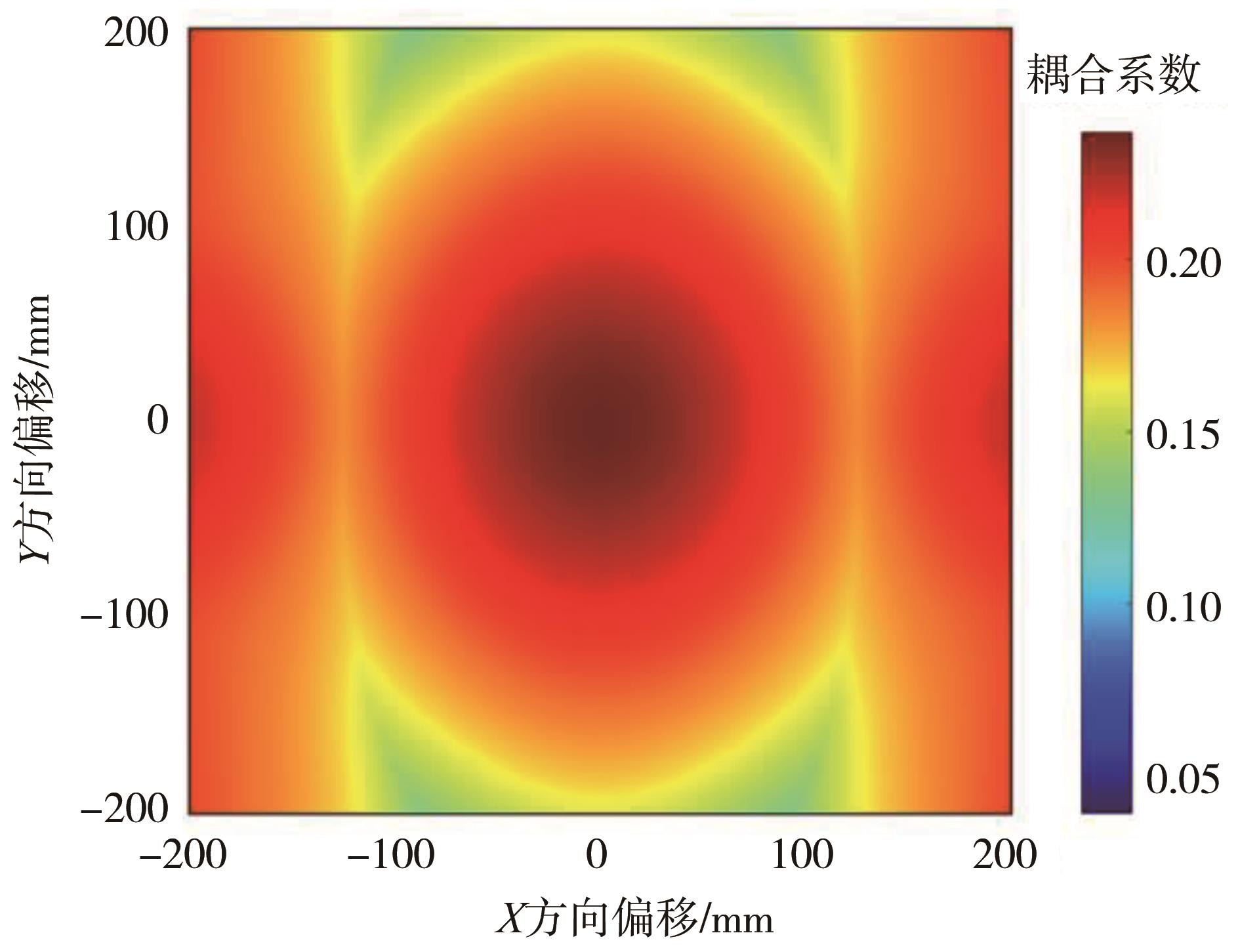

图7
相邻四段短导轨通电示意图"
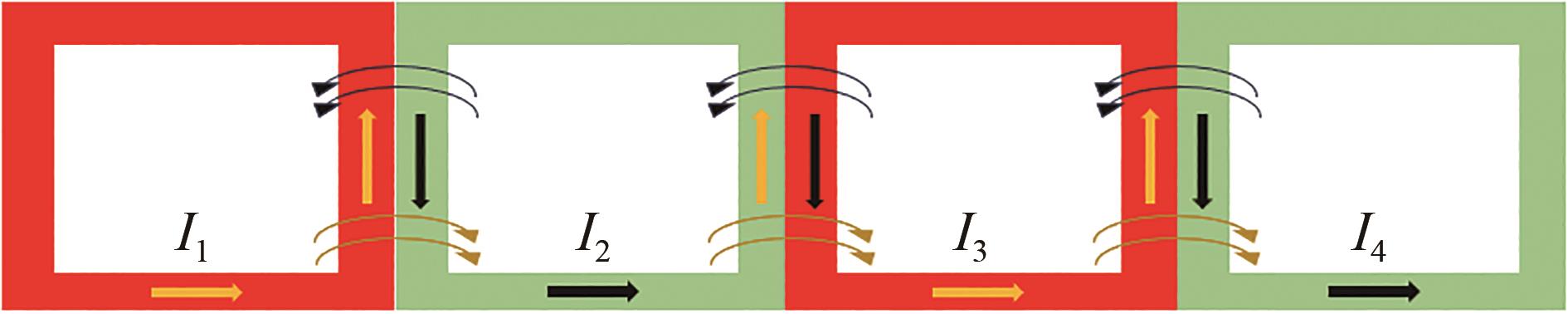
表4
动态轨道结构参数"
| 结构参数 | 数值 | 结构参数 | 数值 |
|---|---|---|---|
| 底板长度 | 500 mm | 支柱高度 | 90 mm |
| 底板宽度 | 200 mm | 顶板长度 | 400 mm |
| 底板高度 | 20 mm | 顶板宽度 | 200 mm |
| 支柱长度 | 100 mm | 顶板高度 | 10 mm |
| 支柱宽度 | 200 mm | 线圈匝数 | 10匝 |
图8
动态DDQ型无线充电系统的磁场分布图"
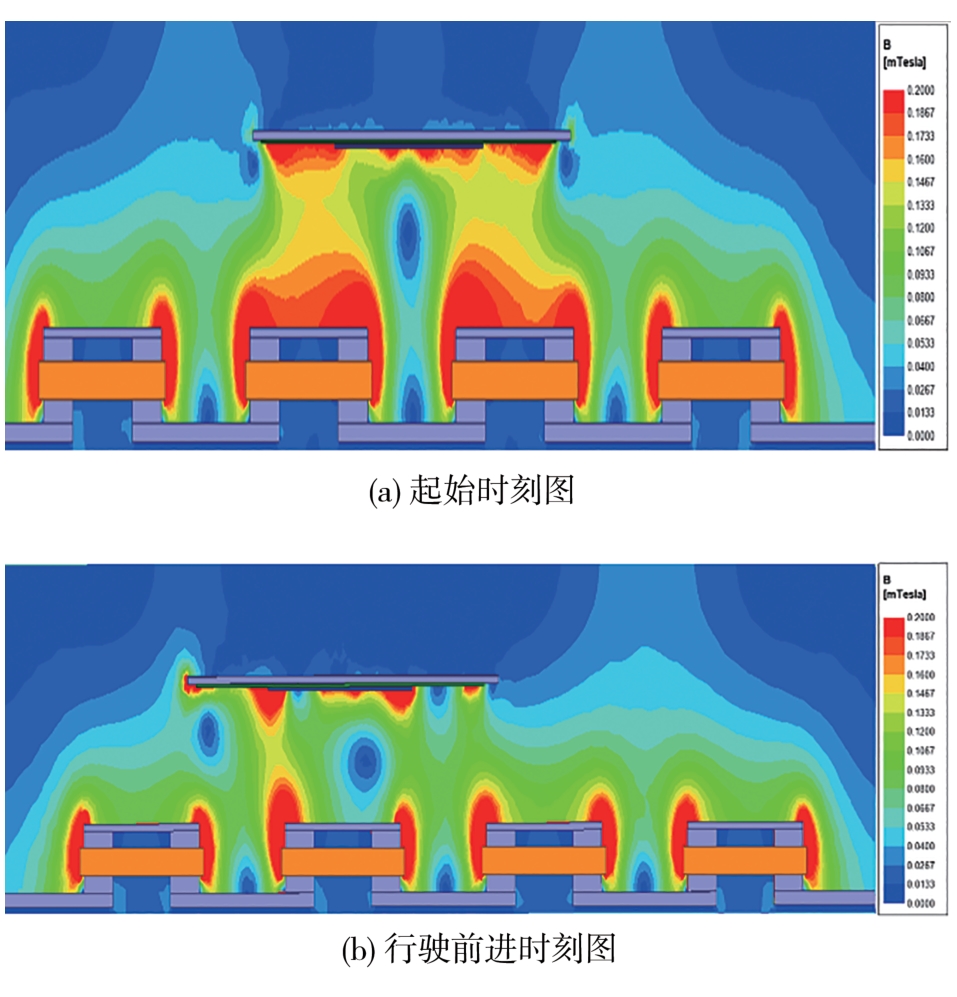
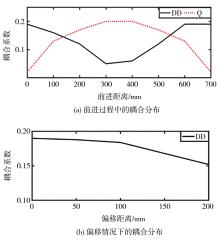
图9
DDQ型动态无线充电系统耦合分布"
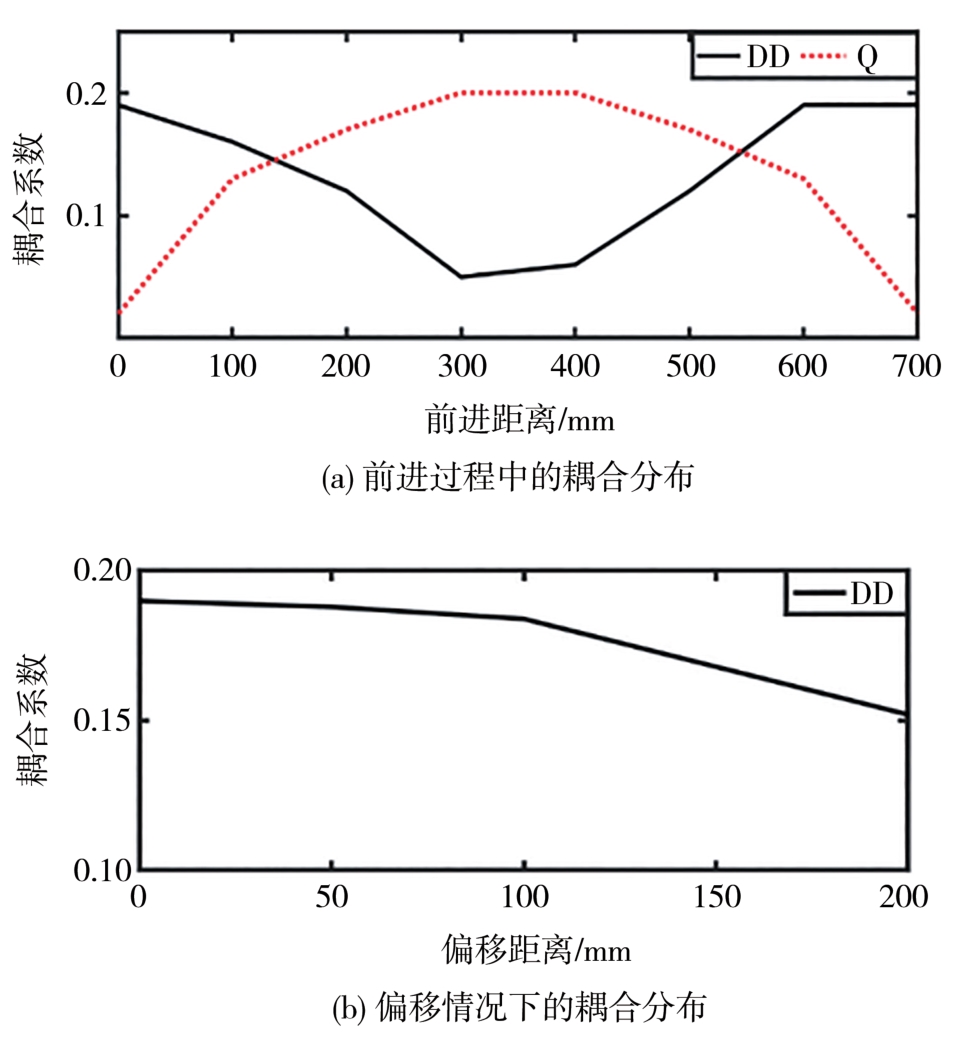
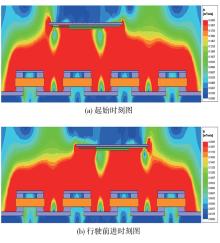
图10
动态DDDQ型无线充电系统的磁场分布图"

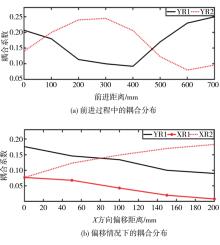
图11
DDDQ型动态无线充电系统耦合分布"
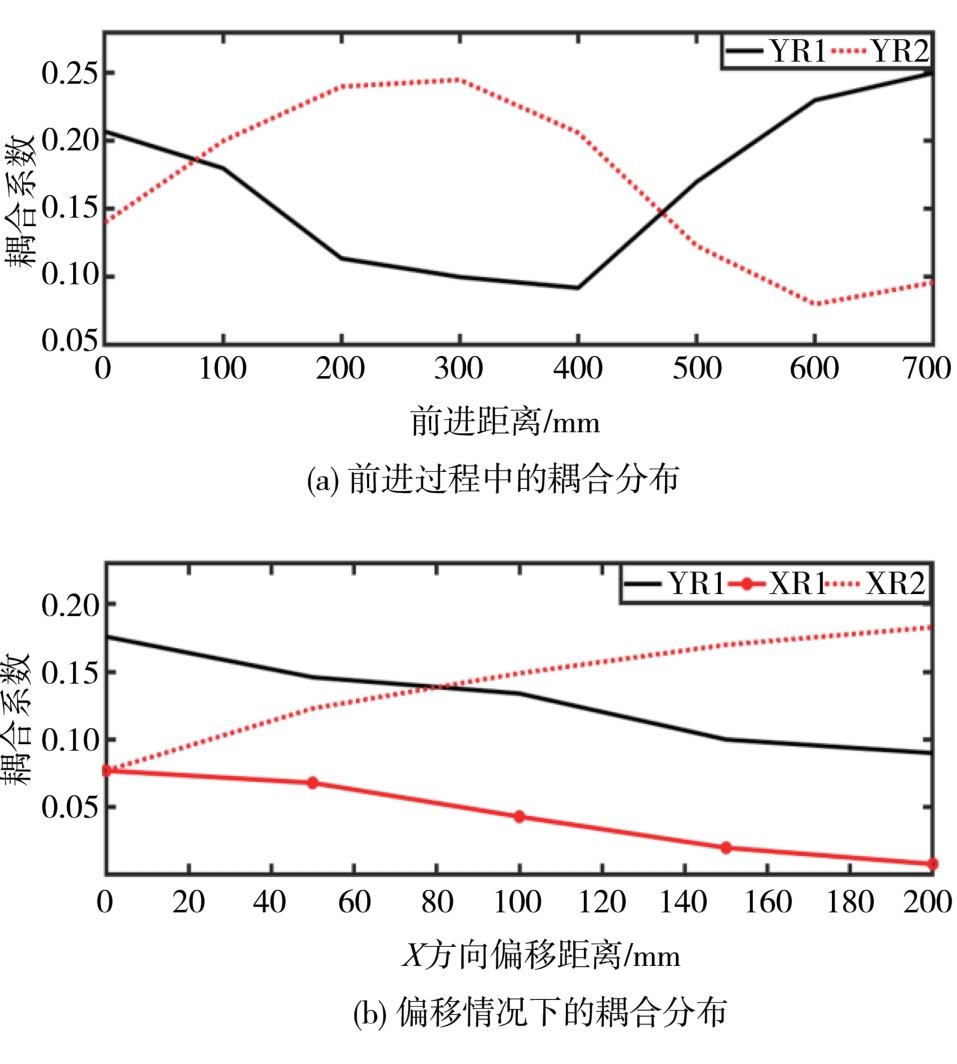
图12
静态无线充电系统等效电路"
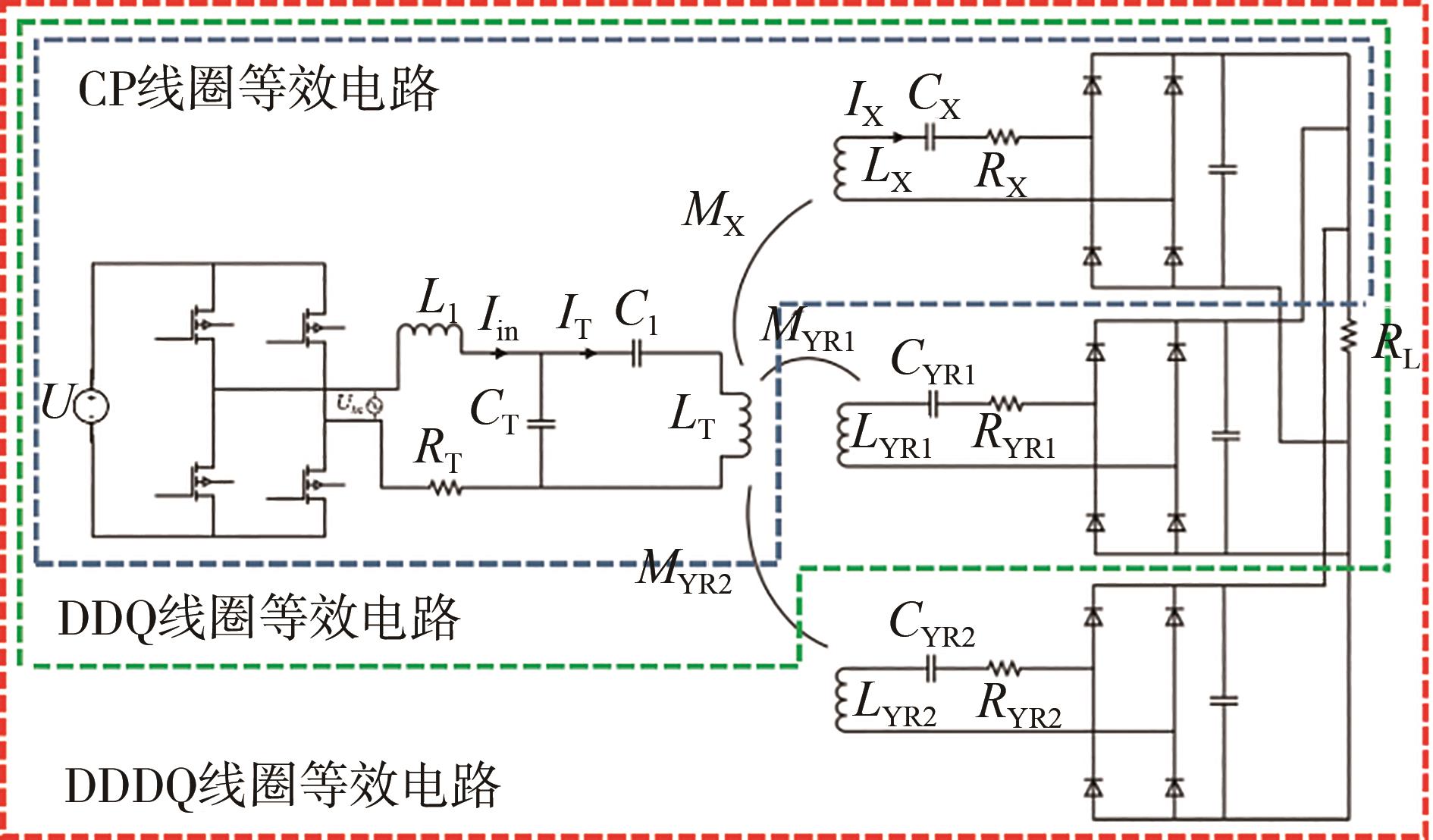
表5
CP型线圈静态系统电路参数"
| 参数 | 数值 | 参数 | 数值 |
|---|---|---|---|
| LT | 530 μH | RT | 47 mΩ |
| LX | 530 μH | RX | 47 mΩ |
| L1 | 0.64 μH | RL | 50 Ω |
| CT | 57 nF | MX | 129 μH |
| C1 | 7.48 nF | Uin | 220 V |
| CX | 6.6 nF |
表6
DDQ型线圈静态系统电路参数"
| 参数 | 数值 | 参数 | 数值 |
|---|---|---|---|
| LT | 695 μH | RT | 100 mΩ |
| LX | 695 μH | RX | 100 mΩ |
| LYR1/YR2 | 216 μH | RYR1/ YR2 | 70 mΩ |
| L1 | 94.5 μH | RL | 50 Ω |
| CT | 37 nF | MX | 199 μH |
| C1 | 5.83 nF | MYR1 | 1 μH |
| CX | 5.04 nF | Uin | 220 V |
| CYR1/ YR2 | 8.34 nF |
图13
静态CP线圈无线充电系统的电路特性"

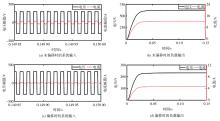
图14
静态DDQ型线圈无线充电系统的电路特性"

表7
DDDQ型线圈静态系统电路参数"
| 参数 | 数值 | 参数 | 数值 |
|---|---|---|---|
| LT | 685 μH | RT | 100 mΩ |
| LX | 685 μH | RX | 100 mΩ |
| LYR1/YR2 | 485 μH | RYR1/ YR2 | 70 mΩ |
| L1 | 100 μH | RL | 50 Ω |
| CT | 35 nF | MX | 178 μH |
| C1 | 5.2 nF | MYR1 | 0.1 μH |
| CX | 4.6 nF | MTR2 | 0.1 μH |
| CYR1/ YR2 | 8.7 nF | Uin | 220 V |
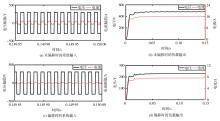
图15
静态DDDQ型线圈无线充电系统的电路特性"

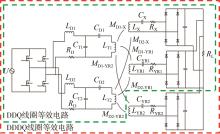
图16
动态无线充电系统等效电路"
表8
DDQ型线圈动态系统电路参数"
| 参数 | 数值 | 参数 | 数值 |
|---|---|---|---|
| LT1/ T2 | 178 μH | MD1-X | 72 μH |
| LD1/D2 | 44.8 μH | MD1-YR1 | 5 μH |
| CD1/D2 | 26.3 nF | MD2-X | 72 μH |
| RD | 10 mΩ | MD2-YR1 | 5 μH |
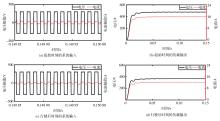
图17
动态DDQ型线圈无线充电系统的电路特性"

表9
DDDQ型线圈动态系统电路参数"
| 参数 | 数值 | 参数 | 数值 |
|---|---|---|---|
| LT1/ T2 | 182 μH | MD1-YR1 | 22 μH |
| LD1/D2 | 14.4 μH | MD1-YR2 | 14 μH |
| CD1/D2 | 21 nF | MD2-X | 0.5 μH |
| RD | 10 mΩ | MD2-YR1 | 5 μH |
| MD1-X | 1 μH | MD2-YR2 | 10 μH |
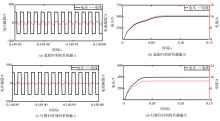
图18
动态DDDQ型线圈无线充电系统的电路特性"
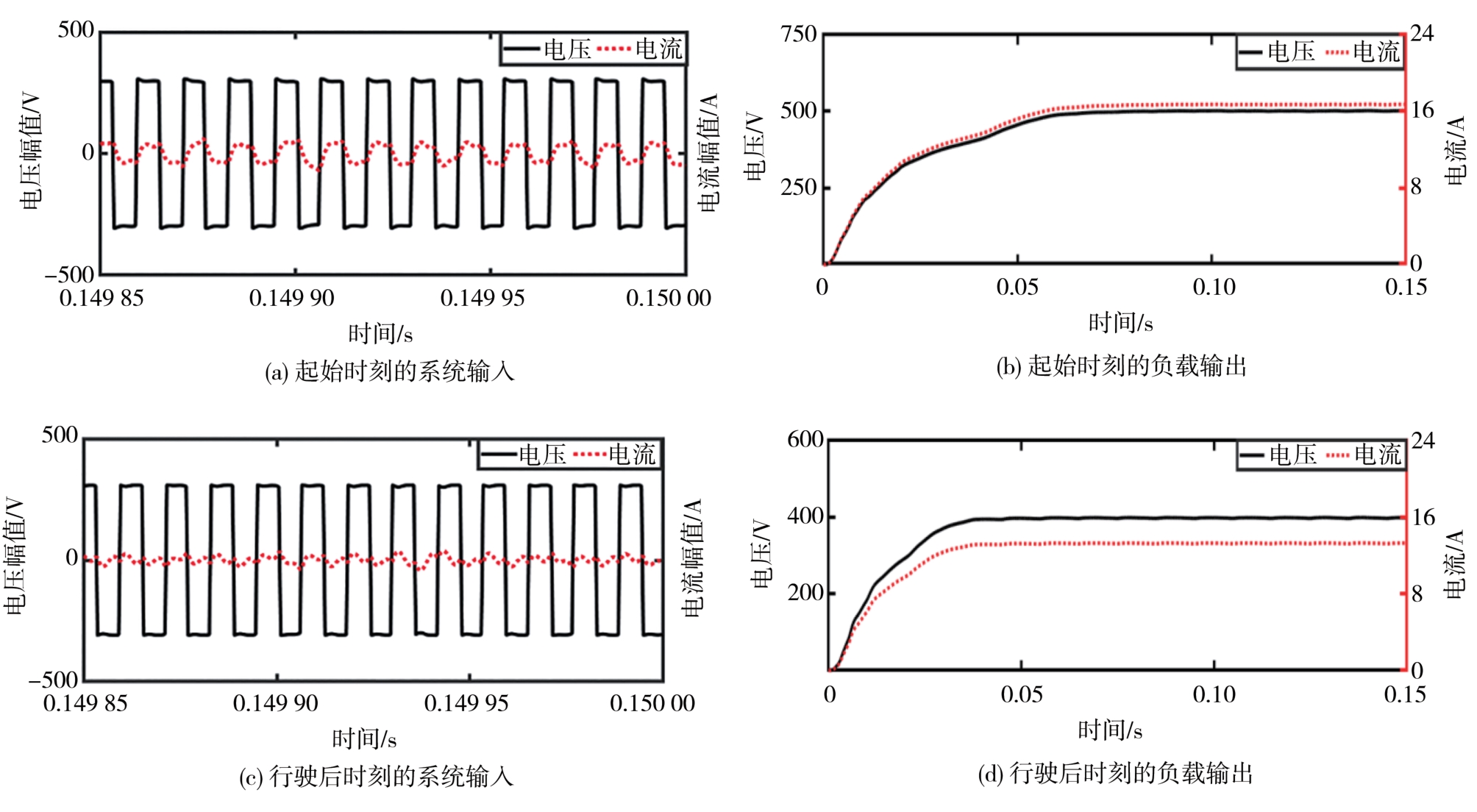
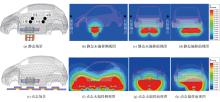
图19
不同场景下DDDQ型线圈无线充电系统磁场分布示意图"

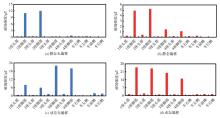
图20
DDDQ型线圈无线充电系统电磁安全仿真图"

| 1 | 邓衍辉,李剑,卢国强,等. 考虑分区域动态电价机制引导的电动汽车充电优化策略 [J]. 电力系统保护与控制, 2024, 52 (7): 33-44. DOI:10.19783/j.cnki.pspc.230931. |
| DENG Y H, LI J, LU G Q, et al. Optimization strategy of electric vehicle charging considering the guidance of sub-regional dynamic tariff mechanism[J]. Power System Protection and Control, 2024, 52(7): 33-44. DOI:10.19783/j.cnki.pspc.230931. | |
| 2 | 姜晓锋,魏巍,王永灿,等.“车—路—网”协同优化下的电动汽车有序充电引导策略[J].电力科学与技术学报,2023,38(5):44-56. DOI:10.19781/j.issn.1673-9140.2023.05.005. |
| JIANG X F, WEI W, WANG Y C, et al. An orderly charging guidance strategy for electric vehicles under vehicle-road-network cooperative optimization[J]. Journal of Electric Power Science and Technology, 2023, 38(5): 44-56. DOI:10.19781/j.issn.1673-9140.2023.05.005. | |
| 3 | 吴忠强,张长兴.考虑配电网负荷的电动汽车分布式充电控制[J].汽车工程, 2023, 45(4): 598-608. DOI:10.19562/j.chinasae.qcgc.2023.04.008. |
| WU Z Q,ZHANG C X. Distributed charging control of electric vehicles considering distribution network load[J]. Automotive Engineering, 2023,45(4):598-608. DOI:10.19562/j.chinasae.qcgc.2023.04.008. | |
| 4 | 左世全.解读新能源汽车产业发展规划(2021—2035年)[J].智能网联汽车, 2020(6): 21-23. |
| ZUO S Q. Interpretation of new energy automobile industry development plan (2021-2035)[J]. Intelligent Networked Vehicles, 2020(6): 21-23. | |
| 5 | 崔淑梅,宋贝贝,王志远.电动汽车动态无线供电磁耦合机构研究综述[J].电工技术学报,2022,37(3):537-554. DOI:10.19595/j.cnki.1000-6753.tces.201543. |
| CUI S M,SONG B B,WANG Z Y. A review of research on dynamic wireless supply electromagnetic coupling mechanism for electric vehicles[J]. Journal of Electrotechnology, 2022, 37(3): 537-554. DOI:10.19595/j.cnki.1000-6753.tces.201543. | |
| 6 | 李延杰,李峰,周思齐,等.大传输距离下电动汽车无线充电系统优化[J].北京工业大学学报,2024,50(4):405-416. |
| LI Y J,LI F,ZHOU S Q,et al.Optimization of wireless charging system for electric vehicles with large transmission distance[J]. Journal of Beijing Institute of Technology, 2024, 50(4): 405-416. | |
| 7 | 吴理豪, 张波.电动汽车静态无线充电技术研究综述(上篇)[J].电工技术学报, 2020, 35(6): 1153-1165. DOI:10.19595/j.cnki.1000-6753.tces.190106. |
| WU L H, ZHANG B. A review of static wireless charging technology for electric vehicles (Part I) [J]. Transactions of China Electrotechnical Society, 2020, 35(6): 1153-1165. DOI:10.19595/j.cnki.1000-6753.tces.190106. | |
| 8 | 吴理豪, 张波.电动汽车静态无线充电技术研究综述(下篇)[J].电工技术学报, 2020, 35(8): 1662-1678. DOI:10.19595/j.cnki.1000-6753.tces.190107. |
| WU L H, ZHANG B. A review of static wireless charging technology for electric vehicles (Part II) [J]. 2020, 35(8): 1662-1678. DOI:10.19595/j.cnki.1000-6753.tces.190107. | |
| 9 | QIN R Y, LI J,SUN J J, et al. Shielding design for high-frequency wireless power transfer system for EV charging with self-resonant coils[J].IEEE Transactions on Power Electronics, 2023, 38(6): 7900-7909. |
| 10 | WANG Y D,WANG F Y,TIAN Y, et al. Surrogate-assisted multiobjective optimization of double-D coil for inductive power transfer system with LCC-LCC compensation network[J]. IEEE Transactions on Industrial Electronics, 2023:1-13. |
| 11 | 张献, 白雪宁, 沙琳,等. 电动汽车无线充电系统不同结构线圈间互操作性评价方法研究[J]. 电工技术学报, 2020, 35(19): 4150-4160. DOI:10.19595/j.cnki.1000-6753.tces.191225. |
| ZHANG X, BAI X N, SHA L,et al. Study on the evaluation method of interoperability between coils of different structures of wireless charging system for electric vehicles[J]. Transactions of China Electrotechnical Society, 2020, 35(19): 4150-4160. DOI:10.19595/j.cnki.1000-6753.tces.191225. | |
| 12 | ADITYA K, SOOD V K, WILLIAMSON S S. Magnetic characterization of unsymmetrical coil pairs using Archimedean spirals for wider misalignment tolerance in IPT systems[J]. IEEE Transactions on Transportation Electrification, 2017, 3(2): 454-463. |
| 13 | ZAHEER A, HAO HAO, COVIC G A, et al. Investigation of multiple decoupled coil primary pad topologies in lumped IPT systems for interoperable electric vehicle charging[J]. IEEE Transactions on Power Electronics, 2015, 30(4): 1937-1955. |
| 14 | 李砚玲, 杜浩, 何正友. 基于双 D 形正交混合拓扑的感应电能传输系统恒流输出研究[J]. 中国电机工程学报, 2020, 40(3): 942-950. DOI:10.13334/j.0258-8013.pcsee.182321. |
| LI Yanling, DU Hao, HE Zhengyou. Research on constant current output of inductive power transmission system based on double D-shape orthogonal hybrid topology [J]. Proceedings of the CSEE, 2020, 40(3): 942-950. DOI:10.13334/j.0258-8013.pcsee.182321. | |
| 15 | ZAHEER A, COVIC G A, KACPRZAK D. A bipolar pad in a 10-kHz 300-W distributed IPT system for AGV applications[J]. IEEE Transactions on Industrial Electronics, 2014, 61(7): 3288-3301. |
| 16 | AHMAD A, ALAM M S, MOHAMED A A S. Design and interoperability analysis of quadruple pad structure for electric vehicle wireless charging application[J]. IEEE Transactions on Transportation Electrification, 2019, 5(4): 934-945. |
| 17 | 张艺明, 王辉, 沈志伟, 等. 利用混合拓扑实现强 抗偏移性能的紧凑型电动汽车无线充电系统 [J]. 中国电机工程学报, 2022, 42(8): 2979-2986. DOI:10.13334/j.0258-8013.pcsee.220290. |
| ZHANG Yiming, WANG Hui, SHEN Zhiwei, et al. Compact electric vehicle wireless charging system with strong offset resistance based on hybrid topology [J]. Proceedings of the CSEE, 2022, 42(8): 2979-2986. DOI:10.13334/j.0258-8013.pcsee.220290. | |
| 18 | 刘旭,曹宇鹏,夏晨阳,等.基于四矩形正交线圈的无线电能传系统混合式补偿拓扑优化及其抗偏移性[J/OL].电工技术学报,1-12. https://doi.org/10.19595/j.cnki.1000-6753.tces.242124. |
| LIU X, CAO Y P, XIA C Y et al. Hybrid compensation topology optimization of radio energy transfer system based on four rectangular orthogonal coils and its migration resistance [J/OL]. Transactions of Electrotechnical Society, 1-12. https://doi.org/10.19595/j.cnki.1000-6753.tces.242124. | |
| 19 | 周熙炜,汪贵平,王会峰,等.车-路协同电动汽车动态无线充电的路权调度控制[J].电子学报, 2021, 49(5): 904-911. |
| ZHOU X W, WANG G P, WANG H F,et al. Right-of-way scheduling control for dynamic wireless charging of vehicle-road cooperative electric vehicles[J]. Journal of Electronics, 2021, 49(5): 904-911. | |
| 20 | GENG Y Y,GUO Q,YANG Z P,et al. Design and optimization of real-time strong coupling coil ofdynamic wireless power transfer for electrical vehicle[J].IEEE Transactions on Vehicular Technology, 2023, 72(9): 11495-11504. |
| 21 | HUANG C Y D. Design of IPT EV battery charging systems for variable coupling applications[D]. Auckland: The Universty of Auckland, 2011. |
| 22 | 赵锦波. 分段式动态无线充电的抗偏移及中继接力方法研究[D]. 武汉: 华中科技大学, 2016. |
| ZHAO Jinbo. Research on anti-migration and relay relay method of segmented dynamic wireless charging [D]. Wuhan: Huazhong University of Science and Technology, 2016. | |
| 23 | CHEN W T,LIN F Y,COVIC G A. A modified DDQ track for interoperable EV dynamic charging[J]. IEEE Transactions on Power Electronics, 2023, 38(10): 11738-11750. |
| 24 | SHEN T,MENG F,LIU X L, et al.Design of a three-coil-based wireless charging system for electric vehicles[C]. 2023 IEEE International Conference on Image Processing and Computer Applications (ICIPCA). Changchun, China: IEEE,2023:11-17. |
| 25 | WANG Z Y,CUI S M,HAN S L, et al. A novel magnetic coupling mechanism for dynamic wireless charging system for electric vehicle[J]. IEEE Transactions on Vehicular Technology, 2018, 67(1): 124-133. |
| 26 | 赵军,赵毅航,武志军,等.电动汽车无线充电系统对心脏起搏器的电磁兼容与热效应影响[J].电工技术学报, 2022, 37(S1): 1-10. DOI:10.19595/j.cnki.1000-6753.tces.L90366. |
| ZHAO J, ZHAO Y H, WU Z J, et al. Electromagnetic compatibility and thermal effects of electric vehicle wireless charging system on pacemakers[J]. Journal of Electrotechnology, 2022, 37(S1): 1-10. DOI:10.19595/j.cnki.1000-6753.tces.L90366. | |
| 27 | 杨阳, 章治, 吴雪钰, 等. 采用改进遗传算法的无线电能传输系统参数优化设计[J]. 西安交通大学学报, 2025: 1-12. |
| YANG Yang, ZHANG Zhi, WU Xueyu, et al. Parameter optimization design of radio energy transmission system using improved genetic algorithm [J]. Journal of Xi 'an Jiaotong University, 2025: 1-12. | |
| 28 | ZHOU S J, MI C C. Multi-paralleled LCC reactive power compensation networks and their tuning method for electric vehicle dynamic wireless charging[J]. IEEE Transactions on Industrial Electronics, 2016, 63(10): 6546-6556. |
| [1] | 张倩文,徐磊,王庆洋,徐胜金. 电动汽车底部流动分离对风阻的动态影响[J]. 汽车工程, 2025, 47(5): 910-919. |
| [2] | 鲁岩松,朱翀,张希. 一种车用高速电机循环冷却油温集总参数模型[J]. 汽车工程, 2025, 47(5): 920-930. |
| [3] | 罗毅,马文彬,苏岭,刘月桥,肖波. 基于R290工质的电动汽车集成式热管理系统性能研究[J]. 汽车工程, 2025, 47(5): 931-939. |
| [4] | 黄晓婷,张海标,李长玉,吕辉,上官文斌. 电动汽车动力总成悬置系统的多输出灵敏度分析[J]. 汽车工程, 2025, 47(4): 746-754. |
| [5] | 郑字琛,王姝,赵轩,李兆柯. 基于混杂模型预测控制的分布式驱动电动汽车AFS/DYC集成控制[J]. 汽车工程, 2025, 47(3): 470-480. |
| [6] | 李琴,李壮,汤建明,王勇,张博远,贺德强. 分布式驱动电动汽车多目标转矩分配策略[J]. 汽车工程, 2025, 47(3): 489-498. |
| [7] | 石琴,侯伟路,张晓楠,吴为教,贺泽佳. 基于三层加权堆叠模型的电动汽车剩余里程预测[J]. 汽车工程, 2025, 47(1): 107-116. |
| [8] | 崔海龙,杜冰,黄秀东,刘凤华,刘雪东,周茂伟. 电动汽车胶粘型电机铁芯加工装备效能优化[J]. 汽车工程, 2025, 47(1): 178-186. |
| [9] | 贺伯林,陈勇,代青林. 基于LADRC的纯电动汽车双离合变速器换挡控制[J]. 汽车工程, 2024, 46(9): 1668-1677. |
| [10] | 周峰,田旭文,李红旗. 混合工质电动汽车空调全生命周期气候性能分析[J]. 汽车工程, 2024, 46(9): 1707-1714. |
| [11] | 钱堃,刘珂,王言夫,厉濠阳,谭璟,沈政华,杜习康,段继英,赵剑. 电动汽车车内声品质评价研究进展[J]. 汽车工程, 2024, 46(8): 1431-1446. |
| [12] | 刘长钊,王坤,宋健,范朔铭,陈祥龙. 开关磁阻电驱动系统机电控协同设计[J]. 汽车工程, 2024, 46(8): 1457-1468. |
| [13] | 李易庭,高泽鹏,李梦梦,王普毅. 实现纹波电流还原的PMSM端口模拟算法[J]. 汽车工程, 2024, 46(8): 1469-1478. |
| [14] | 马龙飞,张宝群,王立永,曾佳妮,焦然,宫成. 基于数字孪生混合储能的电动汽车参与微电网负荷功率波动平抑研究[J]. 汽车工程, 2024, 46(6): 1045-1053. |
| [15] | 杨天阳,邹慧明,周晖,王春磊,田长青. -30至50 ℃车辆工况下CO2喷射器的适应性研究[J]. 汽车工程, 2024, 46(4): 682-690. |
|
||
