

汽车工程 ›› 2025, Vol. 47 ›› Issue (9): 1803-1813.doi: 10.19562/j.chinasae.qcgc.2025.09.016
• • 上一篇
朱益琛,孙宇薇,刘思华,晏江昊宇,翟丽,张敏弟( )
)
收稿日期:2024-11-20
修回日期:2025-04-13
出版日期:2025-09-25
发布日期:2025-09-19
通讯作者:
张敏弟
E-mail:zhangmindi@bit.edu.cn
基金资助:
Yichen Zhu,Yuwei Sun,Sihua Liu,Jianghaoyu Yan,Li Zhai,Mindi Zhang()
Received:2024-11-20
Revised:2025-04-13
Online:2025-09-25
Published:2025-09-19
Contact:
Mindi Zhang
E-mail:zhangmindi@bit.edu.cn
摘要:
油冷电机因其设计紧凑、冷却性能好,近几年来备受关注。为了提高电机散热效果,本文基于VOF多相流模型,针对两种采用不同方式油冷的永磁同步电机进行数值模拟研究。首先,通过将额定工况下两种电机仿真结果与实验结果相对比,可知最高温度相对误差均小于5%,证明了数值方法准确、可靠。进而,开展了额定工况下电机冷却系统内部油液流动与冷却散热特性研究。研究表明:电机Ⅰ绕组和定子的最高温度分别为98 、93.8 ℃,温度不均匀度分别为4.28%、5.48%;电机Ⅱ绕组和定子的最高温度分别为93.0、92.5 ℃,温度不均匀度分别为3.62%、5.08%,同时发现转子甩油冷却方式虽然可以使油液分布更均匀,提高冷却油的冷却效率,但会增加电机冷却系统的启动时间。这些研究为后续高效高可靠油冷散热系统的优化设计提供理论依据。
朱益琛,孙宇薇,刘思华,晏江昊宇,翟丽,张敏弟. 基于多相流模型的油冷电机内部流动及散热特性研究[J]. 汽车工程, 2025, 47(9): 1803-1813.
Yichen Zhu,Yuwei Sun,Sihua Liu,Jianghaoyu Yan,Li Zhai,Mindi Zhang. Study on Internal Flow and Heat Dissipation Characteristics of Oil-Cooled Electric Motors Based on Multiphase Flow Model[J]. Automotive Engineering, 2025, 47(9): 1803-1813.
图 1
流固耦合传热求解步骤"
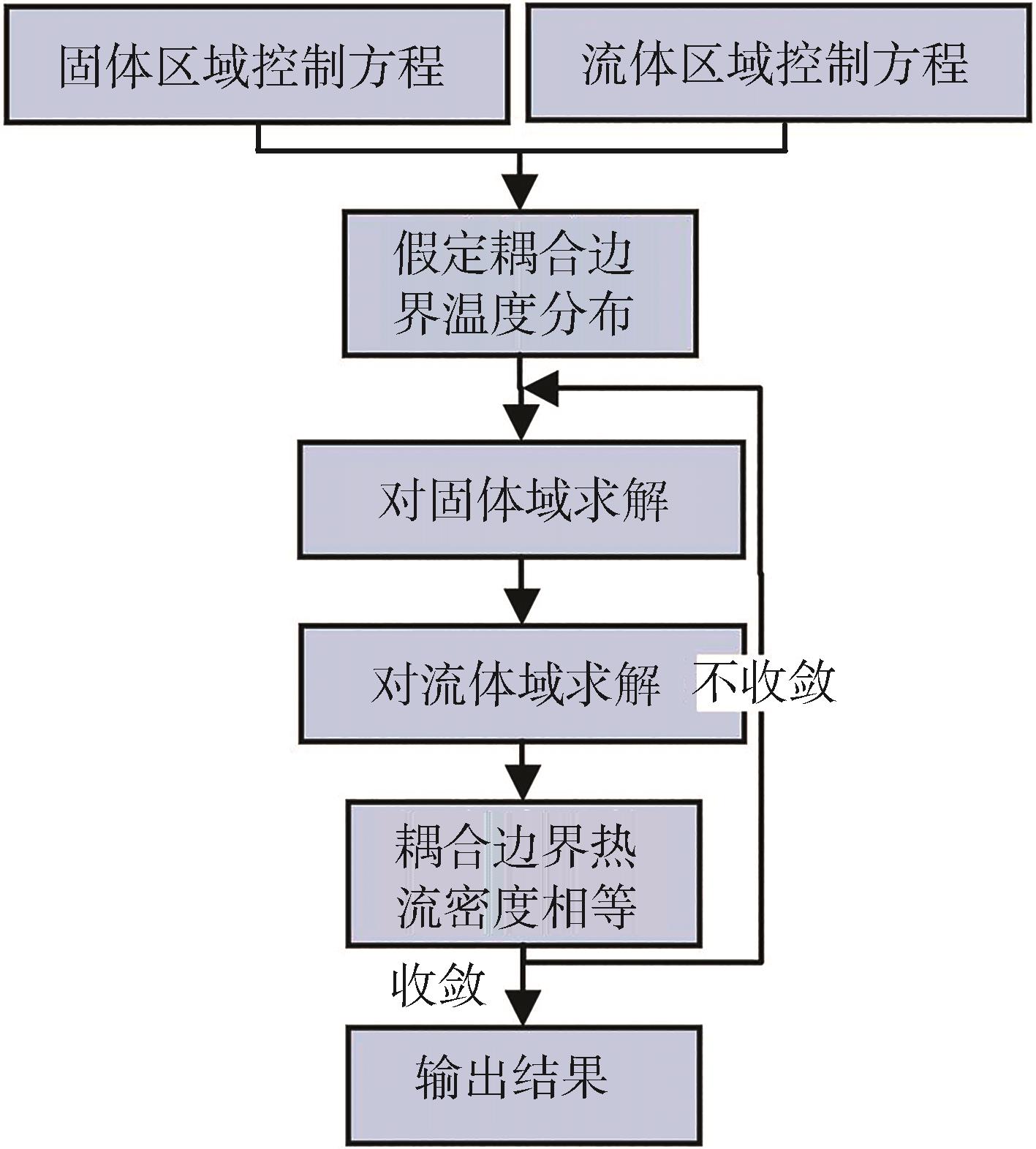
图 2
电机Ⅰ仿真模型剖面图"
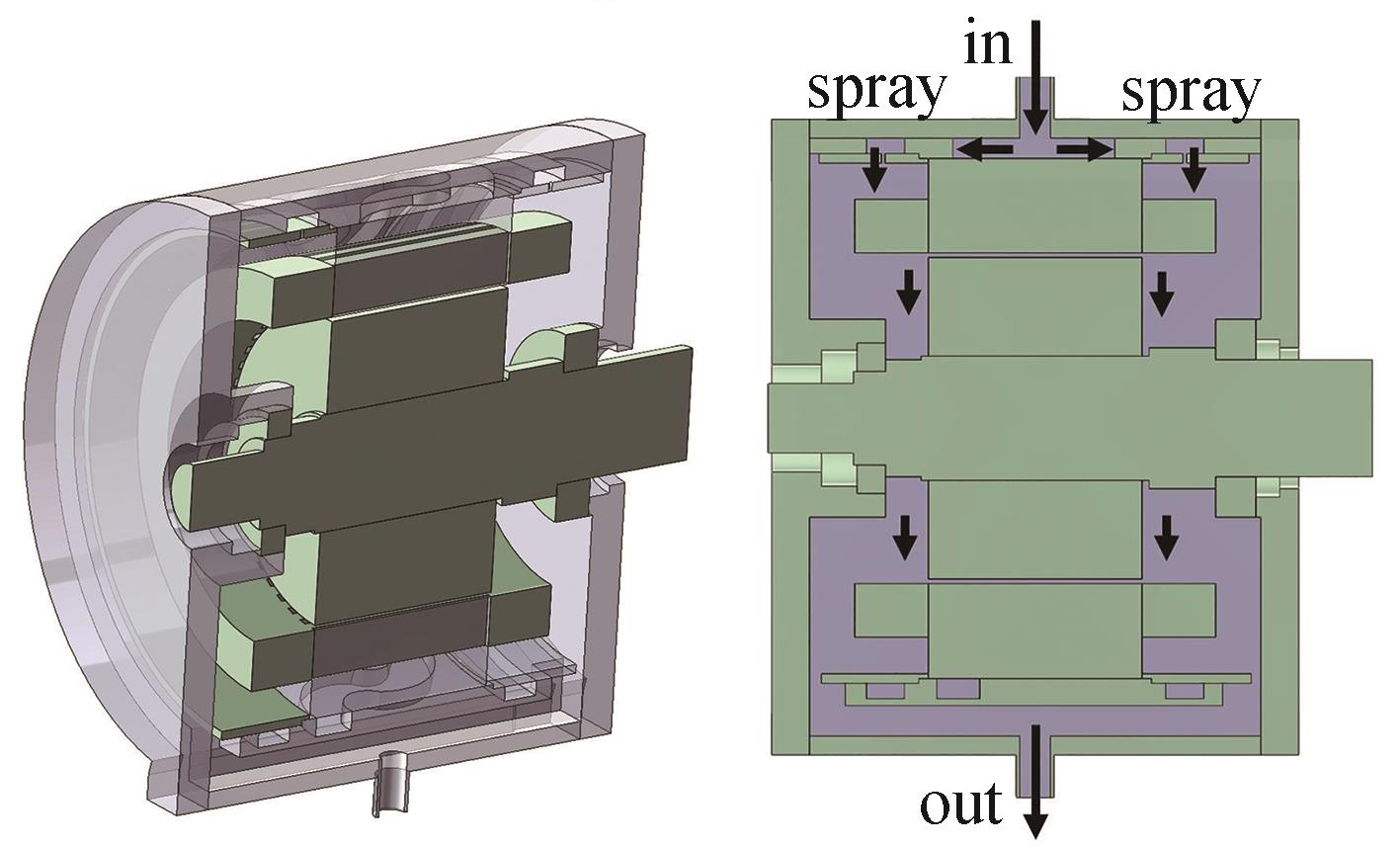
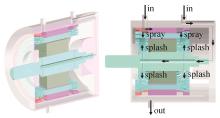
图 3
电机Ⅱ仿真模型剖面图"
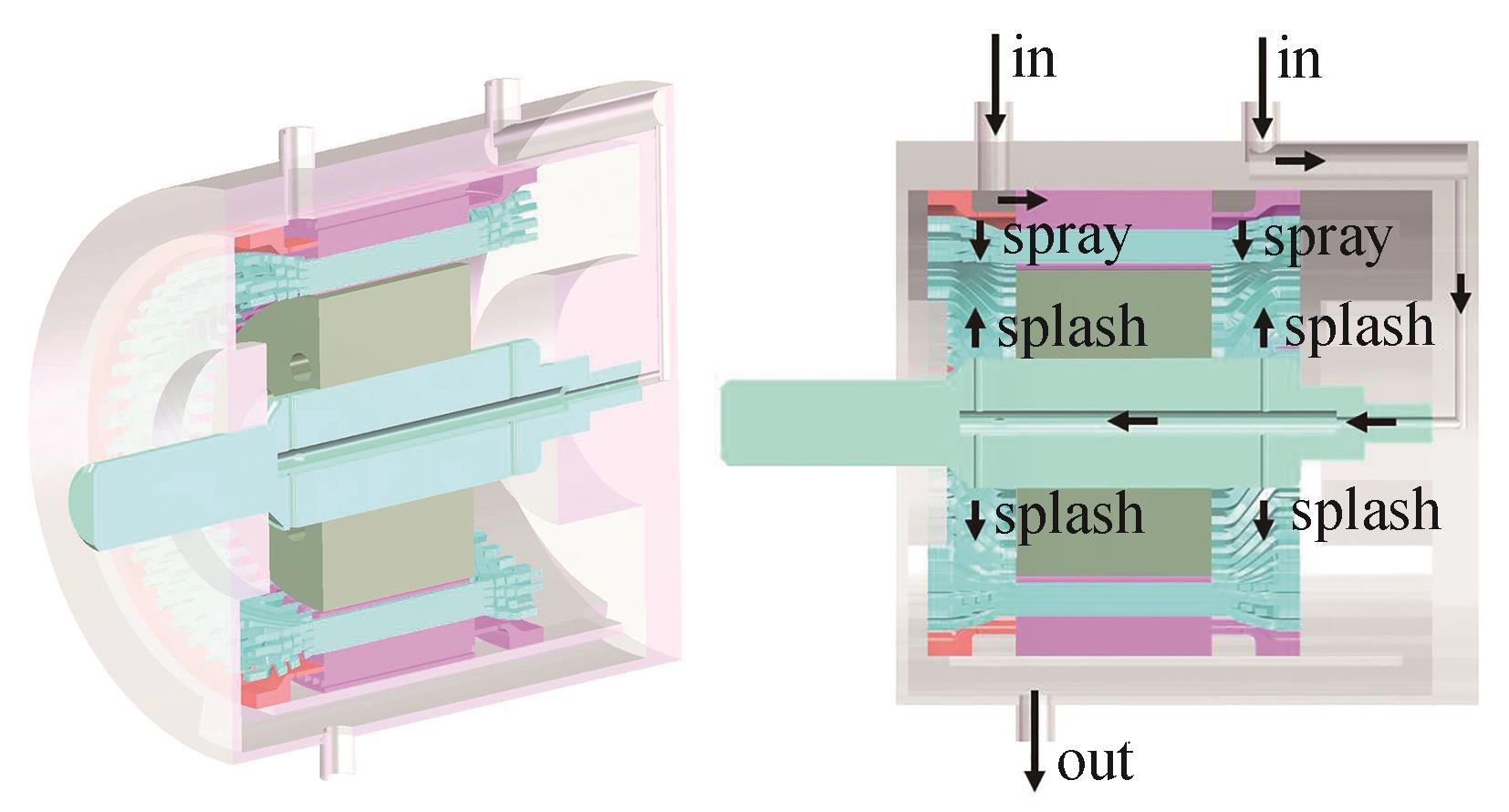
表1
两款电机额定工况下各部件损耗"
| 转速/(r·min-1) | 3 820 | 4 500 | 8 000 | 12 000 |
|---|---|---|---|---|
| 项目 | 电机Ⅰ损耗/W | 电机Ⅱ损耗/W | ||
| 绕组 | 2 157.8 | 1 871.9 | 1 031.2 | 896.8 |
| 定子 | 449.0 | 596.6 | 773.0 | 917.5 |
| 转子 | 46.2 | 55.7 | 59.4 | 62.5 |
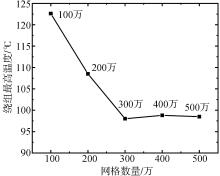
图 4
电机Ⅰ网格无关性验证"
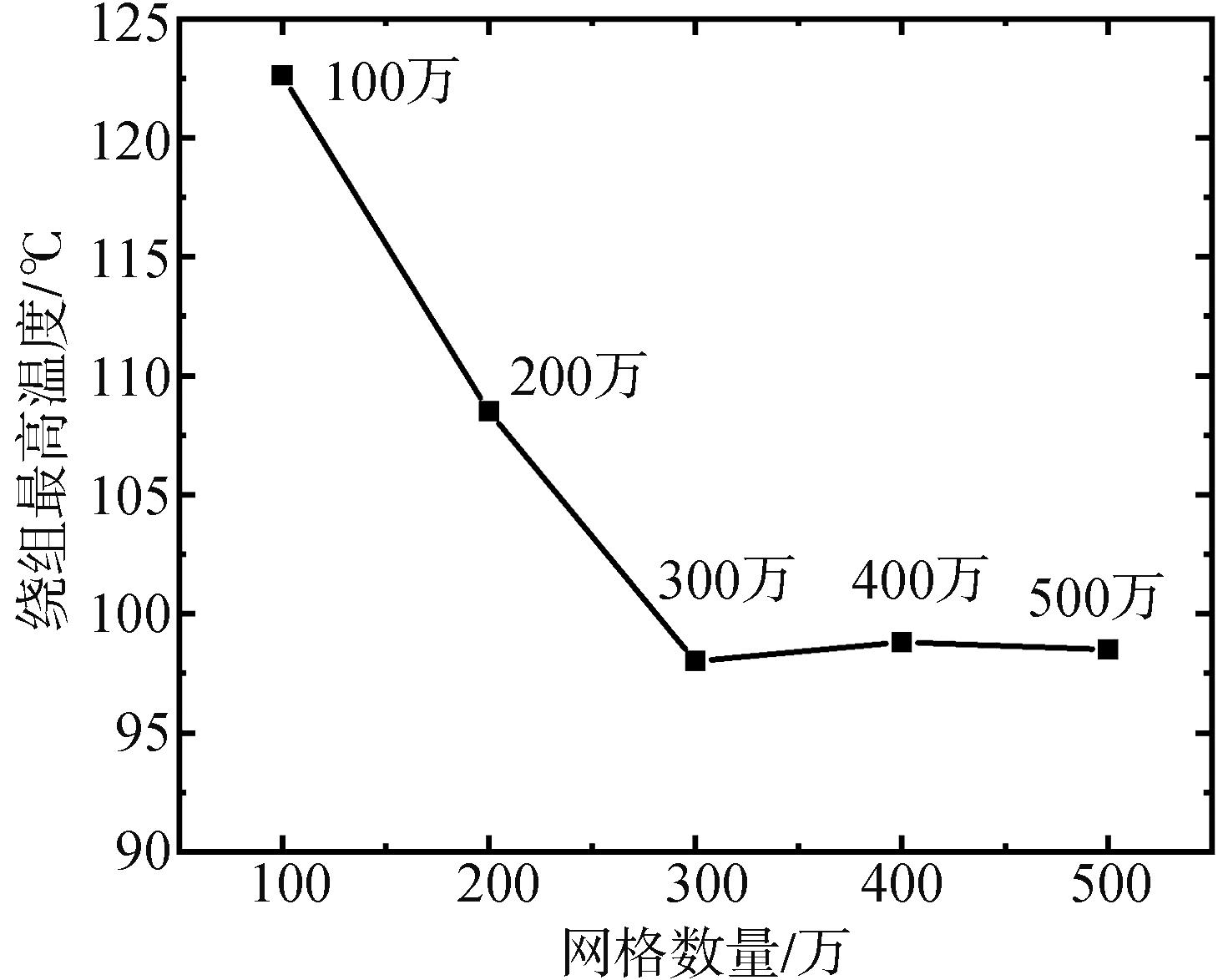
图 5
电机Ⅱ网格无关性验证"
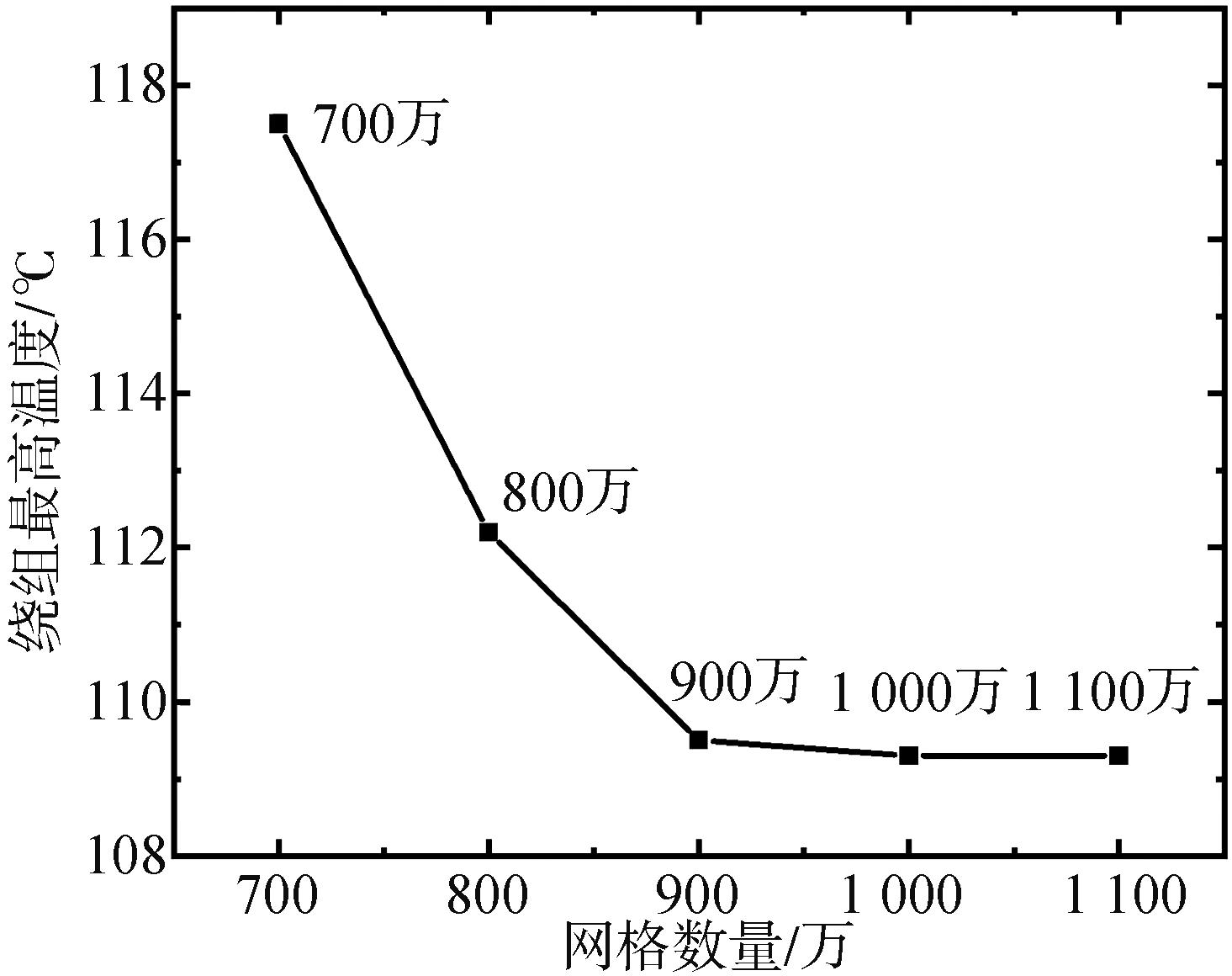
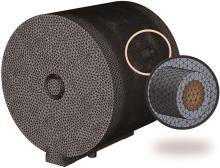
图 6
电机Ⅰ仿真模型网格划分"
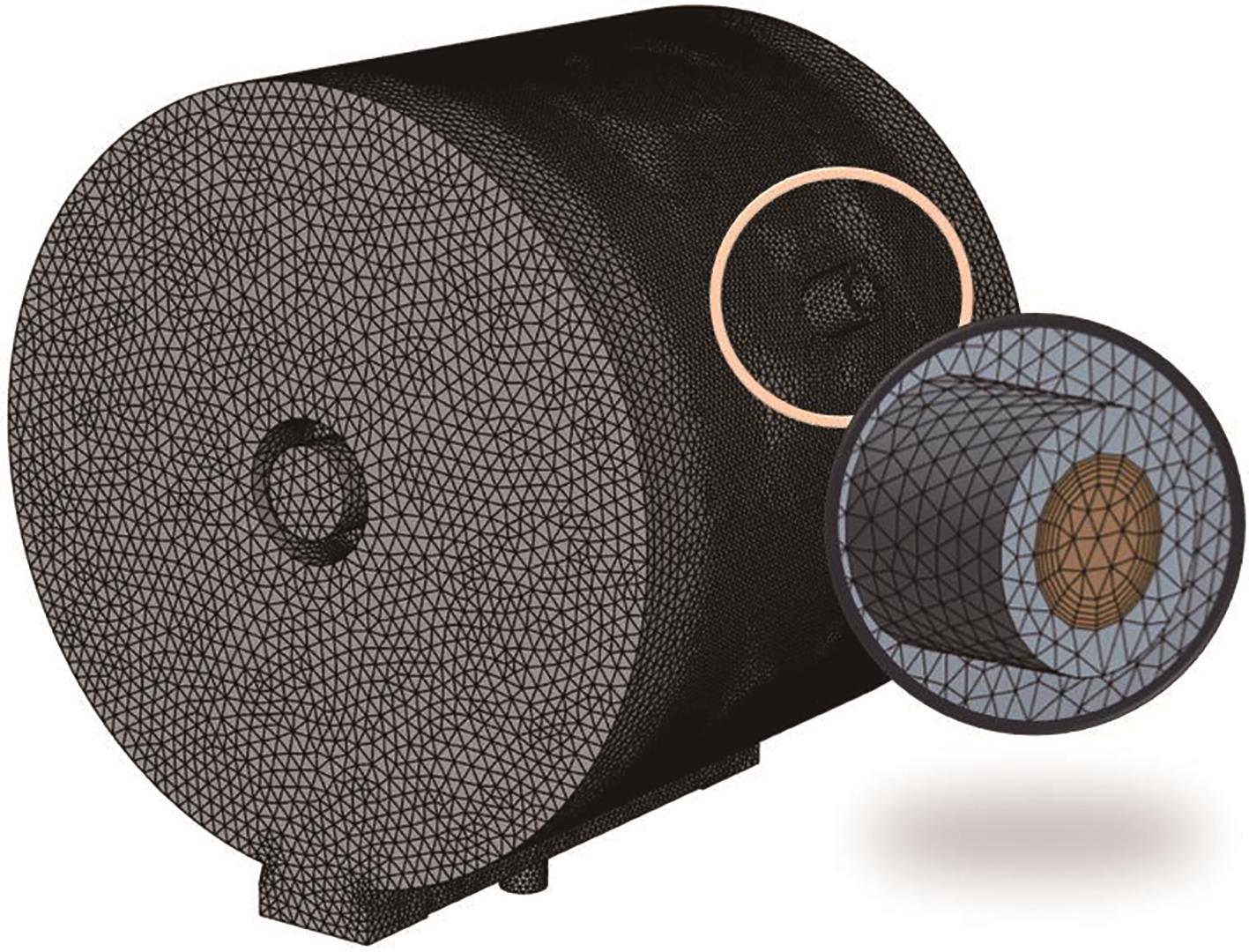
图 7
电机Ⅱ仿真模型网格划分"
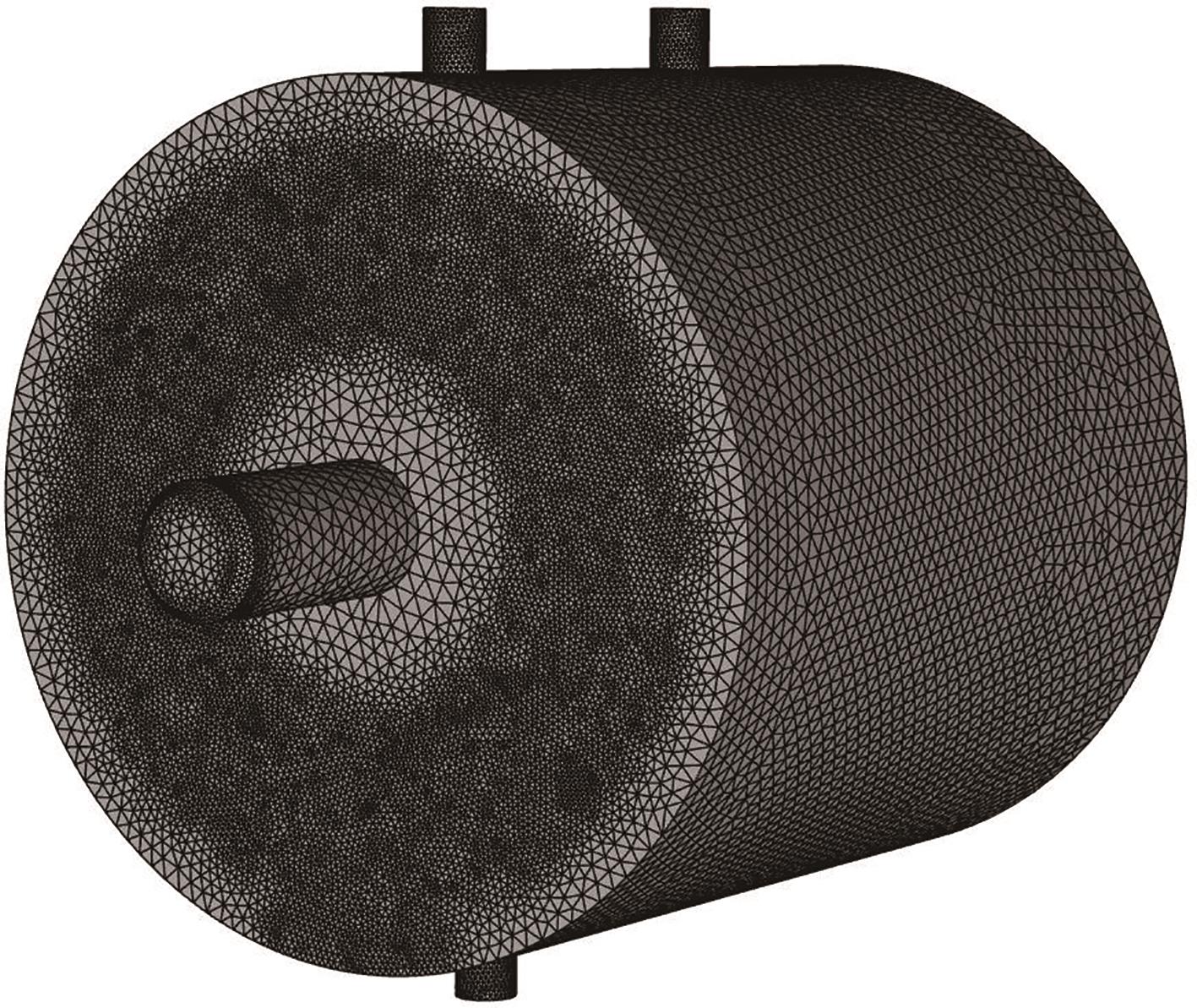
图 8
电机Ⅱ样机测试平台"

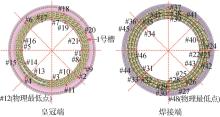
图 9
热电偶分布图"
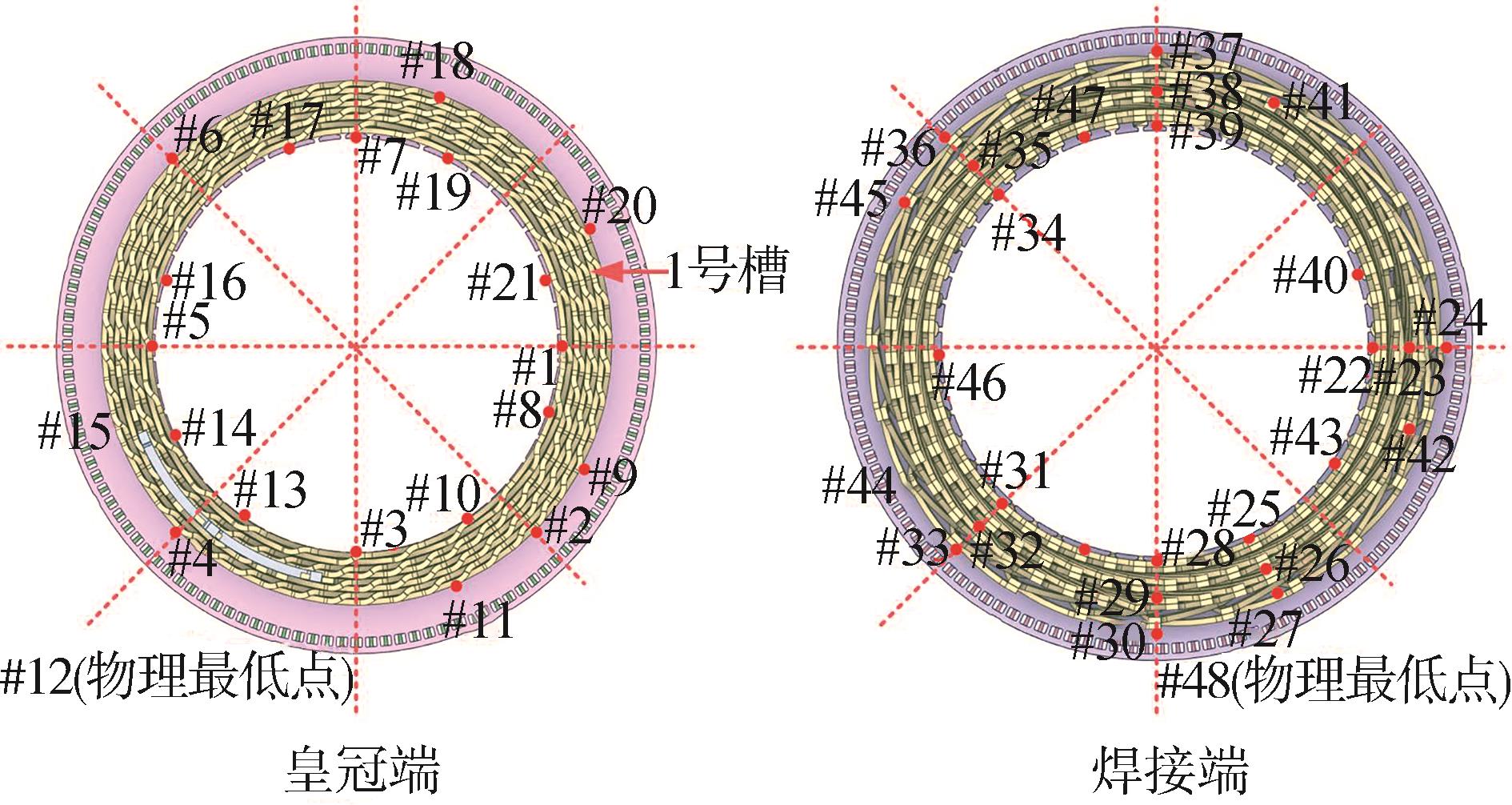
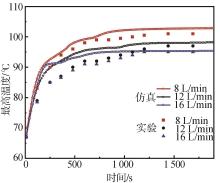
图 10
电机Ⅰ仿真与实验温升曲线"
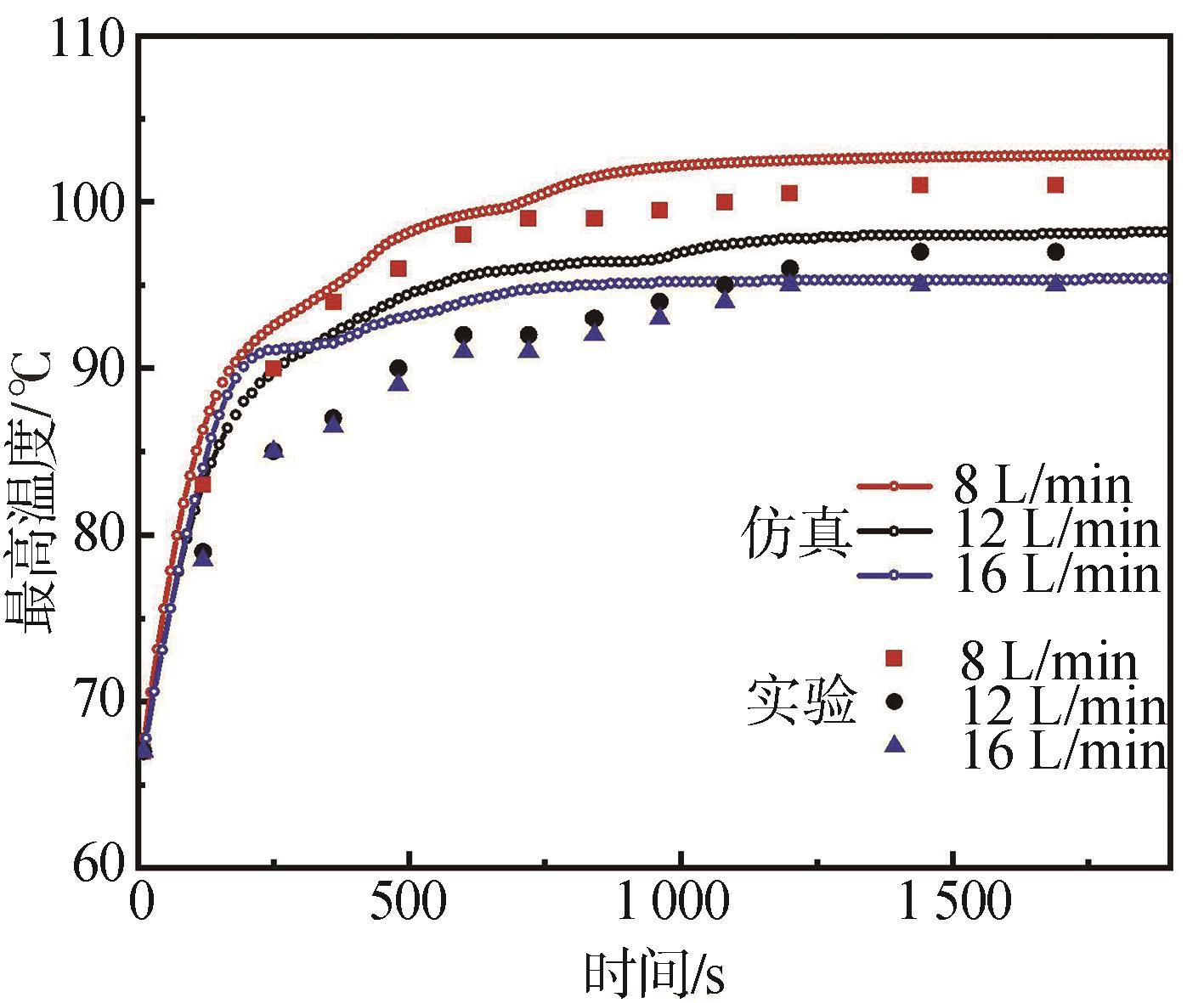
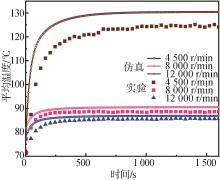
图 11
电机Ⅱ仿真与实验温升曲线"
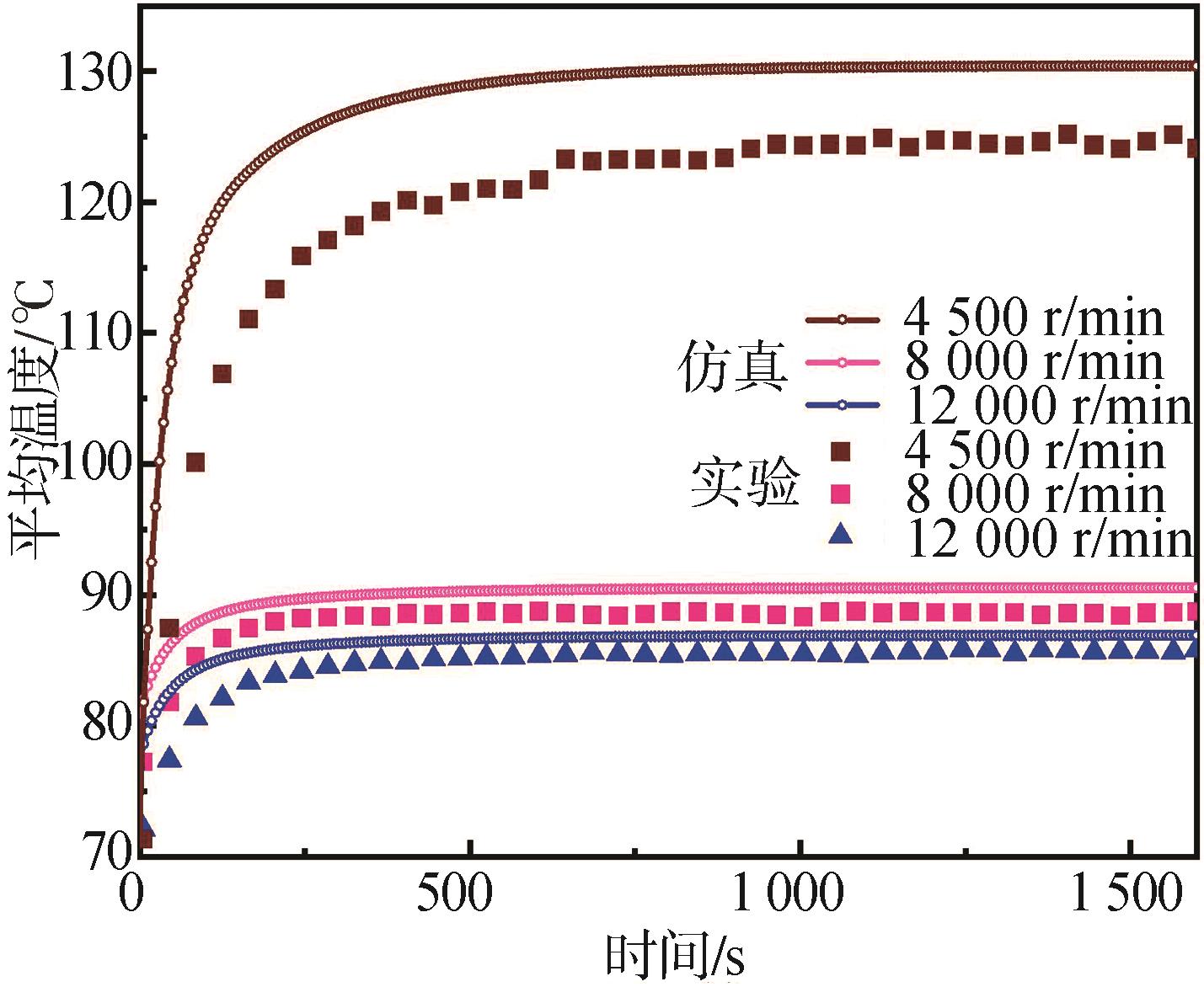
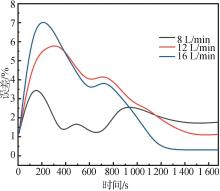
图 12
电机Ⅰ仿真与实验温升误差曲线"
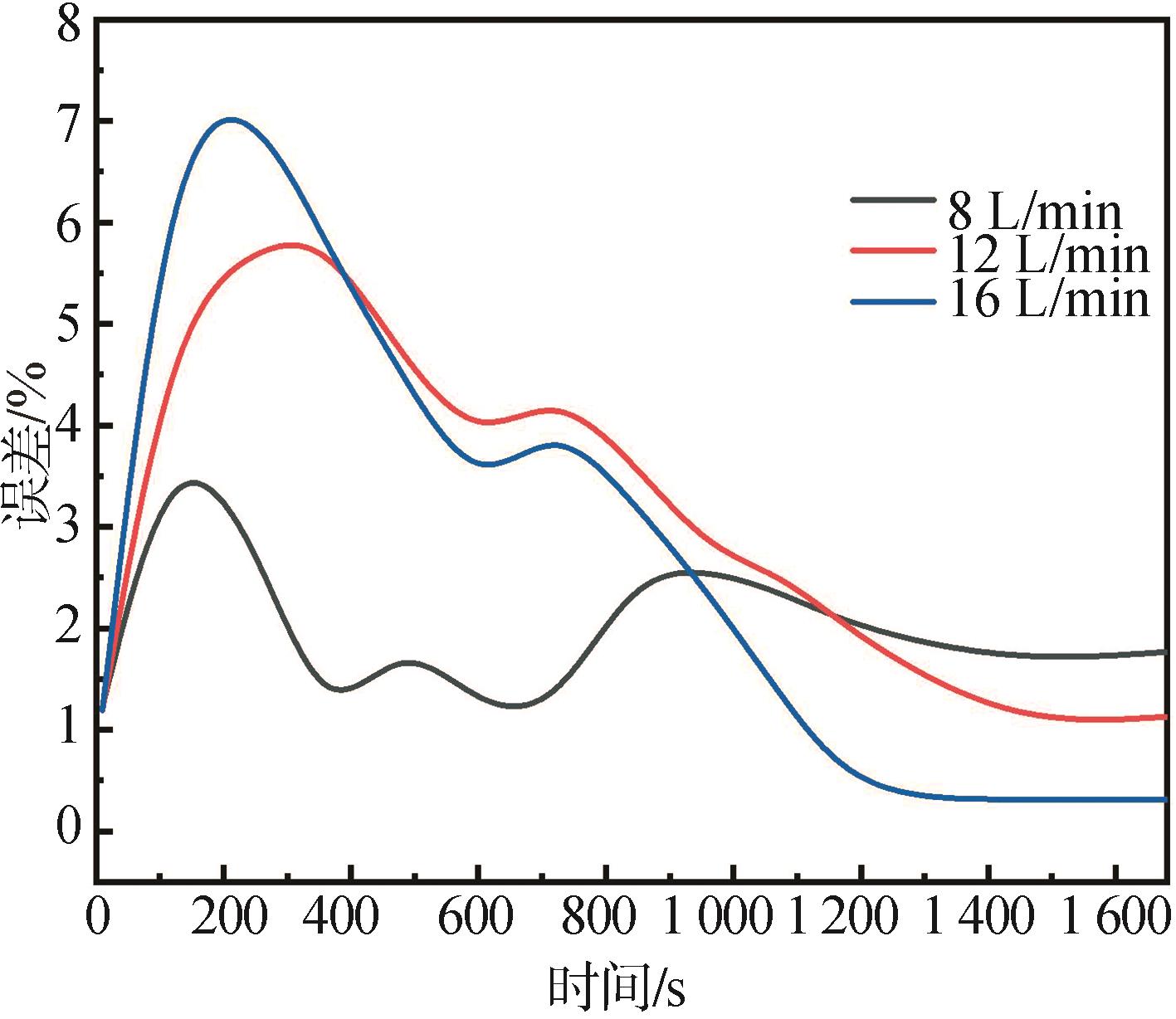
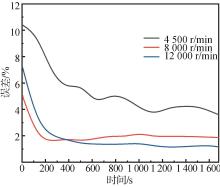
图 13
电机Ⅱ仿真与实验温升误差曲线"
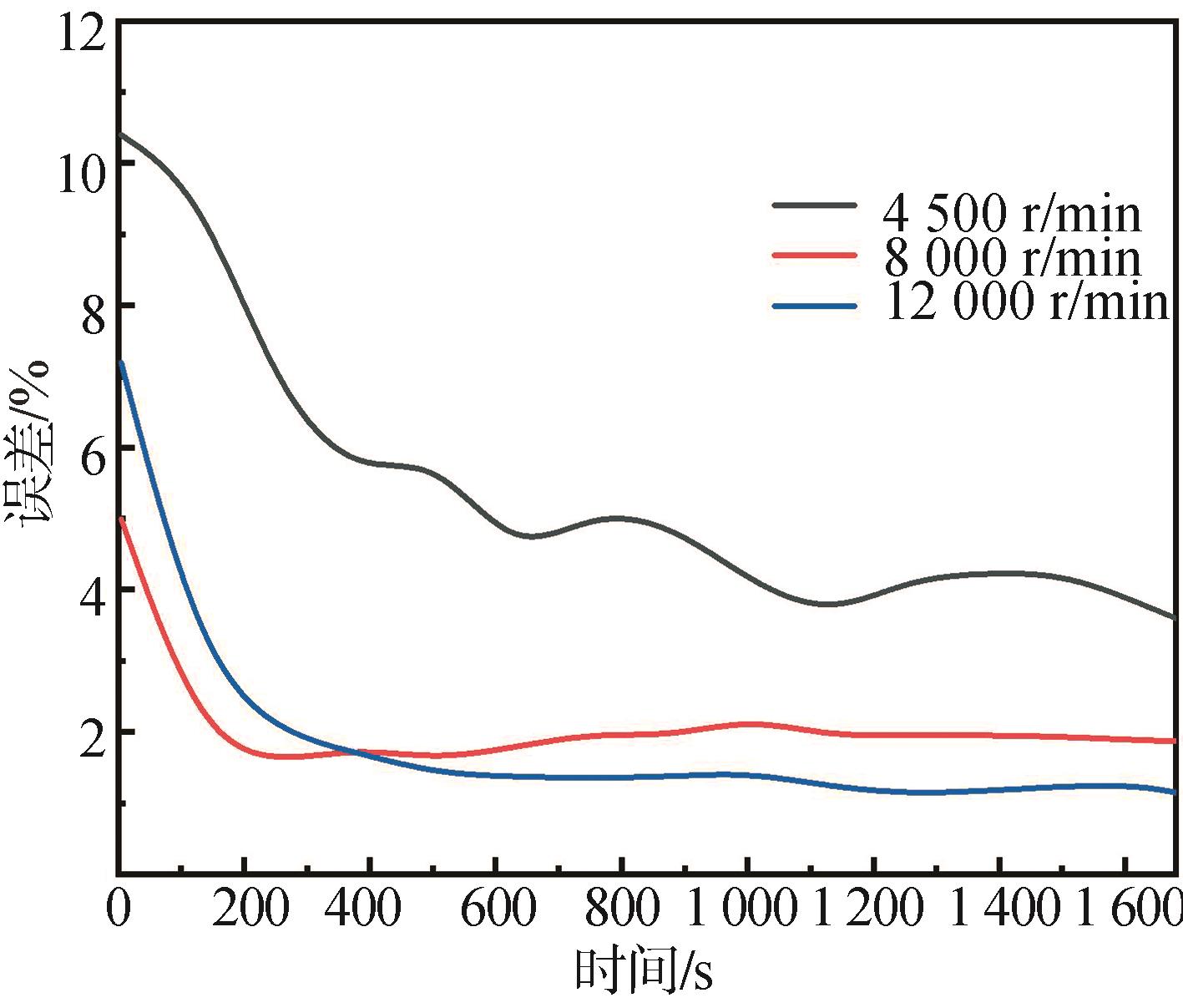
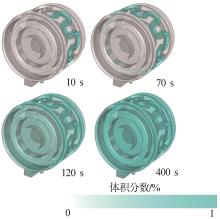
图 14
电机Ⅰ不同时刻冷却油相体积分数"
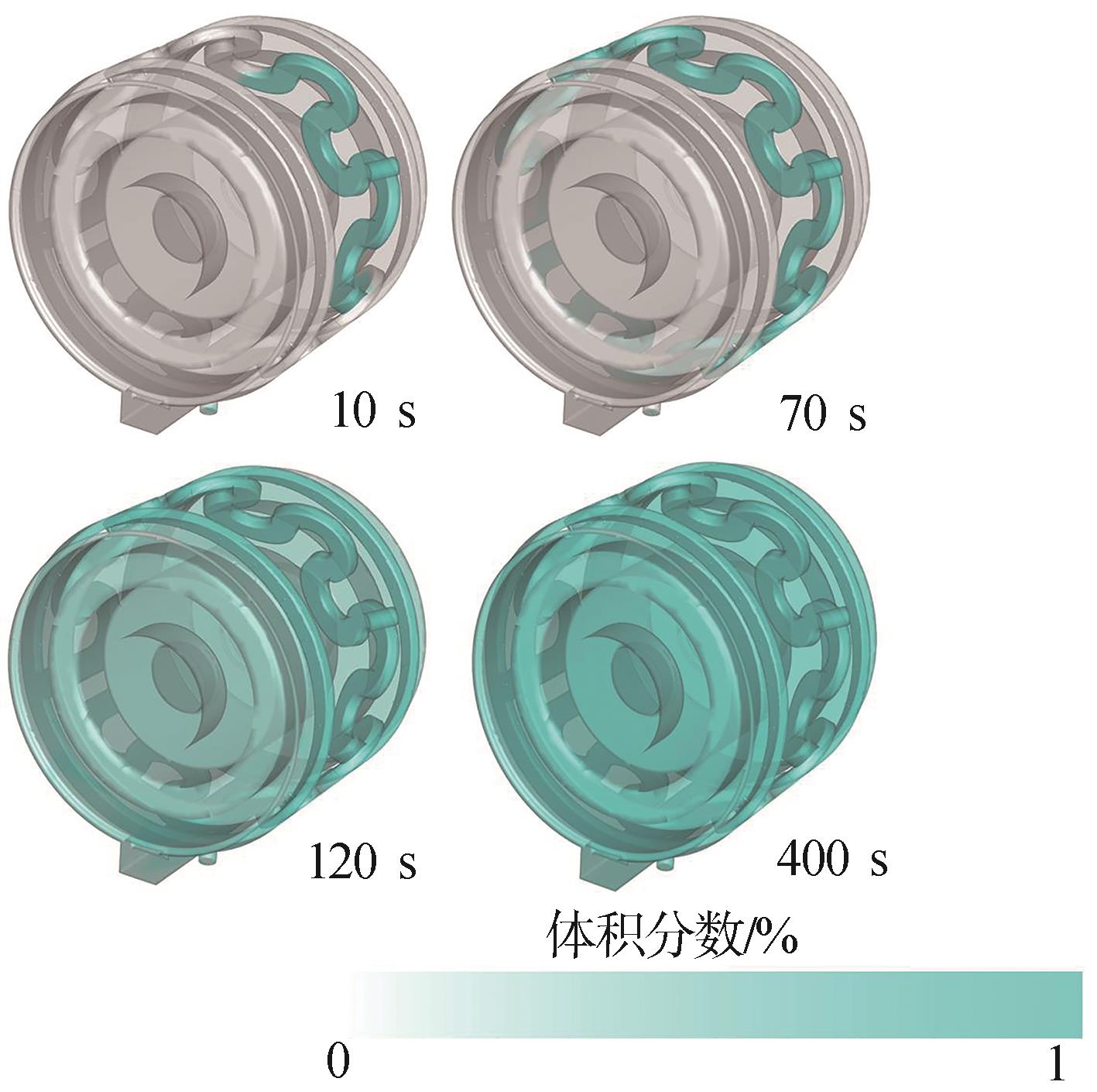
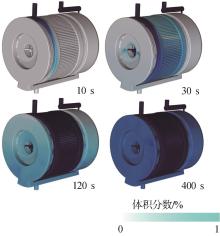
图 15
电机Ⅱ不同时刻冷却油相体积分数"
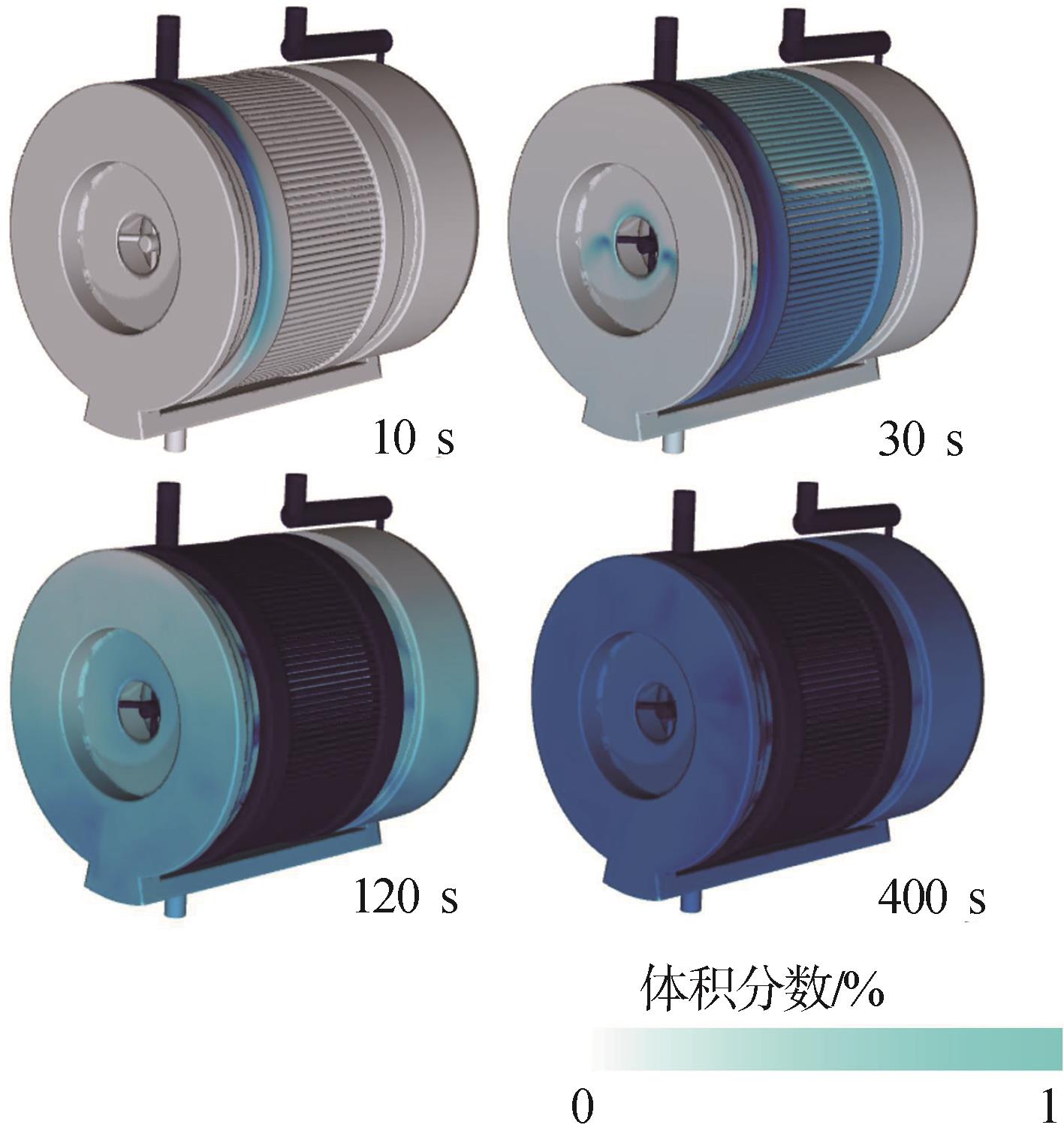
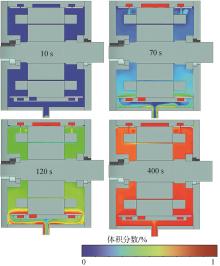
图 16
电机Ⅰ中心平面油相体积分布"
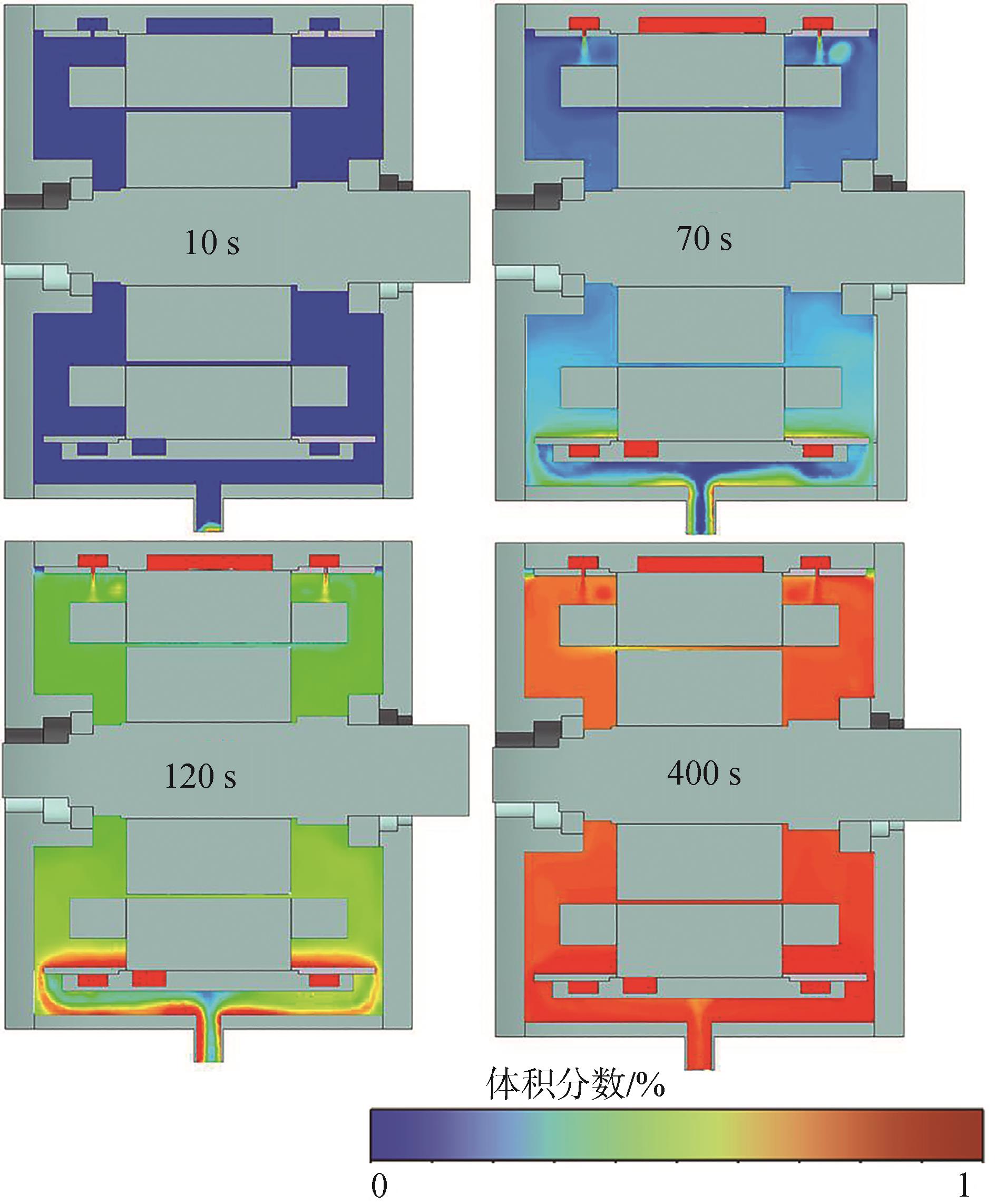
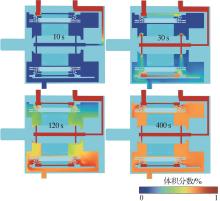
图 17
电机Ⅱ中心平面油相体积分布"
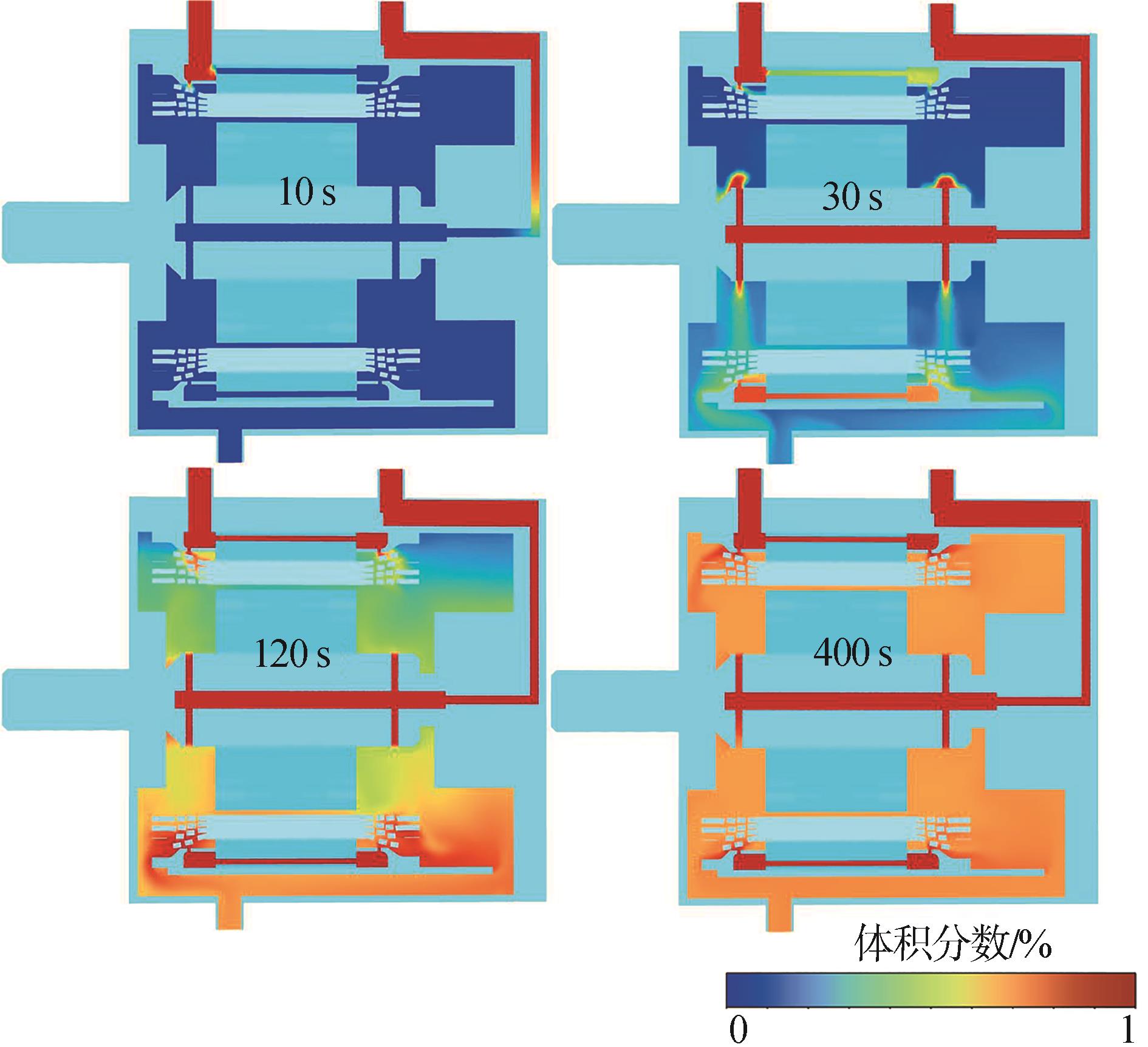
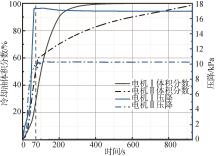
图 18
两款电机冷却油体积分数及压降变化"
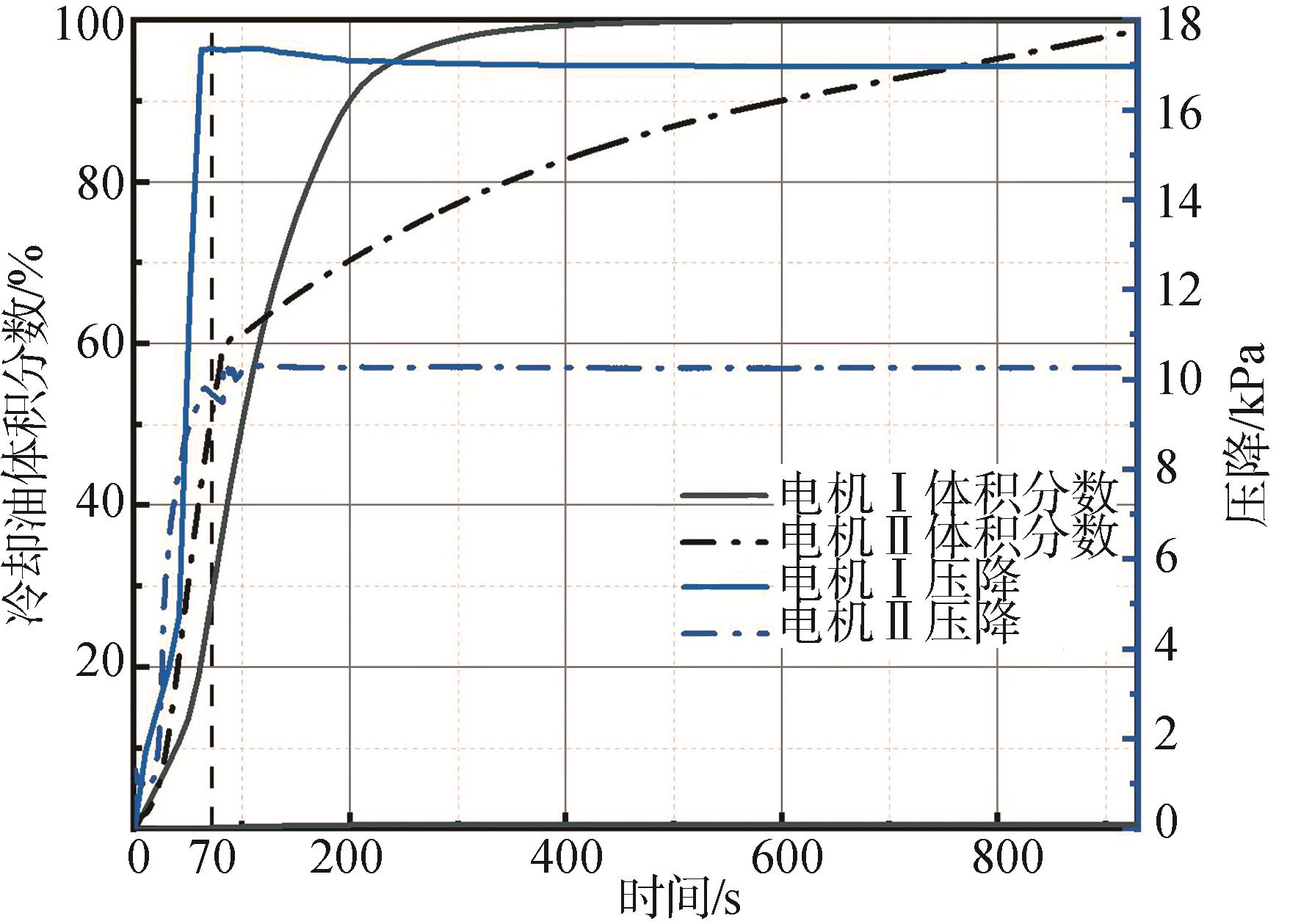
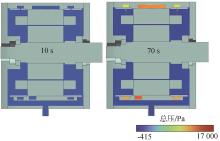
图 19
电机Ⅰ中心平面总压分布"
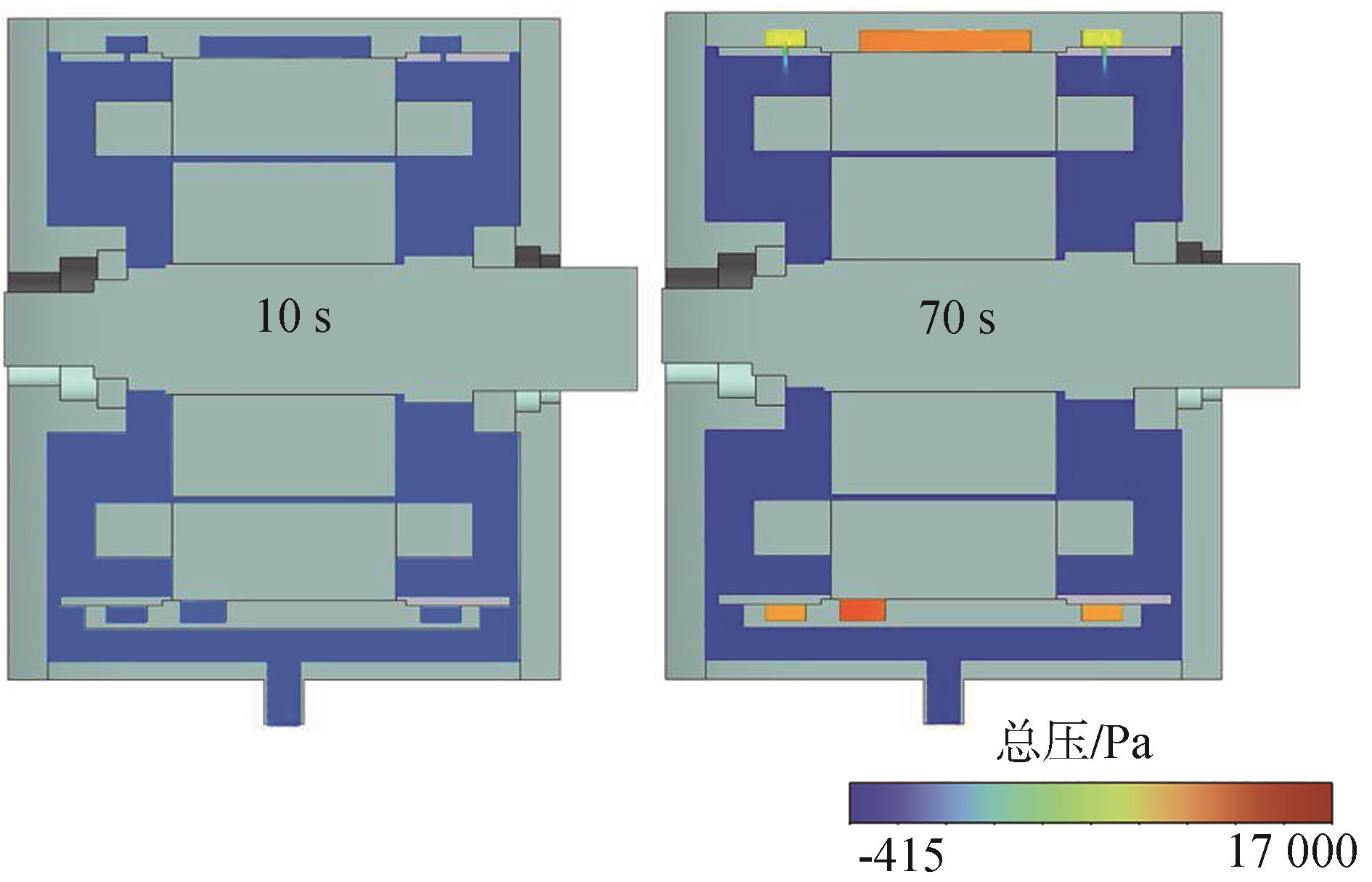
表2
电机Ⅰ不同时刻最大压力与平均压力"
| 测量参数 | 10 s | 70 s | 120 s | 400 s |
|---|---|---|---|---|
| 最大压力/Pa | 3 349.8 | 23 120.8 | 23 751.2 | 24 017.3 |
| 平均压力/Pa | 993.4 | 1 343.8 | 2 579.2 | 2 759.9 |
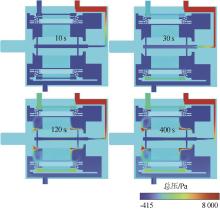
图 20
电机Ⅱ中心平面总压分布"
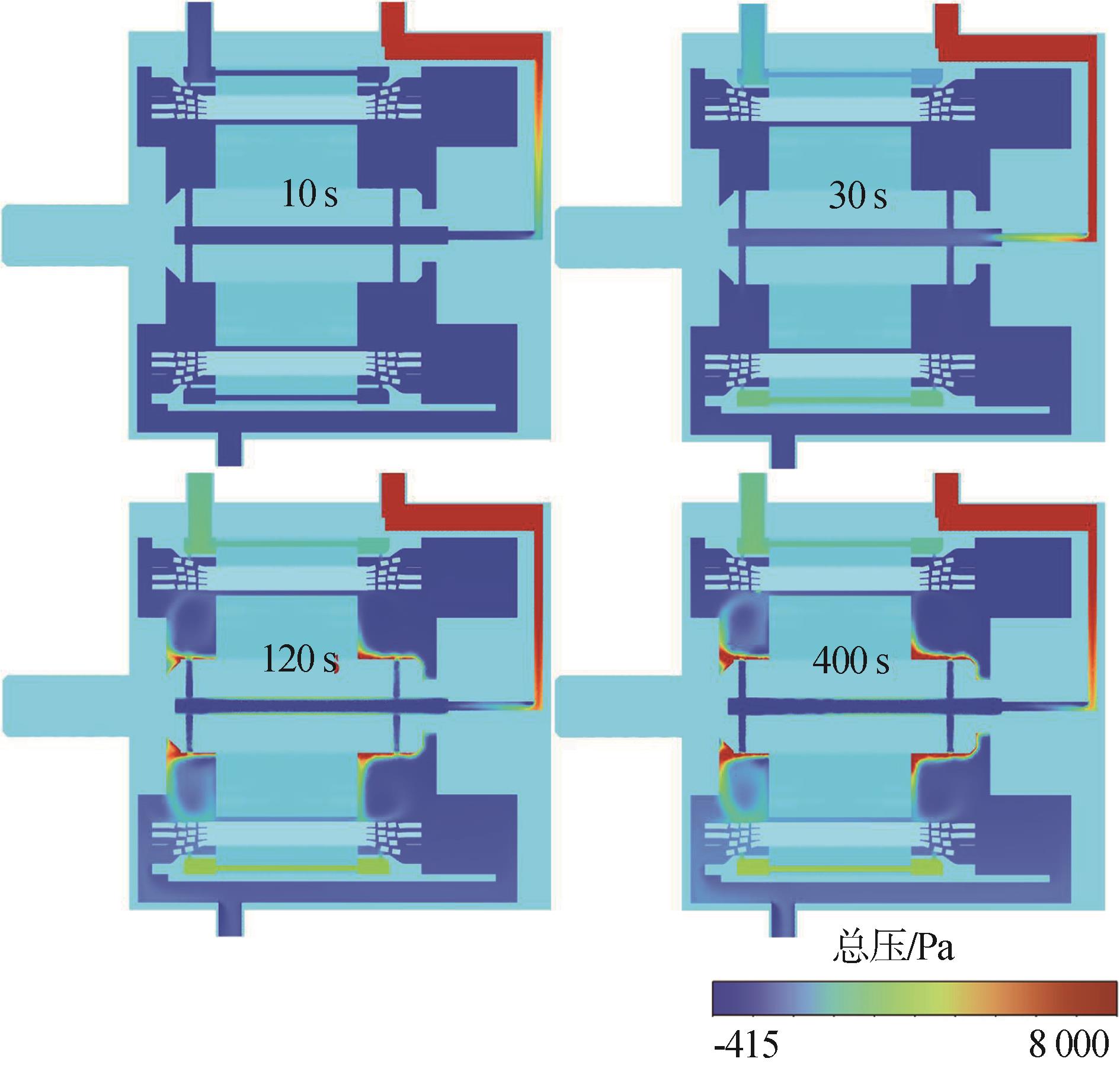
表3
电机Ⅱ不同时刻最大压力与平均压力"
| 测量参数 | 10 s | 70 s | 120 s | 400 s |
|---|---|---|---|---|
| 最大压力/Pa | 10 624.6 | 16 534.9 | 18 955.8 | 35 406.4 |
| 平均压力/Pa | 332.7 | 786.2 | 807.2 | 772.9 |
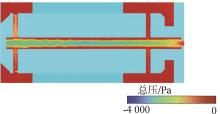
图 21
电机Ⅱ中心平面总压分布"
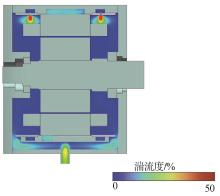
图 22
电机Ⅰ 400 s时刻中心平面湍流度"
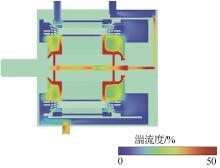
图 23
电机Ⅱ 400 s时刻中心平面湍流度"
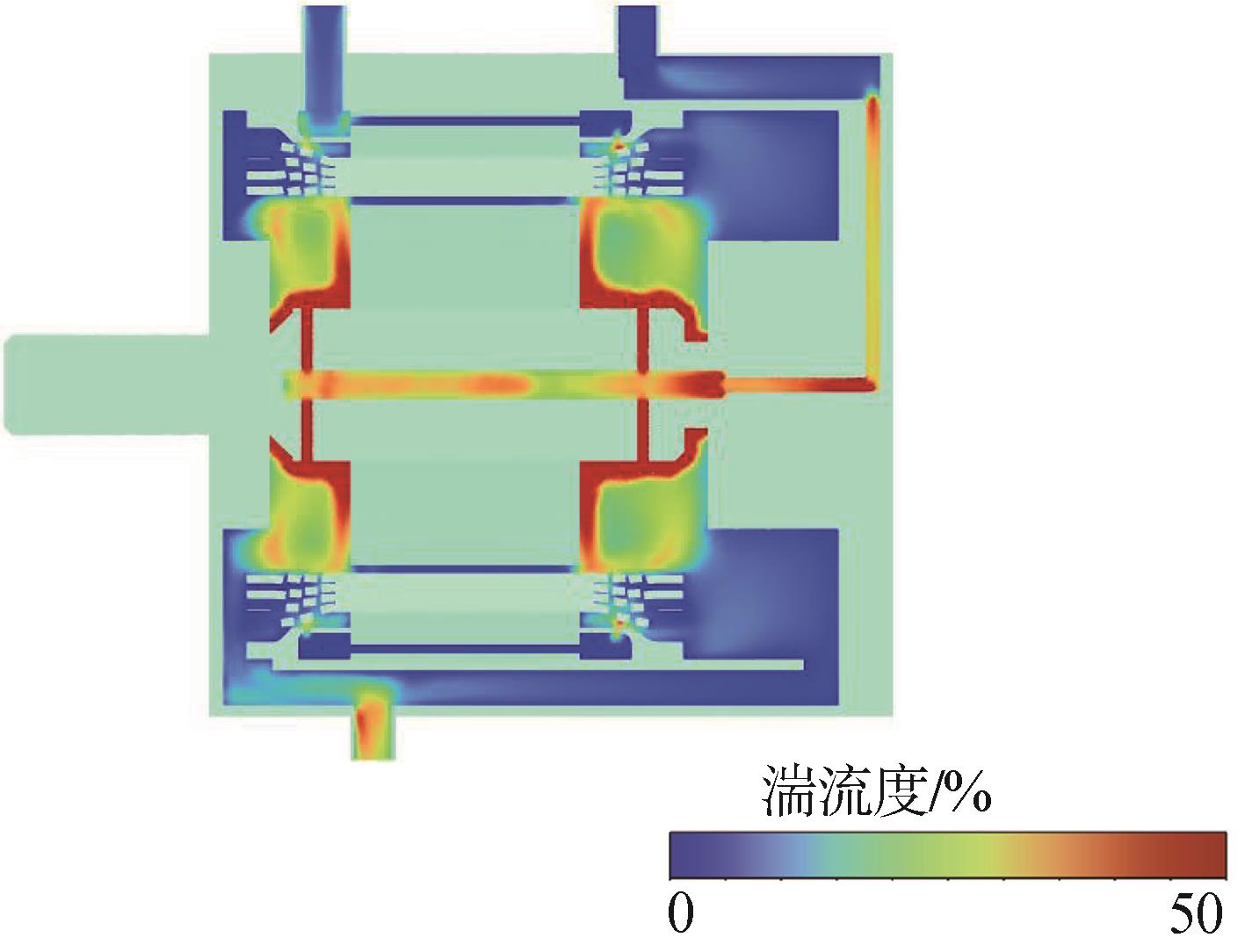
表4
电机Ⅰ各时刻各部件表面平均湍流度 %"
| 部件 | 10 s | 70 s | 120 s | 400 s |
|---|---|---|---|---|
| 绕组 | 3.22 | 8.20 | 4.47 | 3.28 |
| 定子 | 4.31 | 6.29 | 5.18 | 4.91 |
| 转子 | 0.04 | 0.30 | 0.08 | 0.01 |
| 转轴 | 0.06 | 1.33 | 0.41 | 0.05 |
表5
电机Ⅱ各时刻各部件表面平均湍流度 %"
| 部件 | 10 s | 70 s | 120 s | 400 s |
|---|---|---|---|---|
| 绕组 | 0.72 | 0.85 | 6.79 | 6.39 |
| 定子 | 3.58 | 0.31 | 1.92 | 1.81 |
| 转子 | 2.20 | 1.34 | 16.10 | 16.32 |
| 转轴 | 5.60 | 5.78 | 74.24 | 74.21 |
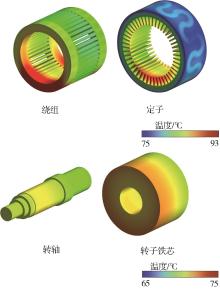
图 24
电机Ⅰ各部件表面温度分布"
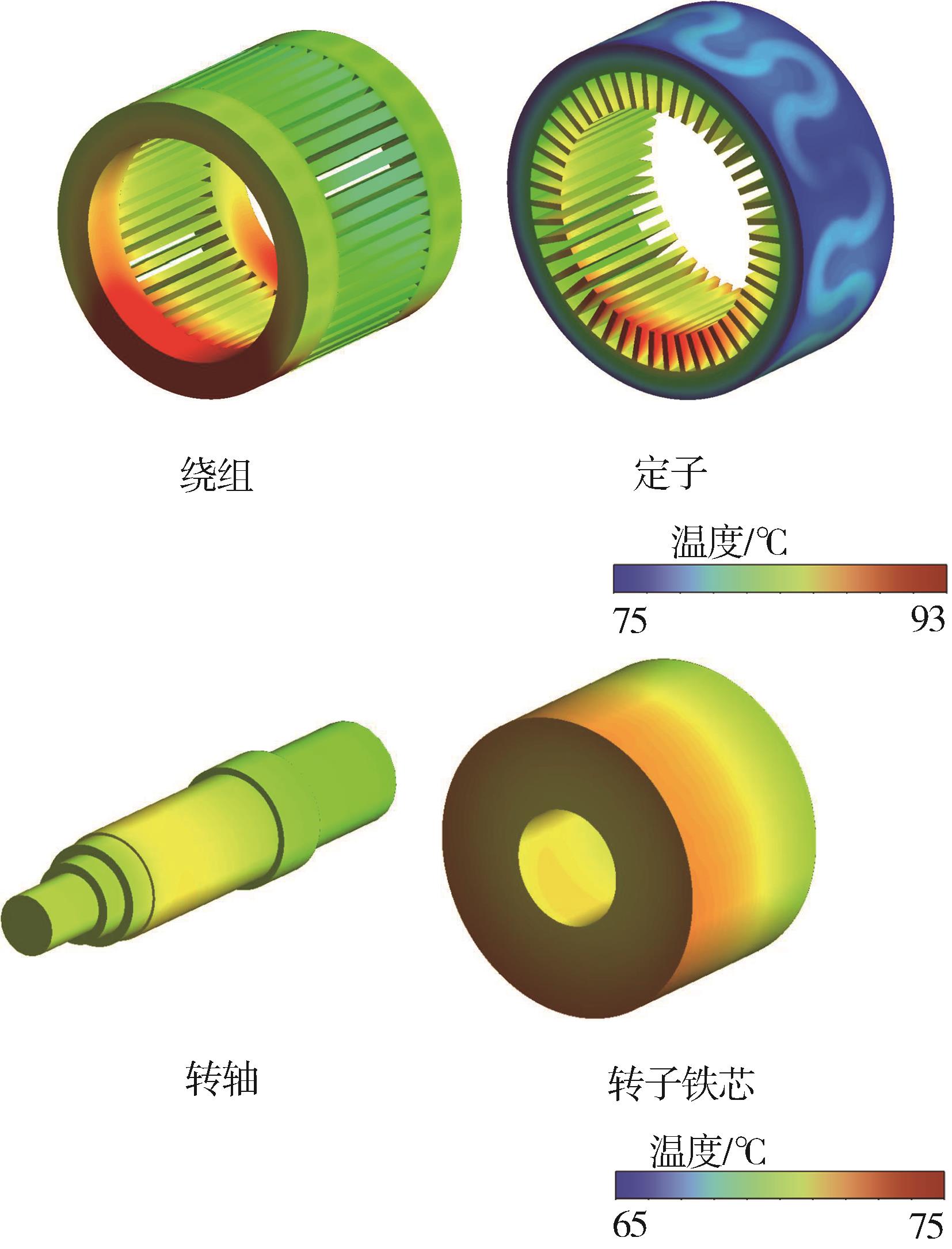
表6
电机Ⅰ各部件表面最高温度与平均温度"
| 部件 | 最高温度/℃ | 平均温度/℃ |
|---|---|---|
| 绕组 | 98.0 | 88.1 |
| 定子 | 93.8 | 82.3 |
| 转子铁芯 | 74.2 | 72.6 |
| 转轴 | 72.8 | 71.7 |
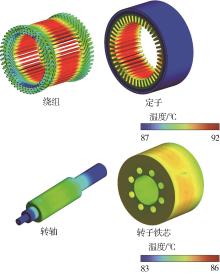
图 25
电机Ⅱ各部件表面温度分布"
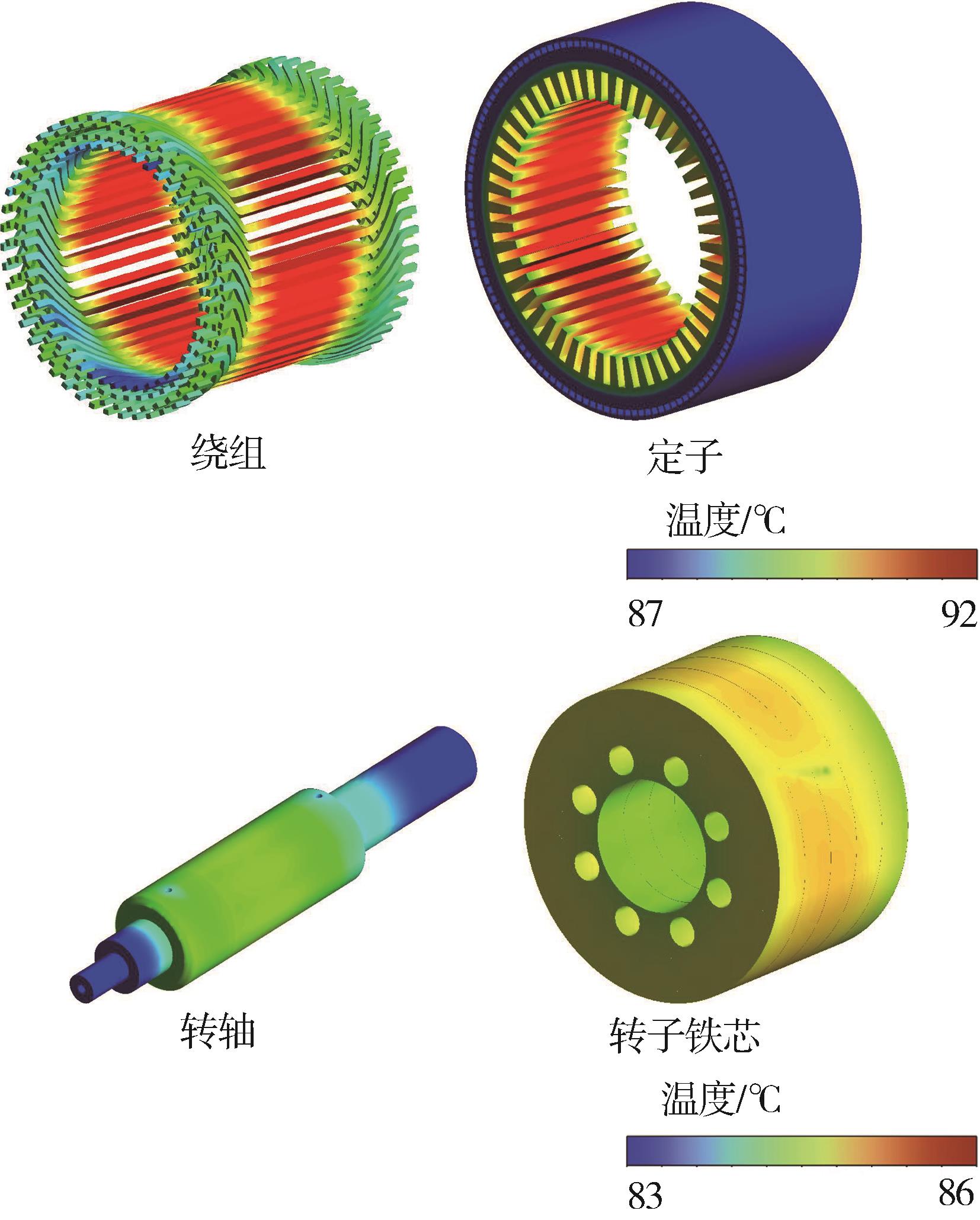
表7
电机Ⅱ各部件表面最高温度与平均温度"
| 部件 | 最高温度/℃ | 平均温度/℃ |
|---|---|---|
| 绕组 | 93.0 | 89.6 |
| 定子 | 92.5 | 87.7 |
| 转子铁芯 | 85.5 | 85.1 |
| 转轴 | 84.7 | 83.6 |
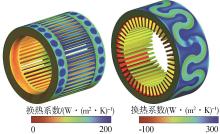
图 26
电机Ⅰ绕组(左)与定子表面换热系数(右)分布"
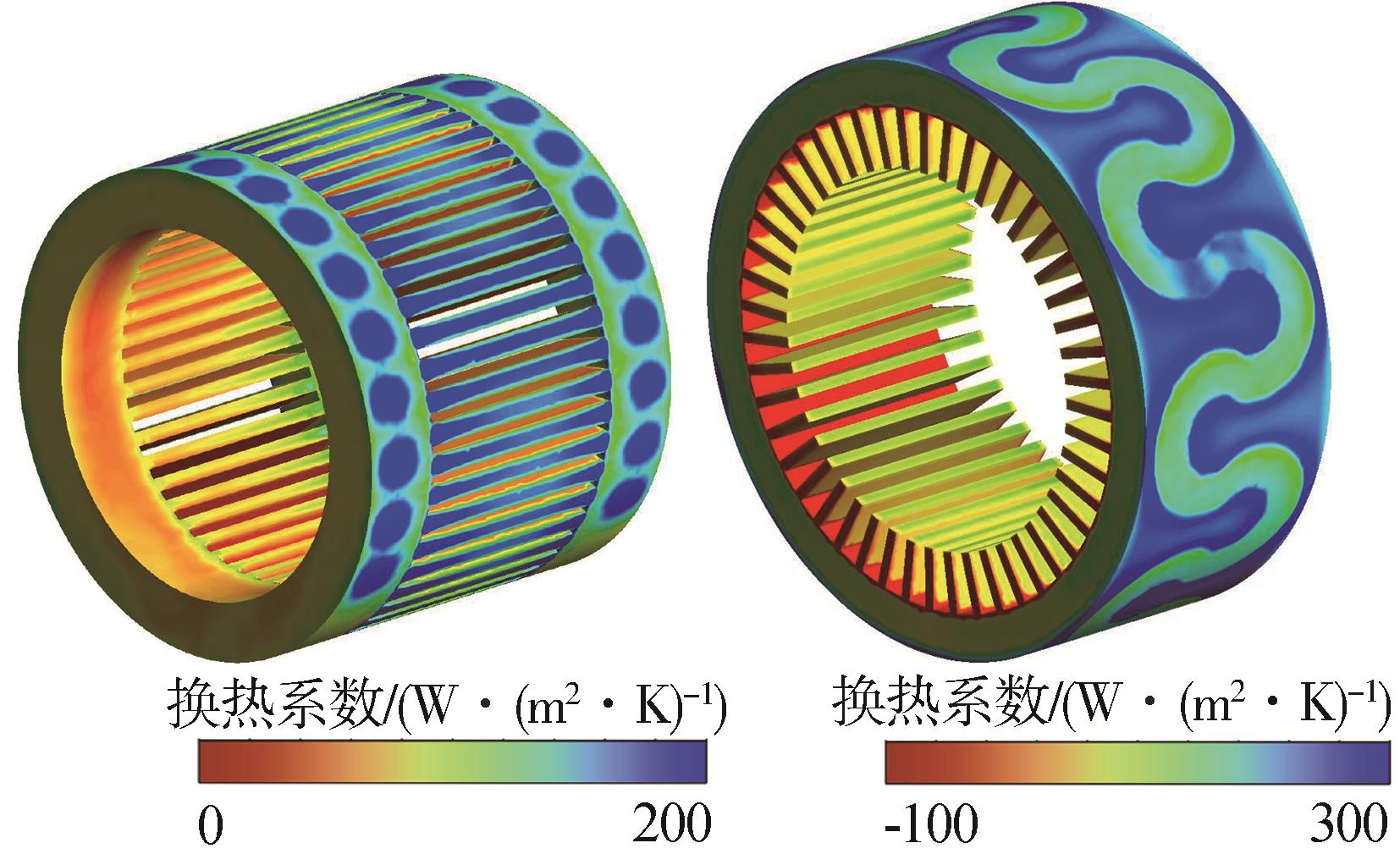
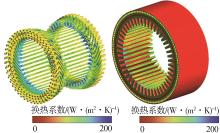
图 27
电机Ⅱ绕组(左)与定子表面换热系数(右)分布"
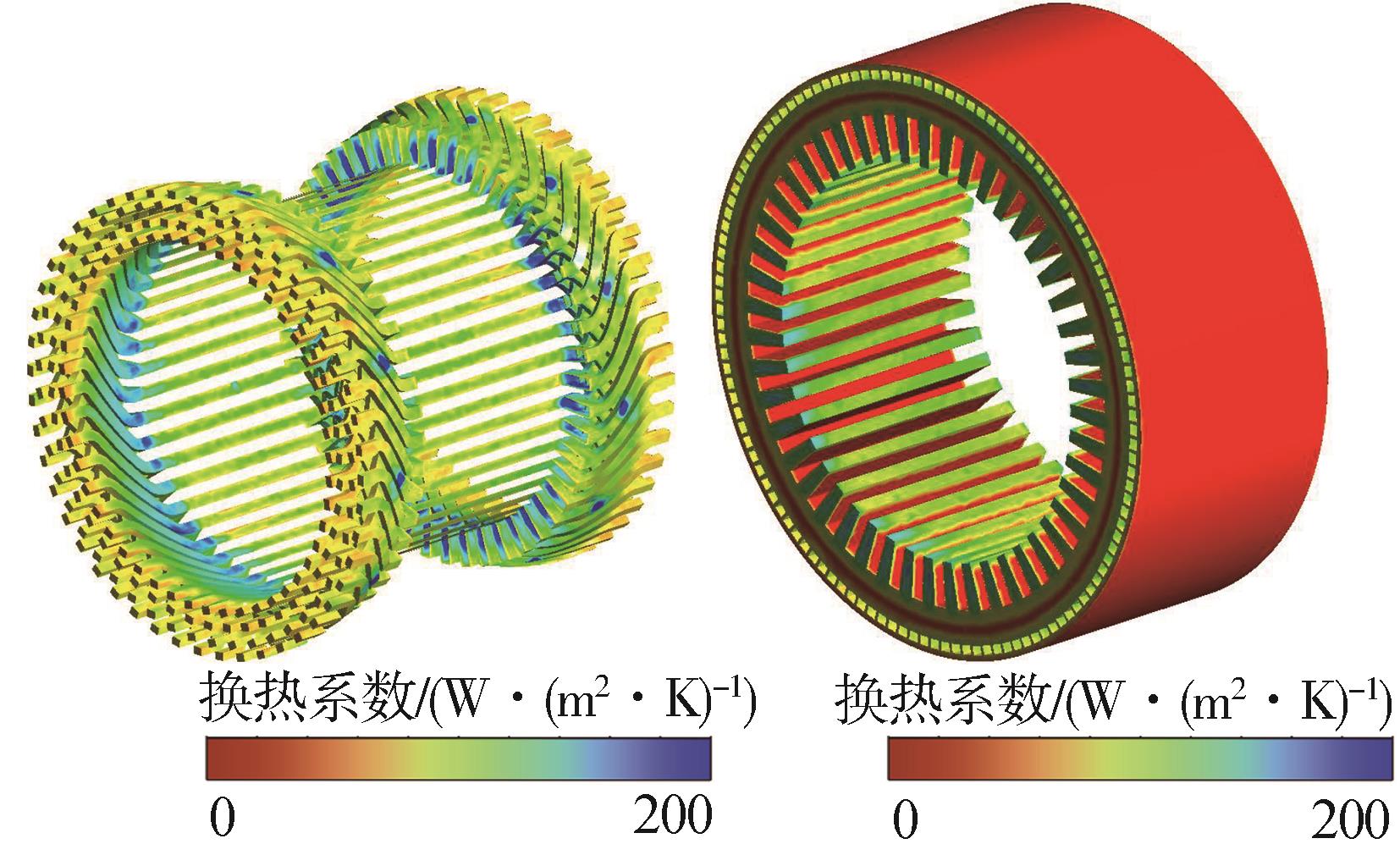
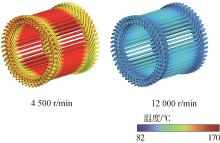
图 28
不同转速下绕组温度分布"
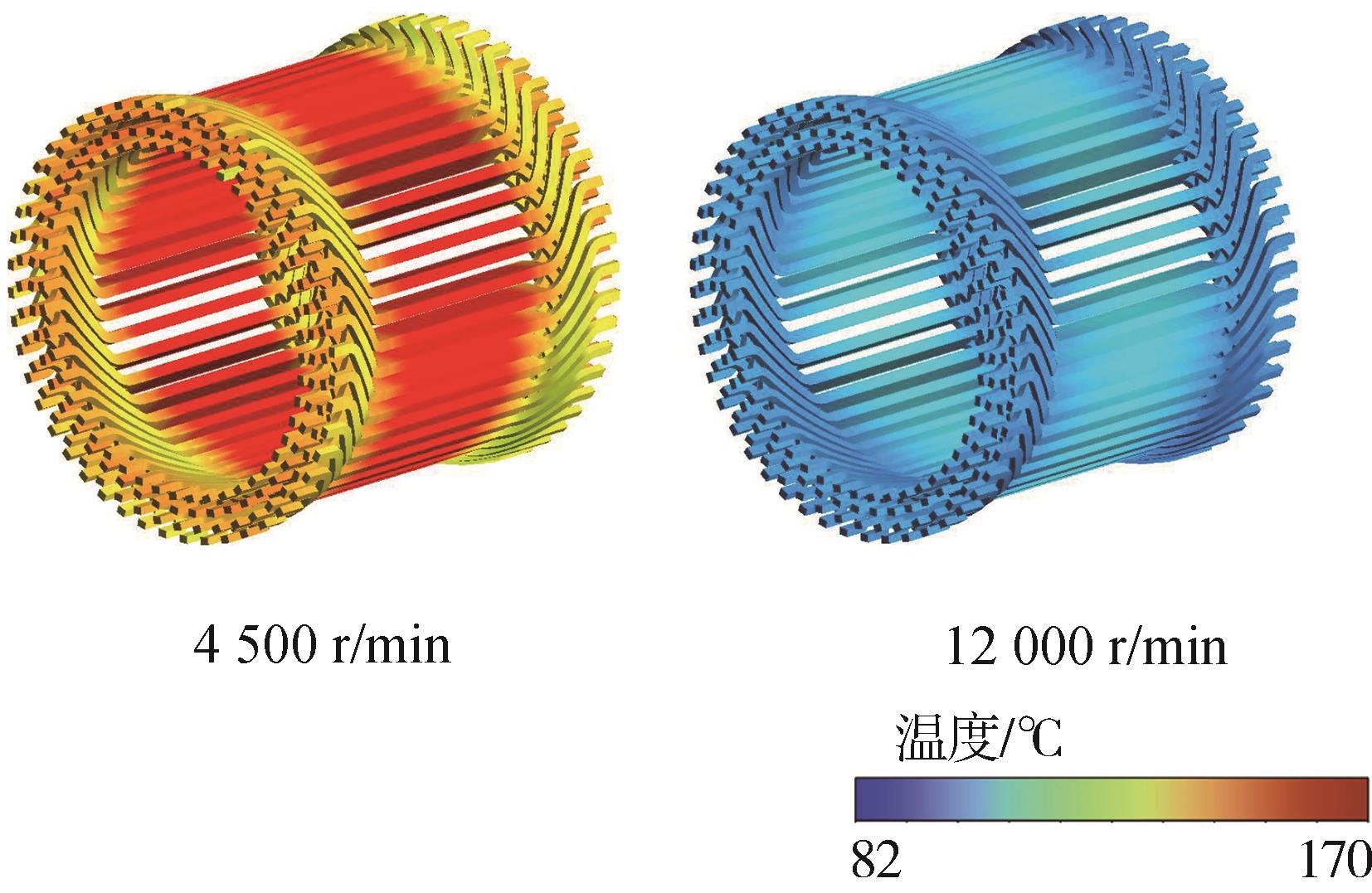
图 29
不同入油量下最高温度、压降与湍流度"
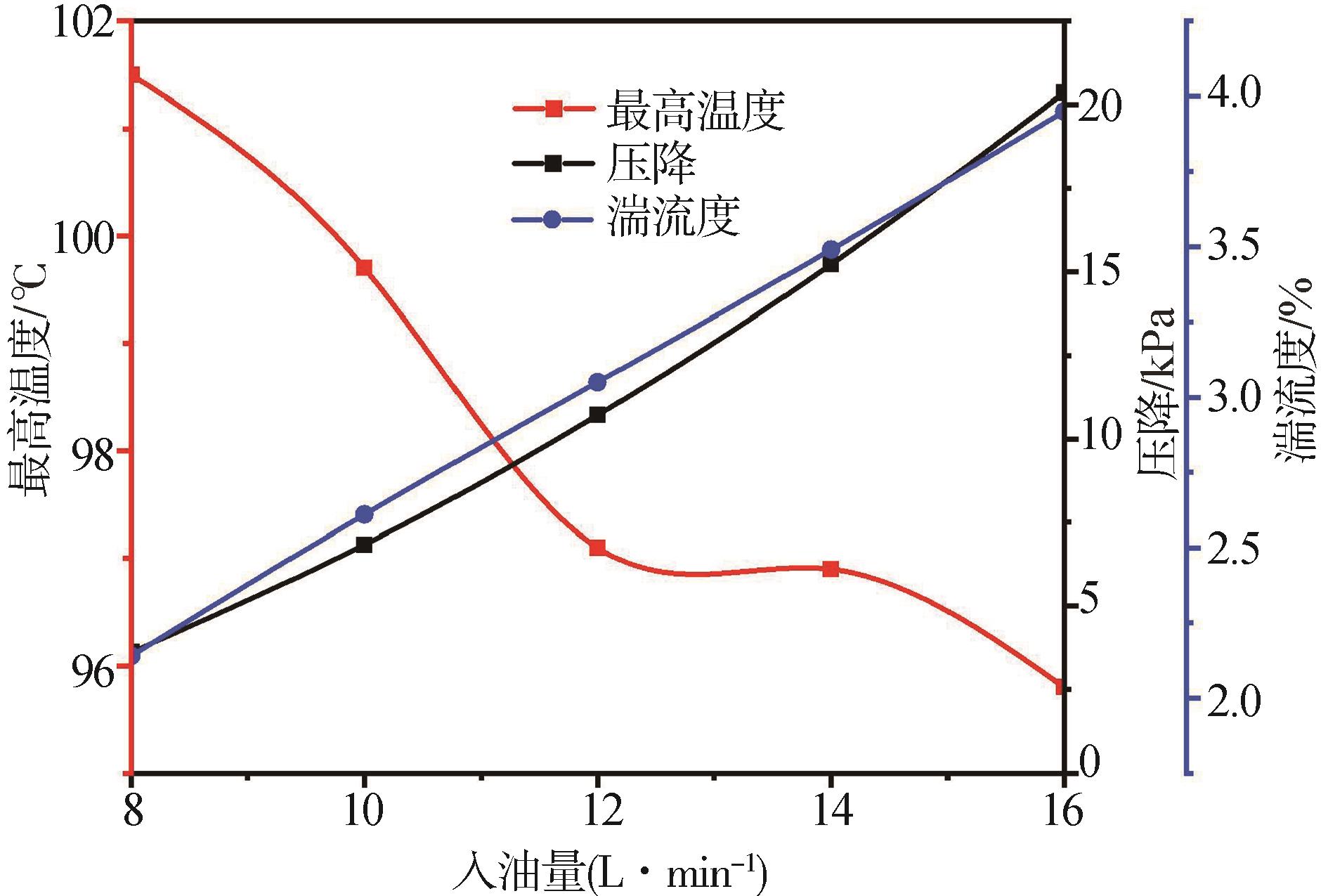
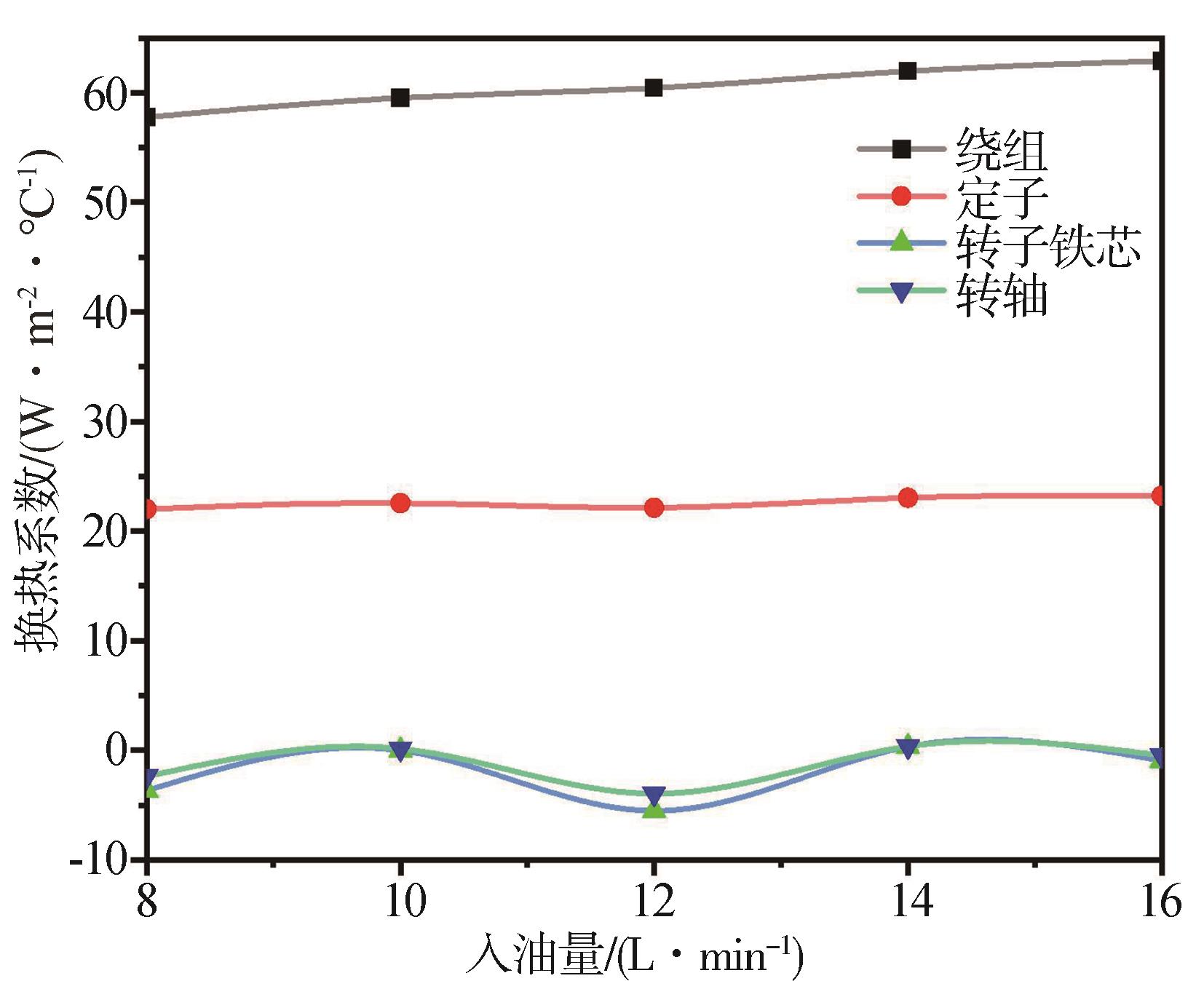
图 30
不同入油量下各部件表面换热系数"
| [1] | CARRIERO A, LOCATELLI M, RAMAKRISHNAN K, et al. A review of the state of the art of electric traction motors cooling techniques [C]. SAE Paper 2018 -01-0057. |
| [2] | GAI Y, KIMIABEIGI M, CHONG Y C, et al. Cooling of automotive traction motors: schemes, examples, and computation methods [J]. IEEE Transactions on Industrial Electronics, 2019, 66(3): 1681-1692. |
| [3] | GUO F, ZHANG C. Oil-cooling method of the permanent magnet synchronous motor for electric vehicle[J]. Energies, 2019, 12(15). |
| [4] | PARK M H, KIM S C. Development and validation of lumped parameter thermal network model on rotational oil spray cooled motor for electric vehicles[J]. Applied Thermal Engineering, 2023, 225. |
| [5] | WANG R, XIE P, HE M. Oil-immersed oil cooling motor for electric automobile, has sealing filling layer whose two ends are extended towards same side end cover direction, and cavity formed between end covers and inner surface of shell and connected with oil groove:CN211377756-U [P/OL]. 2020-08-28. |
| [6] | WANG Q, WEI Y. Cooling system of motor assembly for hybrid electric vehicle, has oil cooler that is connected with oil guide pipe and is located between spraying component and oil pump:CN214888767-U [P/OL]. 2021-11-26. |
| [7] | SRINIVASAN C, YANG X, SCHLAUTMAN J, et al. Conjugate heat transfer cfd analysis of an oil cooled automotive electrical motor [J]. SAE International Journal of Advances and Current Practices in Mobility,2020,2(4):1741-1753. |
| [8] | BEDKOWSKI B, DUKALSKI P, JAREK T, et al. The efficiency analysis of various structural solutions of the wheel motor cooling systems [C]. 2018 XIII International Conference on Electrical Machines (ICEM), 2018: 995-1000. |
| [9] | DERISZADEH A, DE MONTE F, VILLANI M, et al. Numerical thermal performance investigation of an electric motor passive cooling system employing phase change materials [C]. Proceedings of the Asme 2021 Heat Transfer Summer Conference (HT2021), 2021. |
| [10] | 杨悦思. 新能源汽车驱动电机油冷系统设计研究[J]. 专用汽车, 2024 (2): 33-36. |
| YANG Y S. Research on the design of oil cooling system for electric drive motors of new energy vehicles[J]. Special Purpose Vehicle, 2024 (2): 33-36. | |
| [11] | 刘奕新, 张志军. 油冷电机磁热耦合仿真研究[J]. 汽车技术, 2022 (11): 41-46. |
| LIU Y X, ZHANG Z J. Simulative research on magneto thermal coupling of oil-cooled [J]. Automobile Technology, 2022 (11): 41-46. | |
| [12] | MIZUTANI R, OHASHI Y, OKUMURA N, et al. Superconducting motor mounted in electric vehicle, has coil whose end portion |
| is located in axial direction of stator and is cooled by cooling unit of several refrigerators:JP2011244535-A [P/OL]. 2011-12-01. | |
| [13] | CAMILLERI R, HOWEY D A, MCCULLOCH M D. Predicting the temperature and flow distribution in a direct oil-cooled electrical machine with segmented stator [J]. IEEE Transactions on Industrial Electronics, 2016, 63(1): 82-91. |
| [14] | 段家超. 新能源汽车驱动电机油冷系统设计与性能研究 [D]. 广州:华南理工大学, 2021. |
| DUAN J C. Design and performance research on oil cooling systemof new energy vehicle drive motor [D].Guangzhou: South China University of Technology, 2021. |
| [1] | 孔令琛,袁晓磊,赵轩,余强,周辰雨,黄榕. 基于特征熵奇异值分解的振动传递路径分析方法[J]. 汽车工程, 2025, 47(9): 1742-1751. |
| [2] | 杨阳,章治,许博,董扬. 电动汽车无线充电系统DDDQ型磁耦合结构研究[J]. 汽车工程, 2025, 47(6): 1007-1021. |
| [3] | 胡杰,王浩杰,魏敏,王志红,陈琳,黄文涛,康涵锐. 基于TCN-LSTM模型的实车电池健康状态评估方法[J]. 汽车工程, 2025, 47(6): 1060-1071. |
| [4] | 陈翔,何莉萍,肖咏坤,陈端懋,李耀东. 高能锂电池模组新型液冷散热结构及散热优化[J]. 汽车工程, 2025, 47(6): 1086-1094. |
| [5] | 汪俊,马骋浩,申宗玹,邢伯斌,夏勇. 电动汽车侧柱碰安全性虚拟仿真研究[J]. 汽车工程, 2025, 47(6): 1095-1102. |
| [6] | 张倩文,徐磊,王庆洋,徐胜金. 电动汽车底部流动分离对风阻的动态影响[J]. 汽车工程, 2025, 47(5): 910-919. |
| [7] | 鲁岩松,朱翀,张希. 一种车用高速电机循环冷却油温集总参数模型[J]. 汽车工程, 2025, 47(5): 920-930. |
| [8] | 罗毅,马文彬,苏岭,刘月桥,肖波. 基于R290工质的电动汽车集成式热管理系统性能研究[J]. 汽车工程, 2025, 47(5): 931-939. |
| [9] | 黄晓婷,张海标,李长玉,吕辉,上官文斌. 电动汽车动力总成悬置系统的多输出灵敏度分析[J]. 汽车工程, 2025, 47(4): 746-754. |
| [10] | 郑字琛,王姝,赵轩,李兆柯. 基于混杂模型预测控制的分布式驱动电动汽车AFS/DYC集成控制[J]. 汽车工程, 2025, 47(3): 470-480. |
| [11] | 李琴,李壮,汤建明,王勇,张博远,贺德强. 分布式驱动电动汽车多目标转矩分配策略[J]. 汽车工程, 2025, 47(3): 489-498. |
| [12] | 石琴,侯伟路,张晓楠,吴为教,贺泽佳. 基于三层加权堆叠模型的电动汽车剩余里程预测[J]. 汽车工程, 2025, 47(1): 107-116. |
| [13] | 崔海龙,杜冰,黄秀东,刘凤华,刘雪东,周茂伟. 电动汽车胶粘型电机铁芯加工装备效能优化[J]. 汽车工程, 2025, 47(1): 178-186. |
| [14] | 贺伯林,陈勇,代青林. 基于LADRC的纯电动汽车双离合变速器换挡控制[J]. 汽车工程, 2024, 46(9): 1668-1677. |
| [15] | 周峰,田旭文,李红旗. 混合工质电动汽车空调全生命周期气候性能分析[J]. 汽车工程, 2024, 46(9): 1707-1714. |
|
||
