

汽车工程 ›› 2025, Vol. 47 ›› Issue (12): 2277-2288.doi: 10.19562/j.chinasae.qcgc.2025.12.001
• • 下一篇
何忱远1,郭轶龙1,朱冠宇2,张洲宇1( ),蔡英凤3,王海1,陈龙3
收稿日期:2025-06-16
修回日期:2025-09-26
出版日期:2025-12-25
发布日期:2025-12-19
通讯作者:
张洲宇
E-mail:zhouyu.zhang@ujs.edu.cn
基金资助:
Chenyuan He1,Yilong Guo1,Guanyu Zhu2,Zhouyu Zhang1(),Yingfeng Cai3,Hai Wang1,Long Chen3
Received:2025-06-16
Revised:2025-09-26
Online:2025-12-25
Published:2025-12-19
Contact:
Zhouyu Zhang
E-mail:zhouyu.zhang@ujs.edu.cn
摘要:
飞行汽车能有效拓展交通系统的立体化维度,为缓解地面拥堵与拓展出行空间提供创新解决思路。近年来,我国积极推动飞行汽车发展,政策支持持续加强,企业研发加速推进。在此背景下,飞行汽车相关研究逐年增多,但多数集中于飞控系统、能源系统或单一路径规划方法的技术突破,缺乏面向整机运行过程的综合视角,以及对子系统协同关系的深入分析。为弥补这一不足,本文从飞行汽车运行核心支撑技术角度出发,围绕飞行汽车在实际运行中所面临的安全性、能效性与决策复杂性问题,构建了由底层故障容错与安全保障、中层能量管理与功率分配、顶层路径规划与自主决策组成的三级协同架构。系统综述了各层关键技术与相互依赖关系,并梳理典型研究进展与工程方案。本文旨在为飞行汽车实现规模化、安全化运行提供理论支撑与系统参考。
何忱远,郭轶龙,朱冠宇,张洲宇,蔡英凤,王海,陈龙. 飞行汽车运行核心支撑技术综述[J]. 汽车工程, 2025, 47(12): 2277-2288.
Chenyuan He,Yilong Guo,Guanyu Zhu,Zhouyu Zhang,Yingfeng Cai,Hai Wang,Long Chen. A Review of Core Support Technologies for Flying Car System Operation[J]. Automotive Engineering, 2025, 47(12): 2277-2288.
表1
国内外代表性飞行汽车"
| 产品图片 | 产品名称 | 最大飞行速度/(km·h-1) | 最大起飞 质量/kg | 航程/km | 载客人数 | 动力系统 | 特点 |
|---|---|---|---|---|---|---|---|
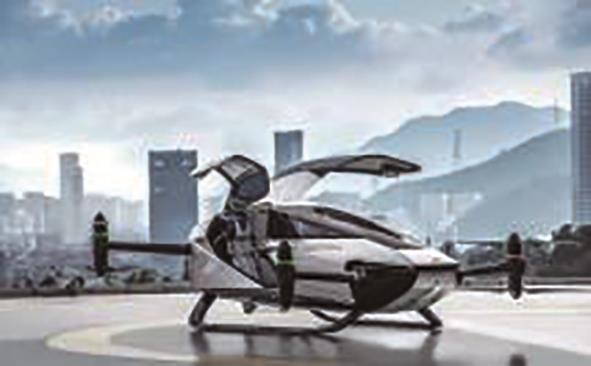 | 小鹏汇天旅航者X2 | 130 | 760 | 54 | 2 | 纯电动 | 自动驾驶/手动切换,城市短途低空出行 |
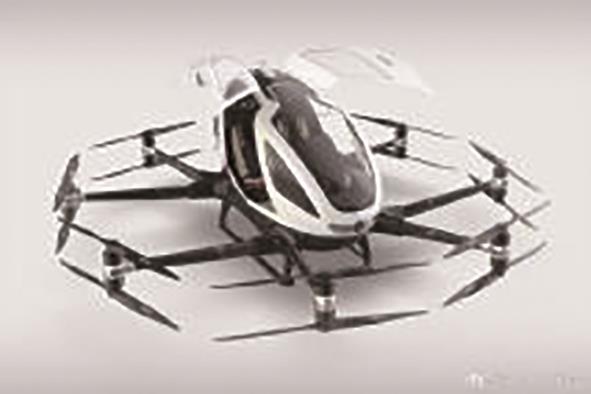 | 亿航智能EH216-S | 130 | 650 | 30 | 2 | 纯电动 | 体积小、机动性强、噪声低 |
 | TriFan 600 | 555 | 2 630 | 2 200 | 6 | 混合动力 | 兼顾垂直起降与高速巡航,城市到城市中长途运输 |
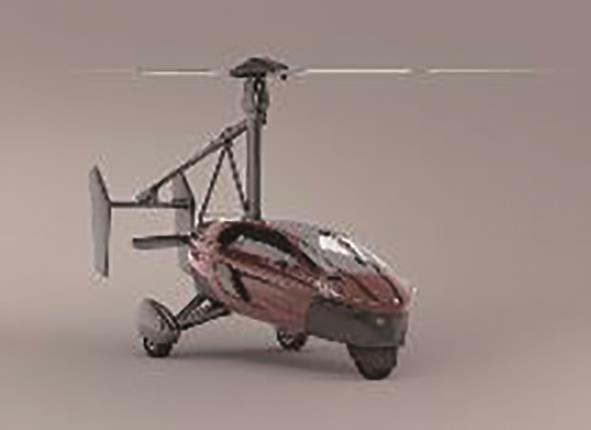 | PAL-V Liberty | 180 | 910 | 500 | 2 | 汽油发动机 | 陆空两用,适合个人出行 |
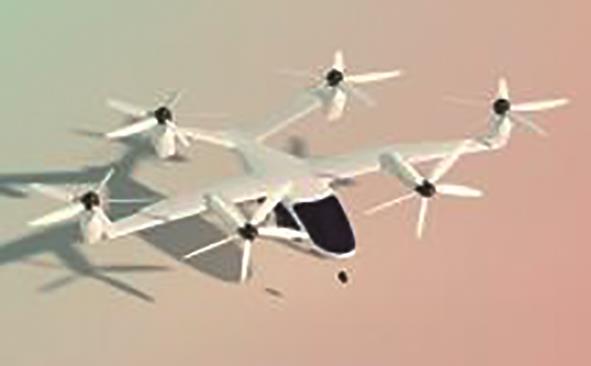 | Joby Aviation S4 | 322 | 2 404 | 842 | 5 | 纯电动 | 零排放、具备垂直起降和高效巡航能力 |
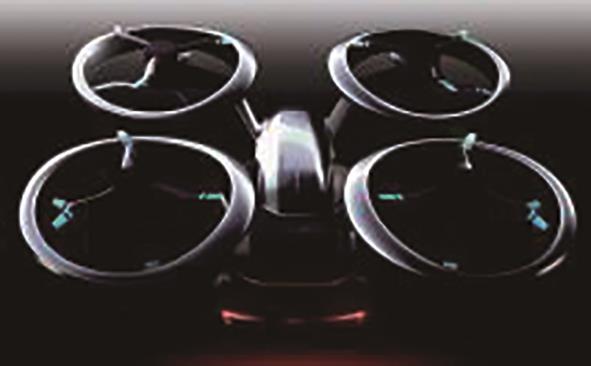 | Pop-Up Next | 20 | 2 | 纯电动 | 概念设计,乘舱可在地面行驶或挂载无人飞行模块,短途空地切换 |
图1
飞行汽车的5种任务模式"
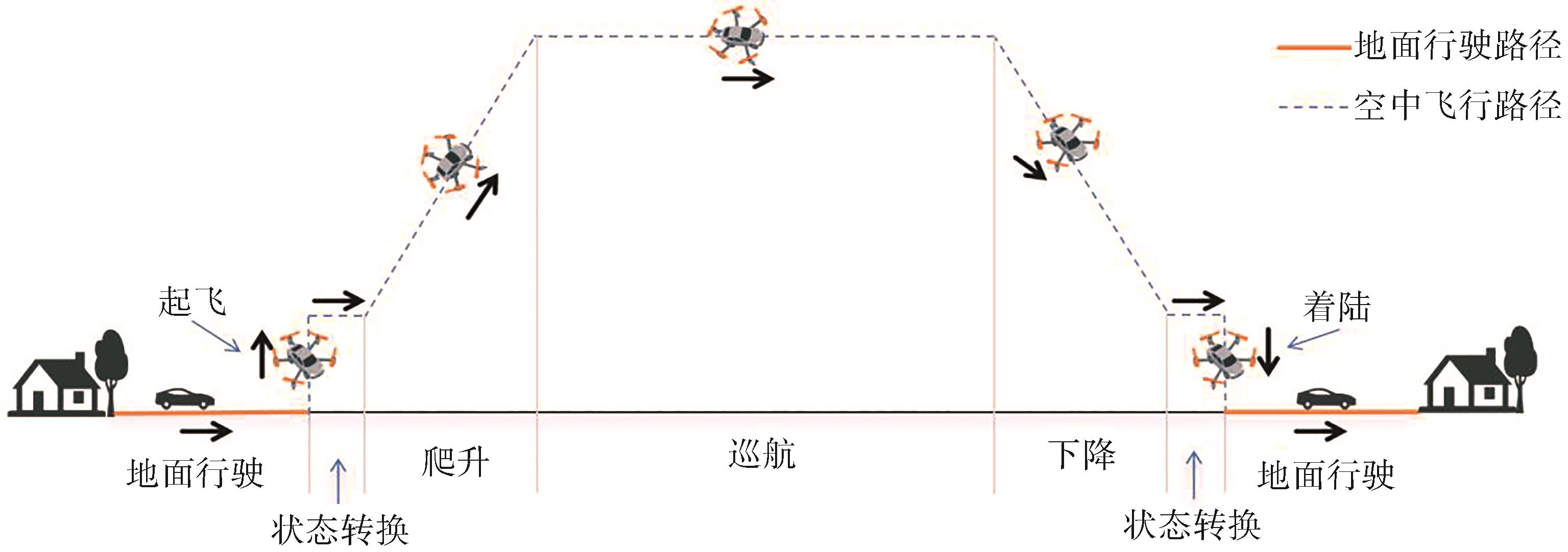
表2
中华人民共和国空域等级"
| 空域类别 | 高度范围 |
|---|---|
| A类 | 标准气压高度6 000 m(含)至20 000 m(含) |
| B类 | 通常划设在民用运输机场上空 |
| C类 | 通常划设在建有塔台的民用通用机场上空 |
| D类 | 除A、B、C、G、W类空域外的空间,其中标准气压高度20 000 m以上统一划设为D类空域 |
| E类 | 除A、B、C、G、W类空域外的空间,具体高度范围须根据实际情况确定 |
| G类 | B、C类空域以外真高300 m以下空域(W类空域除外),以及平均海平面高度低于6 000 m、对军事飞行和民航公共运输飞行无影响的空域 |
| W类 | G类空域内真高120 m以下部分空域 |
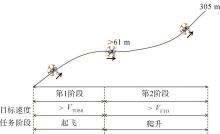
图2
欧洲航空安全局定义的起飞爬升分段"
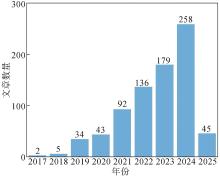
图3
2017-2025年飞行汽车相关文章数量统计"
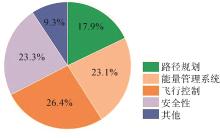
图4
不同技术领域文献分布情况"
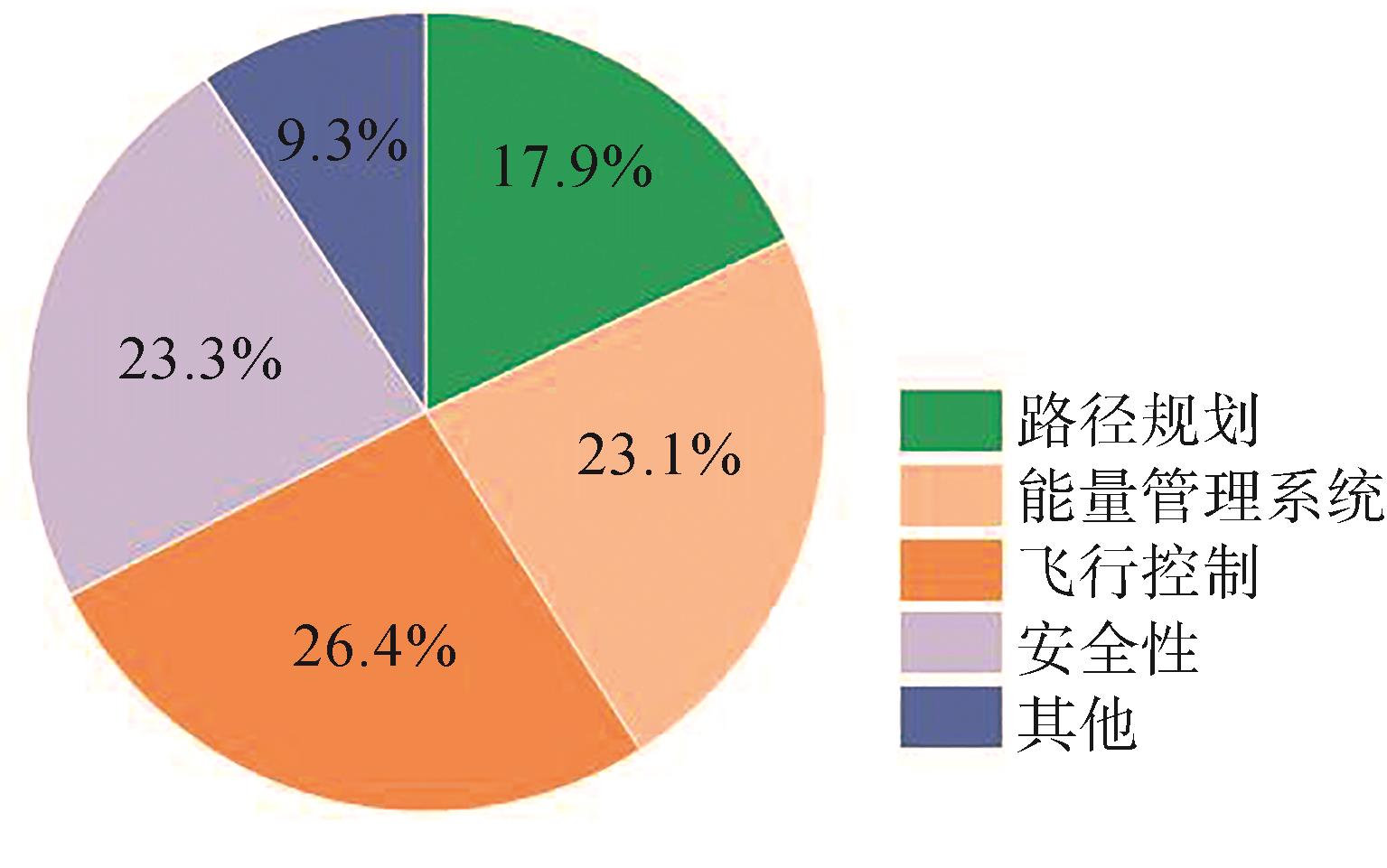
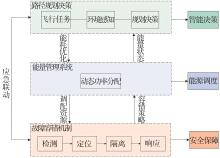
图5
系统多层级架构功能模块示意图"
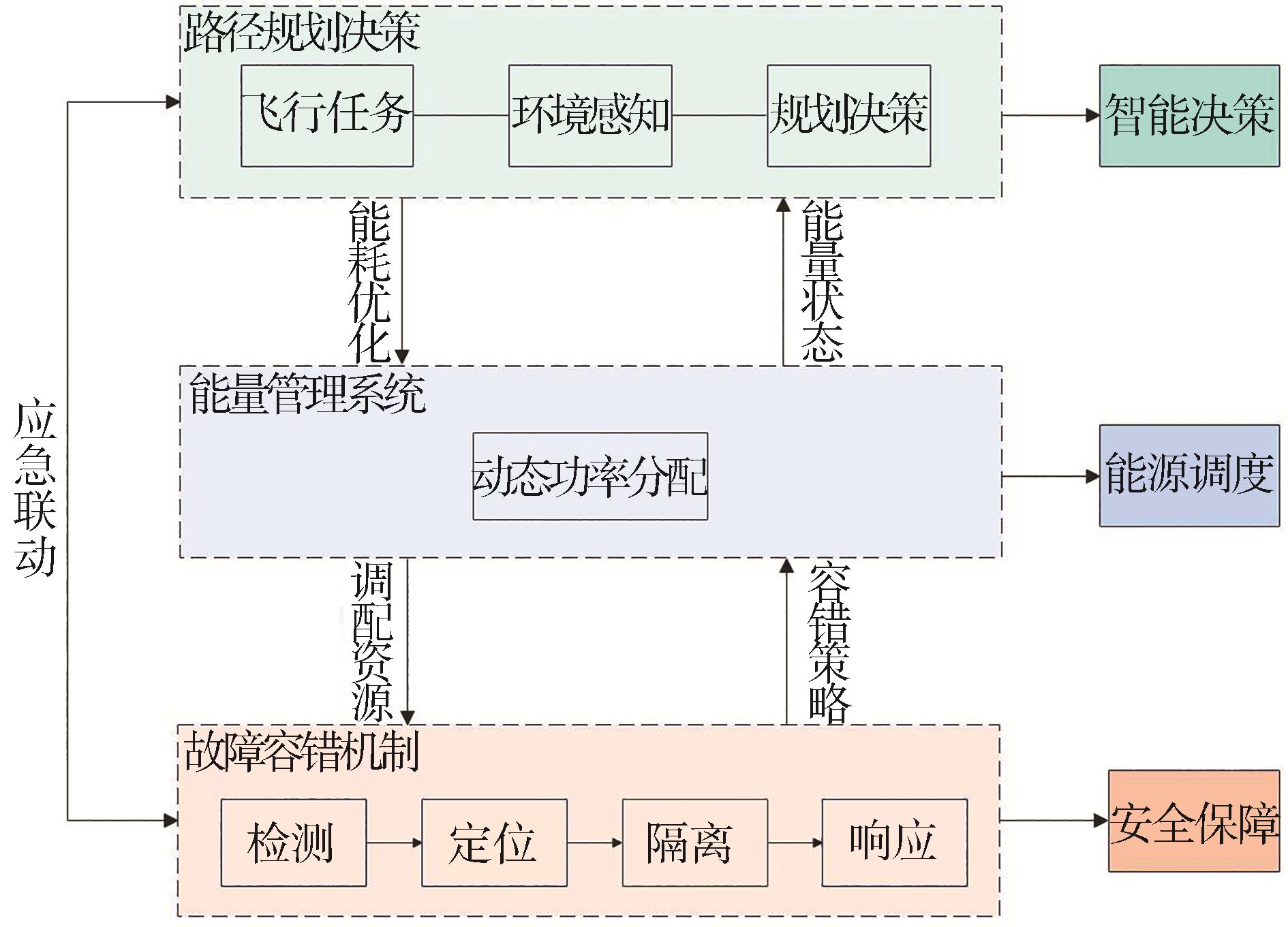
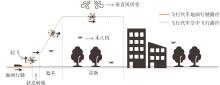
图6
飞行汽车复杂空域截面图"
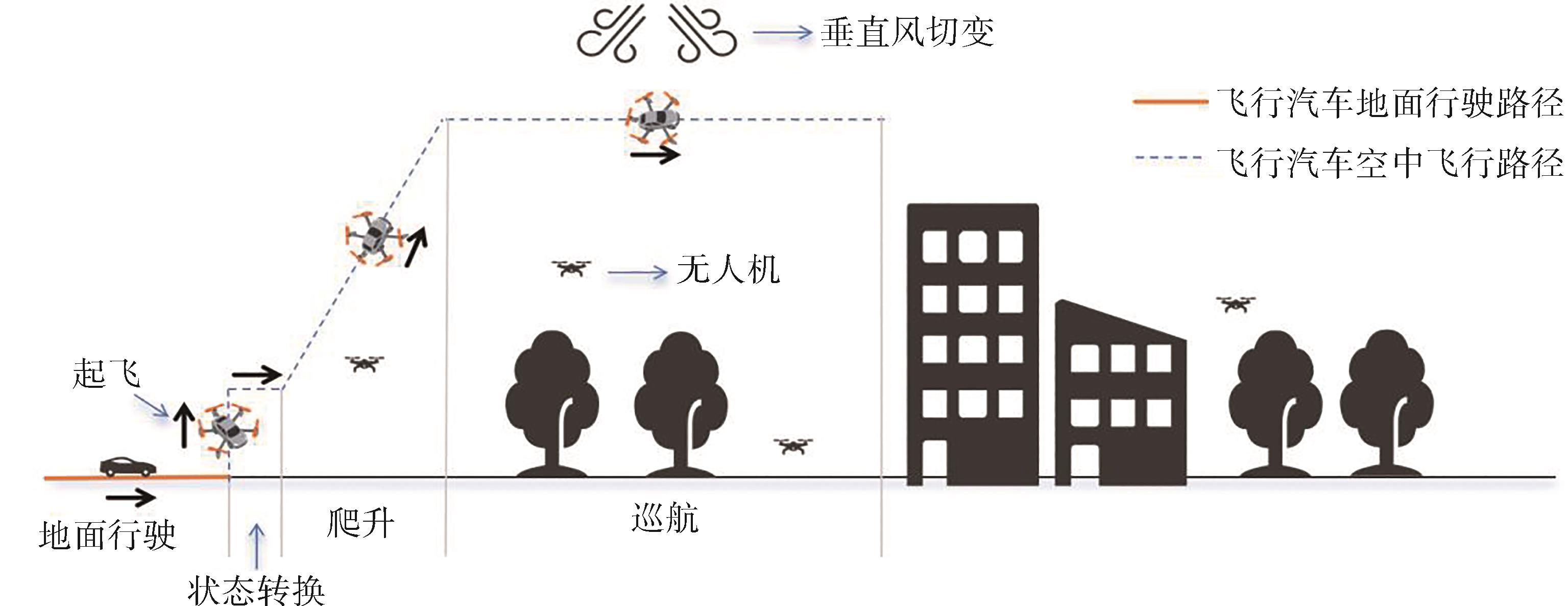
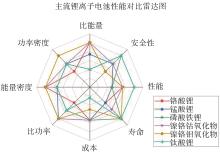
图7
主流锂离子电池性能对比"
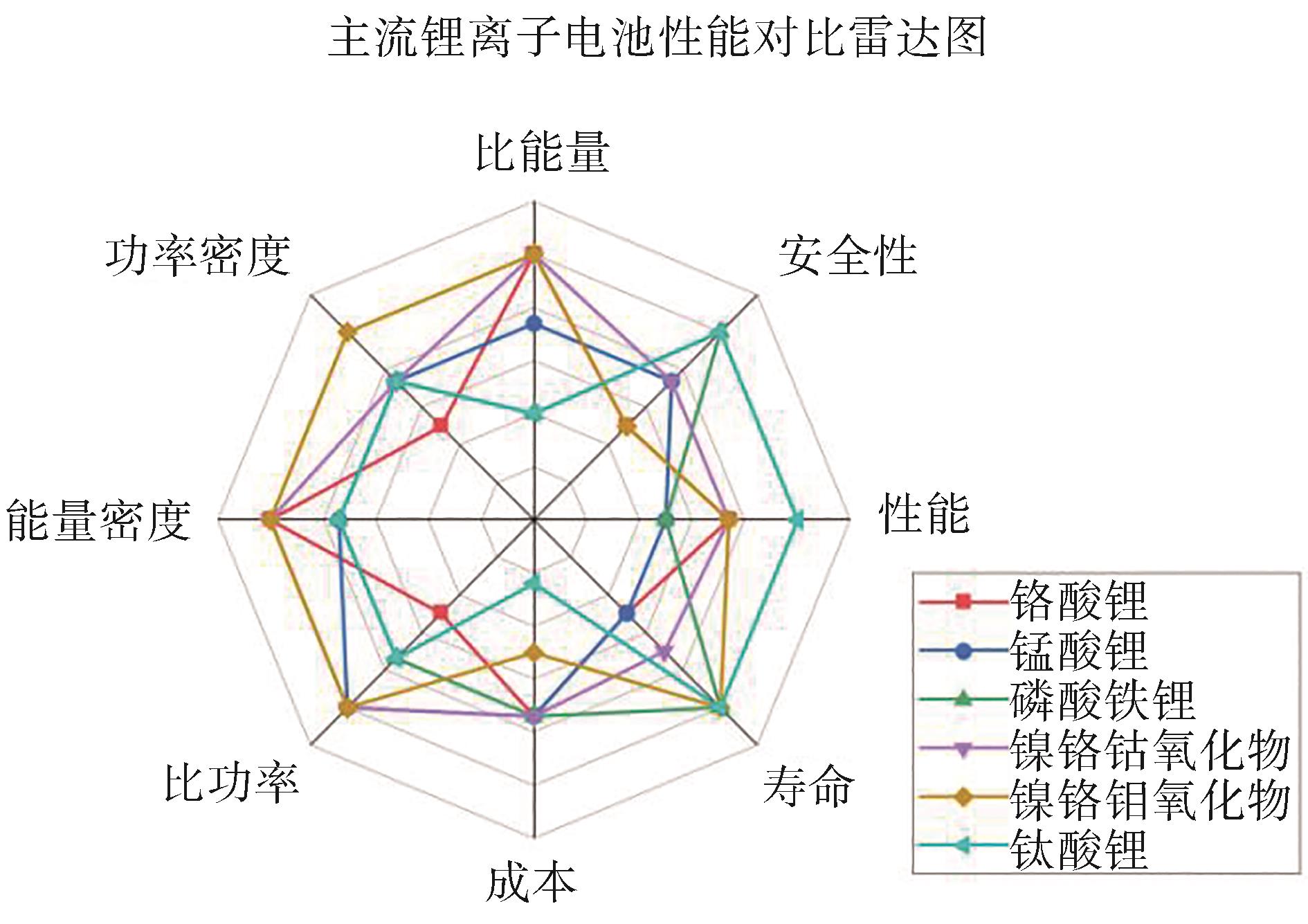
表3
路径规划决策算法"
| 算法类型 | 应用场景 | 优势 | 劣势 | 搜索速率 | 计算资源需求 | 环境适应性 |
|---|---|---|---|---|---|---|
| 图搜索算法 | 静态、确定性环境 | 能找到最短路径 | 对动态环境适应性差、计算复杂度高 | 中等 | 中等 | 低 |
| 采样基础搜索算法 | 动态、非结构化环境 | 探索效率高,能应对高维状态空间 | 路径质量不稳定,随机性强 | 高 | 中等 | 高 |
| 元启发式搜索算法 | 复杂优化问题 | 全局搜索能力强 | 易陷入局部最优、参数敏感 | 中等 | 高 | 中等 |
| 数值优化算法 | 约束明确的优化问题 | 能提供精确解,优化性能好 | 对模型、目标函数和约束依赖强、实时性差 | 低 | 高 | 低 |
| [1] | LI J, CHENG H, GUO H, et al. Survey on artificial intelligence for vehicles[J]. Automotive Innovation, 2018, 1(1): 2-14. |
| [2] | 张扬军,钱煜平,诸葛伟林,等. 飞行汽车的研究发展与关键技术[J]. 汽车安全与节能学报,2020,11(1):1-16. |
| ZHANG Y J, QIAN Y P, ZHUGE W L, et al. Progress and key technologies of flying cars[J]. Journal of Automotive Safety and Energy, 2020, 11(1): 1-16. | |
| [3] | 交通运输部,科学技术部. 交通领域科技创新中长期发展规划纲要(2021—2035年)[Z]. 2022. |
| Ministry of Transport, Ministry of Science and Technology. Medium and long-term development plan outline for scientific and technological innovation in the transportation field (2021-2035) [Z]. 2022. | |
| [4] | 中共中央国务院. 通用航空装备创新应用实施方案(2024-2030年)[Z]. 2024. |
| The Central Committee of the Communist Party of China and the State Council. Implementation plan for innovation and application of general aviation equipment (2024-2030) [Z]. 2024. | |
| [5] | IT之家. 小鹏汇天“陆地航母”2024 广州车展完成全球公开载人首飞[EB/OL]. (2024-11-17)[2025-07-11]. https://m.ithome.com/html/811104.htm. |
| ITHome. XPeng AeroHT “Land Aircraft Carrier” completes its first public crewed flight at the 2024 guangzhou auto show [EB/OL]. (2024-11-17)[2025-07-11]. https://m.ithome.com/html/811104.htm. | |
| [6] | 亿航智能. EH216-S自动驾驶飞行器技术白皮书[EB/OL]. (2023-12-15)[ 2025-05-07]. https://www.ehang.com/cn/ehangaav. |
| EHang Intelligent Technology. EH216-S autonomous aerial vehicle technical white paper [EB/OL]. (2023-12-15)[2025-05-07]. https://www.ehang.com/cn/ehangaav. | |
| [7] | 峰飞航空. 峰飞航空官网[EB/OL]. (2025-01-01)[2025-05-07]. https://autoflight.com/zh/. |
| AutoFlight. Official website of autoflight [EB/OL]. (2025-01-01)[2025-05-07]. https://autoflight.com/zh/. | |
| [8] | 广汽集团. 领航低空赛道!广汽复合翼飞行汽车GOVY AirJet正式发布[EB/OL]. (2024-12-18)[2025-05-07]. https://www.gacgroup.com. |
| GAC Group. Leading the low-altitude track! GAC releases the hybrid-wing flying car GOVY AirJet [EB/OL]. (2024-12-18)[2025-05-07]. https://www.gacgroup.com. | |
| [9] | Joby Aviation. Introducing Joby's electric air taxi[EB/OL]. (2023-09-12)[2025-05-07]. https://www.jobyaviation.com/technology. |
| [10] | Archer Aviation. Midnight eVTOL aircraft technical specifications [EB/OL]. (2023-11-15)[2025-06-27]. https://archer.com/midnight. |
| [11] | Klein Vision. AirCar: the dual-mode roadable aircraft [EB/OL]. (2021-06-28) [2025-05-07]. https://www.klein-vision.com/aircar. |
| [12] | XTI Aircraft Company. TriFan 600: the high-speed VTOL aircraft [EB/OL]. (2023-05-17) [2025-05-07]. https://xtiaerospace.com/trifan-600. |
| [13] | Rankred. 13 flying car companies at the forefront in 2025[EB/OL]. (2025-02-26)[2025-03-30]https://www.rankred.com/flying-car-companies. |
| [14] | 北京理工大学. 北理工与多家单位联合发布全球首款载人级两座智能分体式飞行汽车工程样车[EB/OL]. (2022-12-23)[2025-05-07]. https://www.bit.edu.cn/xww/gbmtlg/mtjj2/f156579ed4894392a24a727cf3ea2429.htm. |
| Beijing Institute of Technology. BIT and partners jointly release the world’s first two-seat intelligent split-body flying car prototype [EB/OL]. (2022-12-23)[2025-05-07]. https://www.bit.edu.cn/xww/gbmtlg/mtjj2/f156579ed4894392a24a727cf3ea2429.htm. | |
| [15] | 温冲,于建平. 奇瑞公开专利,Model A试飞成功,“陆地航母”完成冬测[EB/OL]. 华夏时报,(2025-02-26)[2025-05-23]. https://finance.sina.com.cn/stock/wbstock/2025-02-26/doc-inemvssw7690817.shtml. |
| WEN C, YU J P. Chery discloses patent, Model A completes successful flight test; “Land Aircraft Carrier” finishes winter testing [EB/OL]. China Times, (2025-02-26)[2025-05-23]. https://finance.sina.com.cn/stock/wbstock/2025-02-26/doc-inemvssw7690817.shtml. | |
| [16] | ZHAO J, YANG C, WANG W, et al. A game-learning-based smooth path planning strategy for intelligent air-ground vehicle considering mode switching[J]. IEEE Transactions on Transportation Electrification, 2022, 8(3): 3349-3366.. |
| [17] | ZHAO J, YANG C, WANG W, et al. A smooth path planning learning strategy design for an air-ground vehicle considering mode switching[J]. Energy Proceedings, 2021, 18. |
| [18] | ZHANG S, LUO Y, WANG J, et al. Predictive energy management strategy for fully electric vehicles based on preceding vehicle movement[J]. IEEE Transactions on Intelligent Transportation Systems, 2017, 18(11): 3049-3060. |
| [19] | European Union Aviation Safety Agency. Special condition for VTOL and means of compliance[EB/OL]. (2024-12-10)[2025-05-07]. https://www.easa.europa.eu/en/document-library/product-certification-consultations/special-condition-vtol. |
| [20] | European Union Aviation Safety Agency. Special condition for small-category VTOL aircraft[S]. Cologne: EASA, 2019. |
| [21] | Federal Aviation Administration. Urban air mobility (UAM) concept of operations [EB/OL]. Washington: FAA, 2023. (2023-01-01)[2025-05-07]. https://www.faa.gov/air-taxis/uam_blueprint.. |
| [22] | 邹立颖,林钰川,惠鹏飞.基于有限时间观测器的VTOL飞行器跟踪控制[J].高技术通讯,2023,33(1):106-112. |
| ZOU L Y, LIN Y C, HUI P F. Tracking control of VTOL aircraft based on finite-time observer [J]. High Technology Communications, 2023, 33(1): 106-112. | |
| [23] | ZHANG Y, XU J, PAN R, et al. Numerical investigation of short takeoff and landing exhaust system using bypass dual throat nozzle[J]. Aerospace Science and Technology, 2023, 138: 108316. |
| [24] | COMER A M, MISHRA A A, CHAKRABORTY I. Extension of a full envelope flight control system to CTOL/STOL capabilities on a urban air mobility tilt-rotor[C].AIAA SCITECH 2025 Forum. 2025: 0658. |
| [25] | 郄天琪, 王伟达, 杨超,等. 面向分体式飞行汽车自主对接的自动驾驶底盘运动规划方法研究[J]. 机械工程学报, 2024, 60(10): 235-244. |
| QIE T Q, WANG W D, YANG C,et al. Motion planning method of autonomous driving chassis for split-body flying car docking [J]. Journal of Mechanical Engineering, 2024, 60(10): 235-244. | |
| [26] | EVTOL News. XPeng HT aero flying car[EB/OL]. (2022-03-02)[2025-05-07]. https://evtol.news/xpeng-ht-aero-flying-car. |
| [27] | DriveMag. Audi, italdesign and airbus update pop.up next flying car concept[EB/OL]. (2022-03-02)[2025-05-26]. https://drivemag.com/news/audi-italdesign-and-airbus-update-pop-up-next-the-self-driving-car-flying-drone-combo. |
| [28] | PATTERSON M D, ANTCLIFF K R, KOHLMAN L W. A proposed approach to studying urban air mobility missions including an initial exploration of mission requirements[R]. Phoenix: Annual Forum Technology Display, 2018. |
| [29] | SWAMINATHAN N, REDDY S R P, RAJASHEKARA K, et al. Flying cars and eVTOLs—technology advancements, powertrain architectures, and design[J]. IEEE Transactions on Transportation Electrification, 2022, 8(4): 4105-4117. |
| [30] | NATHEN P, STROHMAYER A, MILLER R, et al. Architectural performance assessment of an electric vertical take-off and landing (e-VTOL) aircraft based on a ducted vectored thrust concept[J]. Lilium GmbH, Claude-Dornier StraeSSe, Weßling, Germany, Tech. Rep, 2021. |
| [31] | BACCHINI A, CESTINO E. Electric VTOL configurations comparison[J]. Aerospace, 2019, 6(3): 26. |
| [32] | PASCIONI K A, WATTS M E, HOUSTON M, et al. Acoustic flight test of the joby aviation advanced air mobility prototype vehicle[C].28th AIAA/CEAS Aeroacoustics 2022 Conference, 2022: 3036. |
| [33] | 国家空中交通管理委员会办公室. 中华人民共和国空域管理条例(征求意见稿)[Z]. 2023. |
| Office of the National Air Traffic Management Committee. Administrative regulations on the airspace of the people's republic of china (draft for comments) [Z]. 2023. | |
| [34] | JMinnesota State Legislature.Etsons law[Z]. 2024. |
| [35] | Federal Aviation Administration. Code of federal regulations, title 14, part 23: airworthiness standards: normal category airplanes[S]. 2024. |
| [36] | European Aviation Safety Agency. Easy access rules for airworthiness and environmental certification (regulation (EU) No 748/2012)[EB/OL]. (2022-05)[2025-04-23]. https://www.easa.europa.eu/document-library/rules-and-regulations/easy-access-rules-airworthiness-and-environmental-certification-regulation-eu-no-7482012. |
| [37] | PAL-V. World's first flying car[EB/OL]. (2025-04)[2025-04-23]. https://www.pal-v.com/en/press/flydrive-company-pal-v-clears-essential-certification-milestone. |
| [38] | TRIPALDI F, VIANELLO S, BIANCHI N. Emerging trends in urban air mobility: an extensive review[J]. Energies, 2025, 18(6): 1426. |
| [39] | European Union Aviation Safety Agency. Easy access rules for small category VCA[EB/OL]. (2024-12-10)[2024-12-10]. https://www.easa.europa.eu/en/document-library/easy-access-rules/easy-access-rules-small-category-vca. |
| [40] | Joby Aviation. Joby Aviation | Joby[EB/OL]. (2025-01-14)[2025-04-23]. https://www.jobyaviation.com. |
| [41] | International Organization for Standardization. Mechanical vibration and shock-evaluation of human exposure to whole-body vibration-part 1: general requirements: ISO 2631-1:1997[S]. Geneva: ISO, 1997. |
| [42] | BASNER M, CLARK C, HANSELL A, et al. Aviation noise impacts: state of the science[J]. Noise and Health, 2017, 19(87): 41-50. |
| [43] | RIZZI S A, HUFF D L, BOYD D D, et al. Urban air mobility noise: current practice, gaps, and recommendations[EB/OL]. (2025-01-14)[2025-05-08]. https://ntrs.nasa.gov/citations/20205007433. |
| [44] | LILIUM. Lilium[EB/OL]. (2025-01-14)[2025-05-08]. https://jet.lilium.com. |
| [45] | TERRAFIGIA. Terrafugia reveals new details on Transition flying car due in 2019[EB/OL]. (2021-11-10)[2025-05-08]. https://www.motorauthority.com/news/1046814_terrafugia-reveals-new-details-on-transition-flying-car-due-in-2019. |
| [46] | ELROY AIR. Elroy Air flew the world's first turbogenerator-hybrid electric vertical take-off and landing (hVTOL) aircraft on November 12 at its test-flight facility in Byron, California - the Chaparral C1[EB/OL]. (2023-11-16)[2025-05-08]. https://elroyair.com/company/news/press-releases/first-flight-hVTOL-Chaparral/. |
| [47] | HAN L, ZHOU X, YANG N, et al. Multi-objective energy management for off-road hybrid electric vehicles via nash DQN[J]. Automotive Innovation, 2025, 8(1): 140-156. |
| [48] | DENG T, WU S, CHEN Q, et al. Multi-objective energy management strategy for PHEVs based on working condition information prediction and time-varying equivalence factor ECMS[J]. Automotive Innovation, 2024: 1-18. |
| [49] | MIN J, TEKKAYA A E, LI Y, et al. Preface for feature topic on environmentally benign automotive lightweighting[J]. Automotive Innovation, 2023, 6(3): 297-299. |
| [50] | FRANCISCONE B G, FERNANDES E. Challenges to the operational safety and security of eVTOL aircraft in metropolitan regions: a literature review[J]. Journal of Airline Operations and Aviation Management, 2023, 2(1): 45-56. |
| [51] | MOFOLASAYO A. Potential policy issues with flying car technology[J]. Transportation Research Procedia, 2020, 48: 8-22. |
| [52] | LITTELL J D. Challenges in vehicle safety and occupant protection for autonomous electric vertical take-off and landing (eVTOL) vehicles[C].2019 AIAA/IEEE Electric Aircraft Technologies Symposium (EATS). IEEE, 2019: 1-16. |
| [53] | GOYAL R, COHEN A. Advanced air mobility: opportunities and challenges deploying eVTOLs for air ambulance service[J]. Applied Sciences, 2022, 12(3): 1183. |
| [54] | MORADI N, WANG C, MAFAKHERI F. Urban air mobility for last-mile transportation: a review[J]. Vehicles, 2024, 6(3): 1383-1414. |
| [55] | POLACZYK N, TROMBINO E, WEI P, et al. A review of current technology and research in urban on-demand air mobility applications[C].8th Biennial Autonomous VTOL technical meeting and 6th Annual electric VTOL Symposium. Mesa, Arizona: Vertical Flight Soc., 2019: 333-343. |
| [56] | XIANG S, XIE A, YE M, et al. Autonomous eVTOL: a summary of researches and challenges[J]. Green Energy and Intelligent Transportation, 2024, 3(1): 100140. |
| [57] | WEI H, LOU B, ZHANG Z, et al. Autonomous navigation for eVTOL: review and future perspectives[J]. IEEE Transactions on Intelligent Vehicles, 2024, 9(2): 4145-4171. |
| [58] | SU J, HUANG H, ZHANG H, et al. eVTOL performance analysis: a review from control perspectives[J]. IEEE Transactions on Intelligent Vehicles, 2024. |
| [59] | PAVEL M D. Understanding the control characteristics of electric vertical take-off and landing (eVTOL) aircraft for urban air mobility[J]. Aerospace Science and Technology, 2022, 125: 107143. |
| [60] | QIAN Y, ZHANG Y, ZHUGE W. Key technology challenges of electric ducted fan propulsion systems for eVTOL[M]. SAE International, 2023. |
| [61] | KIM H D, PERRY A T, ANSELL P J. A review of distributed electric propulsion concepts for air vehicle technology[C].2018 AIAA/IEEE Electric Aircraft Technologies Symposium (EATS). IEEE, 2018: 1-21. |
| [62] | HE J, HE Q, XU Z, et al. Key technologies and upgrade strategies for eVTOL aircraft energy storage systems[J]. Journal of Energy Storage, 2024, 103: 114402. |
| [63] | ZHOU Q, TAN F. Avionics of electric vertical take-off and landing in the urban air mobility: a review[J]. IEEE Aerospace and Electronic Systems Magazine, 2024. |
| [64] | AKMAN T, SCHWEIGHOFER F, AFONSO R J M, et al. Robust eVTOL trajectory optimization under uncertainties-challenges and approaches[C].Journal of Physics: Conference Series. IOP Publishing, 2023, 2514(1): 012002. |
| [65] | LI M, CHEN J, LIU W, et al. A comparative of eVTOL aircraft path planning algorithms for urban air mobility[J]. Journal of Xihua University (Natural Science Edition), 2023, 42(5): 54-61. |
| [66] | WISK AERO. Discover Wisk's self-flying eVTOL air taxi[EB/OL]. (2025-01-17)[2025-05-08]. https://wisk.aero/aircraft/. |
| [67] | 王进才.应用人工神经网络于飞控系统故障检测研究[J].电子产品可靠性与环境试验,2013,31(3):1-5. |
| WANG J C. Application of artificial neural networks in fault detection of flight control systems [J]. Electronic Product Reliability and Environmental Testing, 2013, 31(3): 1-5. | |
| [68] | 小鹏汽车. 小鹏汽车科技日首发"AI代驾" 将于四季度推送全国所有城市[EB/OL]. (2023-10-24) [2025-07-13]. https://www.xiaopeng.com/news/company_news/5361.html. |
| XPeng Motors. XPeng launches “AI Chauffeur” at tech day, to roll out nationwide in Q4 [EB/OL]. (2023-10-24)[2025-07-13]. https://www.xiaopeng.com/news/company_news/5361.html. | |
| [69] | 博士研究帮. 光伏行业2024年投资策略:技术迭代与供需格局重塑[EB/OL]. 雪球, (2024-06-14)[2025-07-14]. https://xueqiu.com/8237496176/293870751. |
| Dr. Research Hub. Investment strategy for the photovoltaic industry in 2024: technological iteration and supply-demand restructuring [EB/OL]. Xueqiu, (2024-06-14)[2025-07-14]. https://xueqiu.com/8237496176/293870751. | |
| [70] | WANG X, LIANG W, YAN X, et al. Model reference adaptive control for a manned eVTOL aircraft[C].2024 WRC Symposium on Advanced Robotics and Automation (WRC SARA). IEEE, 2024: 222-227. |
| [71] | JIANG Z, PAKMEHR M. Model predictive control for distributed electric propulsion of eVTOL vehicles: a preliminary design[C].AIAA SciTech 2022 Forum, 2022: 0878. |
| [72] | BHALLA S. Systematic analysis of control moment gyroscopes integration: elevating control and comfort in eVTOL aircraft[D]. University of Cincinnati, 2024. |
| [73] | DENG B, XU J, YUAN X, et al. Active disturbance rejection flight control and simulation of unmanned quad tilt rotor eVTOL based on adaptive neural network[J]. Drones, 2024, 8(10): 560. |
| [74] | LIU J, TAN Y. Incremental sliding mode control for predefined-time stability of a fixed-wing electric vertical takeoff and landing vehicle attitude control system[J].Actuators, 2024, 13(9): 371. |
| [75] | THOMAS G L, MALONE B. Power system redundancy design trends for all-electric eVTOL quadrotors[C].AIAA SCITECH 2023 Forum, 2023: 1209. |
| [76] | WANG B, SHEN Y, ZHANG Y. Active fault-tolerant control for a quadrotor helicopter against actuator faults and model uncertainties[J]. Aerospace Science and Technology, 2020, 99: 105745. |
| [77] | BICZYSKI M, SEHAB R, WHIDBORNE J F, et al. Fault-tolerant switched reluctance motor propulsion system for eVTOLs[C].Journal of Physics: Conference Series. IOP Publishing, 2023, 2526(1): 012065. |
| [78] | MORANI G, GARBARINO L, GENITO N, et al. Multivariable fault tolerant control for a distributed electric propulsion aircraft[C].AIAA SCITECH 2024 Forum, 2024: 2358. |
| [79] | ASPER G D, WOOLSEY C A. Toward a fault-tolerant control allocation evaluation framework for eVTOL aircraft[J]. System, 2025, 1000: R6. |
| [80] | CHU X, XUE F, LIU T, et al. Adaptive fitting capacity prediction method for lithium-ion batteries[J]. Automotive Innovation, 2022, 5(4): 359-375. |
| [81] | HU L, YAN X, YUAN Y. Development and challenges of autonomous electric vertical take-off and landing aircraft[J]. Heliyon, 2025, 11(1). |
| [82] | RUAN S, MA Y, WEI Z, et al. Hierarchical control strategy for the hybrid electric propulsion system of a flying car with engine start-stop system and dynamic coordination[J]. IEEE Transactions on Transportation Electrification, 2023, 10(3): 4904-4918. |
| [83] | RUAN S, MA Y, WEI Z, et al. Data-driven cooperative differential game based energy management strategy for hybrid electric propulsion system of a flying car[J]. IEEE Transactions on Intelligent Transportation Systems, 2024. |
| [84] | ZHAO C, MAZO J R, VERSTRAETE D. Optimisation of a liquid cooling system for eVTOL aircraft: impact of sizing mission and battery size[J]. Applied Thermal Engineering, 2024, 246: 122988. |
| [85] | KANG S, SAIAS C A, ROUMELIOTIS I, et al. Design and simulation of evtol aircraft thermal management system[J]. Journal of Engineering for Gas Turbines and Power, 2025, 147(6): 061016. |
| [86] | ZHAO Y, GENG H, LIANG J, et al. Effects of driver response time under take-over control based on CAR-ToC model in human-machine mixed traffic flow[J]. Automotive Innovation, 2023, 6(1): 3-19. |
| [87] | MCKILLIP R M. Algorithmic icing detection for eVTOL/AAM aircraft[C].AIAA AVIATION 2022 Forum, 2022: 3963. |
| [88] | BROWN A, AKAGI D, REID I, et al. Infrared-constellation-aided landing of eVTOL aircraft[C].AIAA SCITECH 2025 Forum, 2025: 1538. |
| [89] | LI G, CHI X, QU X. Depth estimation based on monocular camera sensors in autonomous vehicles: a self-supervised learning approach[J]. Automotive Innovation, 2023, 6(2): 268-280. |
| [90] | 镭神智能. 镭神智能——全球领先的全场景激光雷达与智能搬运机器人系统解决方案提供商[EB/OL]. (2025-02-14)[2025-05-08]. https://finance.sina.com.cn/roll/2025-02-14/doc-inekmuhz4103547.shtml. |
| LeiShen Intelligent. LeiShen Intelligent — a global leader in full-scenario LiDAR and intelligent robotic handling solutions [EB/OL]. (2025-02-14)[2025-05-08]. https://finance.sina.com.cn/roll/2025-02-14/doc-inekmuhz4103547.shtml. | |
| [91] | 镭神智能. 镭神智能激光雷达全场景系统解决方案赋能低空经济新时代[EB/OL]. 网易新闻. (2025-02-14)[2025-05-08]. https://www.163.com/dy/article/JHGN6D6D05149OCK.html. |
| LeiShen Intelligent. LeiShen LiDAR full-scenario system solutions empower the new era of low-altitude economy [EB/OL]. NetEase News. (2025-02-14)[2025-05-08]. https://www.163.com/dy/article/JHGN6D6D05149OCK.html. | |
| [92] | WANG W, ZHAO J, YANG C, et al. A path planning learning strategy design for a wheel-legged vehicle considering both distance and energy consumption[J]. IEEE Transactions on Vehicular Technology, 2022, 72(4): 4277-4293. |
| [93] | KOENIG S, LIKHACHEV M, FURCY D. Lifelong planning A∗[J]. Artificial Intelligence, 2004, 155(1-2): 93-146. |
| [94] | DOLGOV D, THRUN S, MONTEMERLO M, et al. Path planning for autonomous vehicles in unknown semi-structured environments[J]. The International Journal of Robotics Research, 2010, 29(5): 485-501. |
| [95] | WANG J, CHI W, LI C, et al. Neural RRT*: learning-based optimal path planning[J]. IEEE Transactions on Automation Science and Engineering, 2020, 17(4): 1748-1758. |
| [96] | SEYYEDABBASI A, KIANI F. I-GWO and Ex-GWO: improved algorithms of the Grey Wolf Optimizer to solve global optimization problems[J]. Engineering with Computers, 2021, 37(1): 509-532. |
| [97] | STICH S U. Local SGD converges fast and communicates little[J]. arXiv preprint arXiv:, 2018. |
| [98] | DENG T, YAN J, XU B. Multi-flying cars path planning strategy considering energy consumption and time in urban environments[J]. Automotive Innovation, 2025: 1-21. |
| [99] | XIANG S, YE M, ZHU S, et al. A multi-stage precision landing method for autonomous eVTOL based on multi-marker joint localization[C].2022 IEEE International Conference on Robotics and Biomimetics (ROBIO). IEEE, 2022: 1-6. |
| [100] | SHAO Q, SHAO M, LU Y. Terminal area control rules and eVTOL adaptive scheduling model for multi-vertiport system in urban air mobility[J]. Transportation Research Part C: Emerging Technologies, 2021, 132: 103385. |
| [101] | GOKASAR I, GUNAY G. Mode choice behavior modeling of ground access to airports: a case study in Istanbul, Turkey[J]. Journal of Air Transport Management, 2017, 59: 1-7. |
| [102] | CHEN J, LIU Y, CHEN X, et al. Dynamic takeoff and landing control for multi-rotor eVTOL aircraft[J]. International Journal of Aeronautical and Space Sciences, 2025, 26(1): 376-389. |
| [103] | ZHAO J, YANG C, LIU G, et al. A flight-fault-aware path planning strategy for VTOL intelligent air-ground vehicle using game learning approach[J]. IEEE Transactions on Intelligent Vehicles, 2024. |
| [104] | NGUYEN D D, ROHACS J, ROHACS D. Autonomous flight trajectory control system for drones in smart city traffic management[J]. ISPRS International Journal of Geo-Information, 2021, 10(5): 338. |
| [105] | HUANG Y, LIU W, LI Y, et al. MFE-SSNet: multi-modal fusion-based end-to-end steering angle and vehicle speed prediction network[J]. Automotive Innovation, 2024: 1-14. |
| [106] | XIE Y, SONG Z, YANG R, et al. An improved velocity planning method for eVTOL aircrafts based on differential evolution algorithm considering flight economy[J]. IEEE Transactions on Transportation Electrification, 2024. |
| [107] | HUANG R, LI W, ZENG Y, et al. Power optimization of an electric propulsion system based on variable speed rotor blades[C].Journal of Physics: Conference Series. IOP Publishing, 2025, 2977(1): 012084. |
| [1] | 刘龙龙,樊伟,肖涵,张一博,徐彬. 基于采样点状态增广的飞行汽车一体化路径规划[J]. 汽车工程, 2025, 47(12): 2303-2313. |
| [2] | 赵颖,郝纪波,孙晓宇,杨杰,胡晓松,王月强,王扬卫. 基于负泊松比微结构的飞行汽车液冷电池包热学性能分析[J]. 汽车工程, 2025, 47(12): 2326-2335. |
| [3] | 马嘉欣,汪志鸿,刘卓,李宗阳,陈炳全. 飞行汽车关键技术及应用研究综述[J]. 汽车工程, 2025, 47(11): 2049-2069. |
| [4] | 赵靖,杨超,王伟达,李颖,项昌乐. 飞行汽车多模态任务路径高效学习规划方法[J]. 汽车工程, 2025, 47(11): 2070-2082. |
| [5] | 严永俊,张宸硕,陶世龙,薛鹏宇,王洪亮,皮大伟. 城市场景下飞行汽车决策-规划-跟踪分层运动控制研究[J]. 汽车工程, 2025, 47(11): 2083-2092. |
| [6] | 栾众楷,沈钰焜,赵万忠,王春燕,周健豪,姜朋昌. 基于改进TD3算法的混动飞行汽车空地协调能量管理策略研究[J]. 汽车工程, 2025, 47(11): 2093-2102. |
| [7] | 刘朱紫,李银,李奇奇,胡林,邹铁方. 结构安全与共情差异对飞行汽车使用意愿的影响研究[J]. 汽车工程, 2025, 47(11): 2113-2125. |
| [8] | 陈德海,任永昌,黄艳国,华铭. 基于改进PSO-RBF算法的纯电动汽车剩余里程实时预测[J]. 汽车工程, 2018, 40(7): 764-. |
|
||
