汽车工程 ›› 2025, Vol. 47 ›› Issue (11): 2103-2112.doi: 10.19562/j.chinasae.qcgc.2025.11.005

• • 上一篇    

复合翼构型电动垂直起降飞行器气动特性数值研究

周铨1,2,贾青1,夏超1,莫礽1,韦欢夏1(),张英朝2(),胡强强3,杨志刚1,3   

  1. 1.同济大学汽车学院,上海 201804
    2.吉林大学,汽车底盘集成与仿生全国重点实验室,长春 130025
    3.中国商用飞机有限责任公司北京民用飞机技术研究中心,北京 102211
  • 收稿日期:2025-06-19 修回日期:2025-09-25 出版日期:2025-11-25 发布日期:2025-11-28
  • 通讯作者: 韦欢夏,张英朝 E-mail:huanxia.wei@u.nus.edu;yingchao@jlu.edu.cn

Numerical Study on Aerodynamic Characteristics of Electric Vertical Take-off and Landing Aircraft with Lift-and-Cruise Configuration

Quan Zhou1,2,Qing Jia1,Chao Xia1,Reng Mo1,Huanxia Wei1(),Yingchao Zhang2(),Qiangqiang Hu3,Zhigang Yang1,3   

  1. 1.School of Automotive Studies,Tongji University,Shanghai 201804
    2.Jilin University,National Key Laboratory of Automotive Chassis Integration and Bionics,Changchun 130025
    3.COMAC Beijing Aircraft Technology Research Institute,Beijing 102211
  • Received:2025-06-19 Revised:2025-09-25 Online:2025-11-25 Published:2025-11-28
  • Contact: Huanxia Wei,Yingchao Zhang E-mail:huanxia.wei@u.nus.edu;yingchao@jlu.edu.cn

摘要:

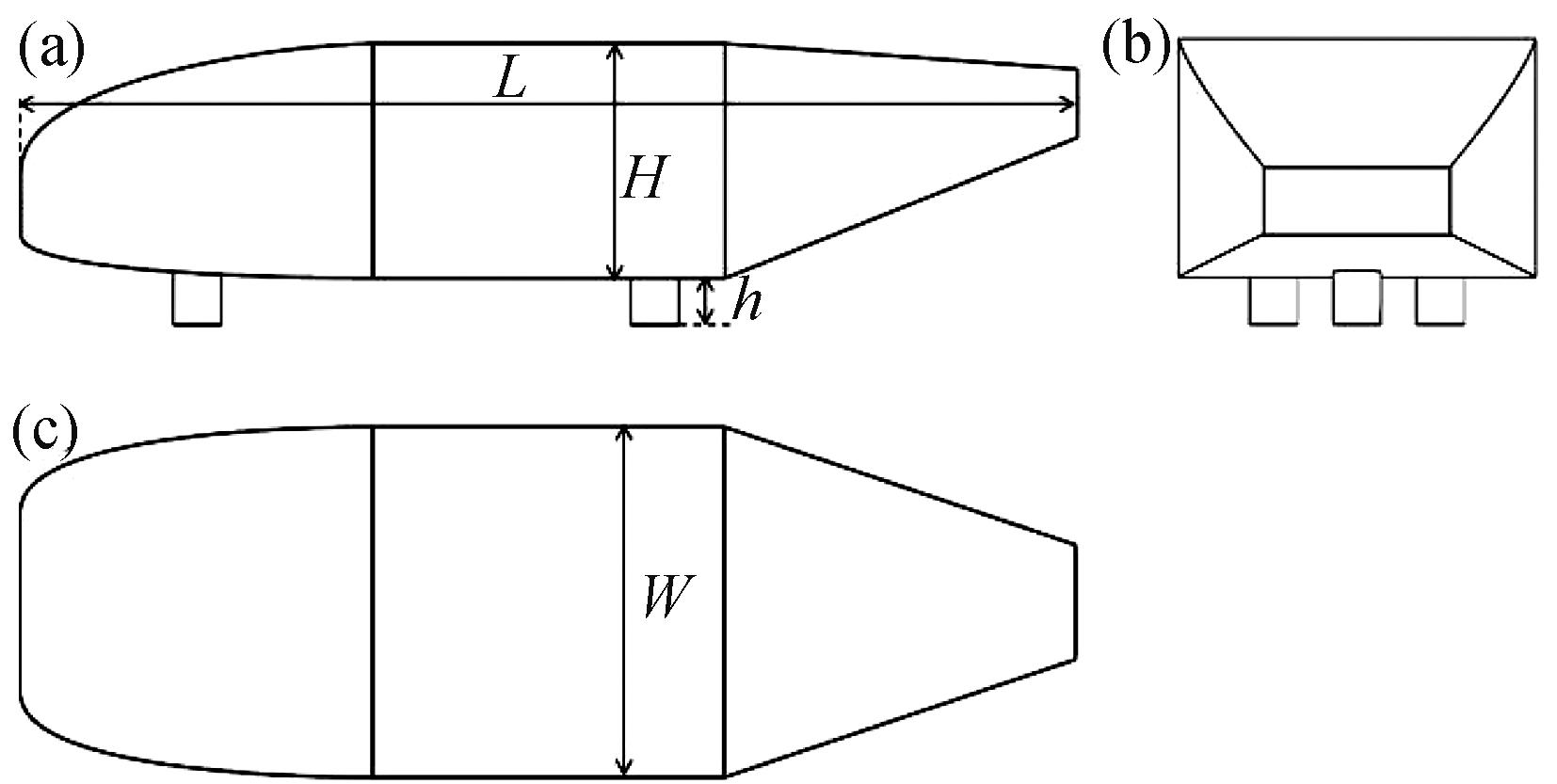
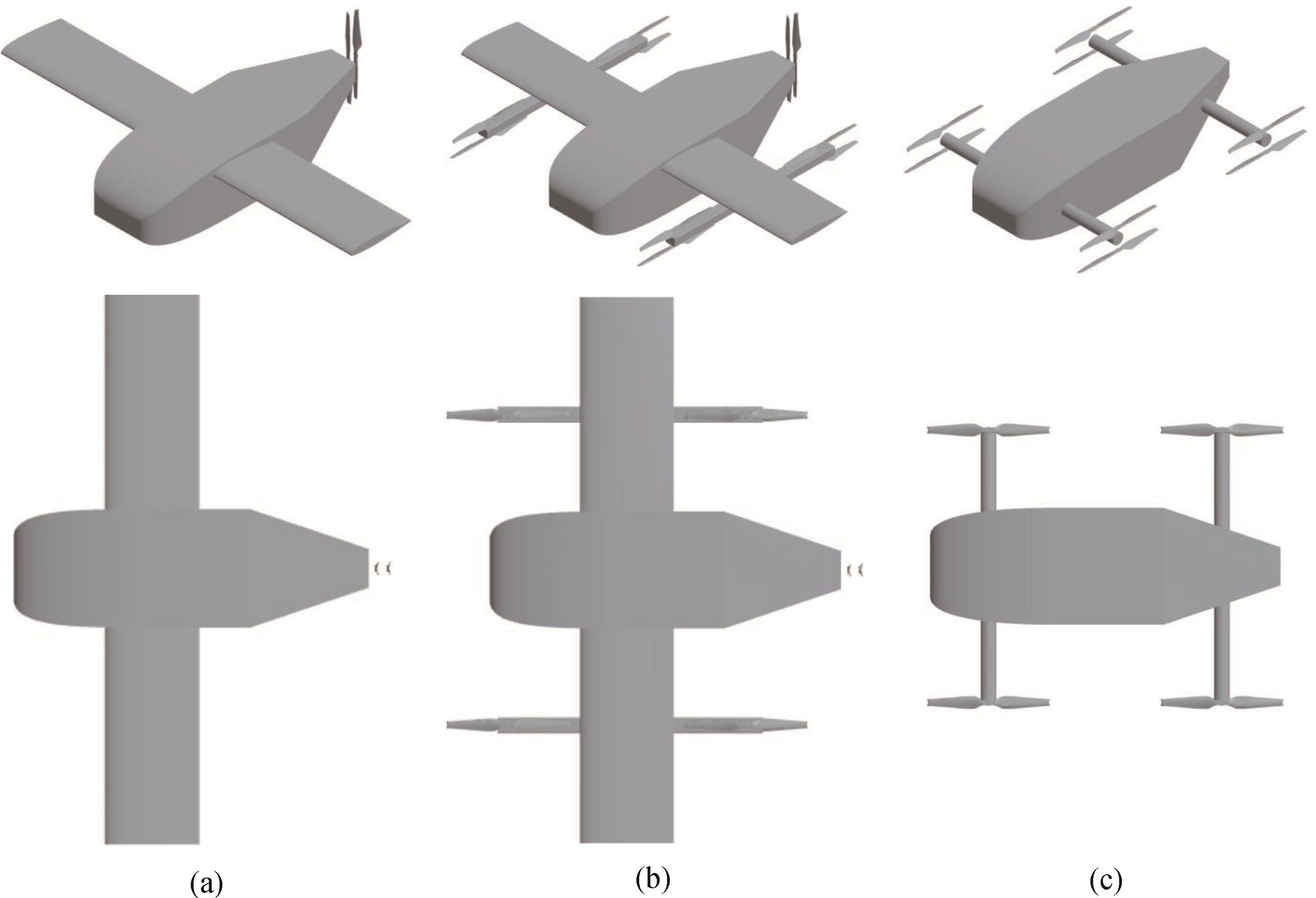
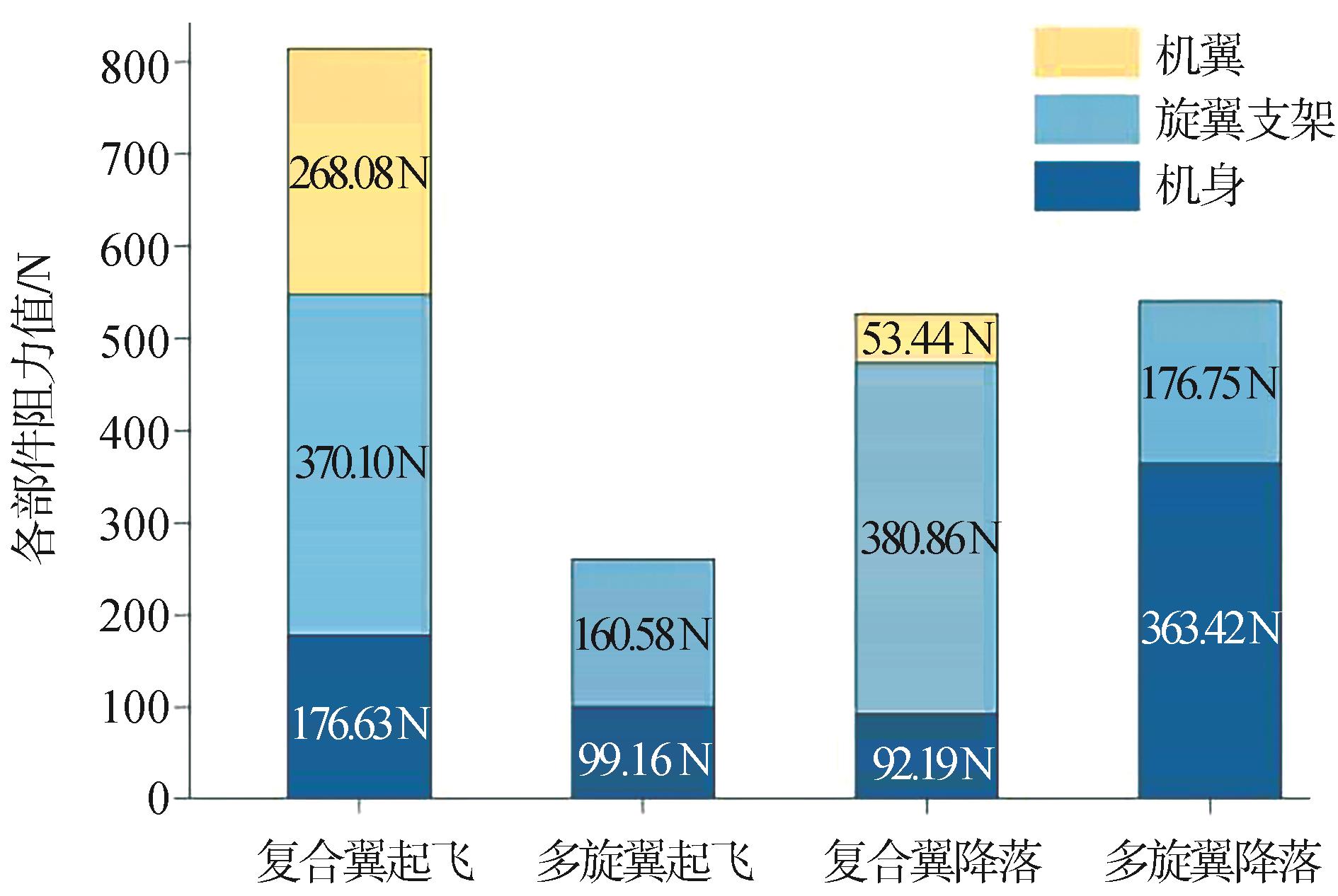
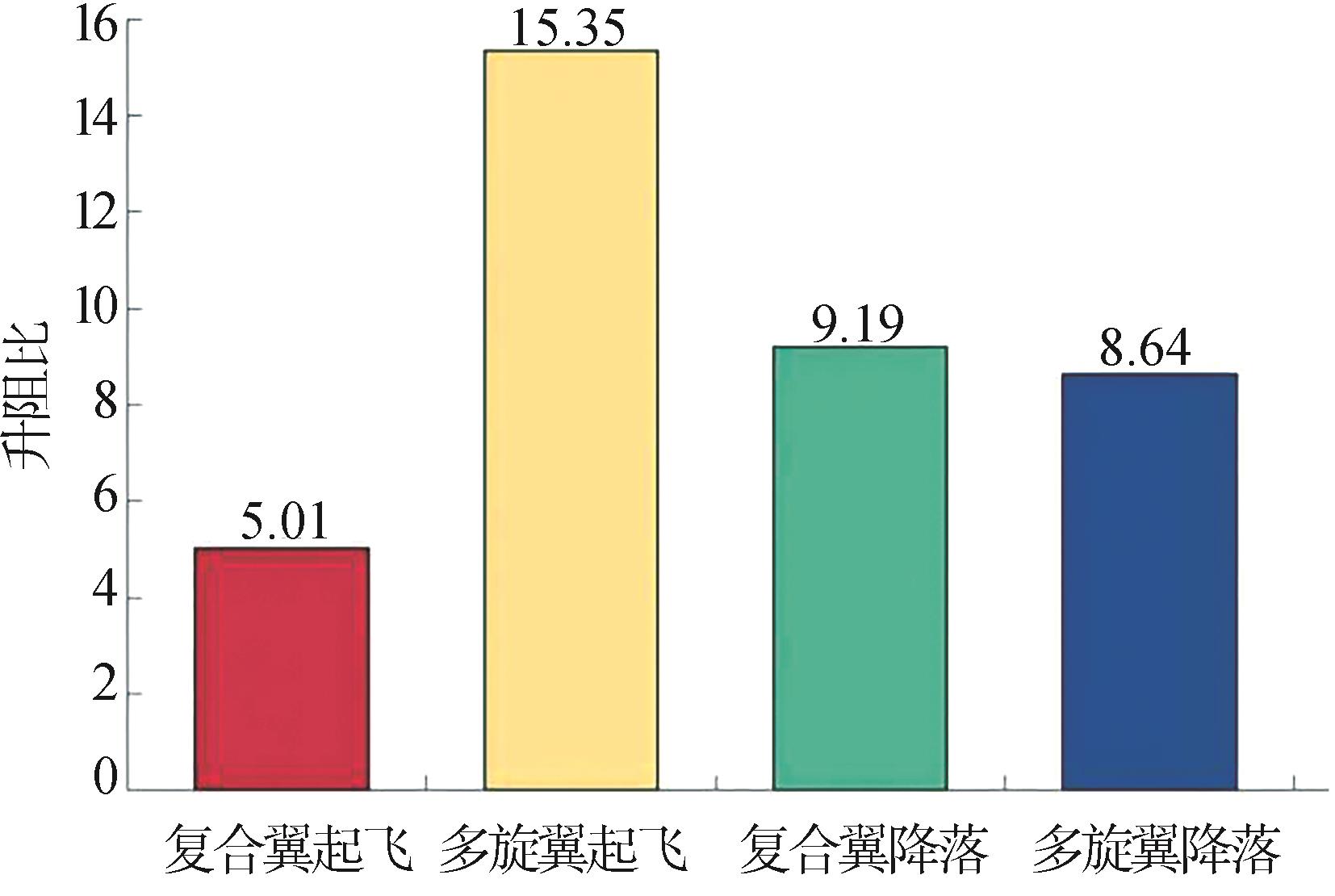
本研究建立了适用于不同构型电动垂直起降 (electric vertical take-off and landing, eVTOL)飞行器的简化气动模型,并采用增强延迟分离涡模拟方法,对不同构型eVTOL在起飞、降落、巡航和爬升等典型飞行阶段的气动特性进行了数值仿真。结果表明,起飞阶段复合翼构型的升阻比约为多旋翼构型的1/3,降落阶段两者相近。巡航阶段复合翼构型的升阻比相较于固定翼构型低20.52%,爬升阶段低17.14%。综合比较可知,复合翼构型在起飞阶段逊色于多旋翼构型,降落阶段略优,而在巡航和爬升阶段表现均不及固定翼构型。研究结果为eVTOL的构型方案选择与气动性能优化提供了科学参考与工程依据。

关键词: eVTOL, 计算流体力学, 空气动力学, 飞行阶段

Abstract:

In this study a simplified aerodynamic model applicable to various electric vertical take-off and landing (eVTOL) configurations is established and the improved delayed detached-eddy simulation method is used to numerically simulate the aerodynamic characteristics of different eVTOL configurations during typical flight phases, including take-off, landing, cruise, and climb. The results show that the lift-to-drag ratio of the lift-and-cruise configuration during take-off is approximately one-third that of the multi-rotor configuration, while the two are comparable during landing. During the cruise phase, the lift-to-drag ratio of the lift-and-cruise configuration is 20.52% lower than that of the fixed-wing configuration, and 17.14% lower during the climb phase. Overall, the lift-and-cruise configuration is inferior to the multi-rotor configuration during take-off, slightly outperforms it during landing, and falls short of the fixed-wing configuration in both cruise and climb phases. The findings provide scientific guidance and an engineering basis for eVTOL configuration selection and aerodynamic performance optimization.

Key words: eVTOL, computational fluid dynamics, aerodynamics, flight phases