

汽车工程 ›› 2025, Vol. 47 ›› Issue (11): 2178-2186.doi: 10.19562/j.chinasae.qcgc.2025.11.012
• • 上一篇
刘好年1,蔡鑫1,Harenbrock Michael2,林瑞1( )
)
收稿日期:2025-03-31
修回日期:2025-05-19
出版日期:2025-11-25
发布日期:2025-11-28
通讯作者:
林瑞
E-mail:ruilin@tongji.edu.cn
基金资助:
Haonian Liu1,Xin Cai1,Michael Harenbrock2,Rui Lin1()
Received:2025-03-31
Revised:2025-05-19
Online:2025-11-25
Published:2025-11-28
Contact:
Rui Lin
E-mail:ruilin@tongji.edu.cn
摘要:
质子交换膜燃料电池是能源领域中备受关注的绿色发电技术,具有能量转换效率高、环境友好等优点。然而,高成本的贵金属催化剂限制了其规模化应用。单原子催化剂凭借其高原子利用率、低成本、选择性好等优点在燃料电池的催化反应中展现出巨大应用潜力,是未来燃料电池催化剂的重要发展方向。本文系统阐述了单原子催化剂在质子交换膜燃料电池阳极抗毒化与阴极氧还原中的构效关系及实际应用,详细介绍了铂基和非铂基单原子催化剂的结构特点与应用优势;总结了基于第一性原理和机器学习的高通量计算方法,为燃料电池催化剂的高效筛选和从原子尺度的精准设计提供了思路借鉴;并对燃料电池单原子催化剂的未来发展机遇和挑战进行了总结和展望,可为质子交换膜燃料电池单原子催化剂的未来发展应用提供理论依据和技术参考。
刘好年,蔡鑫,Harenbrock Michael,林瑞. 单原子催化剂赋能下一代燃料电池:从计算筛选到实际应用[J]. 汽车工程, 2025, 47(11): 2178-2186.
Haonian Liu,Xin Cai,Michael Harenbrock,Rui Lin. Single-Atom Catalysts Empowering Next-Generation Fuel Cells: From Computational Screening to Application[J]. Automotive Engineering, 2025, 47(11): 2178-2186.
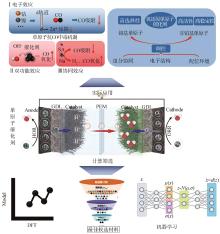
图 1
单原子催化剂:从实际应用到计算筛选"

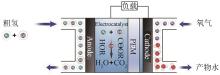
图 2
粗氢供给的PEMFC工作示意图[13]"
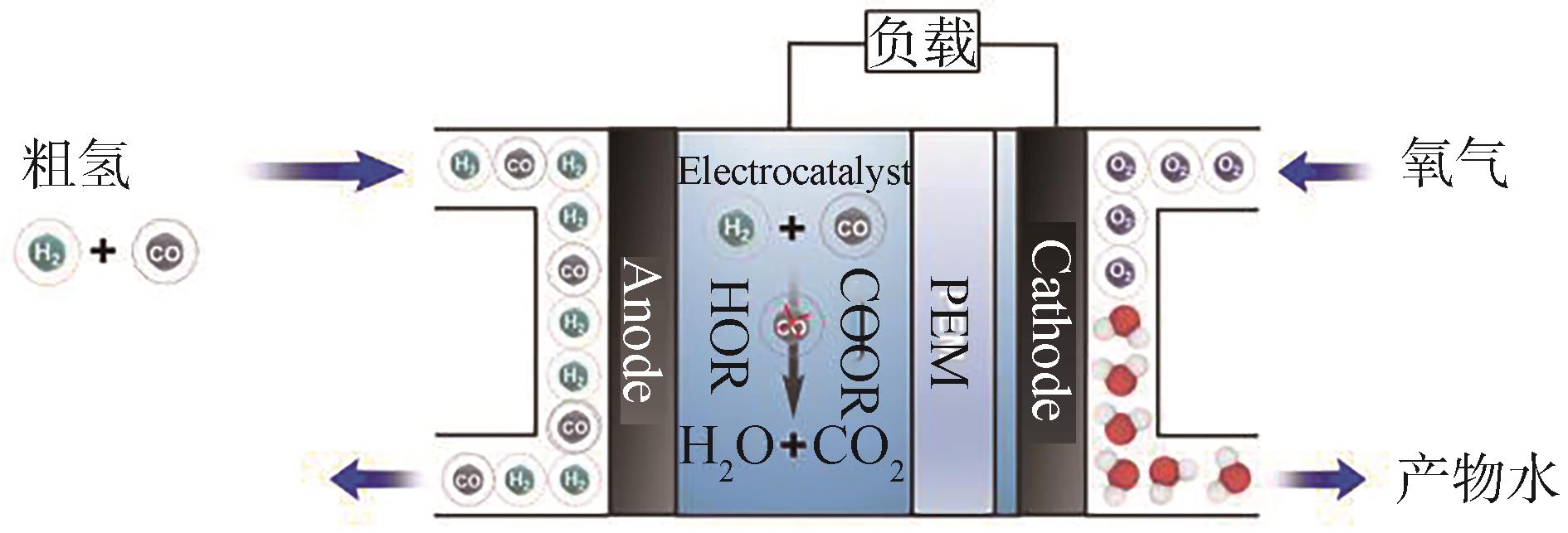
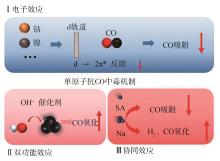
图 3
单原子催化剂抗CO中毒机制示意图"
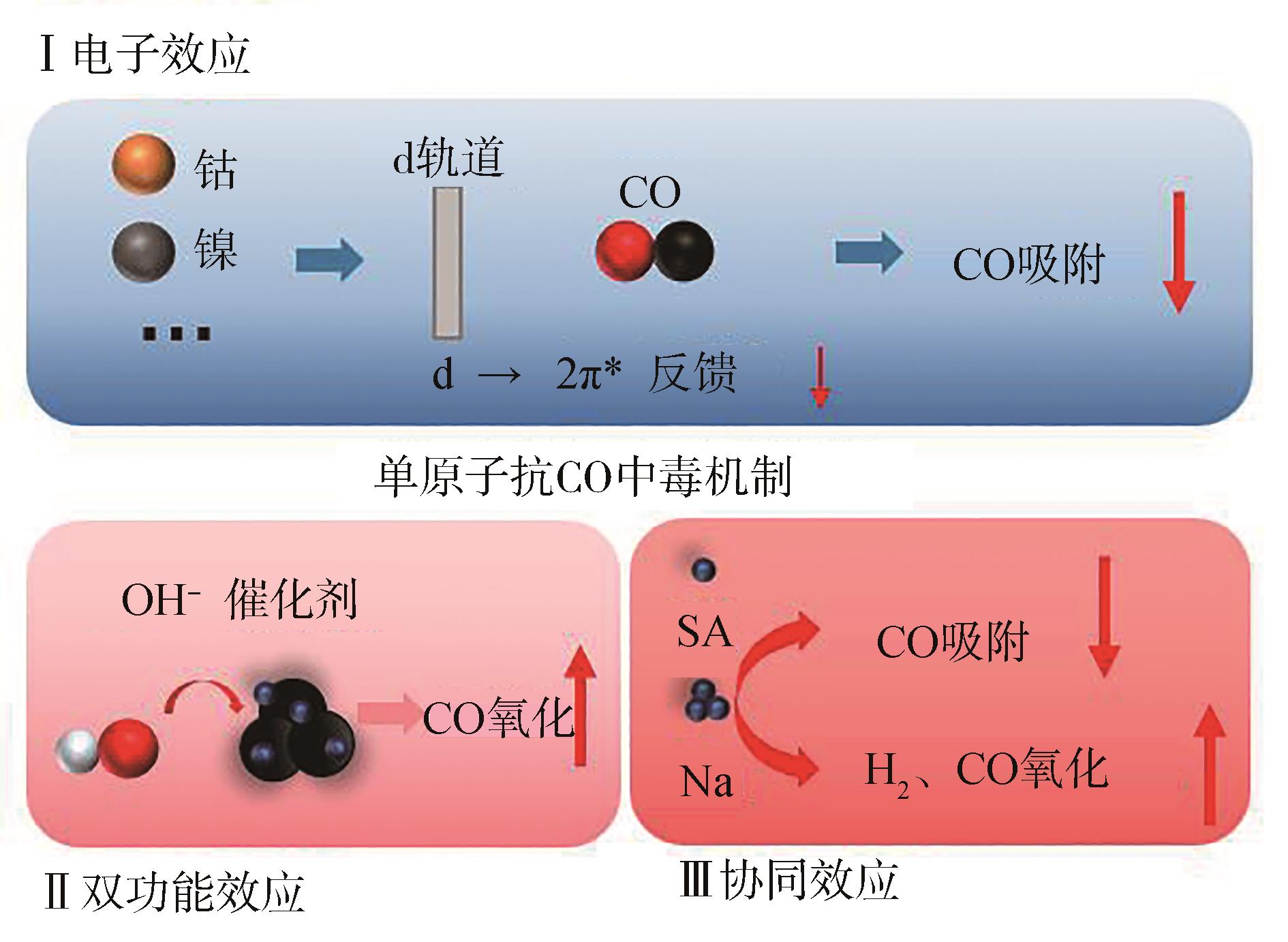
图 4
不同催化剂上CO中毒和去除过程示意图[18]"
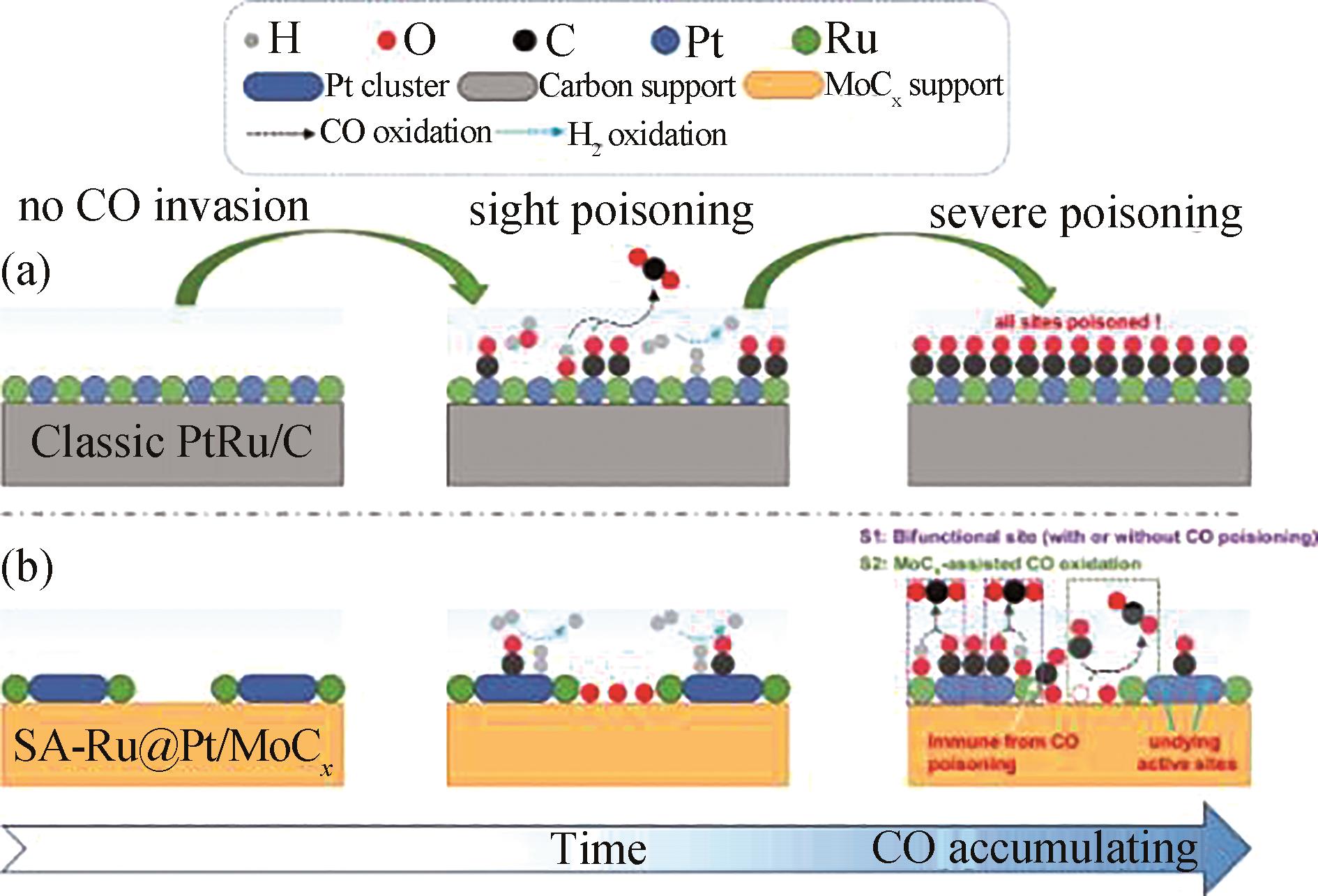
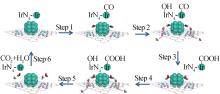
图 5
IrSA和IrNP协同效应示意图[20]"
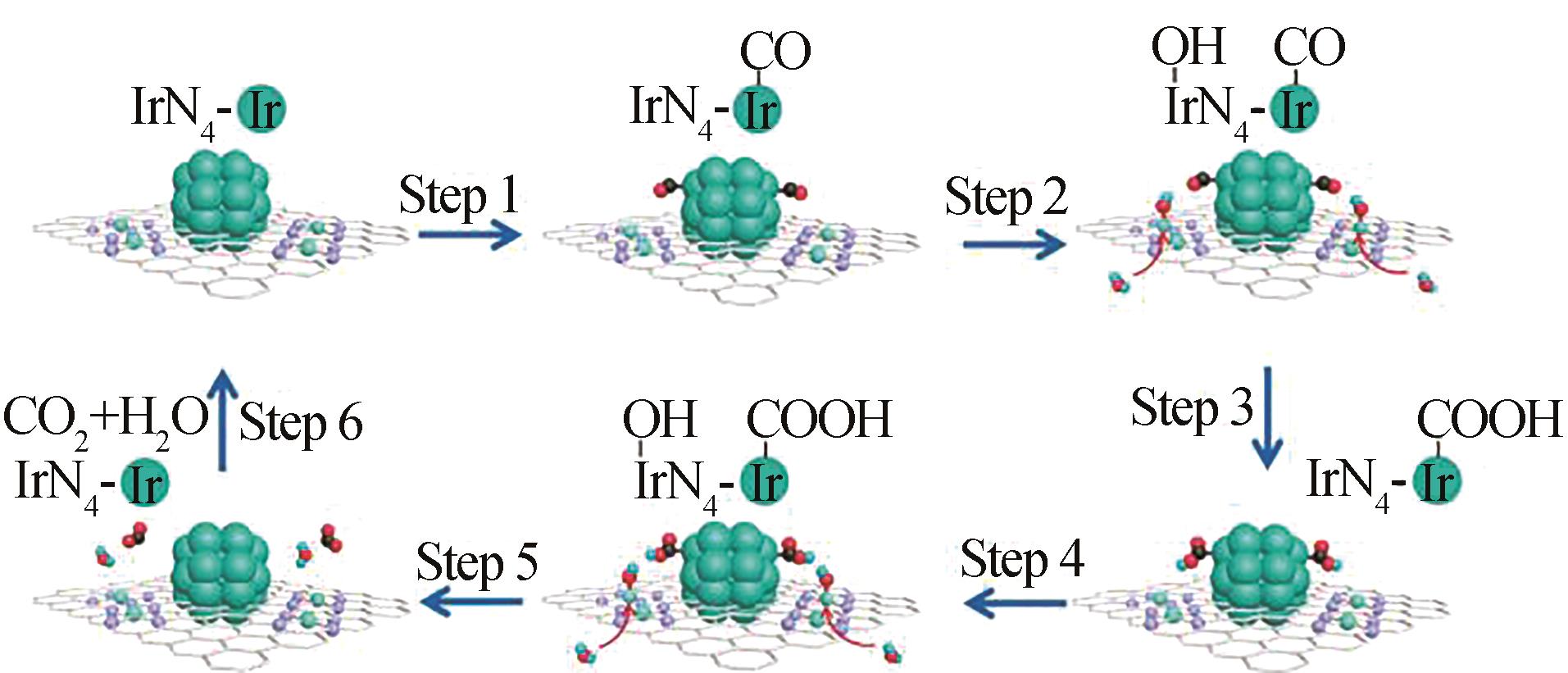
图 6
单原子催化剂在PEMFC阴极氧还原中的应用"
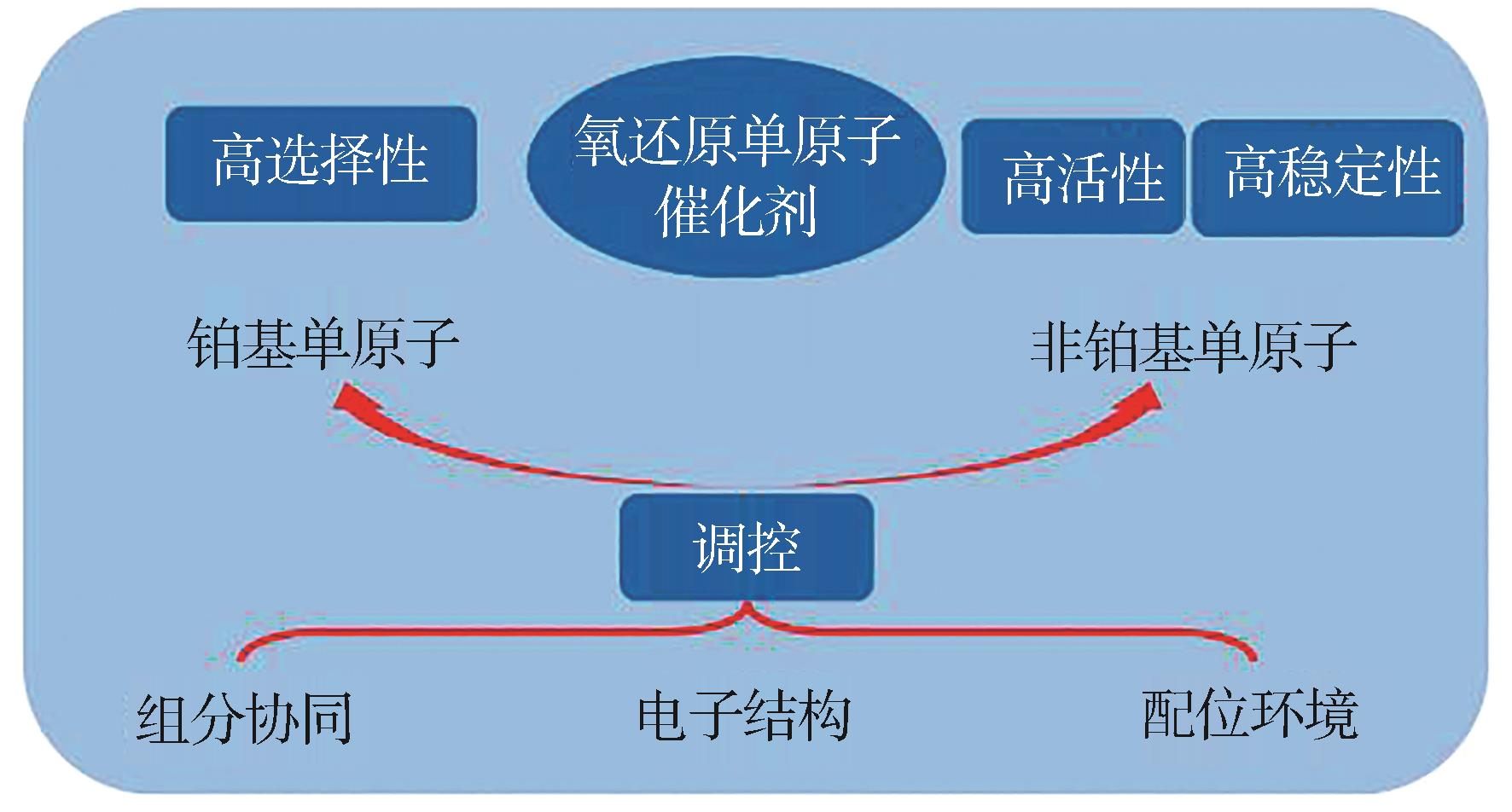
图 7
Pt3Co@Pt-SAC催化剂结构示意图[25]"
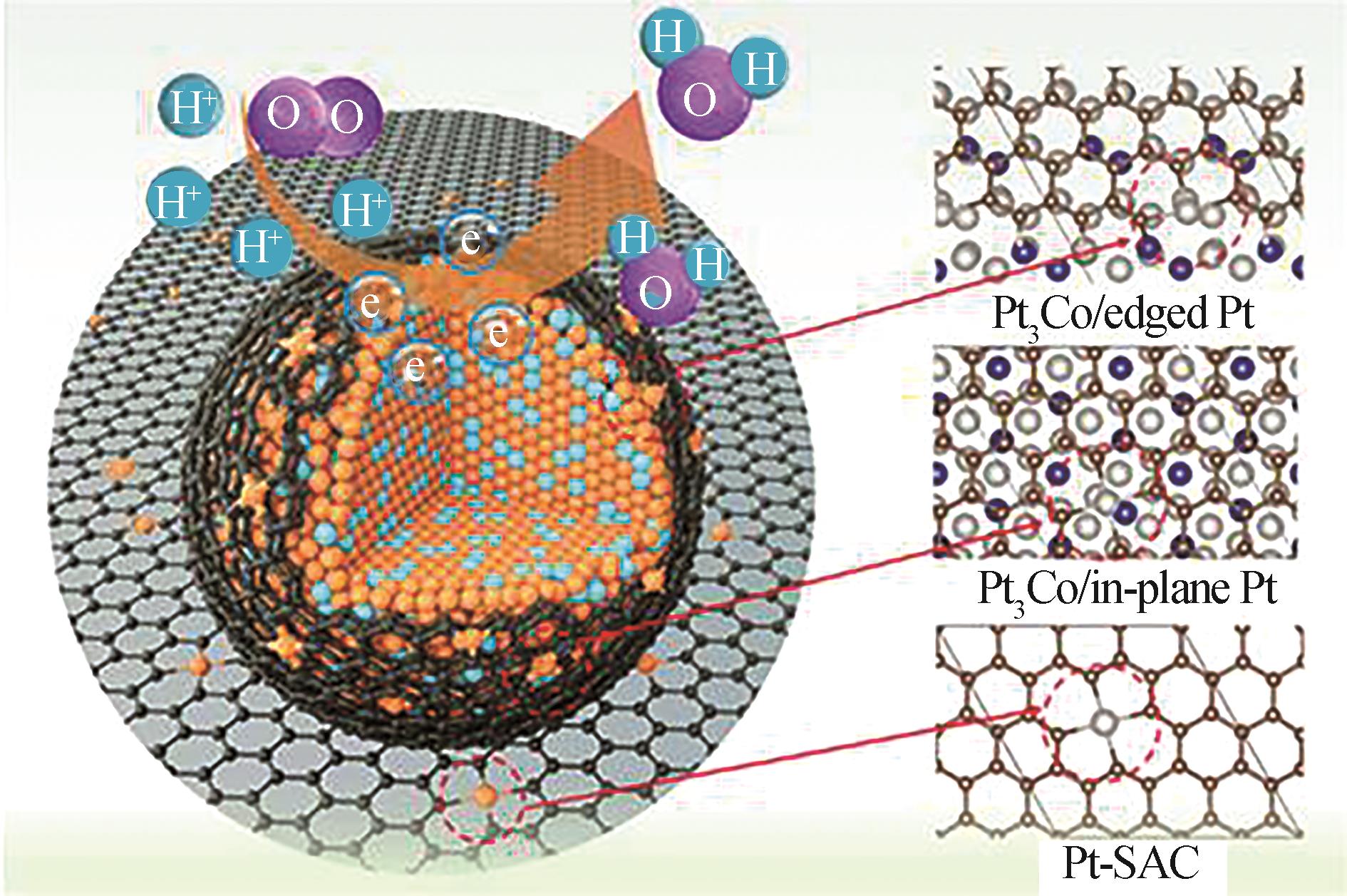
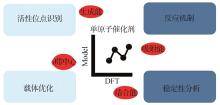
图 8
基于DFT描述符对单原子催化剂作用分析"


图 9
机器学习高通量DFT计算材料筛选流程图"

| [1] | 付佩,周紫佳,兰利波,等.氢燃料电池汽车发动机关键技术研究现状及趋势展望[J].汽车工程学报,2022,12(4):388-398. FU Pei, ZHOU Zijia, LAN Libo, et al. Research status and development trends of key technologies for hydrogen fuel cell vehicle engines [J]. Journal of Automotive Engineering, 2022, 12(4): 388-398. |
| [2] | 奥海尔,车硕源,Colella,等.燃料电池基础: Fuel cell fundamentals[M].北京:电子工业出版社,2007. |
| AO Haier, CHE Shuoyuan, COLELLA W, et al. Fuel cell fundamentals[M]. Beijing:Electronics Industry Press, 2007. | |
| [3] | 吴钊颖, 罗夏爽, 罗柳轩, 等. 氢燃料电池阳极抗一氧化碳毒化催化剂的研究进展与展望[J]. 中国科学:技术科学, 2024, 54(4): 567-583. |
| WU Zhaoying, LUO Xiashuang, LUO Liuxuan, et al. Progress and prospects of anti-carbon monoxide poisoning catalysts for hydrogen fuel cell anodes[J]. Science in China: Technological Sciences, 2024, 54(4): 567-583. | |
| [4] | 张鹏, 李佳烨, 潘原. 单原子催化剂在氢燃料电池阴极氧还原反应中的研究进展[J]. 太阳能学报, 2022, 43(6): 306-320. |
| ZHANG Peng, LI Jiaye, PAN Yuan. Progress of single-atom catalysts in the cathodic oxygen reduction reaction of hydrogen fuel cells[J]. Journal of Solar Energy, 2022, 43(6): 306-320. | |
| [5] | 郝策, 刘自若, 刘炜, 等. 用于氧还原反应的碳基负载金属单原子催化剂研究进展[J]. 无机材料学报, 2021, 36(8): 820-834. |
| HAO Ce, LIU Ziruo, LIU Wei, et al. Progress of carbon-based metal-loaded single-atom catalysts for oxygen reduction reactions[J]. Journal of Inorganic Materials, 2021, 36(8): 820-834. | |
| [6] | SONG Z, LI J, ZHANG Q, et al. Progress and perspective of single-atom catalysts for membrane electrode assembly of fuel cells[J]. Carbon Energy, 2023, 5(7): 19. |
| [7] | TANG M, YANG T, YANG X, et al. Single-atom catalysts for proton exchange membrane fuel cell: anode anti-poisoning & characterization technology[J]. Electrochimica Acta, 2023, 446: 142120. |
| [8] | LIAO X, LU R, XIA L, et al. Density functional theory for electrocatalysis[J]. Energy & Environmental Materials, 2022, 5(1): 157-185. |
| [9] | 王甲一, 车春霞, 朱吉钦, 等. 基于结构描述符的催化剂理论设计研究进展[J]. 中国科学: 化学, 2024, 54(11): 2071-2082. |
| WANG Jiayi, CHE Chunxia, ZHU Jiqin, et al. Progress in theoretical design of catalysts based on structural descriptors[J]. Science in China: Chemistry, 2024, 54(11): 2071-2082. | |
| [10] | 竹涛, 韩一伟, 刘帅, 等. 单原子位点催化剂及其电催化应用研究进展[J]. 化工进展, 2022, 2: 41. |
| ZHU Tao, HAN Yiwei, LIU Shuai, et al. Progress of single-site catalysts and their electrocatalytic applications[J]. Advances in Chemical Engineering, 2022, 2: 41. | |
| [11] | TAMTAJI M, GAO H, HOSSAIN M D, et al. Machine learning for design principles for single atom catalysts towards electrochemical reactions[J]. Journal of Materials Chemistry A, 2022, 10(29): 15309-15331. |
| [12] | LOPES P P, FREITAS K S, TICIANELLI E A. CO tolerance of PEMFC anodes: mechanisms and electrode designs[J]. Electrocatalysis, 2010, 1(4): 200-212. |
| [13] | WEI K, WANG X, GE J. Towards bridging thermo/electrocatalytic CO oxidation: from nanoparticles to single atoms[J]. Chemical Society Reviews, 2024, 53(17): 8903-8948. |
| [14] | YANG Z, CHEN C, ZHAO Y, et al. Pt single atoms on CrN nanoparticles deliver outstanding activity and CO tolerance in the hydrogen oxidation reaction[J]. Advanced Materials, 2023, 35(1): 2208799. |
| [15] | HUANG Z, LU R, ZHANG Y, et al. A highly efficient pH-universal HOR catalyst with engineered electronic structures of single Pt sites by isolated Co atoms[J]. Advanced Functional Materials, 2023, 33(47): 2306333. |
| [16] | LIN J, ZHANG Z, QIU J, et al. Synergy between single atom and nanoclusters promotes power and CO tolerant performance in PEMFCs[J]. Chemical Engineering Journal, 2025, 506: 160156. |
| [17] | LI H, WANG X, GONG X, et al. “One stone three birds” of a synergetic effect between Pt single atoms and clusters makes an ideal anode catalyst for fuel cells[J]. Journal of Materials Chemistry A, 2023, 11(27): 14826-14832. |
| [18] | LONG D, LIU Y, PING X, et al. Constructing CO-immune water dissociation sites around Pt to achieve stable operation in high CO concentration environment[J]. Nature Communications, 2024, 15(1): 8105. |
| [19] | WANG X, LI Y, WANG Y, et al. Proton exchange membrane fuel cells powered with both CO and H2[J]. Proceedings of the National Academy of Sciences, 2021, 118(43): e2107332118. |
| [20] | YANG X, WANG Y, WANG X, et al. CO‐tolerant PEMFC anodes enabled by synergistic catalysis between iridium single‐atom sites and nanoparticles[J]. Angew. Chem. Int. Ed., 2021, 60(50): 26177-26183. |
| [21] | ZHU L, LI Z, YANG M, et al. An effective approach to enhance hydrogen evolution reaction and hydrogen oxidation reaction by Ni doping to MoO3[J]. Small, 2023, 19(49): 2303481. |
| [22] | WANG M, ZHANG H, LIU Y, et al. Research progress of precise structural regulation of single atom catalyst for accelerating electrocatalytic oxygen reduction reaction[J]. Journal of Energy Chemistry, 2022, 72: 56-72. |
| [23] | WANG F, YANG J, LI J, et al. Which is best for ORR: single atoms, nanoclusters, or coexistence?[J]. ACS Energy Letters, 2024, 9(1): 93-101. |
| [24] | LAI W H, ZHANG L, YAN Z, et al. Activating inert surface Pt single atoms via subsurface doping for oxygen reduction reaction[J]. Nano Letters, 2021, 21(19): 7970-7978. |
| [25] | LIU B, FENG R, BUSCH M, et al. Synergistic hybrid electrocatalysts of platinum alloy and single-atom platinum for an efficient and durable oxygen reduction reaction[J]. ACS Nano, 2022, 16(9): 14121-14133. |
| [26] | XIAO M, ZHU J, LI G, et al. A single-atom iridium heterogeneous catalyst in oxygen reduction reaction[J]. Angewandte Chemie International Edition, 2019, 58(28): 9640-9645. |
| [27] | QIN J, LIU H, ZOU P, et al. Altering ligand fields in single-atom sites through second-shell anion modulation boosts the oxygen reduction reaction[J]. Journal of the American Chemical Society, 2022, 144(5): 2197-2207. |
| [28] | MEHMOOD A, GONG M, JAOUEN F, et al. High loading of single atomic iron sites in Fe-NC oxygen reduction catalysts for proton exchange membrane fuel cells[J]. Nature Catalysis, 2022, 5(4): 311-323. |
| [29] | XU H, JIA H, LI H, et al. Dual carbon-hosted Co-N3 enabling unusual reaction pathway for efficient oxygen reduction reaction[J]. Applied Catalysis B: Environmental, 2021, 297: 120390. |
| [30] | YU Z, XU H, CHENG D. Design of single atom catalysts[J]. Advances in Physics: X, 2021, 6(1): 1905545. |
| [31] | LUO J, ZHANG Y, LU Z, et al. Oxygen-coordinated Cr single-atom catalyst for oxygen reduction reaction in proton exchange membrane fuel cells[J]. Angewandte Chemie International Edition, 2025, 137(17): 202500500. |
| [32] | BACK S, BAGHERZADEH MOSTAGHIMI A H, SIAHROSTAMI S. Enhancing oxygen reduction reaction activity using single atom catalyst supported on tantalum pentoxide[J]. ChemCatChem, 2022, 14(11): e202101763. |
| [33] | CHEN Z, ZHENG H, ZHANG J, et al. Covalent organic frameworks derived single-atom cobalt catalysts for boosting oxygen reduction reaction in rechargeable Zn-air batteries[J]. Journal of Colloid and Interface Science, 2024, 670: 103-113. |
| [34] | YANG Z, QIAN S, WANG Y, et al. Graphene benefits penta-nitrogen coordinated iron and catalytic stability of oxygen reduction reaction[J]. Chemical Engineering Journal, 2024, 496: 154141. |
| [35] | KULKARNI A, SIAHROSTAMI S, PATEL A, et al. Understanding catalytic activity trends in the oxygen reduction reaction[J]. Chemical Reviews, 2018, 118(5): 2302-2312. |
| [36] | CALLE-VALLEJO F, TYMOCZKO J, COLIC V, et al. Finding optimal surface sites on heterogeneous catalysts by counting nearest neighbors[J]. Science, 2015, 350(6257): 185-189. |
| [37] | XIA G, TAN Y, CHEN X, et al. Monodisperse magnesium hydride nanoparticles uniformly self-assembled on graphene[J]. Advanced Materials, 2015, 27(39): 5981-5988. |
| [38] | JING H, ZHU P, ZHENG X, et al. Theory-oriented screening and discovery of advanced energy transformation materials in electrocatalysis[J]. Advanced Powder Materials, 2022, 1(1): 14-26. |
| [39] | SUN H, GAO L, LI Y, et al. Screening of single-atomic catalysts loaded on two-dimensional transition metal dichalcogenides for electrocatalytic oxygen reduction via high throughput ab initio calculations[J]. Journal of Colloid and Interface Science, 2025, 684: 251-261. |
| [40] | WANG S, MENG K, QIN L, et al. High-throughput screening of transition metal phthalocyanine electrocatalysts for oxygen reduction reactions[J]. International Journal of Hydrogen Energy, 2024, 88: 850-857. |
| [41] | LIN S, XU H, WANG Y, et al. Directly predicting limiting potentials from easily obtainable physical properties of graphene-supported single-atom electrocatalysts by machine learning[J]. Journal of Materials Chemistry A, 2020, 8(11): 5663-5670. |
| [42] | ZHU Y, XU B, HAN C, et al. Potential correlation between thermal transport and catalytic performance in single metal atom cata |
| [1] | 陆继轩,郑伟波,李翔,王倩倩,李冰,明平文. 质子交换膜燃料电池氢气渗透研究进展及抑制措施概述[J]. 汽车工程, 2025, 47(7): 1238-1257. |
| [2] | 李楠,白雪宜,杨抖,李贵敬,马诗会. PEMFC金属泡沫流场全形态三维性能模拟及结构优化[J]. 汽车工程, 2025, 47(7): 1277-1284. |
| [3] | 常文,邵赓华,郭凤刚,张敬贵,吴永豪,赵宏建,刘尹,张健,姚东升. 实际道路工况下燃料电池寿命性能衰减研究[J]. 汽车工程, 2025, 47(7): 1296-1304. |
| [4] | 金立生,赵鑫,谢宪毅,杨浩,路波,宋明亮,郭柏苍,曹耀光. 基于轮胎内嵌传感器阵列的智能轮胎磨损检测方法[J]. 汽车工程, 2025, 47(6): 1207-1218. |
| [5] | 姜俊昭,徐业凯,张小纹,王文军. 基于主客观融合的轮胎与整车操纵稳定性匹配评价方法研究[J]. 汽车工程, 2025, 47(4): 776-787. |
| [6] | 乔鹏宇,吴思远,包志铭,焦道宽,刘学良,朱凯歌,杜浩然,罗炜睿,杜青,焦魁. 多工况下质子交换膜燃料电池物理场分布均匀性与运行状态研究[J]. 汽车工程, 2025, 47(11): 2126-2140. |
| [7] | 曾升,岳美玲,李昕彤. 基于扩展状态观测的燃料电池空气供应系统容错控制研究[J]. 汽车工程, 2025, 47(11): 2159-2167. |
| [8] | 张拴羊,徐洪涛,张国宾,陈晓平,袁泉,陈冠一. 海豚状肋片仿生流场的PEMFC性能研究[J]. 汽车工程, 2025, 47(10): 1953-1962. |
| [9] | 李光伟,韩雪,邢丹敏,明平文. 催化层/微孔层界面设计对PEMFC影响研究[J]. 汽车工程, 2025, 47(1): 77-84. |
| [10] | 任立海,陈黎黎,杨振华,蒋成约,赵清江,刘西,胡远志. 冲击载荷下PEMFC力-电耦合建模及电学响应研究[J]. 汽车工程, 2025, 47(1): 96-106. |
| [11] | 徐寅嵩,李文浩,杜常清,颜伏伍. 考虑运行参数可寻优范围的PEMFC系统净功率优化[J]. 汽车工程, 2024, 46(7): 1137-1146. |
| [12] | 余宾宴,马建,陈轶嵩,耿莉敏,王茜. 微孔间距和孔径对PEMFC气体扩散层表面液滴流动传输特性的影响[J]. 汽车工程, 2024, 46(6): 1025-1033. |
| [13] | 曾娟,王昊,许博,张洪昌. 基于强弱感知设计的驾驶员危险感知状态识别模型研究[J]. 汽车工程, 2024, 46(6): 995-1005. |
| [14] | 刘卫东,韩宗志,高镇海,康艳虎. 基于智能轮胎系统的实时路面辨识技术[J]. 汽车工程, 2024, 46(4): 617-625. |
| [15] | 陈琳,何熳平,吴淑孝,陈德乾,赵铭思,潘海鸿. 基于自适应模糊C-均值算法的退役锂离子电池快速聚类[J]. 汽车工程, 2024, 46(4): 643-651. |
|
||
