汽车工程 ›› 2025, Vol. 47 ›› Issue (12): 2378-2386.doi: 10.19562/j.chinasae.qcgc.2025.12.010

• • 上一篇    下一篇

强光环境智能汽车相机功能仿真测试

黄殷梓1,朱冰1,赵健1,张培兴1(),高质桐1,韩嘉懿1,范欣炜2   

  1. 1.吉林大学,汽车底盘集成与仿生全国重点实验室,长春 130022
    2.中汽研汽车试验场股份有限公司,盐城 224100
  • 收稿日期:2024-12-20 修回日期:2025-05-07 出版日期:2025-12-25 发布日期:2025-12-19
  • 通讯作者: 张培兴 E-mail:zhangpeixing@jlu.edu.cn
  • 基金资助:
    国家重点研发计划项目(2022YFB2503401);国家自然科学基金(U22A20247);国家自然科学基金(524B2163);吉林省教育厅科学研究项目(2024KC088)

Simulation Test Method of Intelligent Vehicle Camera Function in Strong Light Environment

Yinzi Huang1,Bing Zhu1,Jian Zhao1,Peixing Zhang1(),Zhitong Gao1,Jiayi Han1,Xinwei Fan2   

  1. 1.Jilin University,State Key Laboratory of Automotive Chassis Integration and Bionics,Changchun 130022
    2.CATARC Automotive Proving Ground Co. ,Ltd. ,Yancheng 224100
  • Received:2024-12-20 Revised:2025-05-07 Online:2025-12-25 Published:2025-12-19
  • Contact: Peixing Zhang E-mail:zhangpeixing@jlu.edu.cn

摘要:

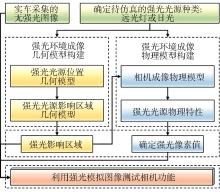
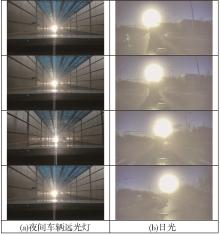
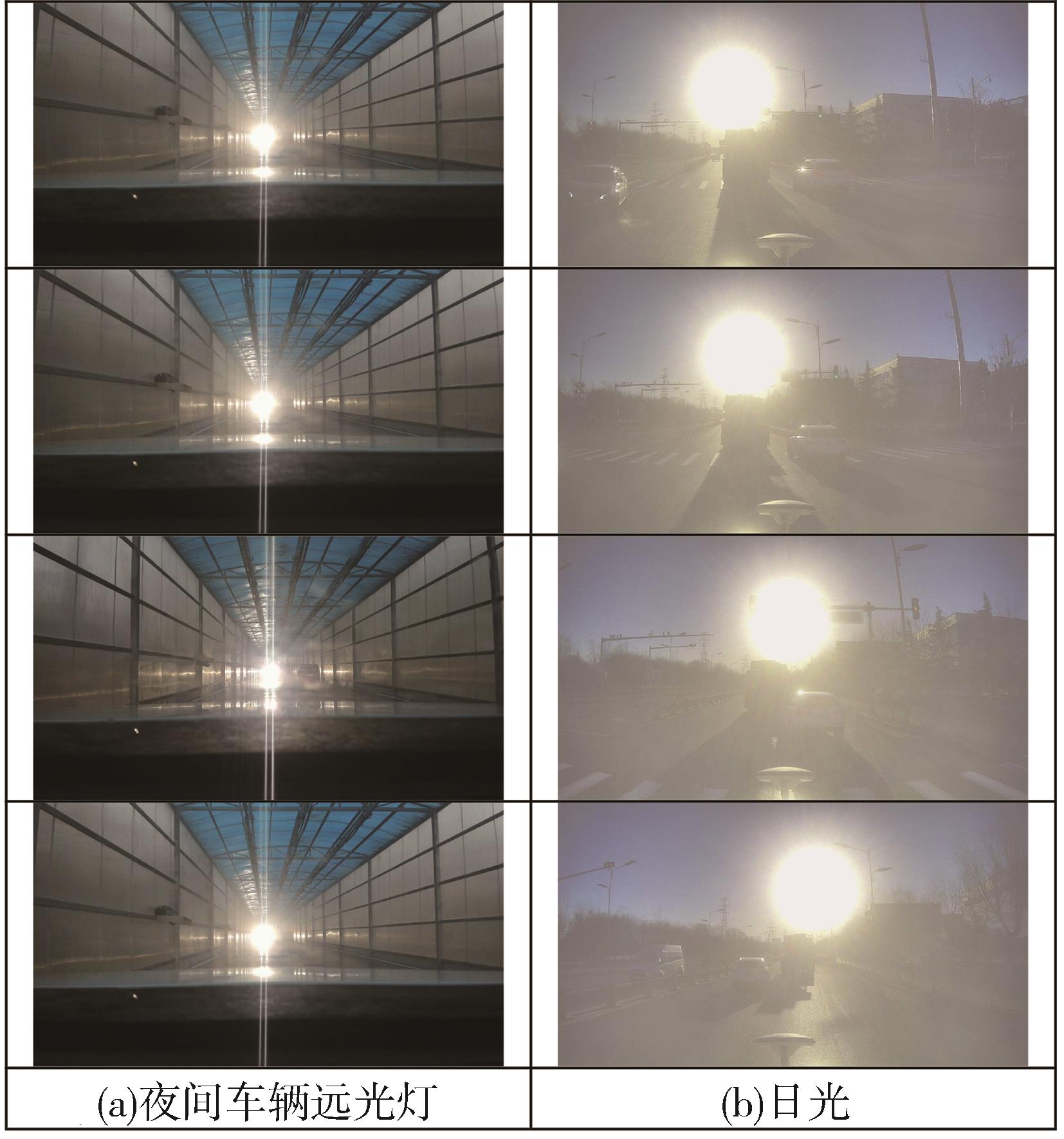
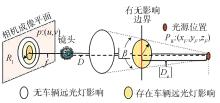
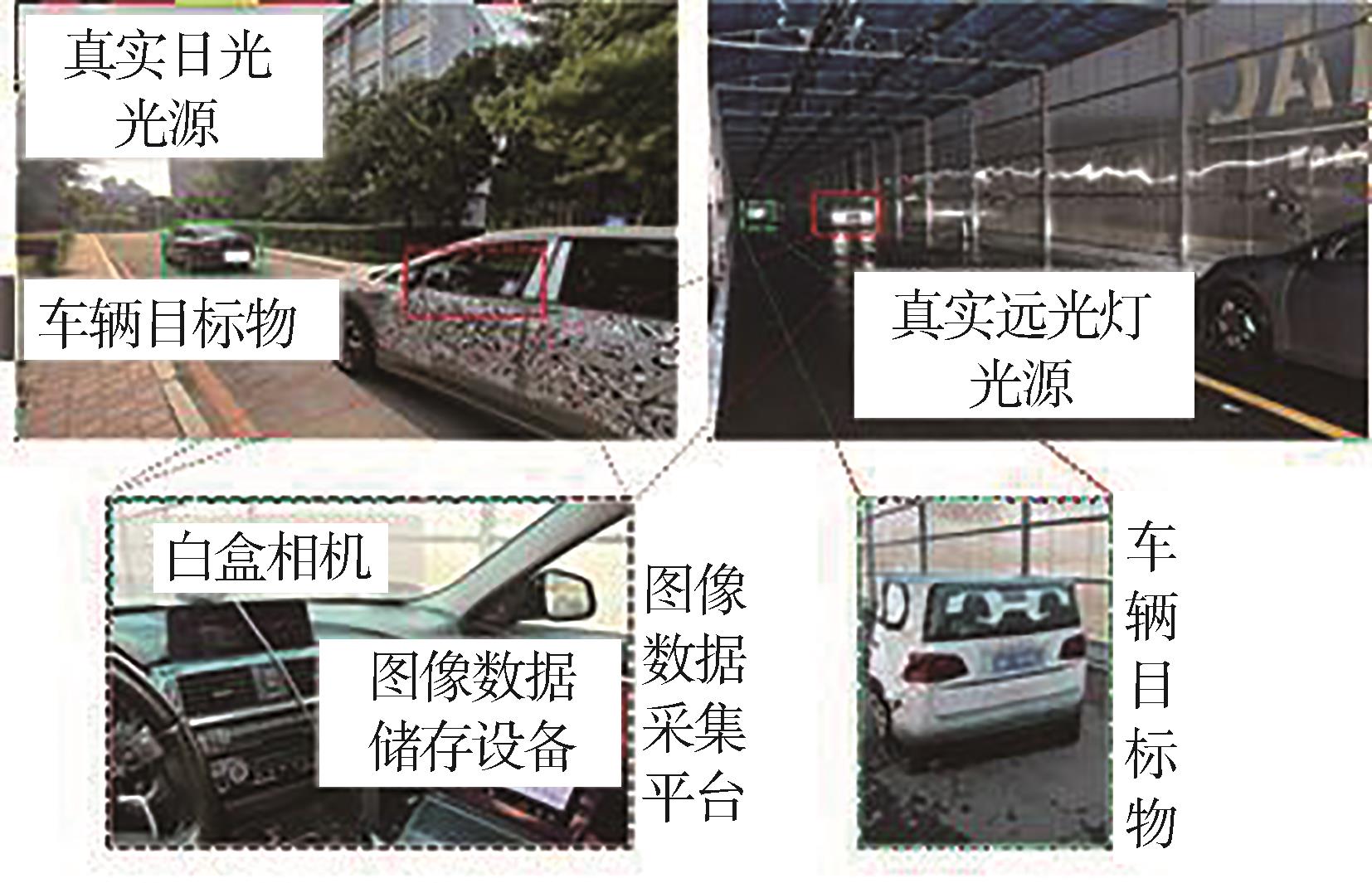
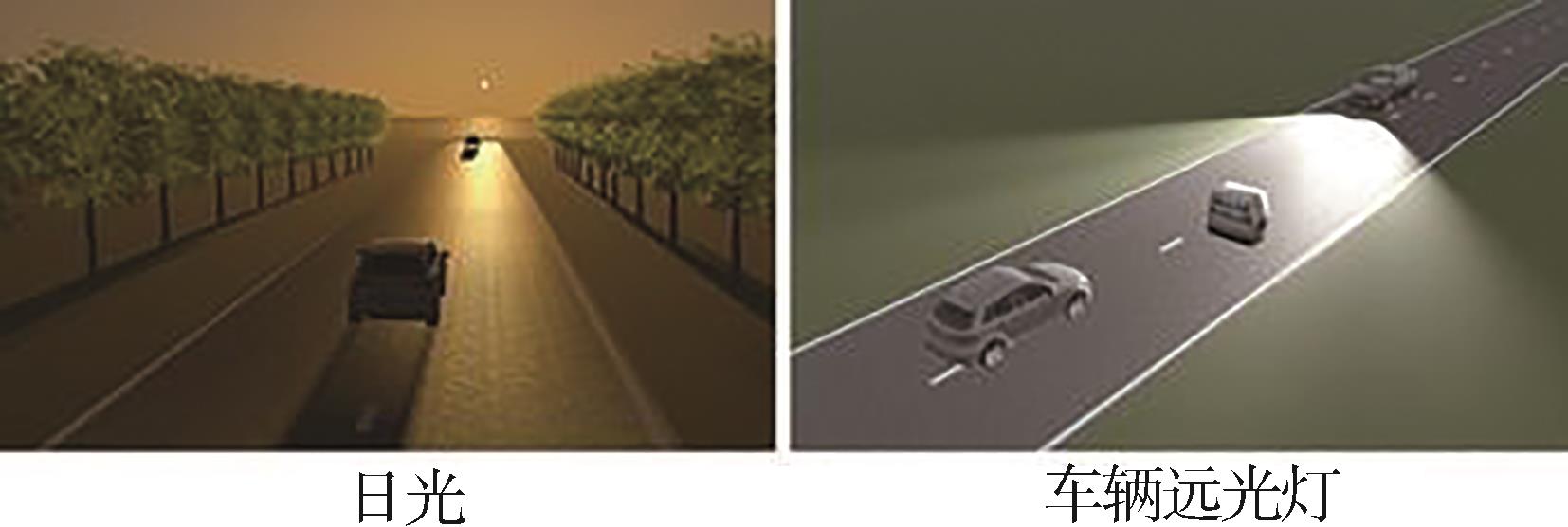
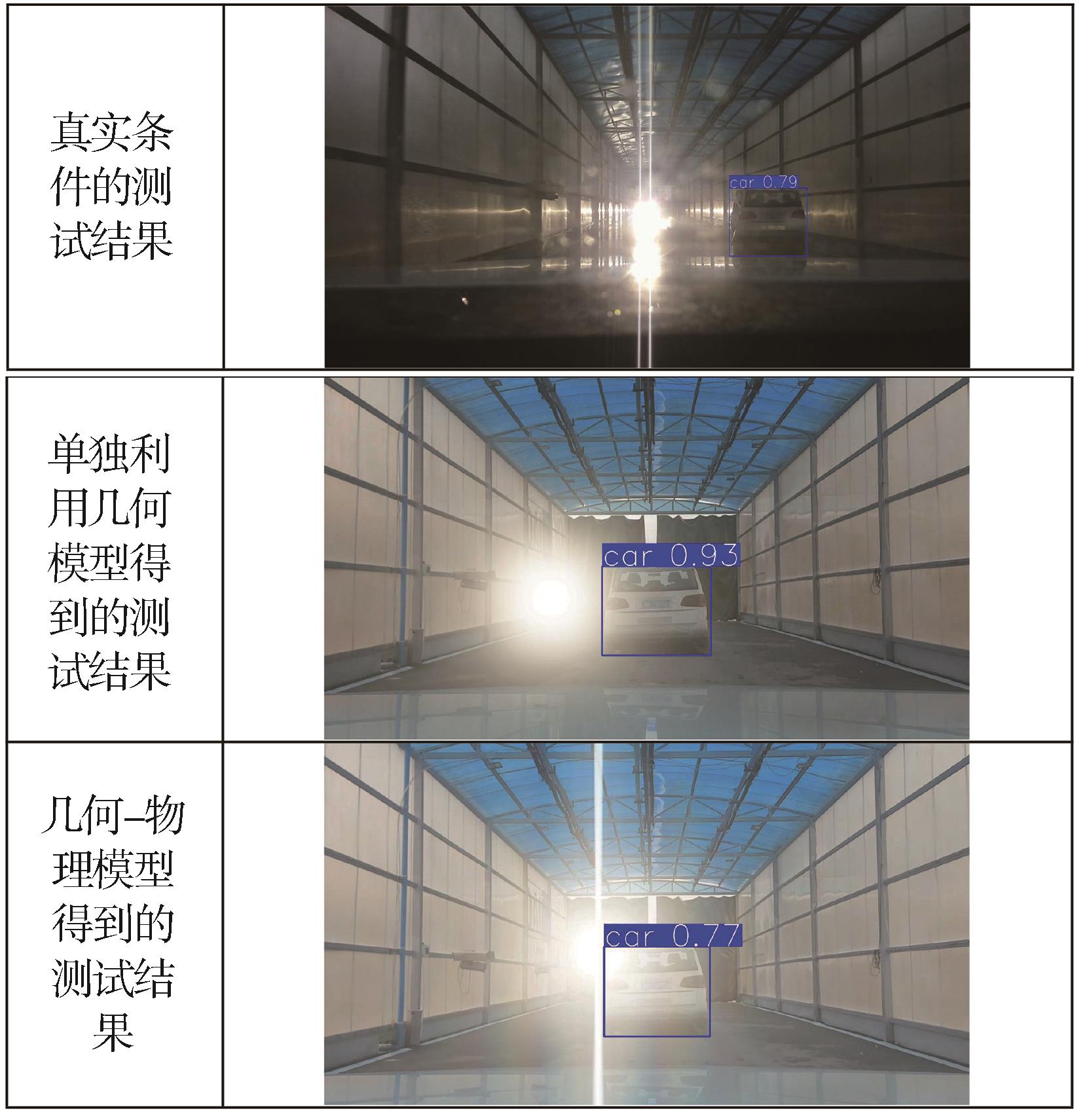
由车辆远光灯、日光等光源产生的强光环境会对智能汽车相机功能产生较大影响,建立面向强光环境准确且可控的测试方法对提高智能汽车环境适应性具有重要意义。然而,基于实车道路或封闭场地进行强光实景测试存在测试成本高、周期长且场景难以精准可控复现的问题。本文提出一种面向强光环境的智能汽车相机功能仿真测试方法,通过几何-物理融合仿真模型模拟强光环境中的图像响应,并利用强光模拟图像测试智能汽车相机功能。首先,构建强光光源的几何位置和影响区域范围模型;其次,利用相机成像物理模型和强光光源物理特性确定强光影响对应的像素强度,基于强光影响区域和强光像素值将实车采集的无强光图像合成为强光模拟图像;最后,以真实强光环境测试结果作为真值,对比传统仿真软件、大模型方法和本文方法针对强光环境下相同相机功能的测试结果。实验结果表明,本文提出的方法能够提高强光环境仿真测试的性能,相较于传统仿真软件和大模型方法实现了更有效且准确的强光环境相机功能测试,同时相较于物理实景测试具有测试成本低、效率高且仿真模拟参数精准可控的优势。

关键词: 智能汽车, 相机功能测试, 强光环境, 几何-物理融合仿真模型

Abstract:

The strong light environment generated by vehicle high beams, sunlight, and other light sources can significantly affect the camera functions of intelligent vehicle. Establishing accurate and controllable testing methods for such strong light environment is crucial for improving the environmental adaptability of intelligent vehicles. However, real-world testing on roads or closed fields under strong light conditions faces challenges such as high testing cost, long cycles, and the difficulty of precisely replicating controlled scenarios. In this paper a simulation test method for intelligent vehicle camera function under strong light environment is proposed. It uses a geometric-physical fusion simulation model to simulate image responses in strong light environment, and employs strong light simulation images to test camera functions. Firstly, a geometric model of strong light environment imaging is constructed to determine the area affected by strong light. Secondly, the camera imaging physical model and the physical characteristics of strong light sources are used to determine the pixel intensity corresponding to the strong light effect. Based on the strong light impact region and pixel values, images collected from real vehicles under normal light conditions are combined to generate strong light simulation images. Finally, real-world test results under strong light environment are taken as ground truth, and the testing results for the same camera functions in strong light environment are compared with traditional simulation software, large model methods, and the method proposed in this paper. The experimental results show that the proposed method can improve the performance of strong light environment simulation testing. Compared to traditional simulation software and large model methods, it achieves more effective and accurate camera function testing under strong light conditions. Additionally, it offers the advantages of lower testing cost, higher efficiency, and precise controllability of simulation parameters, as compared to physical scene testing.

Key words: intelligent vehicle, camera function testing, strong light environment, geometric-physical fusion simulation model