

汽车工程 ›› 2025, Vol. 47 ›› Issue (5): 797-808.doi: 10.19562/j.chinasae.qcgc.2025.05.001
• • 下一篇
管家意1,李斌1,周傲1,赵治国1,林巧2,陈广1( )
)
收稿日期:2025-01-14
修回日期:2025-03-04
出版日期:2025-05-25
发布日期:2025-05-20
通讯作者:
陈广
E-mail:guangchen@tongji.edu.cn
基金资助:
Jiayi Guan1,Bin Li1,Ao Zhou1,Zhiguo Zhao1,Qiao Lin2,Guang Chen1()
Received:2025-01-14
Revised:2025-03-04
Online:2025-05-25
Published:2025-05-20
Contact:
Guang Chen
E-mail:guangchen@tongji.edu.cn
摘要:
针对自动泊车系统中路径规划的安全性、实时性和可行性问题,本文提出一种基于混合动作空间约束强化学习的泊车路径规划算法。具体地,该算法利用混合动作空间强化学习框架将离散动作和连续参数相结合实现参数化轨迹规划,提高了规划路径的可执行性;在此基础上设计一种混合动作空间的约束强化学习算法实现安全策略优化,确保了泊车路径的安全性。此外,在模型训练过程中引入课程学习机制逐步引导策略探索,增强了模型训练稳定性和收敛速度。最后,在垂直车位和平行车位进行广泛的对比和消融实验,实验结果表明所提出的泊车路径规划算法在成功率、安全性和实时性等指标上均表现出色,且综合性能明显优于现有基线算法。
管家意,李斌,周傲,赵治国,林巧,陈广. 面向狭窄环境的安全泊车路径规划算法研究[J]. 汽车工程, 2025, 47(5): 797-808.
Jiayi Guan,Bin Li,Ao Zhou,Zhiguo Zhao,Qiao Lin,Guang Chen. Study on Safe Parking Path Planning Algorithm for Narrow Environment[J]. Automotive Engineering, 2025, 47(5): 797-808.
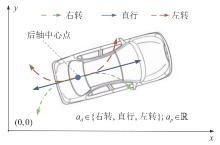
图1
泊车路径规划的参数化动作"
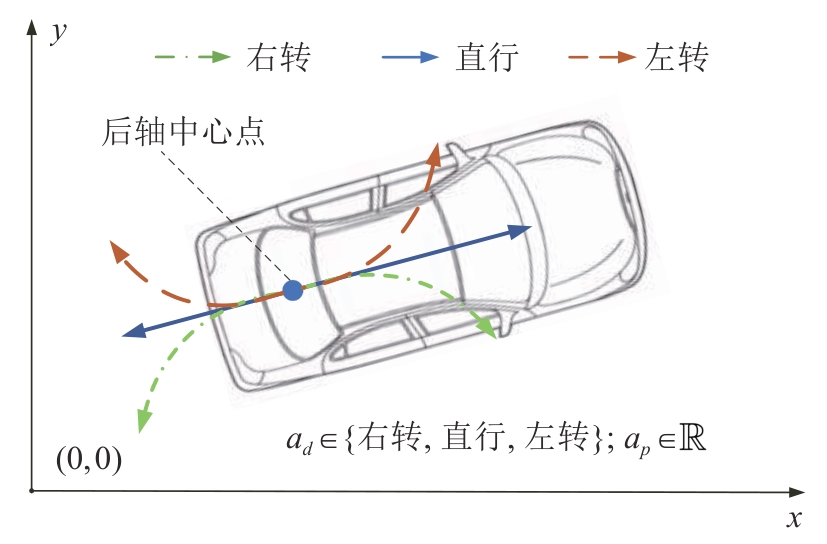
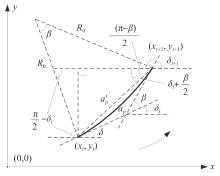
图2
车辆左转前进工况的状态转移示意图"
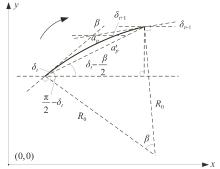
图3
车辆右转前进工况的状态转移示意图"
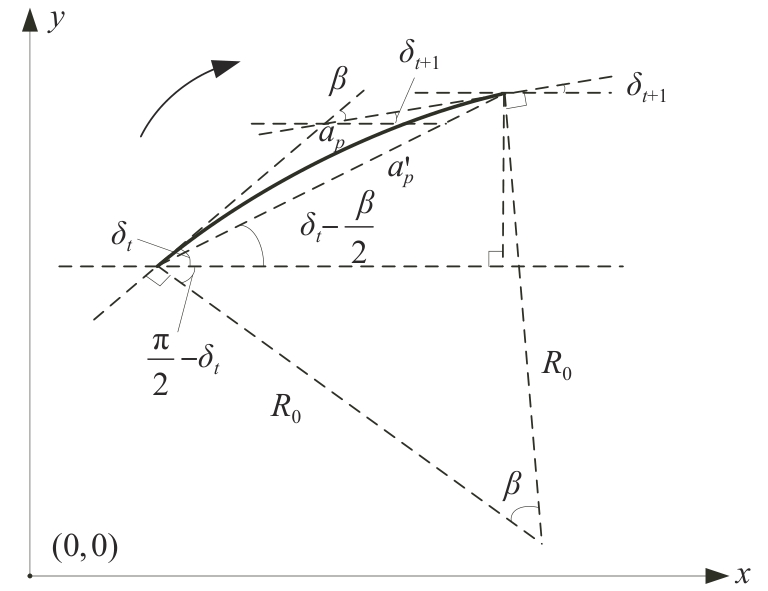
表1
HCRL安全泊车路径规划算法"
算法1:混合动作安全泊车路径规划算法 |
|---|
1:输入:初始化策略网络参数 |
2:for 每个回合do: |
3: 通过策略 |
4: 计算后续轨迹奖励和成本 |
5: 基于当前奖励值网络 |
6: 基于当前成本值网络 |
7: 基于 |
8: 如果 |
9: 反之则通过成本优势函数更新策略: |
10: 通过均方误差拟合奖励和成本值函数: |
11:终止for |
12: 输出:策略网络 |
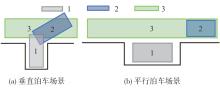
图4
训练过程中课程引导区域示意图"
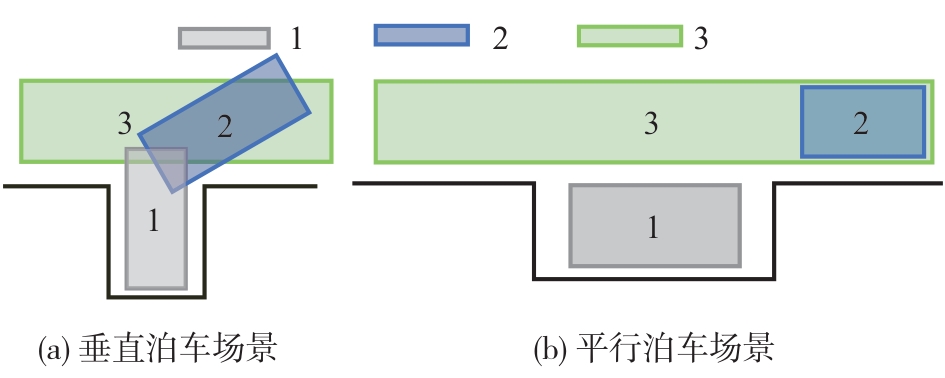
图5
垂直泊车位仿真环境可视化"
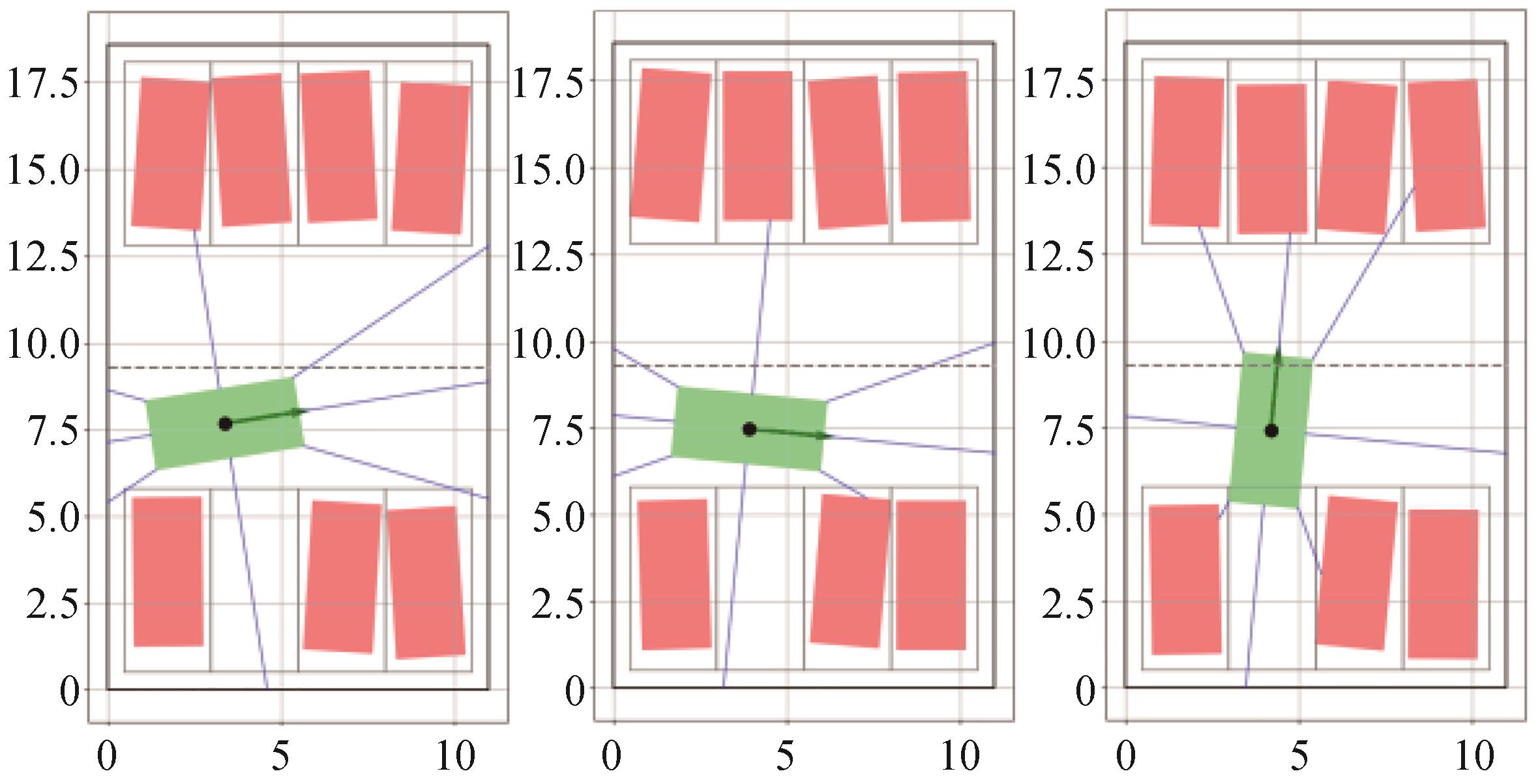
图6
平行泊车位仿真环境可视化"
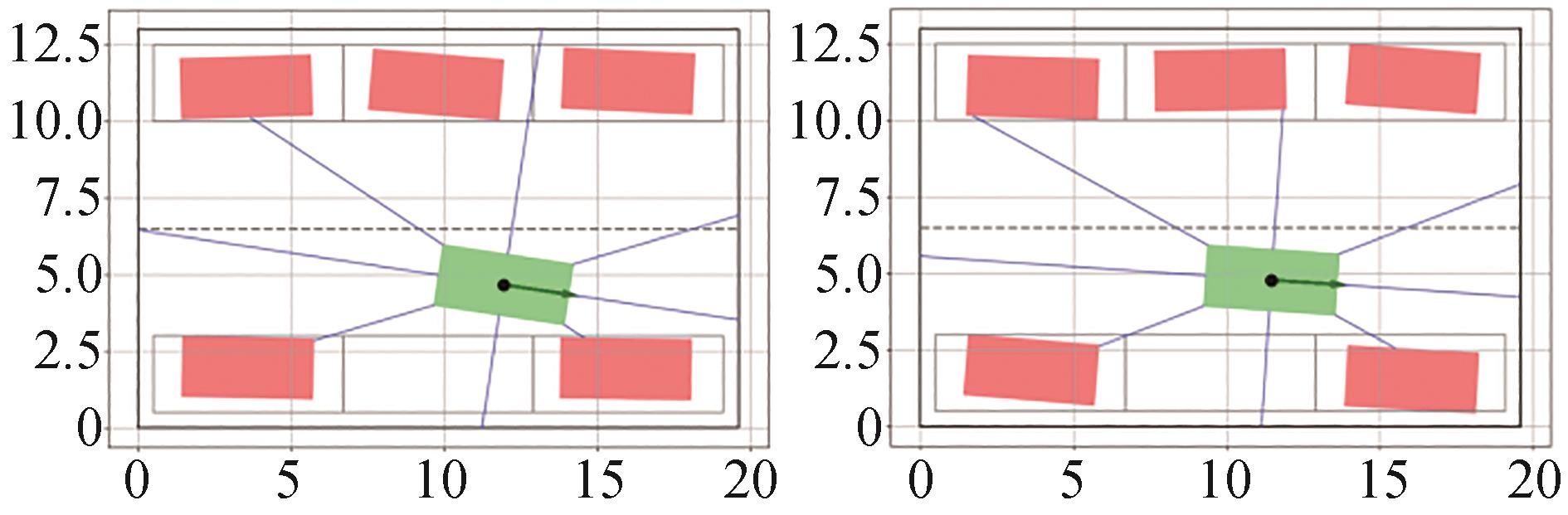
表2
现有基线算法与HCRL算法在垂直车泊车位实验结果"
| 方法 | Reeds-Shepp | Hybrid A* | SAC | PPO | HCRL(Ours) |
|---|---|---|---|---|---|
| 1.00±0.00 | 1.00±0.00 | 1.00±0.00 | 1.00±0.00 | 1.00±0.00 | |
| 52.98±26.78 | 8.75±3.32 | 26.00±12.72 | 27.94±13.55 | 8.67±3.89 | |
| 0.01±0.00 | 2.74±3.86 | 0.50±0.03 | 0.56±0.03 | 0.07±0.01 | |
| 8.91±0.36 | 9.68±1.16 | 14.73±2.07 | 15.98±2.21 | 9.78±0.86 | |
| 1.00±0.00 | 1.33±0.58 | 5.84±2.30 | 6.16±2.77 | 1.66±0.71 | |
| 2.87±0.51 | 3.68±1.03 | 14.18±3.04 | 13.37±3.19 | 3.82±1.50 | |
| 83.33 | 79.23 | 44.47 | 40.58 | 94.05 |
表3
现有基线算法与HCRL算法在平行车泊车位实验结果"
| 方法 | Reeds-Shepp | Hybrid A* | SAC | PPO | HCRL(Ours) |
|---|---|---|---|---|---|
| 1.00 ±0.00 | 0.83 ±0.12 | 1.00 ±0.00 | 1.00 ±0.00 | 1.00±0.00 | |
| 65.49 ±29.72 | 10.70 ±4.66 | 16.22 ±7.27 | 18.02±7.82 | 7.92±3.76 | |
| 0.01 ±0.00 | 23.93 ±7.20 | 0.31 ±0.06 | 0.32 ±0.08 | 0.06±0.02 | |
| 8.80 ±0.34 | 9.34 ±0.84 | 11.02 ±1.65 | 11.64 ±1.81 | 9.96±0.92 | |
| 2.00 ±0.00 | 2.26 ±1.14 | 2.60±0.34 | 2.72 ±1.16 | 2.31±1.01 | |
| 3.82 ±1.38 | 4.51 ±1.94 | 13.29±2.53 | 12.56 ±2.25 | 4.69 ±1.22 | |
| 83.33 | 55.46 | 53.80 | 48.14 | 84.45 |
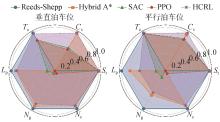
图7
垂直和平行位泊车场景评价指标归一化得分"
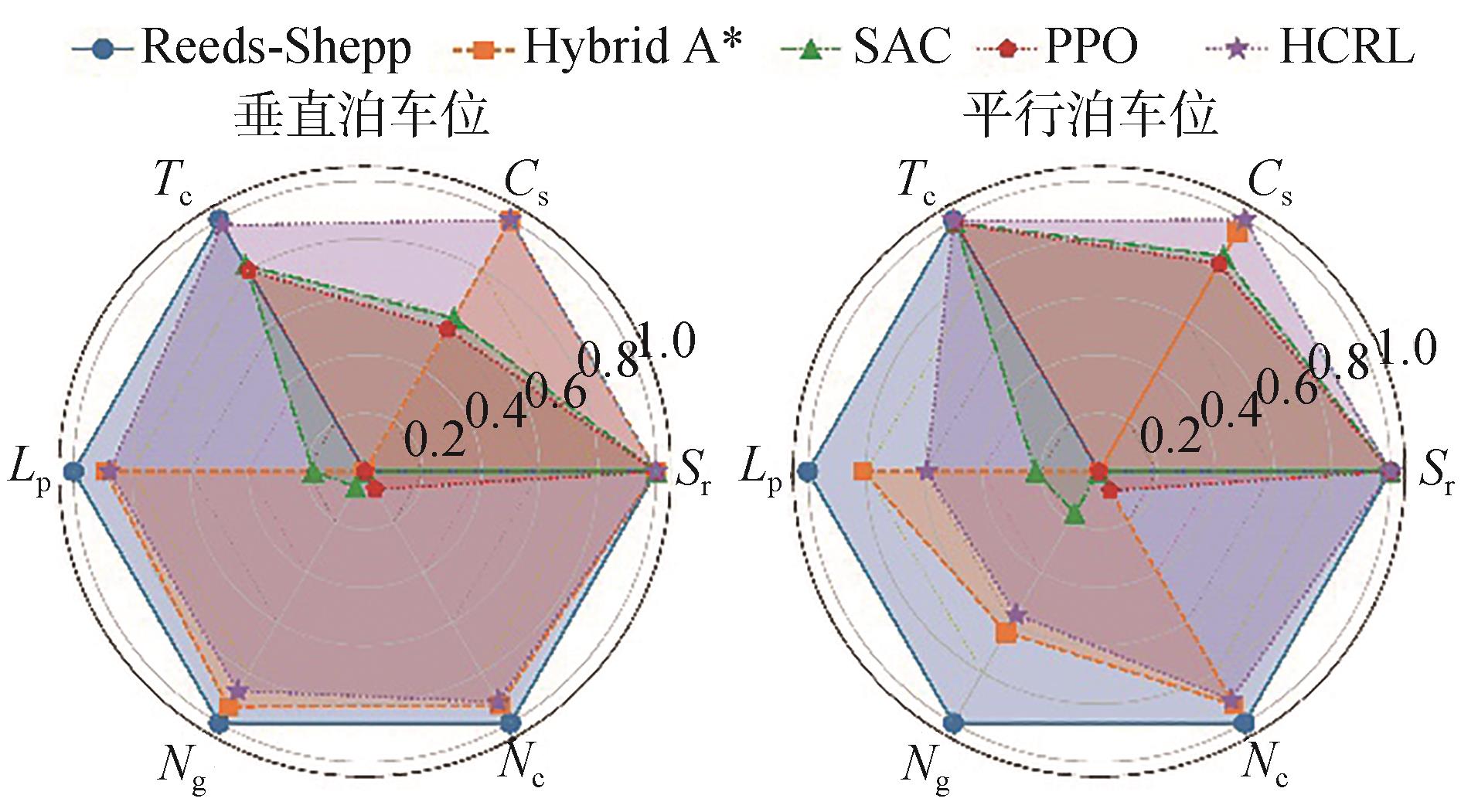
表4
基于现有算法改进的安全规划算法与HCRL算法在垂直车泊车位实验结果"
| 方法 | PADDPG-Lag | HPPO-Lag | PDQN-Lag-R | HCRL(Ours) |
|---|---|---|---|---|
| 0.98 ± 0.01 | 0.99± 0.01 | 1.00 ± 0.00 | 1.00 ± 0.00 | |
| 11.33 ± 5.10 | 10.04 ± 4.86 | 12.58 ± 5.77 | 8.67 ± 3.89 | |
| 0.10± 0.04 | 0.09± 0.05 | 0.11± 0.05 | 0.07± 0.01 | |
| 10.30 ± 1.05 | 12.67 ± 1.49 | 11.08 ± 0.88 | 9.78± 0.86 | |
| 1.56 ± 0.53 | 1.74± 0.89 | 1.67 ± 0.70 | 1.66 ± 0.71 | |
| 3.61 ± 1.36 | 4.14 ± 1.86 | 3.95± 1.64 | 3.82 ± 1.50 | |
| 75.61 | 77.54 | 89.05 | 94.05 |
表5
基于现有算法改进的安全规划算法与HCRL算法在平行车泊车位实验结果"
| 方法 | PADDPG-Lag | HPPO-Lag | PDQN-Lag-R | HCRL(Ours) |
|---|---|---|---|---|
| 0.99 ± 0.01 | 1.00 ± 0.00 | 0.97 ± 0.01 | 1.00 ± 0.00 | |
| 12.09 ± 4.65 | 10.31 ±4.30 | 13.17 ± 5.83 | 7.92 ± 3.76 | |
| 0.07 ± 0.02 | 0.06 ± 0.01 | 0.07 ± 0.03 | 0.06 ± 0.02 | |
| 10.62 ± 1.69 | 10.03 ± 1.37 | 11.87 ± 1.82 | 9.96 ± 1.14 | |
| 2.67 ± 1.68 | 2.43 ± 1.23 | 2.91 ± 1.75 | 2.31± 1.01 | |
| 6.29 ± 4.26 | 5.03 ± 0.96 | 6.67 ± 6.95 | 4.69 ± 1.22 | |
| 67.23 | 79.97 | 57.15 | 84.45 |
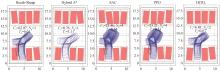
图8
常用泊车路径规划算法与HCRL在垂直泊车位可视化效果"


图9
常用泊车路径规划算法与HCRL算法在平行泊车位可视化效果"

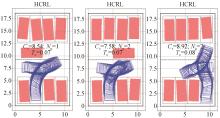
图10
HCRL算法在狭窄的垂直泊车位路径可视化效果"

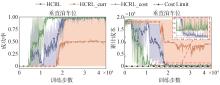
图11
HCRL在垂直泊车场景消融实验的测试曲线"
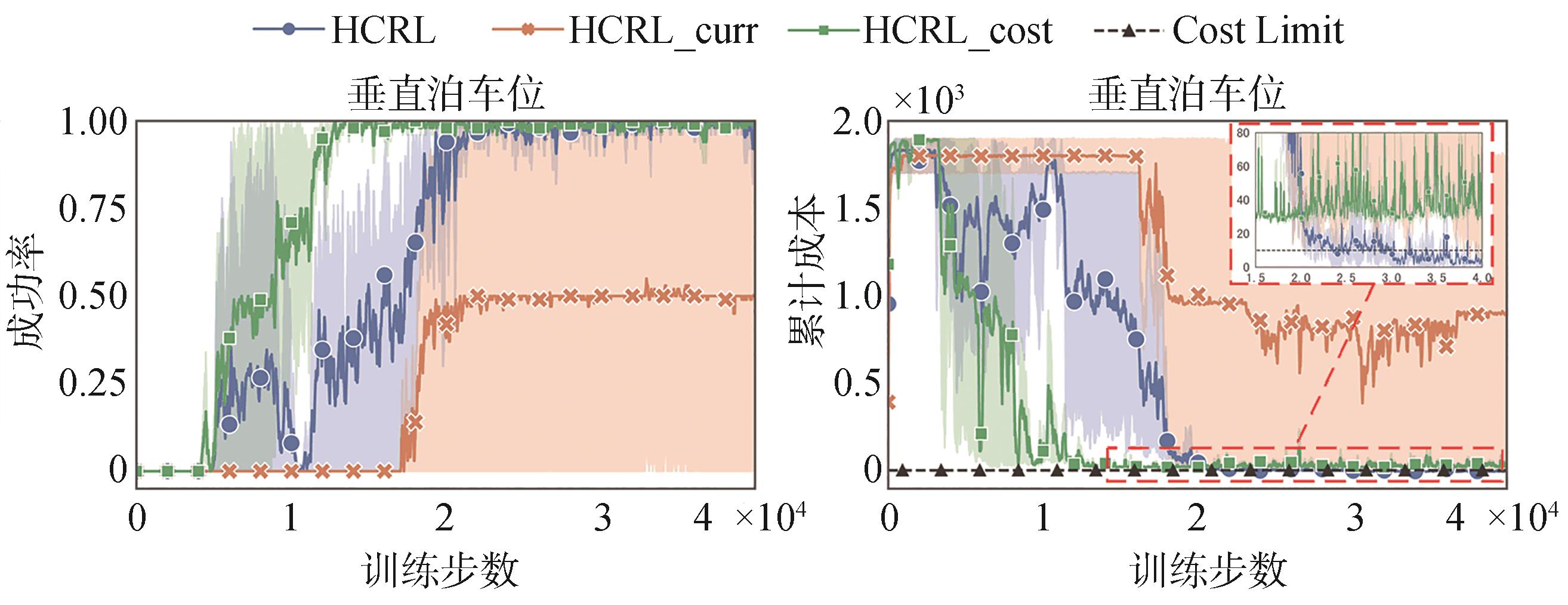
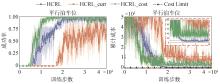
图12
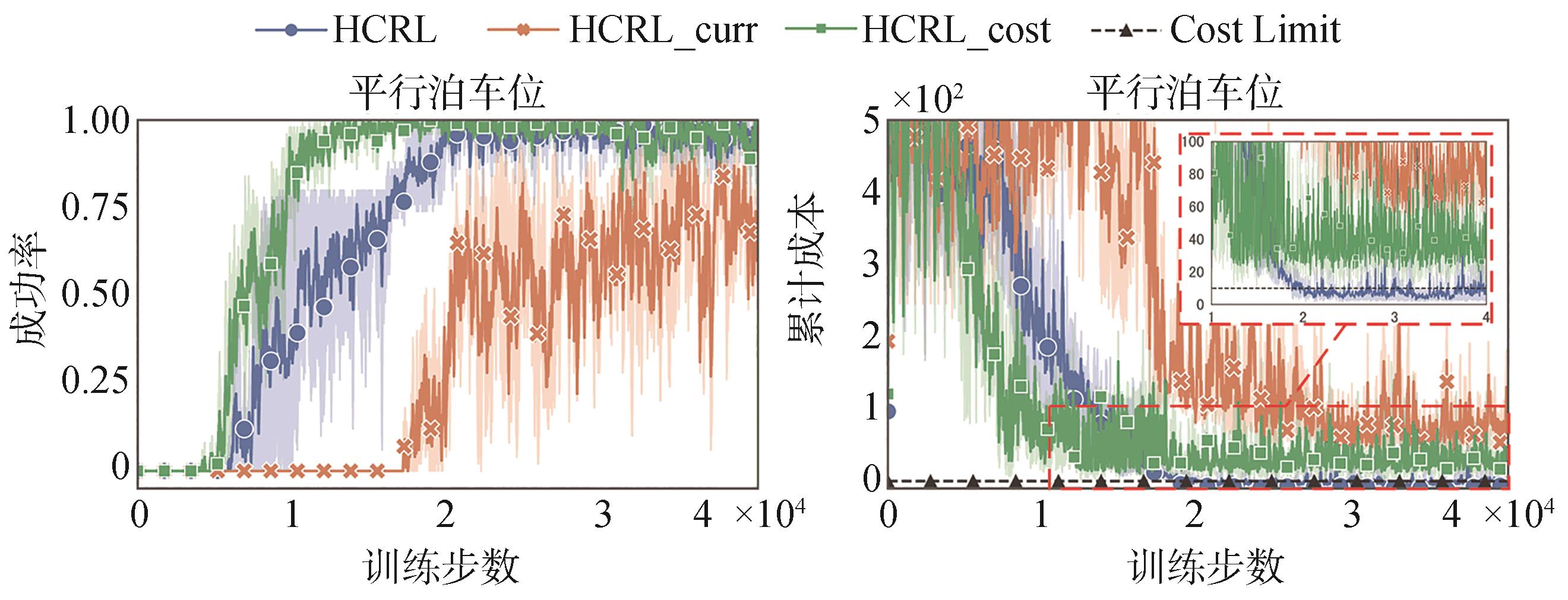
HCRL在平行泊车场景消融实验的测试曲线"
| 1 | ZHAO C, LIAO F, LI X, et al. Macroscopic modeling and dynamic control of on-street cruising-for-parking of autonomous vehicles in a multi-region urban road network[J]. Transportation Research Part C: Emerging Technologies, 2021,128: 103176. |
| 2 | BOCK F, DI MARTINO S, ORIGLIA A. Smart parking: using a crowd of taxis to sense on-street parking space availability[J]. IEEE Transactions on Intelligent Transportation Systems, 2019, 21(2): 496-508. |
| 3 | XIE M, ZHANG X, WU Z, et al. A shared parking optimization framework based on dynamic resource allocation and path planning[J]. Physica A: Statistical Mechanics and Its Applications, 2023, 616:128649. |
| 4 | KHALID M, WANG K, ASLAM N, et al. From smart parking towards autonomous valet parking: a survey, challenges and future works[J]. Journal of Network and Computer Applications, 2021, 175: 102935. |
| 5 | 胡杰, 朱令磊, 陈瑞楠, 等. 狭小车位平行泊车路径规划方法研究[J]. 汽车工程, 2022, 44(7): 1040-1048. |
| HU J, ZHU L, CHEN R, et al. Research on path planning method for parallel parking in narrow spaces [J]. Automotive Engineering, 2022, 44(7): 1040-1048. | |
| 6 | QIN Z, CHEN X, HU M, et al. A novel path planning methodology for automated valet parking based on directional graph search and geometry curve [J]. Robotics and Autonomous Systems, 2020, 132:103606. |
| 7 | REEDS J, LAWRENCE S. Optimal paths for a car that goes both forwards and backwards [J]. Pacific Journal of Mathematics, 1990,145(2): 367-393. |
| 8 | 胡杰, 张敏超, 徐文才, 等. 自动驾驶车辆的平行泊车轨迹规划[J]. 汽车工程, 2022, 44 (3): 330-339. |
| HU J, ZHANG M, XU W, et al. Trajectory planning for parallel parking of autonomous vehicles [J]. Automotive Engineering, 2022, 44(3): 330-339. | |
| 9 | CHEN G, HOU J, DONG J, et al. Multi-objective scheduling strategy with genetic algorithm and time-enhanced A* planning for autonomous parking robotics in high-density unmanned parking lots [J]. IEEE/ASME Transactions on Mechatronics, 2020, 26(3): 1547-1557. |
| 10 | SHENG W, LI B, ZHONG X. Autonomous parking trajectory planning with tiny passages: a combination of multistage hybrid A-star algorithm and numerical optimal control [J]. IEEE Access, 2021,9:102801-102810. |
| 11 | DU Z, MIAO Q, ZONG C. Trajectory planning for automated parking systems using deep reinforcement learning [J]. International Journal of Automotive Technology, 2020, 21(4): 881-887. |
| 12 | ZHANG P, XIONG L, YU Z, et al. Reinforcement learning-based end-to-end parking for automatic parking system[J]. Sensors. 2019, 19(18): 3996. |
| 13 | SONG S, CHEN H, SUN H, et al. Data efficient reinforcement learning for integrated lateral planning and control in automated parking system[J]. Sensors, 2020, 20(24):7297. |
| 14 | CHAN K H, MUSTAPHA A, JUBAIR M A. Comparative analysis of loss functions in TD3 for autonomous parking [J]. Journal of Soft Computing and Data Mining, 2024,5(1):1-4. |
| 15 | 高强, 陆洲, 段晨东, 等. 汽车垂直泊车路径规划与路径跟踪研究[J]. 汽车工程, 2021, 43 (7): 987-994,1012. |
| GAO Q, LU Z, DUAN C, et al. Research on path planning and path tracking for vertical parking of vehicles [J]. Automotive Engineering, 2021, 43(7): 987-994,1012. | |
| 16 | LI B, WANG K, SHAO Z. Time-optimal maneuver planning in automatic parallel parking using a simultaneous dynamic optimization approach [J]. IEEE Transactions on Intelligent Transportation Systems, 2016, 17(11): 3263-3274. |
| 17 | 胡文, 谭运生, 康龙云, 等. 基于驾驶员经验的自动泊车规划算法研究 [J]. 汽车工程, 2019, 41 (12): 1394-1400,1415. |
| HU W, TAN Y S, KANG L Y, et al. Study on automatic parking planning algorithm based on driver's experience[J]. Automotive Engineering, 2019, 41(12): 1394-1400,1415. | |
| 18 | 张家旭,王晨,赵健. 面向狭小平行泊车位的路径规划与跟踪控制[J]. 吉林大学学报(工学版), 2021, 51(5): 1879-1886. |
| ZHANG J, WANG C, ZHAO J. Path planning and tracking control for narrow parallel parking spaces [J]. Journal of Jilin University (Engineering and Technology Edition), 2021, 51(5): 1879-1886. | |
| 19 | DOLGOV D, THRUN S, MONTEMERLO M, et al. Path planning for autonomous vehicles in unknown semi-structured environm-ents [J]. The International Journal of Robotics Research, 2010, 29(5):485-501. |
| 20 | JHANG J H, LIAN F L. An autonomous parking system of optimally integrating bidirectional rapidly-exploring random trees and parking-oriented model predictive control [J]. IEEE Access, 2020, 8: 163502-163523. |
| 21 | KARAMAN S, FRAZZOLI E. Sampling-based algorithms for optimal motion planning[J]. The International Journal of Robotics Research, 2011,30(7): 846-894. |
| 22 | GUAN J, SHEN L, ZHOU A, et al. POCE: primal policy optimization with conservative estimation for multi-constraint offline reinforcement learning [C]. Proceedings of the IEEE/CVF Conference on Computer Vision and Pattern Recognition, 2024: 26243-26253. |
| 23 | LIU H X, FENG S. Curse of rarity for autonomous vehicles[J]. Nature Communications, 2024,15(1):4808. |
| 24 | TAKEHARA R, GONSALVES T. Autonomous car parking system using deep reinforcement learning [C]. 2021 2nd International Conference on Innovative and Creative Information Technology (ICITech). IEEE, 2021: 85-89. |
| 25 | SHI J, LI K, PIAO C, et al. Model-based predictive control and reinforcement learning for planning vehicle-parking trajectories for vertical parking spaces[J]. Sensors, 2023, 23 (16): 7124. |
| 26 | WU Y, WANG L, LU X, et al. Reinforcement learning-based autonomous parking with expert demonstrations[C]. 2023 7th CAA International Conference on Vehicular Control and Intelligence (CVCI). IEEE, 2023: 1-6. |
| 27 | DEN HENGST F, FRANÇOIS-LAVET V, HOOGENDOORN M, et al. Planning for potential: efficient safe reinforcement learning[J]. Machine Learning, 2022, 111(6):2255-2274. |
| 28 | TIONG T, SAAD I, TEO K T, et al. Autonomous valet parking with asynchronous advantage actor-critic proximal policy optimization [C]. 2022 IEEE 12th Annual Computing and Communication Workshop and Conference (CCWC). IEEE, 2022: 334-340. |
| 29 | JUNZUO L, QIANG L. An automatic parking model based on deep reinforcement learning[J]. In Journal of Physics: Conference Series, 2021,1883(1). |
| 30 | TANG X, YANG Y, LIU T, et al. Path planning and tracking control for parking via soft actor-critic under non-ideal scenarios [J]. IEEE/CAA Journal of Automatica Sinica,2023,11(1): 181-195. |
| 31 | WÖHLKE J, SCHMITT F, VAN HOOF H. Hierarchies of planning and reinforcement learning for robot navigation [C]. 2021 IEEE International Conference on Robotics and Automation (ICRA). IEEE, 2021: 10682-10688. |
| 32 | YUAN Z, WANG Z, LI X, et al. Hierarchical trajectory planning for narrow-space automated parking with deep reinforcement learning: a federated learning scheme[J]. Sensors, 2023,23 (8):4087. |
| 33 | CAI L, GUAN H, ZHOU Z Y, et al. Parking planning under limited parking corridor space [J]. IEEE Transactions on Intelligent Transportation Systems, 2022, 24(2):1962-1981. |
| 34 | LIU W, LI Z, LI L, et al. Parking like a human: a direct trajectory planning solution [J]. IEEE Transactions on Intelligent Transpor-tation Systems, 2017,18(12):3388-3397. |
| 35 | SOUSA B, RIBEIRO T, COELHO J, et al. Parallel, angular and perpendicular parking for self-driving cars using deep reinforcement learning [C]. 2022 IEEE International Conference on Autonomous Robot Systems and Competitions (ICARSC). IEEE, 2022: 40-46. |
| 36 | HAARNOJA T, ZHOU A, ABBEEL P, et al. Soft actor-critic: off-policy maximum entropy deep reinforcement learning with a stochastic actor [C]. International Conference on Machine Learning, PMLR. 2018: 1861-1870. |
| 37 | HAUSKNECHT M, STONE P. Deep reinforcement learning in parameterized action space [C]. International Conference on Learning Representations, 2015. |
| 38 | WANG Y, HE H, TAN X. Truly proximal policy optimization [C]. Uncertainty in Artificial Intelligence, 2020:113-122. |
| 39 | HAARNOJA T, ZHOU A, HARTIKAINEN K, et al. Soft actor-critic algorithms and applications [C]. Proceedings of the 35th International Conference on Machine Learning, 2018. |
| 40 | XIONG J, WANG Q, YANG Z, et al. Parametrized deep Q-networks learning: reinforcement learning with discrete-continuous hybrid action space [J]. arXiv preprint arXiv:1810. 06394. 2018. |
| 41 | FAN Z, SU R, ZHANG W, et al. Hybrid actor-critic reinforcement learning in parameterized action space[C]. Proceedings of the Twenty-Eighth International Joint Conference on Artificial Intelligence, 2019: 2279-2285. |
| [1] | 郭丛帅,刘辉,聂士达,宋英杰,谢雨佳,张发旺. 考虑复杂地形和障碍尺度的无人车轨迹规划[J]. 汽车工程, 2025, 47(4): 645-657. |
| [2] | 何智成,朱勇杰,邱雨,刘越,周恩临,郑皓. 考虑非地形流体特征的三维地形高可靠性路径规划研究[J]. 汽车工程, 2025, 47(4): 680-691. |
| [3] | 胡子牛,陈鑫鹏,杨泽宇,余子云,秦洪懋,高铭. 具有多型避障方式的智能车辆路径规划[J]. 汽车工程, 2025, 47(3): 402-411. |
| [4] | 张硕,邝士奇,赵轩,陈轶嵩,余强,余曼. 基于全局导向的智能车辆路径规划融合算法研究[J]. 汽车工程, 2024, 46(9): 1546-1555. |
| [5] | 范晓临,张旭东,邹渊,尹鑫,刘颖群. 一种基于简化可视图的建图和规划方法[J]. 汽车工程, 2024, 46(7): 1249-1258. |
| [6] | 丁志杰,王亚飞,章翼辰,邬明宇,王亦乐. 基于复合动态采样的自动驾驶矿车节能路径规划方法[J]. 汽车工程, 2024, 46(4): 588-595. |
| [7] | 王元民,王亚飞,秦文刚,陈浩,刘银华. 基于SMPA的半挂车自动泊车运动规划方法研究[J]. 汽车工程, 2024, 46(4): 691-702. |
| [8] | 马天飞,李波,朱冰,赵健. 考虑大气条件影响的自动泊车系统超声波雷达建模[J]. 汽车工程, 2023, 45(9): 1646-1654. |
| [9] | 刘平, 陈卓, 刘明杰, 朴昌浩, Soohyun Jang, 万凯林. 阶段约束下Gauss配点离散化平行车位自动泊车轨迹规划[J]. 汽车工程, 2023, 45(7): 1163-1173. |
| [10] | 苗作华,朱良建,赵成诚,刘代文,李诒雯,陈澳光. 基于Retinex的低光照车位图像增强[J]. 汽车工程, 2023, 45(6): 989-996. |
| [11] | 胡满江,牟斌杰,杨泽宇,边有钢,秦晓辉,徐彪. 基于DBSCAN与二分法的混合A*路径规划方法[J]. 汽车工程, 2023, 45(3): 341-349. |
| [12] | 胡杰,朱琪,陈锐鹏,张敏超,张志豪,刘昊岩. 引入必经点约束的智能汽车全局路径规划[J]. 汽车工程, 2023, 45(3): 350-360. |
| [13] | 任明辉,梁军,陈龙,张春,王云. 基于改进冲突搜索的智能车库多AGV路径规划[J]. 汽车工程, 2023, 45(10): 1933-1943. |
| [14] | 张书恺,陈慧,刘美岑. 全自动泊车系统路径跟随控制策略[J]. 汽车工程, 2022, 44(7): 1027-1039. |
| [15] | 胡杰,朱令磊,陈瑞楠,钟鑫凯,徐文才,张敏超. 狭小车位平行泊车路径规划方法研究[J]. 汽车工程, 2022, 44(7): 1040-1048. |
|
||
