

汽车工程 ›› 2025, Vol. 47 ›› Issue (11): 2049-2069.doi: 10.19562/j.chinasae.qcgc.2025.11.001
• •
马嘉欣1,汪志鸿1( ),刘卓2,3,李宗阳1,陈炳全1
收稿日期:2025-06-13
修回日期:2025-07-14
出版日期:2025-11-25
发布日期:2025-11-28
通讯作者:
汪志鸿
E-mail:wzh@ciecc.com.cn
Jiaxin Ma1,Zhihong Wang1(),Zhuo Liu2,3,Zongyang Li1,Bingquan Chen1
Received:2025-06-13
Revised:2025-07-14
Online:2025-11-25
Published:2025-11-28
Contact:
Zhihong Wang
E-mail:wzh@ciecc.com.cn
摘要:
飞行汽车作为汽车功能的立体化拓展,在缓解交通拥堵、重塑出行生态、构建高效低碳的立体交通运输体系方面备受关注。业内普遍认为,飞行汽车与电动汽车具有超过70%的技术同源性。在回溯飞行汽车历史发展的基础上,本文深入对比了全球主流飞行汽车产品的构型及指标差异,凝炼了电动化发展的6大特点,进而结合电动汽车技术同源性与差异性分析,深入剖析动力系统、智能驾驶、轻量化、NVH等关键技术。研究认为,电动汽车的发展经验、技术积累及产业链优势已为飞行汽车提供了较好的产业基础。与电动汽车不同,飞行汽车应聚焦具有更高能量密度、更高放电倍率的动力电池,更高转矩密度、低转速大转矩的电机以及考虑低空复杂气象环境、障碍物、鸟类碰撞等影响的高安全性智能驾驶技术。
马嘉欣,汪志鸿,刘卓,李宗阳,陈炳全. 飞行汽车关键技术及应用研究综述[J]. 汽车工程, 2025, 47(11): 2049-2069.
Jiaxin Ma,Zhihong Wang,Zhuo Liu,Zongyang Li,Bingquan Chen. A Review of Key Technologies and Application of Flying Cars[J]. Automotive Engineering, 2025, 47(11): 2049-2069.
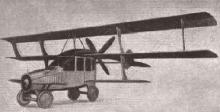
图1
Autoplane"
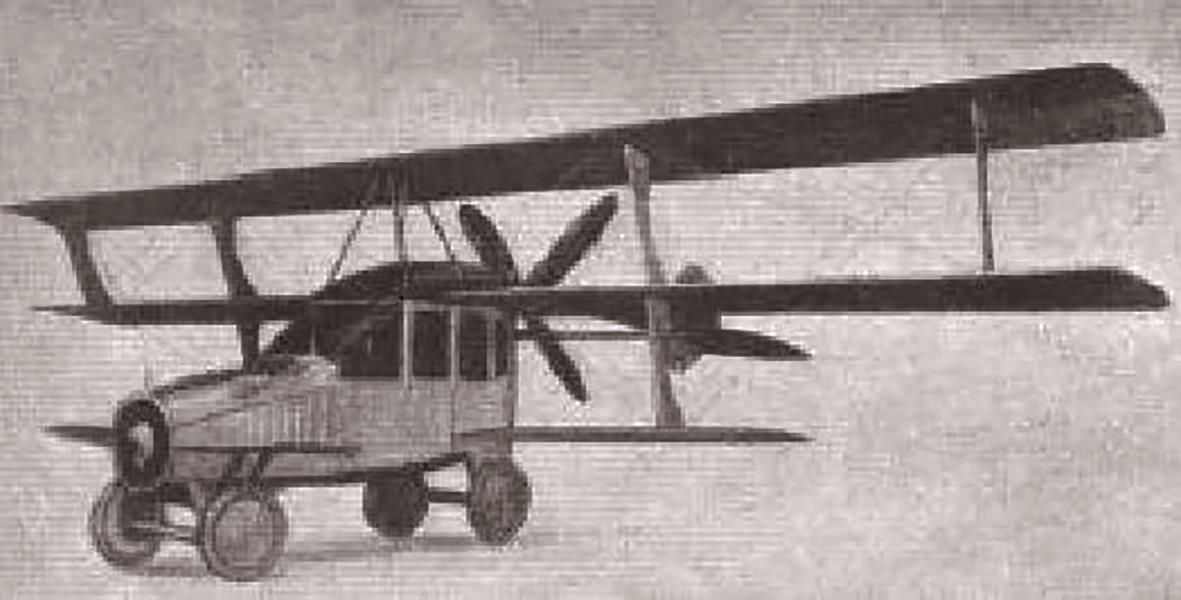
图2
Aerocar"
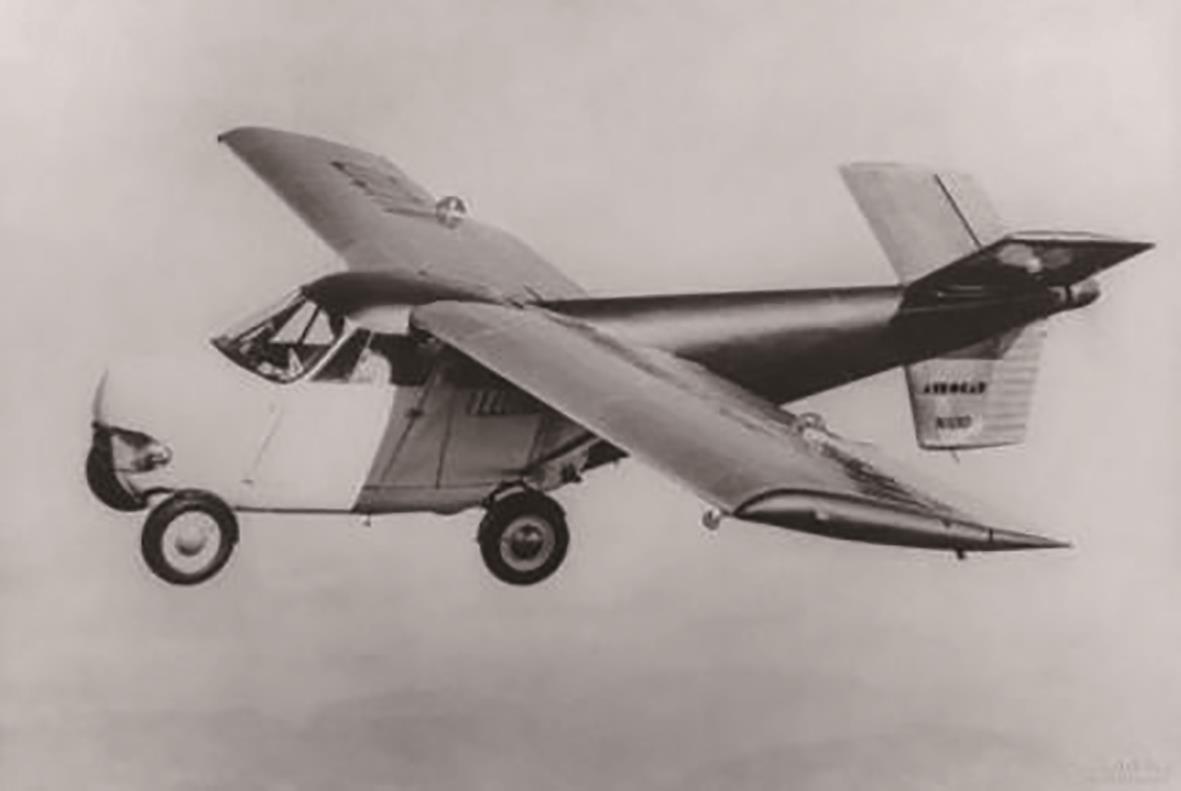
图3
Piasecki VZ-8 Airgeep"
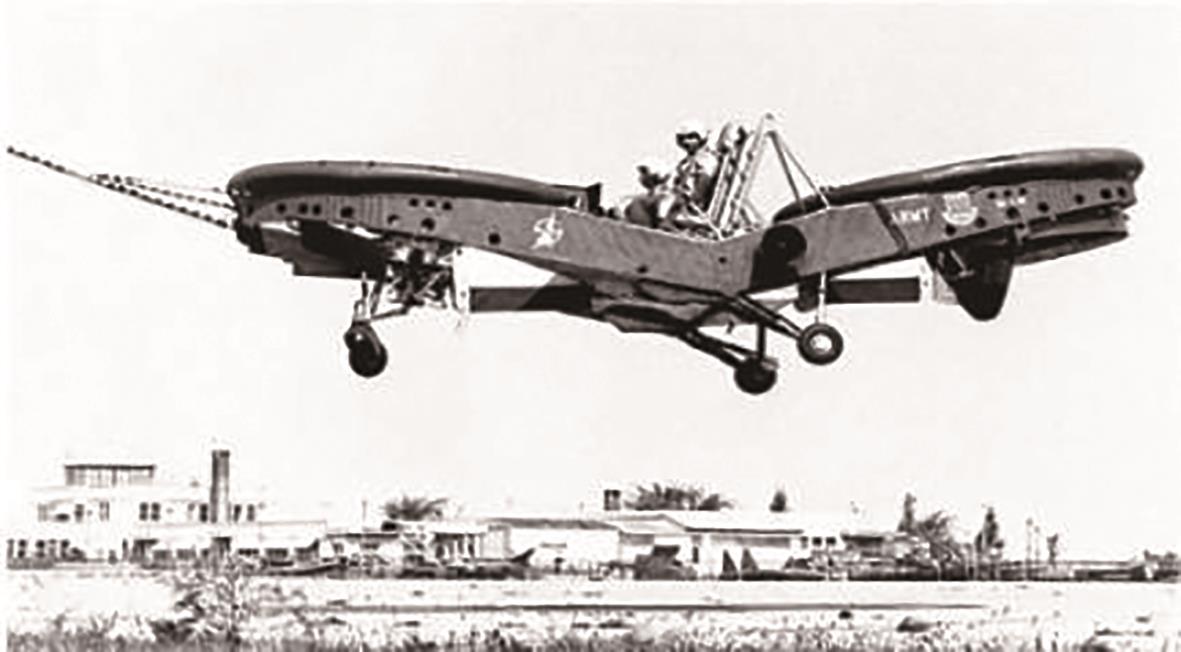
图4
Sky Commuter"
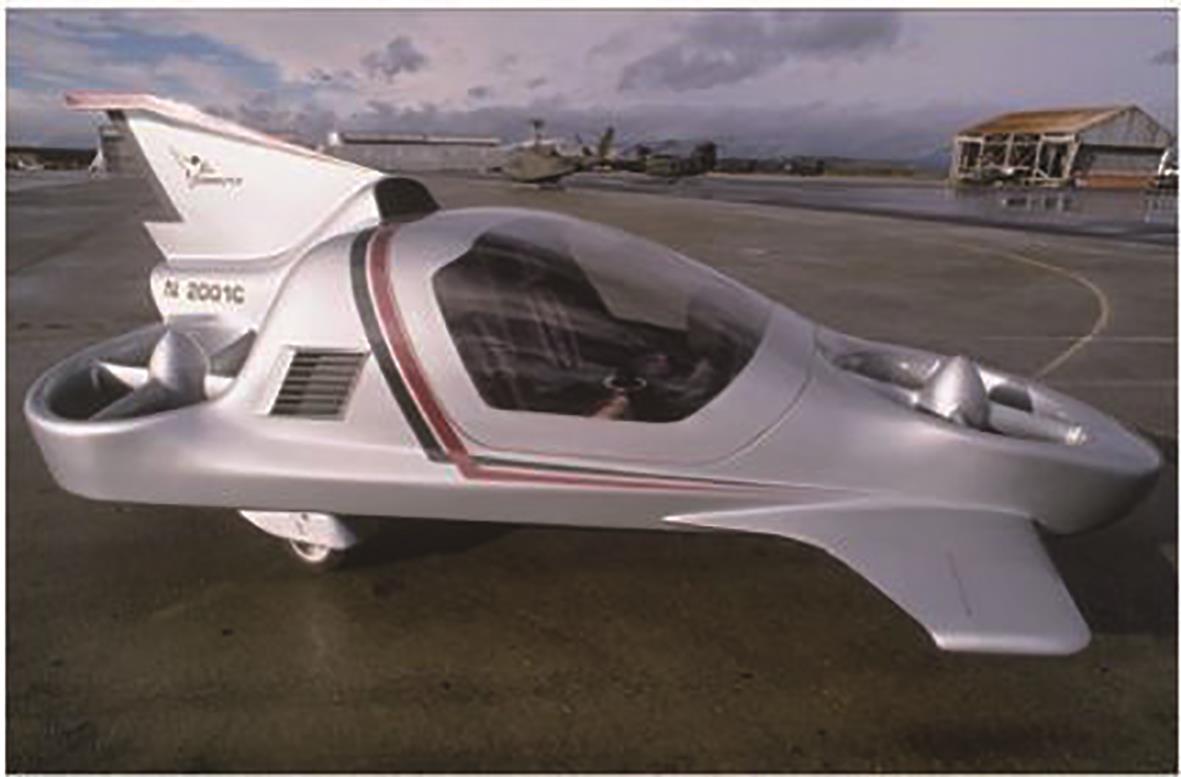
表1
多旋翼构型及基本参数总结"
| 型号 | 系统构型 | 续航里程或时间 | 最高飞行速度/(km·h-1) | 最大起飞质量/kg | 是/否电动 |
|---|---|---|---|---|---|
| Model A | 多旋翼 | 177 km | 320 | 是 | |
| Volocopter Volocity | 多旋翼 | 20 km | 90 | 1 000 | 是 |
| PAL-V Liberty | 多旋翼 | 500 km | 180 | 910 | 否 |
| 亿航智能EH216-S | 多旋翼 | 35 km | 130 | 650 | 是 |
| 小鹏汇天 旅航者X2 | 多旋翼 | 25 min | 360 | 840 | 是 |
| 小鹏汇天 陆地航母 | 分体式多旋翼 | 35 min | 130 | 560 | 是 |
| 高域 AirCar | 分体式多旋翼 | 30 km | 200 | 550 | 是 |
| 北理工UAM650 | 分体式多旋翼 | 25 km | 100 | 650 | 是 |
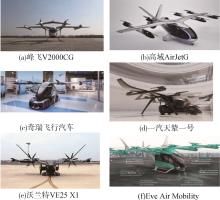
图5
复合翼eVTOL产品"
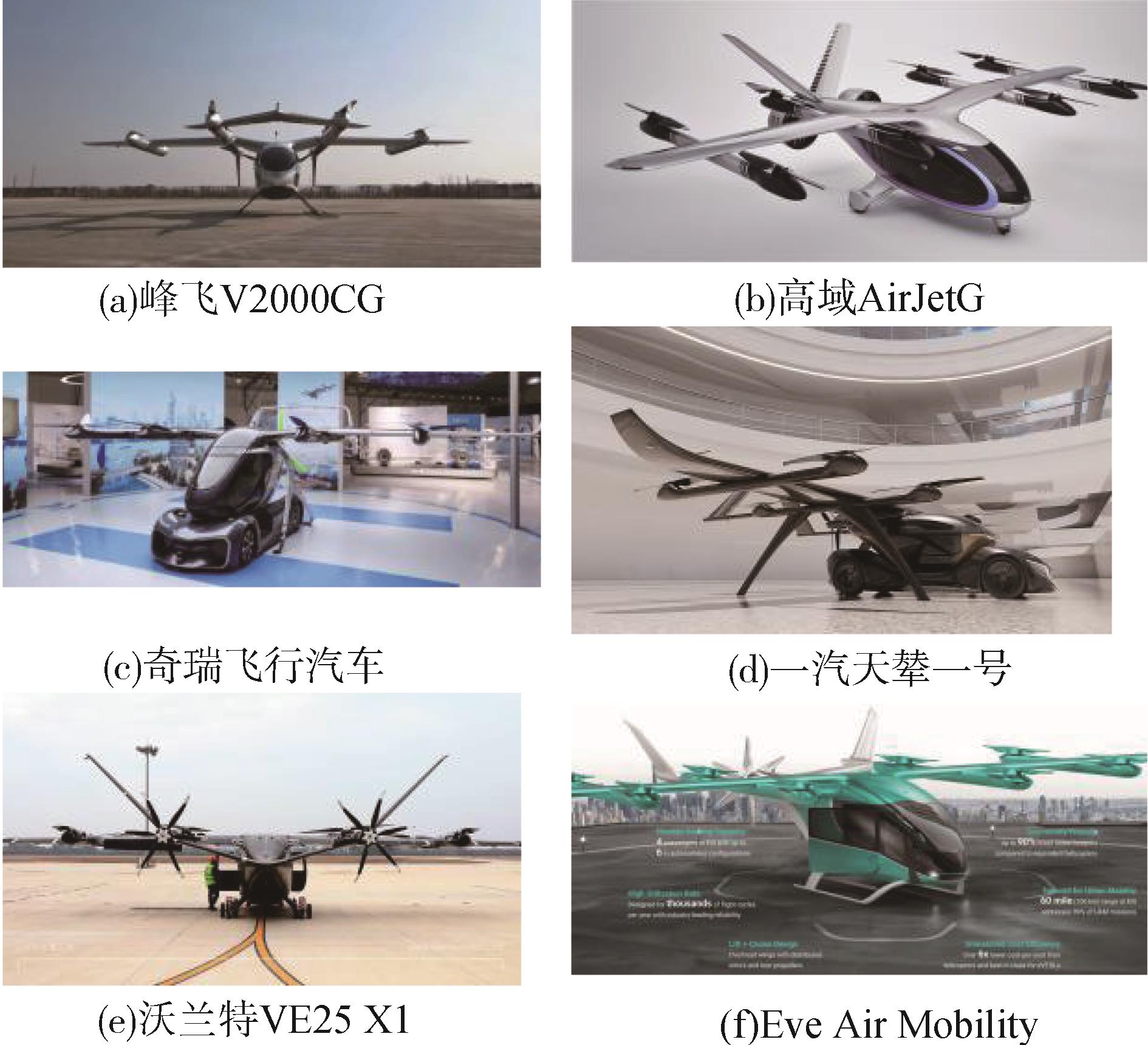
图6
矢量推进eVTOL产品"
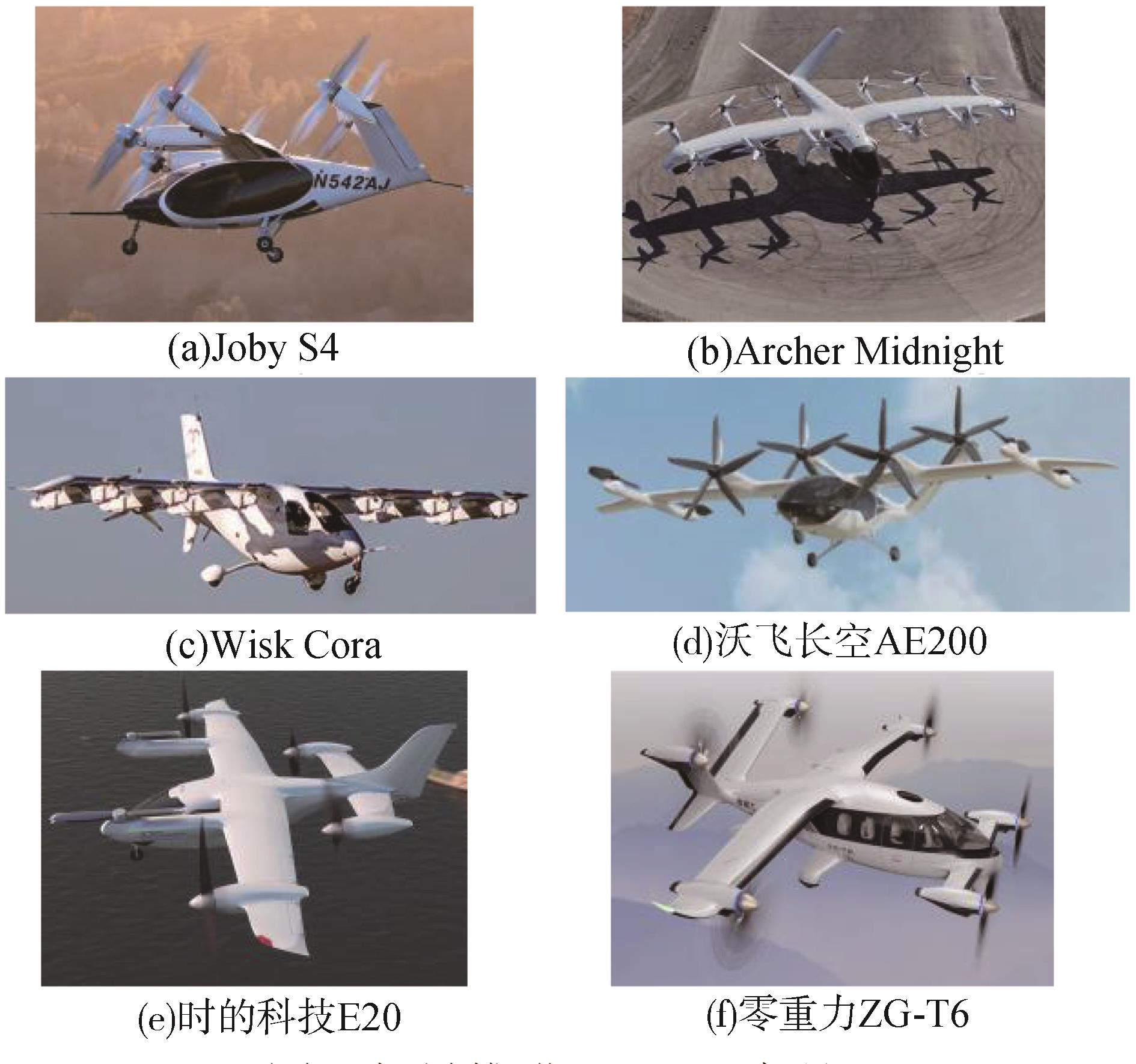
图7
构型-续航-飞行速度-起飞质量关系"
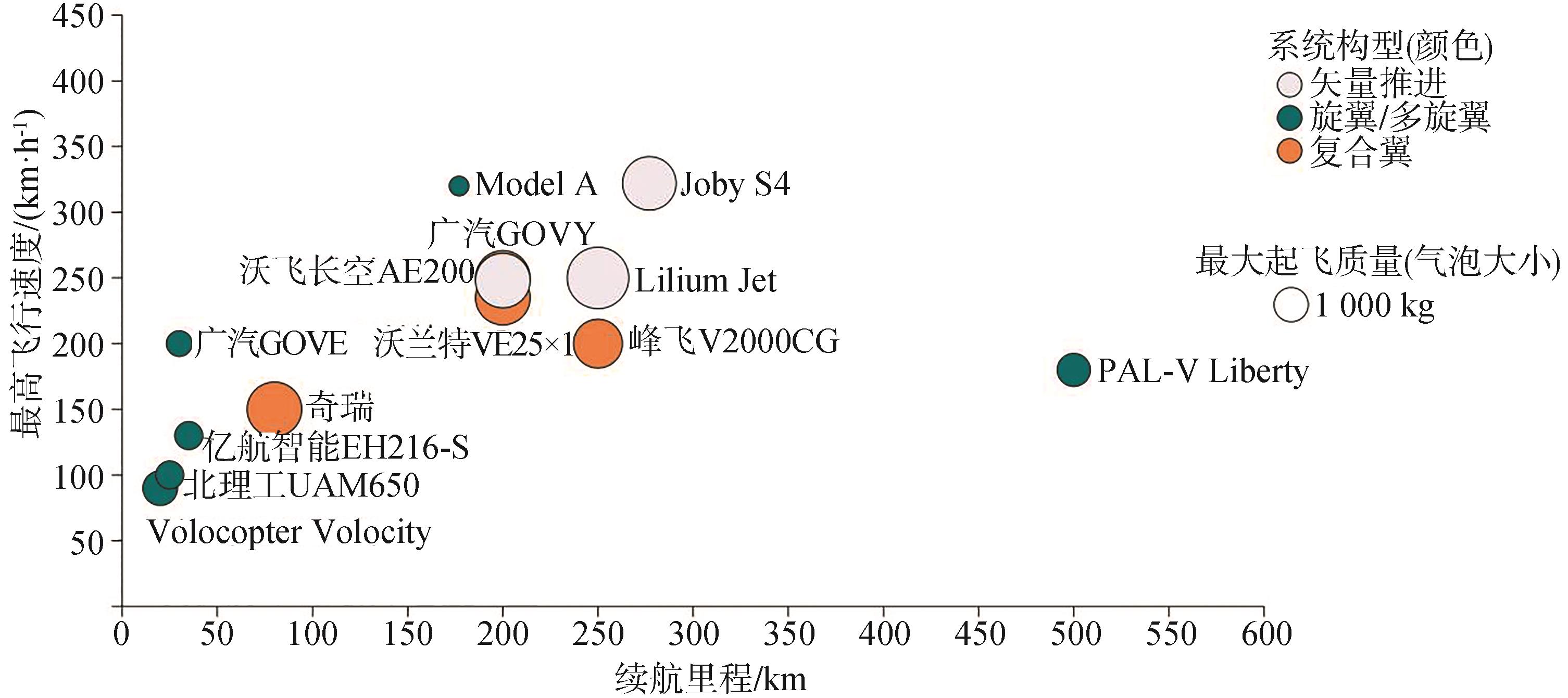
表2
汽车发动机与航空发动机差异总结"
| 项目 | 汽车发动机 | 航空发动机 |
|---|---|---|
| 技术重点 | 小型化与效率平衡; 电气化融合; 智能化控制 | 高空高压环境适应性; 大推力与低油耗; 可靠性 |
| 能量目标 | 功率密度与经济性平衡 | 高功率保持性 |
| 环境目标 | 工作海拔低、气压变化小、温度变化幅度较小 | 工作海拔高、须克服气压变化、极端温度 |
| 性能指标 | 转矩响应、燃油经济、排放合规、低成本导向 | 推重比、燃油效率、维修间隔、安全优先、冗余度高 |
| 设计寿命 | 15~20年,技术迭代快 | 20~30年,技术验证周期长 |
| 燃料类型 | 汽油/柴油 | 航空煤油 |
| 排放目标 | 国六标准 | CCAR-34等 |
| 主要冷却方式 | 油冷/水冷 | 水冷/风冷 |
| 功率需求 | 较小 | 较高 |
| 可靠性 | 中等 | 很高 |
表3
车用动力电池现状和飞行汽车用动力电池需求对比"
| 指标 | 车用动力电池现状 | 飞行汽车用动力电池需求 |
|---|---|---|
| 质量能量密度/(W·h·kg-1) | 250~300 | ≥400 |
| 体积能量密度/(W·h·L-1) | 600~800 | 900~1 000 |
| 质量功率密度/(W·kg-1) | 2 000~2 500 | 3 000~4 000 |
| 体积功率密度/(W·L-1) | 5 000~5 500 | 7 000~8 000 |
| 系统成组率 | 70%以下 | 80%以上 |
| 持续放电倍率 | 约1C | 3~5C |
| 峰值放电倍率 | 3C@10 s | 7C~8C@60 s |
| 循环寿命/(次·年-1) | 1 500~3 000 | 1 500 |
| 充电倍率 | 1C~2C | 2C~3C |
| 快充时间(80%SOC时间)/min | 10~20 | ≤10 |
| 成本/(元·(W·h)-1) | 0.5~0.6 | 1 |
| 失效故障 | 5 min不起火 | 故障模式下持续工作直至安全降落 |
| 冗余设计 | 无 | 50%以上 |
| 安全等级 | 高(GB 38031) | 严苛(DO-311A),满足23部H章要求 |
| 集成 | 一体式 | 分布式 |
| 冷却方式 | 液冷 | 多采用风冷或混合冷却 |
| 电池管理系统 | 功能繁多且复杂 | 功能简单可靠,满足DO-254/178C标准 |
| 电芯形态 | 方形铝壳偏多 | 圆柱、软包等 |
| 抗冲击振动要求 | 最大3g | 最大18g |
表4
飞行汽车动力电池的典型研发进展"
| 企业 | 研发进展 |
|---|---|
| 宁德时代 | 已公布500 W·h/kg凝聚态电池产品。 |
| 中创新航 | 2026年拟推出350 W·h/kg、10C+放电飞行专用固液混合电池产品。 |
| 欣旺达 | 拟推出半固态电池“航空电池-Gen1”(能量密度320 W·h/kg)与“航空电池-Gen2”(能量密度380 W·h/kg),其中,“航空电池-Gen1”已完成开发,“航空电池-Gen2”已开始中试试验。 |
| 亿纬锂能 | 2024年6月,推出320 W·h/kg、10C放电、循环寿命超7 000次的锂电池产品。 |
| 卫蓝新能源 | 已供应320 W·h/kg的低空经济动力电芯。 |
| 孚能科技 | 为Joby批量供应285 W·h/kg的软包电池。 |
| 正力新能 | 推出超320 W·h/kg、12C+的航空电池产品。 |
| 欣界能源 | 具有量产450 W·h/kg固态电池的能力,并已于EH-216实现验证。 |
表5
飞行汽车与电动汽车电机指标对比"
| 型号 | 飞行汽车 | 电动汽车 | |||||
|---|---|---|---|---|---|---|---|
| Joby S4 | Archer Aviation | Lilium Jet | 特斯拉 Model Y | BYD DM-i | BWM i5 | 蔚来 ET7 | |
| 电机类型 | 永磁同步电机 | 永磁同步电机 | 永磁同步电机 | 永磁同步电机 | 永磁同步电机 | 永磁同步电机 | 永磁同步电机 |
| 峰值功率/kW | 236 | 125 | 100 | 220 | 160 | 210 | 180 |
| 峰值转矩/(N·m) | 1 800 | 440 | 325 | 410 | 350 | ||
| 最高转速/(r·min-1) | 800 | 12 000 | 19 000 | 16 000 | 15 000 | 16 000 | |
| 质量/kg | 36 | 25 | 4 | 50 | 136(电机+电控) | 56.5 | |
| 功率密度/(kW·kg-1) | 6.6 | 5 | 25 | 4.4 | 1.2(电机+电控) | 3.2 | |
| 转矩密度/(N·m·kg-1) | 49 | 8.8 | 2.4(电机+电控) | 6.2 | |||
| 绕组 | 圆线 | 圆线 | 扁线 | 扁线 | 扁线 | 扁线 | |
| 冷却方式 | 风冷 | 油冷 | 风冷 | 油冷 | 油冷 | 水冷 | 水冷 |
图8
飞行汽车智能驾驶阶段"
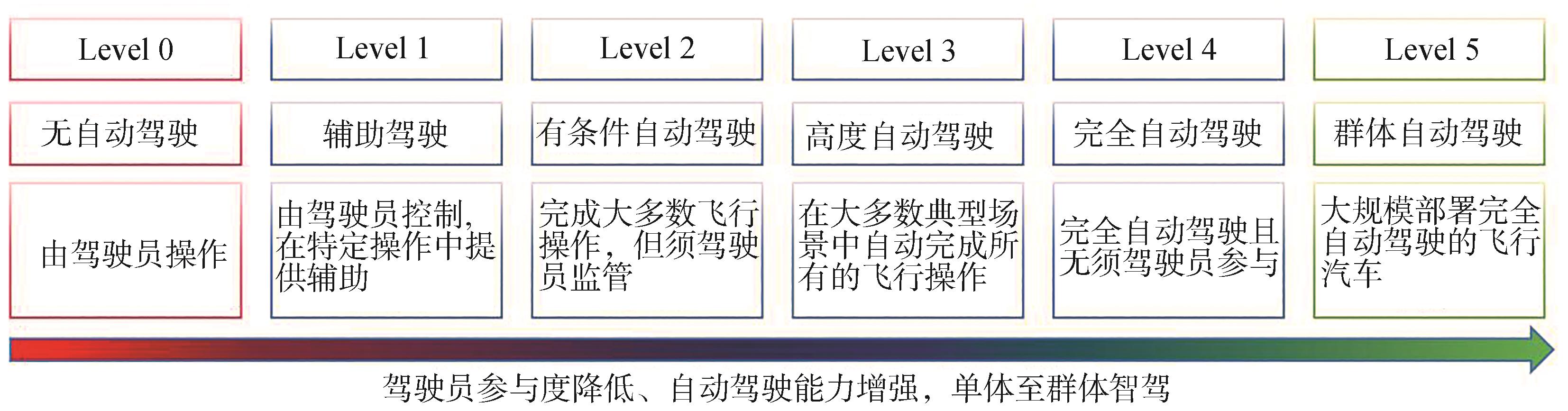
表6
PID、MPC、LQR、反步法、SMC的对比"
| 指标 | PID | MPC | LQR | 反步法 | SMC | |
|---|---|---|---|---|---|---|
| 系统 | 线性系统 | 优 | 优 | 优 | 可处理 | 可处理 |
| 非线性系统 | 中(须线性化或经验调整) | 优 | 须线性化 | 优 | 优 | |
| 多变量系统 | 差 | 优 | 优 | 差(单输入为主) | 差(单输入为主) | |
| 强耦合系统 | 差 | 优 | 可处理 | 差 | 差 | |
| 含约束系统 | 无法处理 | 优 | 无法处理 | 无法处理 | 无法处理 | |
| 不确定性系统 | 中(依赖参数) | 中(依赖鲁棒优化) | 差 | 中(依赖干扰估计) | 优 | |
| 稳态精度 | 优 | 优(滚动优化) | 优(最优控制) | 优(递归设计) | 优(强制跟踪滑模面) | |
| 动态响应速度 | 中 | 快 | 快 | 快 | 极优 | |
| 抗干扰能力 | 中 | 中(须鲁棒设计) | 差 | 中 | 优 | |
| 计算复杂度 | 差 | 优 | 差 | 中(随阶数增长) | 差 | |
| 多变量适用性 | 差 | 优 | 优 | 差 | 差 | |
| 约束处理能力 | 无 | 优 | 差 | 差 | 差 | |
| [1] | 张扬军, 钱煜平, 诸葛伟林,等. 飞行汽车的研究发展与关键技术[J]. 汽车安全与节能学报, 2020, 11(1): 1-16. |
| ZHANG Y J, QIAN Y P, ZHUGE W L, et al. Progress and key technologies of flying cars[J]. Journal of Automotive Safety and Energy, 2020, 11(1): 1-16. | |
| [2] | 杜智民, 高超, 陈泽鹏. 智慧交通与低空经济协同发展的空间规划策略研究[J]. 长安大学学报(社会科学版), 2024, 26(5): 84-100. |
| DU Z M, GAO C, CHEN Z P. Study on spatial planning strategies for the coordinated development of smart transportation and low-altitude economy[J]. Journal of Chang'an University (Social Science Edition), 2024, 26(5): 84-100. | |
| [3] | KASLIWAL A, FURBUSH N J, GAWRON J H, et al. Role of flying cars in sustainable mobility[J]. Nature Communications, 2019, 10(1): 1555. |
| [4] | BRIDGELALL R, WHITE S, TOLLIVER D. Integrating electric vertical takeoff and landing aircraft into public airspace: a scenario study[J]. Future Transportation, 2023, 3(3): 1029-1045. |
| [5] | 中国汽车工程学会.飞行汽车发展白皮书1.0[M] .2024. |
| China SAE.White paper on the development of flying cars 1.0. [M].2024. | |
| [6] | RAJENDRAN S, SRINIVAS S. Air taxi service for urban mobility: a critical review of recent developments, future challenges, and opportunities[J]. Transportation Research Part E: Logistics and Transportation Review, 2020, 143: 102090. |
| [7] | AL HADDAD C, CHANIOTAKIS E, STRAUBINGER A, et al. Factors affecting the adoption and use of urban air mobility[J]. Transportation Research Part A: Policy and Practice, 2020, 132: 696-712. |
| [8] | ESPEJO-DÍAZ J A, ALFONSO-LIZARAZO E, MONTOYA-TORRES J R. Improving access to emergency medical services using advanced air mobility vehicles[J]. Flexible Services and Manufacturing Journal, 2023: 1-33. |
| [9] | GOYAL R, COHEN A. Advanced air mobility: opportunities and challenges deploying eVTOLs for air ambulance service[J]. Applied Sciences, 2022, 12(3): 1183. |
| [10] | STRAUBINGER A, ROTHFELD R, SHAMIYEH M, et al. An overview of current research and developments in urban air mobility-setting the scene for UAM introduction[J]. Journal of Air Transport Management, 2020, 87: 101852. |
| [11] | BAURANOV A, RAKAS J. Designing airspace for urban air mobility: a review of concepts and approaches[J]. Progress in Aerospace Sciences, 2021, 125: 100726. |
| [12] | PARK C, KIM G S, PARK S, et al. Multi-agent reinforcement learning for cooperative air transportation services in city-wide autonomous urban air mobility[J]. IEEE Transactions on Intelligent Vehicles, 2023, 8(8): 4016-4030. |
| [13] | SWAMINATHAN N, REDDY S R P, RAJASHEKARA K, et al. Flying cars and eVTOLs—technology advancements, powertrain architectures, and design[J]. IEEE Transactions on Transportation Electrification, 2022, 8(4): 4105-4117. |
| [14] | EKER U, FOUNTAS G, ANASTASOPOULOS P C, et al. An exploratory investigation of public perceptions towards key benefits and concerns from the future use of flying cars[J]. Travel Behaviour and Society, 2020, 19: 54-66. |
| [15] | 王芳, 白傑, 杨丽平, 等. 探索飞行汽车通勤新模式的城市空中交通发展分析[J]. 北京理工大学学报, 2023, 43(7):665-675. DOI:10.15918/j.tbit1001-0645.2022.236. |
| WANG F, BAI L, YANG L P, et al. An overview on development of urban air traffic with a new mode of flying car commuting[J]. Transactions of Beijing Institute of Technology, 2023, 43(7):665-675. DOI:10.15918/j.tbit1001-0645.2022.236. | |
| [16] | MOORE M. NASA puffin electric tailsitter VTOL concept[C].10th AIAA Aviation Technology, Integration, and Operations (ATIO) Conference, 2010: 9345. |
| [17] | HOLDEN J, GOEL N. Fast-forwarding to a future of on-demand urban air transportation[J]. San Francisco, CA, 2016, 2016. |
| [18] | 张新钰, 荣松松, 李骏,等. 智能飞行汽车关键技术及发展趋势[J]. 中国科学: 技术科学, 2024, 54(4): 601-624. |
| ZHANG X Y, RONG S S, LI J, et al. State-of-the-art and technical trends of intelligent flying cars[J]. Scientia Sinica(Technologica), 2024, 54(4): 601-624. | |
| [19] | PAN G, ALOUINI M S. Flying car transportation system: advances, techniques, and challenges[M]. IEEE Access, 2021, 9: 24586-24603. |
| [20] | YANG C, LU Z, WANG W, et al. An efficient intelligent energy management strategy based on deep reinforcement learning for hybrid electric flying car[J]. Energy, 2023, 280: 128118. |
| [21] | 刘文学, 侯聪, 杨亚联,等. 面向城市空中交通的电动飞行汽车关键性能指标分析[J]. 机械工程学报, 2024, 60(22): 257-275. |
| LIU W X, HOU C, YANG Y L, et al.Analysis of key performance metrics of electric flying cars for urban air mobility[J]. Journal of Mechanical Engineering, 2024, 60(22): 257-275. | |
| [22] | 李松. 飞行汽车发展研究和应用场景分析[J]. 汽车文摘, 2024 (5): 31-40. |
| LI S. Development research and application scenario analysis of flying vehicles[J]. Automotive Digest,2024 (5): 31-40. | |
| [23] | 邵一凡. 电动垂直起降飞行汽车总体方案设计与动力系统匹配[D]. 南京:南京理工大学, 2023. |
| SHAO Y F. Overall scheme design and power system matching of electric vertical take off and landing flight vehicle[D]. Nanjing :Nanjing University of Science and Technology, 2023. | |
| [24] | JOHNSTON C O, MASON W H, HAN C. Unsteady thin airfoil theory revisited for a general deforming airfoil[J]. Journal of Mechanical Science and Technology, 2010, 24(12): 2451-2460. |
| [25] | ZOLTAN B. Boeing sky commuter is a flying car concept[EB/OL]. https://www.carscoops.com/2015/07/boeing-sky-commuter-is-flying-car/. |
| [26] | 李振鹏, 边靖伟. 飞行汽车系统设计与关键技术研究[J]. 汽车电器, 2024 (6): 24-25,28. |
| LI Z P, BIAN J W. Research on system design and key technologies of flying car[J]. Auto Electric Parts, 2024 (6): 24-25,28. | |
| [27] | VFS. eVTOL Aircraft Directory[EB/OL]. (2025-05-30) [2025-05-30]. https://evtol.news/aircraft. |
| [28] | UGWUEZE O, STATHEROS T, HORRI N, et al. Investigation of a mission-based sizing method for electric VTOL aircraft preliminary design[C].AIAA Scitech 2022 Forum, 2022: 1931. |
| [29] | UGWUEZE O, STATHEROS T, BROMFIELD M A, et al. Trends in eVTOL aircraft development: the concepts, enablers and challenges[C].AIAA Scitech 2023 Forum, 2023: 2096. |
| [30] | MAKEEV P V, IGNATKIN Y M, SHOMOV A I. Numerical investigation of full scale coaxial main rotor aerodynamics in hover and vertical descent[J]. Chinese Journal of Aeronautics, 2021, 34(5): 666-683. |
| [31] | PAVEL M D. Understanding the control characteristics of electric vertical take-off and landing (eVTOL) aircraft for urban air mobility[J]. Aerospace Science and Technology, 2022, 125: 107143. |
| [32] | YE Z, CHEN Y, CAI P, et al. Control design for soft transition for landing preparation of light compound-wing unmanned aerial vehicles based on incremental nonlinear dynamic inversion[J]. Applied Sciences, 2023, 13(22): 12225. |
| [33] | BACCHINI A, CESTINO E. Electric VTOL configurations comparison[J]. Aerospace, 2019, 6(3): 26. |
| [34] | SWAMINATHAN N, REDDY S R P, RAJASHEKARA K, et al. Flying cars and eVTOLs—technology advancements, powertrain architectures, and design[J]. IEEE Transactions on Transportation Electrification, 2022, 8(4): 4105-4117. |
| [35] | STOLL A, MIKIC G. Transition performance of tilt propeller aircraft[C].VFS Forum, 2022, 78. |
| [36] | SU J, HUANG H, ZHANG H, et al. eVTOL performance analysis: a review from control perspectives[J]. IEEE Transactions on Intelligent Vehicles, 2024. |
| [37] | Garmin. Garmin G3000 integrated flight deck selected by Joby aviation for revolutionary eVTOL aircraft[EB/OL]. (2023-10-13) [2025-05-30]. https://www.garmin.com/en-US/newsroom/press-release/aviation/garmin-g3000-integrated-flight-deck-selected-by-joby-aviation-for-revolutionary-evtol-aircraft/. |
| [38] | Vertical Aerospace. Vertical aerospace reaches certification milestones, receives design organization approval[EB/OL]. (2023-11-28) [2025-05-30]. https://vertical-aerospace.com/wp-content/uploads/2023/11/Vertical-Aerospace-reaches-significant-certification-milestone-including-Design-Organisation-Approval-DOA.pdf. |
| [39] | Style Pass. Introducing the first electric vertical take-off and landing jet[EB/OL]. (2022-10-1) [2025-05-30]. https://vuink.com/post/yvyvhz-d-dpbz/jet. |
| [40] | Pantuo Aviation. Pantuo Pantala concept H[EB/OL]. (2023-10-17) [2025-05-30]. https://evtol.news/pantuo-pantala-concept-h. |
| [41] | Autoflight. Autoflight makes history with world’s first formation flight of three full-scale eVTOL aircraft[EB/OL]. (2023-10-13) [2025-05-30]. https://www.autoflight.com/en/news/autoflight-makes-history-with-worlds-first-formation-flig/. |
| [42] | Vertaxi. Vertaxi Matrix 1 (prototype)[EB/OL]. (2023-10-13) [2025-05-30]. https://evtol.news/vertaxi-matrix-1-prototype. |
| [43] | Airbus. Thales and Diehl join airbus to develop flight control computers for CityAirbus NextGe[EB/OL]. (2021-11-17) [2025-05-30]. https://www.airbus.com/en/newsroom/press-releases/2021-11-thales-and-diehl-join-airbus-to-develop-flight-control-computers. |
| [44] | BETA Alia-250. BETA Alia-250 review[EB/OL]. (2025-5-30) [2025-05-30]. https://ev.motorwatt.com/ev-database/flying-electric-vehicles/beta-alia-250#:~:text=The%20BETA%20Alia-250%20is%20a%20U.S.-built%20fixed-wing%20eVTOL,medical%2C%20and%20military%20operations%20with%20zero-emission%20electric%20propulsion. |
| [45] | HUANG H, SU J, WANG F Y. The potential of low-altitude airspace: the future of urban air transportation[J]. IEEE Transactions on Intelligent Vehicles, 2024. |
| [46] | PAN G, ALOUINI M S. Flying car transportation system: advances,techniques, and challenges[J]. IEEE Access, 2021, 9: 24586-24603. |
| [47] | 王琛, 雒特, 惠倩倩, 等. 面向分体式飞行汽车对接锁定的机电系统设计与验证[J]. 吉林大学学报(工学版), 2024, 54(8): 2130-2140. |
| WANG C, LUO T, HUI Q Q, et al. Design and verification of electromechanical system for docking and locking of modular flying vehicle[J]. Journal of Jilin University(Engineering and Technology Edition), 2024, 54(8): 2130-2140. | |
| [48] | 李颖, 王荣煊, 万成麟, 等. 分体式飞行汽车立体环境感知系统设计及试验研究[J]. 机械工程学报, 2024, 60(10): 102-111. |
| LI Y, WANG R X, WAN C L, et al. Design and experiment research of 3D environmental perception system for split-type flying vehicle[J]. Journal of Mechanical Engineering, 2024, 60(10): 102-111. | |
| [49] | 新华社.飞行汽车来了!全球首款载人级两座智能分体式飞行汽车工程样车研制成功[EB/OL]. (2022-11-19) [2025-05-30]. https://www.news.cn/politics/2022-11/19/c_1129141690.htm. |
| Xinhua News Agency. Flying cars are coming! The world's first manned two-seater intelligent split flying vehicle engineering prototype was successfully developed[EB/OL]. (2022-11-19) [2025-05-30]. https://www.news.cn/politics/2022-11/19/c_1129141690.htm. | |
| [50] | Loz Blain. LuftCar signs deal to develop detachable flying vans in the Philippines[EB/OL]. (2024-02-09) [2025-05-30]. https://newatlas.com/aircraft/luftcar-detachable-evtol. |
| [51] | 冯冲, 丁能根, 何勇灵, 等. 分布式驱动电动汽车底盘综合控制系统的设计[J]. 汽车工程, 2015, 37(2): 207-213. |
| FENG C, DING N G, HE Y L, et al. Design of a comprehensive chassis control system for a distributed drive electric vehicle[J]. Automotive Engineering, 2015, 37(2): 207-213. | |
| [52] | 郄天琪, 王伟达, 杨超, 等. 面向分体式飞行汽车自主对接的自动驾驶底盘运动规划方法研究[J]. 机械工程学报, 2024, 60(10): 235-244. |
| QIE T Q, WANG W D, YANG C, et al. Motion planning method of autonomous driving chassis for autonomous docking of the split-type flying vehicle[J]. Journal of Mechanical Engineering, 2024, 60(10): 235-244. | |
| [53] | KHAN N, RICCIO A. A systematic review of design for additive manufacturing of aerospace lattice structures: current trends and future direction [J]. Progress in Aerospace Sciences, 2024, 149: 101021. |
| [54] | GAO Y, LI Z B, WEI X Y, et al. Advanced lightweight composite shells: manufacturing, mechanical characterizations and applications[J]. Thin-Walled Structures, 2024, 204: 112286. |
| [55] | CHU Z Q, WANG R C, TIAN S B, et al. Fabrication and failure mechanisms of ultralight all-CFRP sandwich cylinders under axial compression[J]. Composite Structures, 2024, 345: 118386. |
| [56] | MUHAMMAD A, RAHMAN M R, BAINI R, et al. Applications of sustainable polymer composites in automobile and aerospace industry[M]. Woodhead Publishing, 2021:185-207. |
| [57] | TIWARY A, KUMAR R, CHOHAN J S. A review on characteristics of composite and advanced materials used for aerospace applications[J]. Materials Today: Proceedings, 2022, 51:865-870. |
| [58] | 李昊, 宋世聪, 张炫烽, 等.树脂基防隔热一体化热防护复合材料高温性能演变分析[J]. 南京工业大学学报(自然科学版), 2024, 46(2): 180-187. |
| LI H, SONG S C, ZHANG X F, et al. Analysis of the evolution of high temperature performance of resin-based anti-insulation integrated thermal protection composites[J]. Journal of Nanjing Tech University(Natural Science Edition), 2024, 46(2): 180-187. | |
| [59] | 曹东风, 陈奕君, 蔡伟, 等. 高温热解损伤对碳纤维/环氧树脂基复合材料层合板冲击后剩余压缩强度的影响[J/OL].复合材料学报, 1-18 [2025-02-23]. https://doi.org/10.13801/j.cnki.fhclxb.20250217.001. |
| CAO D F, CHEN Y J, CAI W, et al. Effect of high temperature pyrolysis damage on residual strength of compression after impact for carbon fiber/epoxy resin composite laminates[J/OL]. Acta Materiae Compositae Sinica, 1-18 [2025-02-23]. https://doi.org/10.13801/j.cnki.fhclxb.20250217.001. | |
| [60] | 张金栋, 李昶, 刘刚, 等. 航空级碳纤维增强树脂基复合材料的胶接研究进展[J/OL]. 复合材料学报, 1-15[2025-02-23]. https://doi.org/10.13801/j.cnki.fhclxb.20241224.002. |
| ZHANG J D, LI C, LIU G, et al. Research progress in adhesive bonding for aviation grade carbon fiber reinforced polymer composites[J/OL]. Acta Materiae Compositae Sinica, 1-15[2025-02-23]. https://doi.org/10.13801/j.cnki.fhclxb.20241224.002. | |
| [61] | MENSING F. Optimal energy utilization in conventional, electric and hybrid vehicles and its application to eco-driving[D]. INSA de Lyon, 2013. |
| [62] | ČIUTIENĖ R, THATTAKATH E W. Influence of dynamic capabilities in creating disruptive innovation[J]. Economics and Business, 2014, 26: 15-21. |
| [63] | FILBURN T. Commercial aviation in the jet era and the systems that make it possible[M]. Springer, 2020. |
| [64] | VIVIAN E C, MARSH W L. A history of aeronautics[M]. DigiCat, 2022. |
| [65] | DELAMARE-DEBOUTTEVILLE E. On gas engines, with description of the simplex engine[J]. Proceedings of the Institution of Mechanical Engineers, 1889, 40(1): 500-541. |
| [66] | LAI MING-CHIA. Evaluation of nozzle geometry on high pressure gasoline direct injection spray atomization[D]. Detroit: Wayne State University Dissertations, 2014. |
| [67] | DRESNER T, BARKAN P. A review and classification of variable valve timing mechanisms[J]. SAE Transactions, 1989: 1275-1288. |
| [68] | SHER E, BAR-KOHANY T. Optimization of variable valve timing for maximizing performance of an unthrottled SI engine-a theoretical study[J]. Energy, 2002, 27(8): 757-775. |
| [69] | FONTANA G, GALLONI E. Variable valve timing for fuel economy improvement in a small spark-ignition engine[J]. Applied Energy, 2009, 86(1): 96-105. |
| [70] | AGARWAL A K, SINGH A P, GARCÍA A, et al. Challenges and opportunities for application of reactivity-controlled compression ignition combustion in commercially viable transport engines[J]. Progress in Energy and Combustion Science, 2022, 93: 101028. |
| [71] | ROBERTSON D, PRUCKA R. A review of spark-assisted compression ignition (saci) research in the context of realizing production control strategies[C]. SAE Paper 2019-24-0027. |
| [72] | THRING R H. Homogeneous-charge compression-ignition (HCCI) engines[C]. SAE Paper 892068. |
| [73] | YAO M, ZHENG Z, LIU H. Progress and recent trends in homogeneous charge compression ignition (HCCI) engines[J]. Progress in Energy and Combustion Science, 2009, 35(5): 398-437. |
| [74] | DUAN X, LAI M C, JANSONS M, et al. A review of controlling strategies of the ignition timing and combustion phase in homogeneous charge compression ignition (HCCI) engine[J]. Fuel, 2021, 285: 119142. |
| [75] | SRIPAD S, VISWANATHAN V. The promise of energy-efficient battery-powered urban aircraft[J]. Proceedings of the National Academy of Sciences, 2021, 118(45): 2111164118. |
| [76] | 侯福深, 冯锦山. 汽车技术变革支撑飞行汽车创新发展[J]. 交通建设与管理, 2022(3): 4. |
| HOU F S, FENG J S. The technological revolution of automobiles supports the innovative development of flying cars[J]. Transport Construction & Management, 2022(3): 4. | |
| [77] | 王震坡, 袁昌贵, 李晓宇. 新能源汽车动力电池安全管理技术挑战与发展趋势分析[J]. 汽车工程, 2020, 42(12): 1606-1620. |
| WANG Z P, YUAN C G, LI X Y. An analysis on challenge and development trend of safety management technologies for traction battery in new energy vehicles[J]. Automotive Engineering, 2020, 42(12): 1606-1620. | |
| [78] | MISRA A. Energy storage for electrified aircraft: the need for better batteries, fuel cells, and supercapacitors[J]. IEEE Electrification Magazine, 2018, 6(3): 54-61. |
| [79] | FREDERICKS W L, SRIPAD S, BOWER G C, et al. Performance metrics required of next-generation batteries to electrify vertical takeoff and landing (VTOL) aircraft[J]. ACS Energy Letters, 2018, 3(12): 2989-2994. |
| [80] | VISWANATHAN V, KNAPP B M. Potential for electric aircraft[J]. Nature Sustainability, 2019, 2(2): 88-89. |
| [81] | LIU T, YANG X G, GE S, et al. Ultrafast charging of energy-dense lithium-ion batteries for urban air mobility[J]. ETransportation, 2021, 7: 100103. |
| [82] | TOMASZEWSKA A, CHU Z, FENG X, et al. Lithium-ion battery fast charging: a review[J]. ETransportation, 2019, 1: 100011. |
| [83] | LIU Y, ZHU Y, CUI Y. Challenges and opportunities towards fast-charging battery materials[J]. Nature Energy, 2019, 4(7): 540-550. |
| [84] | LIU W, DENG Z, LI J, et al. Investigating the electrothermal behavior of eVTOL batteries in urban air mobility applications[C].The 25th IEEE International Conference on Intelligent Transportation Systems (ITSC25), Macau, China, October 8-12, 2022: 40-45. |
| [85] | BRELJE B J, MARTINS J R R A. Electric, hybrid, and turboelectric fixed-wing aircraft: a review of concepts, models, and design approaches[J]. Progress in Aerospace Sciences, 2019, 104: 1-19. |
| [86] | 王浩聪, 王栎阳, 付主木, 等. 燃料电池混合动力汽车深度强化学习能量管理优化[J]. 控制理论与应用, 2024, 41(10): 1831-1841. |
| WANG H C, WANG S Y, FU Z M, et al. Energy management optimization of fuel cell hybrid electric vehicle based on deep reinforcement learning[J]. Control Theory & Applications, 2024, 41(10): 1831-1841. | |
| [87] | 李国. 混合动力电动汽车用超级电容器组能量管理系统[D]. 锦州:辽宁工业大学, 2007. |
| LI G. The energy management of ultra capacitor groups used on HEV[D]. Jinzhou:Liaoning University of Technology, 2007. | |
| [88] | 龚海华, 郭金坤, 邬大为. 超级电容剩余容量估计研究[J]. 电源技术, 2015, 39(10): 2137-2140. |
| GONG H H, GUO J K, WU D W. Study of super capacitor remaining capacity estimate[J]. Chinese Journal of Power Sources, 2015, 39(10): 2137-2140. | |
| [89] | 王志福, 陈伟, 叶辉萍, 等. 加装超级电容纯电动汽车的性能分析[J]. 机械工程学报, 2005, 41(12): 82-86. |
| WANG Z F, CHEN W, YE H P, et al. Performance analysis of pure electric vehicles equipped with supercapacitors[J]. Journal of Mechanical Engineering, 2005, 41(12): 82-86. | |
| [90] | 成志勇. 分布式电推进飞机气动布局快速设计方法研究[D]. 南昌:南昌航空大学, 2023. |
| CHEN Z Y. Research on rapid design method of aerodynamic layout of distributed electric propulsion aircraft[D]. Nanchang :Nanchang Hangkong University, 2023. | |
| [91] | 鞠孝伟, 龙佳兴, 张凤阁, 等. 电动飞行汽车用推进电机发展现状和研究综述[J/OL]. 电工技术学报, 1-18 [2025-06-05]. https://doi.org/10.19595/j.cnki.1000-6753.tces.250481. |
| JU X W, LONG J X, ZHANG F G, et al. Development status and research overview of propulsion motors for eVTOL[J/OL]. Transactions of China Electrotechnical Society, 1-18 [2025-06-05]. https://doi.org/10.19595/j.cnki.1000-6753.tces.250481. | |
| [92] | ANDERSON A D, RENNER N J, WANG Y Y, et al. System weight comparison of electric machine topologies for electric aircraft propulsion[C].2018 AIAA/IEEE Electric Aircraft Technologies Symposium (EATS). Piscataway: IEEE Press,2018:1-16. |
| [93] | 陈起旭, 王群京, 钱喆, 等. 小型全电/混动飞机技术路线与动力系统综述[J]. 中国电机工程学报, 2024, 44(12): 4966-4986. |
| CHEN Q X, WANG Q J, QIAN Z, et al. Overview of the technical roadmap and powertrain system for small all-electric or hybrid aircraft[J]. Proceedings of the CSEE 2024, 44(12): 4966-4986. | |
| [94] | EL-REFAIE A, OSAMA M. High specific power electrical machines: a system perspective[J]. CES Transactions on Electrical Machines and Systems, 2019, 3(1): 88-93. |
| [95] | 电动航空器电推进系统动力电机控制器技术规范:T/AOPA 0062—2024 [S].2024. |
| Technical specification for power motor controller for electric aircraft electric propulsion system: T/AOPA 0062—2024 [S].2024. | |
| [96] | CHEN R, NIU J, REN R, et al. A cryogenically-cooled MW inverter for electric aircraft propulsion[C].2020 AIAA/IEEE Electric Aircraft Technologies Symposium (EATS). IEEE, 2020: 1-10. |
| [97] | ZHANG D, HE J, PAN D. A megawatt-scale medium-voltage high-efficiency high power density “SiC+ Si” hybrid three-level ANPC inverter for aircraft hybrid-electric propulsion systems[J]. IEEE Transactions on Industry Applications, 2019, 55(6): 5971-5980. |
| [98] | YANG X G, LIU T, GE S, et al. Challenges and key requirements of batteries for electric vertical takeoff and landing aircraft[J]. Joule, 2021, 5(7): 1644-1659. |
| [99] | LIU M, HAO H, LIN Z, et al. Flying cars economically favor battery electric over fuel cell and internal combustion engine[J]. PNAS nexus, 2023, 2(3): pgad019. |
| [100] | WEI H, LOU B, ZHANG Z, et al. Autonomous navigation for eVTOL: review and future perspectives[J]. IEEE Transactions on Intelligent Vehicles, 2024, 2(9): 4145-4171. |
| [101] | GREWAL M S, WEILL L R, ANDREWS A P. Global positioning systems, inertial navigation, and integration[M]. John Wiley & Sons, 2007. |
| [102] | WANG S, ZHAN X, ZHAI Y, et al. Enhancing navigation integrity for urban Air mobility with redundant inertial sensors[J]. Aerospace Science and Technology, 2022, 126: 107631. |
| [103] | HASSAN T, EL‐MOWAFY A, WANG K. A review of system integration and current integrity monitoring methods for positioning in intelligent transport systems[J]. IET Intelligent Transport Systems, 2021, 15(1): 43-60. |
| [104] | STEPANYAN V, LOMBAERTS T, SHISH K H, et al. Adaptive multi-sensor information fusion for autonomous urban air mobility operations[C].AIAA Scitech 2021 Forum, 2021: 1115. |
| [105] | AL-SHARMAN M K, ZWEIRI Y, JARADAT M A K, et al. Deep-learning-based neural network training for state estimation enhancement: application to attitude estimation[J]. IEEE Transactions on Instrumentation and Measurement, 2019, 69(1): 24-34. |
| [106] | MAHDI A E, AZOUZ A, ABDALLA A, et al. Imu-error estimation and cancellation using anfis for improved UAV navigation[C].2022 13th International Conference on Electrical Engineering (ICEENG). IEEE, 2022: 120-124. |
| [107] | SANTRA A, NASR I, KIM J. Reinventing radar: the power of 4D sensing[J]. Microwave Journal, 2018, 61(12): 22-37. |
| [108] | WESSENDORP N, DINAUX R, DUPEYROUX J, et al. Obstacle avoidance onboard MAVs using a FMCW RADAR[C].2021 IEEE/RSJ International Conference on Intelligent Robots and Systems (IROS). IEEE, 2021: 117-122. |
| [109] | YU Z, WAN W, REN M, et al. Sparse fusion 3D: sparse sensor fusion for 3D object detection by radar and camera in environmental perception[J]. IEEE Transactions on Intelligent Vehicles, 2023,9(1): 1524-1536. |
| [110] | CHANG J, ZHANG Y, FAN S, et al. An anti-spoofing model based on MVM and MCCM for a loosely-coupled GNSS/INS/LiDAR Kalman filter[J]. IEEE Transactions on Intelligent Vehicles, 2023, 9(1): 1744-1755. |
| [111] | HEGARTY C J, CHATRE E. Evolution of the global navigation satellite system (GNSS)[J]. Proceedings of the IEEE, 2008, 96(12): 1902-1917. |
| [112] | BIJJAHALLI S, SABATINI R, GARDI A. Advances in intelligent and autonomous navigation systems for small UAS[J]. Progress in Aerospace Sciences, 2020, 115: 100617. |
| [113] | VASCIK P D, HANSMAN R J, DUNN N S. Analysis of urban air mobility operational constraints[J]. Journal of Air Transportation, 2018, 26(4): 133-146. |
| [114] | SONG K, YEO H. Development of optimal scheduling strategy and approach control model of multi-copter VTOL aircraft for urban air mobility (UAM) operation[J]. Transportation Research Part C: Emerging Technologies, 2021, 128: 103181. |
| [115] | YANG X, WEI P. Scalable multi-agent computational guidance with separation assurance for autonomous urban air mobility[J]. Journal of Guidance, Control, and Dynamics, 2020, 43(8): 1473-1486. |
| [116] | KLEINBEKMAN I C, MITICI M, WEI P. Rolling-horizon electric vertical takeoff and landing arrival scheduling for on-demand urban air mobility[J]. Journal of Aerospace Information Systems, 2020, 17(3): 150-159. |
| [117] | HILDEMANN M, VERSTEGEN J A. 3D-flight route optimization for air-taxis in urban areas with evolutionary algorithms and GIS[J]. Journal of Air Transport Management, 2023, 107: 102356. |
| [118] | NG H K, SRIDHAR B, GRABBE S. A practical approach for optimizing aircraft trajectories in winds[C].2012 IEEE/AIAA 31st Digital Avionics Systems Conference (DASC). IEEE, 2012: 3D6-1-3D6-14. |
| [119] | JENSEN L, HANSMAN R J, VENUTI J, et al. Commercial airline altitude optimization strategies for reduced cruise fuel consumption[C].14th AIAA Aviation Technology, Integration, and Operations Conference, 2014: 3006. |
| [120] | ALE-AHMAD H, MAHMASSANI H S, HYLAND M. Simulation framework for autonomous on-demand urban air mobility[C].Proc. 99th Annu. Meeting Transp. Res. Board, 2020. |
| [121] | BOSSON C, LAUDERDALE T A. Simulation evaluations of an autonomous urban air mobility network management and separation service[C].2018 Aviation Technology, Integration, and Operations Conference, 2018: 3365. |
| [122] | DIJKSTRA E W. A note on two problems in connexion with graphs[M]. Numerische Mathematik, 1959, 1(1): 269-271. |
| [123] | ZHANG N, ZHANG M, LOW K H. 3D path planning and real-time collision resolution of multi-rotor drone operations in complex urban low-altitude airspace[J]. Transportation Research Part C: Emerging Technologies, 2021, 129: 103123. |
| [124] | ROBERGE V, TARBOUCHI M, LABONTÉ G. Comparison of parallel genetic algorithm and particle swarm optimization for real-time UAV path planning[J]. IEEE Transactions on Industrial Informatics, 2012, 9(1): 132-141. |
| [125] | KIM S H. Receding horizon scheduling of on-demand urban air mobility with heterogeneous fleet[J]. IEEE Transactions on Aerospace and Electronic Systems, 2019, 56(4): 2751-2761. |
| [126] | YAO W, CHEN Y, FU J, et al. Evolutionary utility prediction matrix-based mission planning for unmanned aerial vehicles in complex urban environments[J]. IEEE Transactions on Intelligent Vehicles, 2022, 8(2): 1068-1080. |
| [127] | WU Y, DENIZ S, SHI Y, et al. Convex approach to real-time multi-phase trajectory optimization for urban air mobility[J]. Journal of Air Transportation, 2024: 1-17. |
| [128] | LUO Y, WANG J, JIANG J, et al. Reentry trajectory planning for hypersonic vehicles via an improved sequential convex programming method[J]. Aerospace Science and Technology, 2024, 149: 109130. |
| [129] | PROTOGYROU D, HAJIBABAI L. A Lagrangian relaxation approach for resource allocation problem with capacity constraints[J]. Computer‐Aided Civil and Infrastructure Engineering, 2024, 39(18): 2760-2773. |
| [130] | HICKLING T, AOUF N, SPENCER P. Robust adversarial attacks detection based on explainable deep reinforcement learning for UAV guidance and planning[J]. IEEE Transactions on Intelligent Vehicles, 2023, 8(10): 4381-4394. |
| [131] | 唐小林, 甘露, 李国法, 等. 面向自动驾驶的大模型对齐技术: 综述[J]. 汽车工程, 2024, 46(11): 1937-1951. |
| TANG X L, GAN L, LI G F, et al. Large model alignment technology for autonomous driving: a review[J]. Automotive Engineering, 2024, 46(11): 1937-1951. | |
| [132] | 王梦茜, 蔡英凤, 王海, 等. 基于图卷积交互网络的车辆轨迹预测方法[J]. 汽车工程, 2024, 46(10): 1863-1872. |
| WANG M Q, CAI Y F, WANG H, et al. Vehicle trajectory prediction method based on graph convolutional interaction network[J]. Automotive Engineering, 2024, 46(10): 1863-1872. | |
| [133] | ROSS S, MELIK-BARKHUDAROV N, SHANKAR K S, et al. Learning monocular reactive UAV control in cluttered natural environments[C].2013 IEEE international conference on robotics and automation. IEEE, 2013: 1765-1772. |
| [134] | REINHART R, DANG T, HAND E, et al. Learning-based path planning for autonomous exploration of subterranean environments[C].2020 IEEE International Conference on Robotics and Automation (ICRA). IEEE, 2020: 1215-1221. |
| [135] | LOQUERCIO A, KAUFMANN E, RANFTL R, et al. Learning high-speed flight in the wild[J]. Science Robotics, 2021, 6(59): eabg5810. |
| [136] | DU W, GUO T, CHEN J, et al. Cooperative pursuit of unauthorized UAVs in urban airspace via multi-agent reinforcement learning[J]. Transportation Research Part C: Emerging Technologies, 2021, 128: 103122. |
| [137] | KOUZEGHAR M, SONG Y, MEGHJANI M, et al. Multi-target pursuit by a decentralized heterogeneous UAV swarm using deep multi-agent reinforcement learning[C].2023 IEEE International Conference on Robotics and Automation (ICRA). IEEE, 2023: 3289-3295. |
| [138] | PHAM D T, TRAN P N, ALAM S, et al. Deep reinforcement learning based path stretch vector resolution in dense traffic with uncertainties[J]. Transportation Research Part C: Emerging Technologies, 2022, 135: 103463. |
| [139] | ZOU Y, ZHANG H, HE W. Adaptive coordinated formation control of heterogeneous vertical takeoff and landing UAVs subject to parametric uncertainties[J]. IEEE Transactions on Cybernetics, 2020, 52(5): 3184-3195. |
| [140] | HUANG Y, SUN B, MENG Z, et al. Adaptive formation tracking control of multiple vertical takeoff and landing UAVs with bearing-only measurements[J]. IEEE Transactions on Cybernetics, 2023, 54(6): 3491-3501. |
| [141] | ALOUINI M S. Flying car transportation system: advances, techniques, and challenges[J]. Authorea Preprints, 2023. |
| [142] | PRADEEP P, CHATTERJI G B, LAUDERDALE T A, et al. Wind-optimal lateral trajectories for a multirotor aircraft in urban air mobility[J]. Frontiers in Aerospace Engineering, 2022, 1: 1064142. |
| [143] | GHAZI G, BOTEZ R M, BOURRELY C, et al. Method for calculating aircraft flight trajectories in presence of winds[J]. Journal of Aerospace Information Systems, 2021, 18(7): 442-463. |
| [144] | ZHANG B, TANG L, ROEMER M. Probabilistic planning and risk evaluation based on ensemble weather forecasting[J]. IEEE Transactions on Automation Science and Engineering, 2017, 15(2): 556-566. |
| [145] | ANDRES E, GONZALEZ-ARRIBAS D, SOLER M, et al.Informed scenario-based RRT for aircraft trajectory planning under ensemble fore-casting of thunderstorms[J].Transportation Research Part C: Emerging Technologies, 2021, 129: 103232. |
| [146] | 黄洲升, 田齐齐, 唐卫贞. 强对流天气下航路多目标改航规划[J]. 科学技术与工程, 2025, 25(4): 1648-1657. |
| HUANG Z J, TIAN Q Q, TANG W Z. Multi-objective diversion planning for routes under strong convective weather[J]. Science Technology and Engineering, 2025, 25(4): 1648-1657. | |
| [147] | 王岩韬, 赵昕颐. 基于危险天气不确定性的最小风险路径规划方法[J]. 工程科学学报, 2024, 46(5): 887-896. |
| WANG Y T, ZHAO X Y. Minimum-risk path planning based on hazardous weather uncertainty[J]. Chinese Journal of Engineering, 2024, 46(5): 887-896. | |
| [148] | GARCÍA-HERAS J, SOLER M, GONZÁLEZ-ARRIBAS D, |
| et al. Robust flight planning impact assessment considering convective phenomena[J]. Transportation Research Part C: Emerging Technologies, 2021, 123: 102968. | |
| [149] | GONZÁLEZ-ARRIBAS D, SOLER M, SANJURJO-RIVO M, |
| et al. Robust optimal trajectory planning under uncertain winds and convective risk[C].Air Traffic Management and Systems III: Selected Papers of the 5th ENRI International Workshop on ATM/CNS (EIWAC2017) 5. Springer Singapore, 2019: 82-103. | |
| [150] | ORFILA R J. Optimization of air transport in the presence of convec-tive weather[D]. Barcelona: Universitat Politecnica de Catalun-ya, 2023. |
| [151] | SOLER M, GONZÁLEZ-ARRIBAS D, SANJURJO-RIVO M, |
| et al. Influence of atmospheric uncertainty, convective indicators, and cost-index on the leveled aircraft trajectory optimization problem[J]. Transportation Research Part C: Emerging Technologies, 2020, 120: 102784. | |
| [152] | 王晓亮, 何理, 张喆, 等. 利用概率天气预报的通航飞行路径规划[J]. 信号处理, 2019, 35(10): 1626-1633. |
| WANG X L, HE L, ZHANG Z, et al. Flight path planning for general aviation using probabilistic weather forecasting[J]. Journal of Signal Processing, 2019, 35(10): 1626-1633. | |
| [153] | EISSFELDT H. Sustainable urban air mobility supported with participatory noise sensing[J]. Sustainability, 2020, 12(8): 3320. |
| [154] | RIZZI S A, HUFF D L, BOYD D D, et al. Urban air mobility noise: current practice, gaps, and recommendations[R]. 2020. |
| [155] | GURUSWAMY G P. Active control of Dutch-roll oscillations of e-VTOL[J]. Aerospace Science and Technology, 2021, 119: 107158. |
| [156] | YOKOTA K, FUJIMOTO H. Aerodynamic force control for tilt-wing e-VTOL using airflow vector estimation[J]. IEEE Transactions on Transportation Electrification, 2022, 8(4): 4163-4172. |
| [157] | 陈妍妍, 田大新, 林椿眄, 等. 端到端自动驾驶系统研究综述[J]. 中国图象图形学报, 29(11): 3216-3237. |
| CHEN Y Y, TIAN D X, LIN C M, et al. Survey of end-to-end autonomous driving systems[J]. Chinese Journal of Image Graphics, 29(11): 3216-3237. | |
| [158] | EFE M Ö. Neural network assisted computationally simple PIℷ Dμ control of a quadrotor UAV[J]. IEEE Transactions on Industrial Informatics, 2011, 7(2): 354-361. |
| [159] | JING L, ZHAO H, SU S, et al. A fuzzy incremental proportional integral derivative control strategy for flywheel energy storage machines in autonomous vehicles[J]. IEEE Transactions on Automation Science and Engineering, 2024. |
| [160] | JIN H, CHEN Y, LAN W. Replacing PI control with first-order linear ADRC[C].2019 IEEE 8th Data Driven Control and Learning Systems Conference (DDCLS). IEEE, 2019: 1097-1101. |
| [161] | LI B, ZHOU W, SUN J, et al. Model predictive control for path tracking of a VTOL tailsitter UAV in an HIL simulation environment[C].2018 AIAA Modeling and Simulation Technologies Conference, 2018: 1919. |
| [162] | MO H, FARID G. Nonlinear and adaptive intelligent control techniques for quadrotor UAV-a survey[J]. Asian Journal of Control, 2019, 21(2): 989-1008. |
| [163] | ZHOU W, LI B, SUN J, et al. Position control of a tail-sitter UAV using successive linearization based model predictive control[J]. Control Engineering Practice, 2019, 91: 104125. |
| [164] | MANZOOR T, PEI H, CHENG Z. Composite observer-based robust model predictive control technique for ducted fan aerial vehicles[J]. Nonlinear Dynamics, 2023, 111(4): 3433-3450. |
| [165] | 杨正才, 张慧泉, 葛林鹤, 等. 考虑时变参考和转向延迟的自动驾驶车辆轨迹跟踪控制方法[J]. 汽车工程, 2025, 47(1): 44-54. |
| YANG Z C, ZHANG H Q, GE L H, et al. Trajectory tracking control method for autonomous vehicles considering time-varying reference and steering delayJ]. Automotive Engineering, 2025, 47(1): 44-54. | |
| [166] | RUAN S, MA Y, WEI Z, et al. Hierarchical control strategy for the hybrid electric propulsion system of a flying car with engine start-stop system and dynamic coordination[J]. IEEE Transactions on Transportation Electrification, 2024, 10(3): 4904-4918. |
| [167] | TOLENTINO J A. Control design for a multi-rotor VTOL enhanced by a gradient descent algorithm to optimize the position tracking[C].2022 IEEE/SICE International Symposium on System Integration (SII). IEEE, 2022: 309-316. |
| [168] | 梁子斌, 李擎. 用于四旋翼无人机姿态的改进遗传算法优化LQR控制[J]. 北京信息科技大学学报(自然科学版), 2022,37(4): 8-15. |
| LIANG Z B, LI Q. Improved genetic algorithm for optimizing LQR control of quadrotor UAV attitude[J]. Journal of Beijing Information Science & Technology University(Science and Technology Edition), 2022,37(4): 8-15. | |
| [169] | LIN J, MIAO Z, WANG Y, et al. Error-state LQR geofencing tracking control for underactuated quadrotor systems[J]. IEEE/ASME Transactions on Mechatronics, 2023, 29(2): 1146-1157. |
| [170] | MADANI T, BENALLEGUE A. Backstepping control for a quadrotor helicopter[C].2006 IEEE/RSJ International Conference on Intelligent Robots and Systems. IEEE, 2006: 3255-3260. |
| [171] | ZHU C, CHEN J, IWASAKI M, et al. Event-triggered deep learning control of quadrotors for trajectory tracking[J]. IEEE Transactions on Industrial Electronics, 2023, 71(3): 2726-2736. |
| [172] | LI B, ZHAO X. Neural network-based adaptive sliding mode control for TS fuzzy fractional order systems[J]. IEEE Transactions on Circuits and Systems II: Express Briefs, 2023, 70(12): 4549-4553. |
| [173] | CUI Q, WANG Y, SONG Y. Neuroadaptive fault-tolerant control under multiple objective constraints with applications to tire production systems[J]. IEEE Transactions on Neural Networks and Learning Systems, 2020, 32(8): 3391-3400. |
| [174] | JENKINS D R. Hypersonics before the shuttle: a concise history of the X-15 research airplane[M]. National Aeronautics and Space Administration, NASA Office of Policy and Plans, NASA History Office, NASA Headquarters, 2000. |
| [175] | CAO C, MA L, XU Y. Adaptive control theory and applications[J]. Journal of Control Science and Engineering, 2012, 2012(1): 827353. |
| [176] | WANG X, LIANG W, YAN X, et al. Model reference adaptive control for a manned eVTOL aircraft[C].2024 WRC Symposium on Advanced Robotics and Automation (WRC SARA). IEEE, 2024: 222-227. |
| [177] | LEE C, NGUYEN N P, BAE S, et al. Real-time TECS gain tuning using steepest descent method for post-transition stability in unmanned tilt-rotor eVTOLs[J]. Drones, 2025, 9(6): 414. |
| [178] | BHALLA S, KIM D, CHOI D. Enhancing human comfort in eVTOL aircraft assisted by control moment gyroscopes[J]. International Journal of Aeronautical and Space Sciences, 2025, 26(2): 698-718. |
| [179] | 陈一哲, 汤逸群, 王辉, 等. 自适应模糊控制尾翼设计及其制动性能研究[J]. 汽车工程, 2024, 46(6): 1085-1095. |
| CHEN Y Z, TANG Y Q, WANG H, et al. Research on braking performance of automotive rear wing designed by adaptive fuzzy control strategy[J]. Automotive Engineering, 2024, 46(6): 1085-1095. | |
| [180] | STEPANYAN V, KRISHNAKUMAR K. MRAC revisited: guaranteed performance with reference model modification[C].Proceedings of the 2010 American Control Conference. IEEE, 2010: 93-98. |
| [181] | CALISE A J, YUCELEN T. Adaptive loop transfer recovery[J]. Journal of Guidance, Control, and Dynamics, 2012, 35(3): 807-815. |
| [182] | 王永顺. 基于非线性L1自适应控制的无人机姿态控制方法研究[D]. 厦门:厦门大学, 2022. |
| WANG Y S. Research on uav attitude control method based on nonlinear L1 adaptive control[D]. Xiamen :Xiamen University, 2022. | |
| [183] | SNYDER S, ZHAO P, HOVAKIMYAN N. Adaptive control for linear parameter-varying systems with application to a VTOL aircraft[J]. Aerospace Science and Technology, 2021, 112: 106621. |
| [184] | 张泽昭, 谷雪松, 李亚妮, 等. 铝合金在新能源汽车车架中的轻量化应用研究[J]. 汽车工艺与材料, 2024(7): 34-39. |
| ZHANG Z Z, GU X S, LI Y N, et al. Lightweight application study of aluminum alloy in new energy vehicle frame[J]. Automobile Technology & Material, 2024(7): 34-39. | |
| [185] | 曹玉凤, 郭望, 李亨, 等. 铝合金在汽车轻量化中的研发应用及发展[J]. 汽车工程学报[2025-06-05]. |
| CAO Y F, GUO W, LI H, et al. Application and development of aluminum alloys in automobile lightweighting[J]. Chinese Journal of Automotive Engineering[2025-06-05]. | |
| [186] | 吴国荣, 陈旭辉. 汽车轮毂材料轻量化与造型设计研究[J]. 材料导报, 2021, 35(19): 19181-19185. |
| WU G R, CHEN X H. Research on material lightweight and shape design of automobile wheel hub[J]. Materials Reports, 2021, 35(19): 19181-19185. | |
| [187] | 顾冬冬,张红梅,陈洪宇,等.航空航天高性能金属材料构件激光增材制造[J]. 中国激光, 2020, 47(5): 32-55. |
| GU D D, ZHANG H M, CHEN H Y, et al. Laser additive manufacturing of high-performance metallic aerospace components[J]. Chinese Journal of Lasers, 2020,4 7(5): 32-55. | |
| [188] | CZERWINSKI F. Current trends in automotive lightweighting strategies and materials[J]. Materials, 2021, 14(21): 6631. |
| [189] | GONG K. A comparative study on the design and challenges for All-Electric and hybrid-electric aircraft[C].E3S Web of Conferences. EDP Sciences, 2024, 553: 04009. |
| [190] | 王博, 张振东, 于海生, 等. 发动机起动引起的混合动力汽车振动分析与控制[J]. 汽车工程, 2019, 41(2): 184-190,205. |
| WANG B, ZHANG Z D, YU H S, et al. Analysis and control on vibration resulted from engine start of hybrid electric vehicle[J]. Automotive Engineering, 2019, 41(2): 184-190,205. | |
| [191] | MEYER S. 4.1 the challenge of e-mobility and eVTOLs on measurement technology with vibration and acceleration sensors[C]. Proceedings-ETTC 2022, 2022: 92-98. |
| [192] | DELKHOSH M, ALIRAMEZANI M, IRANNEJAD M, et al. Optimal control of hybrid electric vehicles by considering engine and tire/road noises[J]. Scientia Iranica, 2021, 28(6): 3129-3140. |
| [193] | 刘宁宁, 孙跃东, 王岩松 ,等. 汽车发动机噪声主动控制系统实验研究[J]. 汽车工程, 2022, 44(3): 442-448. |
| LIU N N, SUN Y D, WANG Y S, et al. An experimental study on active noise control system of automotive engine[J]. Automotive Engineering, 2022, 44(3): 442-448. | |
| [194] | 扈建龙. 面向传动装置的电驱动系统振动噪声机理与抑制方法研究[D]. 长春:吉林大学, 2020. |
| HU J L.Vibration and noise mechanism and suppression method of electric drive system transmission[D]. Changchun:Jilin University, 2020. | |
| [195] | SRIPAD S, VISWANATHAN V. The promise of energy-efficient battery-powered urban aircraft[J]. Proceedings of the National Academy of Sciences, 2021, 118(45): e2111164118. |
| [196] | 马锦超. 倾转旋翼飞行器近场气动噪声主动控制研究[D]. 南京:南京航空航天大学, 2022. |
| MA J C. Active control techniques of near field noise for tilitorot aircraft[D]. Nanjing :Nanjing University of Aeronautics and Astronautics, 2022. | |
| [197] | 邓景辉, 朱文庆, 张威, 等. 直升机气动噪声抑制与飞行测试研究进展[J]. 南京航空航天大学学报, 2023, 55(2): 169-185. |
| DENG J H, ZHU W Q, ZHANG W, et al. Progress in suppression and flight measurement for helicopters noise[J]. Journal of Nanjing University of Aeronautics and Astronautics(Natural Science Edition), 2023, 55(2): 169-185. | |
| [198] | SCHMITZ F H. Reduction of blade-vortex interaction (BVI) noise through X-force control[J]. Journal of the American Helicopter Society, 1995, 43(1): 14-24. |
| [199] | GALLES M B, SCHILLER N H, ACKERMAN K A, et al. Feedback control of flight speed to reduce unmanned aerial system noise[C].2018 AIAA/CEAS Aeroacoustics Conference, 2018: 2950. |
| [200] | 张威, 王菲, 招启军. 基于干扰距离控制的直升机桨-涡干扰噪声降噪方法[J]. 航空动力学报, 2021, 36(7): 1417-1425. |
| ZHANG W,WANG F, ZHAO Q J. Method on helicopter BVI noise reduction based on miss-distance control[J]. Journal of Aerospace Power, 2021, 36(7): 1417-1425. | |
| [201] | WILBY J, WILBY E. Measurements of propeller noise in a light turboprop airplane[J]. Journal of Aircraft, 1989, 26(1): 40-47. |
| [202] | TAM C K. On the spectrum of combustion noise: AlAA-2015-2969[R]. Reston: AIAA, 2015. |
| [203] | BHAT W V. Flight test measurement of exterior turbulent boundary layer pressure fluctuations on Boeing model 737 airplane[J]. Journal of Sound and Vibration, 1971, 14(4): 439-457. |
| [204] | BROOKS T F, HODGSON T. Trailing edge noise prediction from measured surface pressures[J]. Journal of Sound and Vibration, 1981, 78(1): 69-117. |
| [205] | WILBY J F. Aircraft interior noise[J]. Journal of Sound and Vibration, 1996, 190(3): 545-564. |
| [206] | 李晨曦, 胡莹, 韩峰, 等. 飞机机体表面声压及舱内降噪优化设计[J]. 应用声学, 2019, 38(5): 876-885. |
| LI C X, HU Y, HAN F, et al. Sound pressure distribution on the external surface of an aircraft and the optimization of the cabin acoustic design[J]. Journal of Applied Acoustics, 2019, 38(5): 876-885. | |
| [207] | 蒋敏隆. 考虑气动噪声的飞行汽车造型设计研究[D]. 长春:吉林大学, 2023. |
| JIANG M L. Research on styling design of ducted flying car considering aerodynamic noise[D]. Changchun:Jilin University, 2023. |
| [1] | 万科科,江发潮,李淑艳,钟薇,王璐瑶,张傲,高博麟. 基于云控分层架构的电动重型货车预测性节能巡航控制研究[J]. 汽车工程, 2025, 47(8): 1522-1533. |
| [2] | 柴琳果,刘湘言,上官伟,杜煜,巴晓辉,蔡伯根. 虚实感知数据融合的智能驾驶仿真场景生成方法[J]. 汽车工程, 2025, 47(3): 440-448. |
| [3] | 付伟龙,王晶,雷正潮,赵峻,谢欢. 共视场车载激光雷达下线标定设计与实现[J]. 汽车工程, 2025, 47(10): 1923-1932. |
| [4] | 杨超,杨帆,王伟达,郄天琪,王彦松,王宏伟. 基于时空风险的智能驾驶车辆避险决策规划[J]. 汽车工程, 2024, 46(6): 975-984. |
| [5] | 李豪迪,赵治国,唐鹏,侯永平. 功率分流混合动力系统模式切换连续瞬态冲击机理及其性能客观评价[J]. 汽车工程, 2024, 46(4): 669-681. |
| [6] | 吴晓建,廖平伟,雷耀,江会华,王爱春,胡家琦. 面向结构化道路的智能驾驶轨迹规划一致性研究[J]. 汽车工程, 2024, 46(3): 383-395. |
| [7] | 桑海峰,赵梓杉,王金玉,陈旺兴. 基于车辆轨迹预测对抗性攻击与鲁棒性研究[J]. 汽车工程, 2024, 46(3): 407-417. |
| [8] | 王泽兴,何洪文,彭剑坤,张炀,季双,张媛. 并联混合动力系统构型筛选及参数优化设计[J]. 汽车工程, 2024, 46(3): 464-475. |
| [9] | 赵健,李文旭,朱冰,张培兴,汤瑞,李嘉胜. 面向智能驾驶测试的可变跟驰特性交通车建模方法[J]. 汽车工程, 2024, 46(11): 1952-1961. |
| [10] | 秦洪懋,沈国利,周云水,黄圣杰,秦晓辉,谢国涛,丁荣军. 特征稀疏场景下基于标签的车辆视觉SLAM[J]. 汽车工程, 2023, 45(9): 1543-1552. |
| [11] | 郑燚,张世民,陆云龙. 基于AUTOSAR的域控制器以太网通信系统设计实现[J]. 汽车工程, 2023, 45(6): 965-973. |
| [12] | 胡杰,刘昊岩,张敏超,张志豪,朱琪,陈锐鹏,骆嫚. 基于有限状态机的代客泊车决策规划系统研究[J]. 汽车工程, 2023, 45(2): 243-252. |
| [13] | 熊璐,李聪聪,卓桂荣,程玉林,乔乐,王心坚. 电子机械制动器构型及控制技术发展现状[J]. 汽车工程, 2023, 45(12): 2187-2199. |
| [14] | 刘正发,吴亚,刘佩根,顾荣琦,陈广. 基于特征和标签联合分布匹配的智能驾驶跨域自适应目标检测[J]. 汽车工程, 2023, 45(11): 2082-2091. |
| [15] | 李学良,赵志福,杨树军,彭增雄. 双电机耦合驱动系统构型分层设计方法[J]. 汽车工程, 2023, 45(10): 1897-1907. |
|
||
