

汽车工程 ›› 2025, Vol. 47 ›› Issue (12): 2366-2377.doi: 10.19562/j.chinasae.qcgc.2025.12.009
赵路甜,王佳,王易,方海峰( )
)
收稿日期:2025-04-01
修回日期:2025-06-08
出版日期:2025-12-25
发布日期:2025-12-19
通讯作者:
方海峰
E-mail:fanghaifeng@catarc.ac.cn
基金资助:
Lutian Zhao,Jia Wang,Yi Wang,Haifeng Fang()
Received:2025-04-01
Revised:2025-06-08
Online:2025-12-25
Published:2025-12-19
Contact:
Haifeng Fang
E-mail:fanghaifeng@catarc.ac.cn
摘要:
氢燃料电池汽车被视为零碳交通的最终解决方案。近年来,关键组件的技术不断迭代,使其能够满足短途交通运输的基本需求。然而,未来多样的商业应用场景对制造成本和电堆这一核心组件的耐久性提出了更高的要求。燃料电池的阴极Pt基催化剂在本质上可以提高电堆的功率密度,但其高昂的价格成为电堆成本增加的主要原因,降低Pt的含量同时提高催化性能已成为催化剂的重要研究方向。然而,一旦Pt含量降低,催化剂的耐久性就会面临新的挑战。因此,设计和开发高耐久性低Pt催化剂对于提升电堆和燃料电池汽车的寿命至关重要。本文从分析Pt基催化剂的催化反应机理以及在燃料电池汽车实际工况下低Pt催化剂的衰减机理出发,重点基于Pt活性位点的优化探讨了提升其耐久性的原理。此外,对现有研究成果进行了综述,最后展望了未来高性能低Pt氧还原催化剂的设计和开发方向。
赵路甜,王佳,王易,方海峰. 高耐久性低铂氧还原催化剂的设计与开发[J]. 汽车工程, 2025, 47(12): 2366-2377.
Lutian Zhao,Jia Wang,Yi Wang,Haifeng Fang. Designing and Developing High Durability Low-Pt Oxygen Reduction Reaction Catalyst[J]. Automotive Engineering, 2025, 47(12): 2366-2377.
图1
电堆各部分成本随年生产系统量变化趋势[26]"
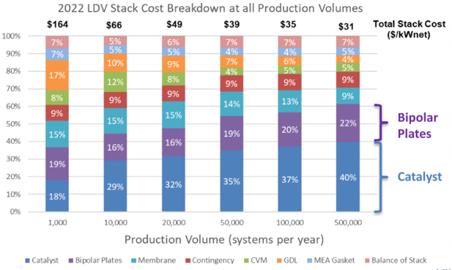
图2
描述不同Pt-过渡金属合金的理论ORR性能与实验得到ORR性能的“火山型”曲线[38]"
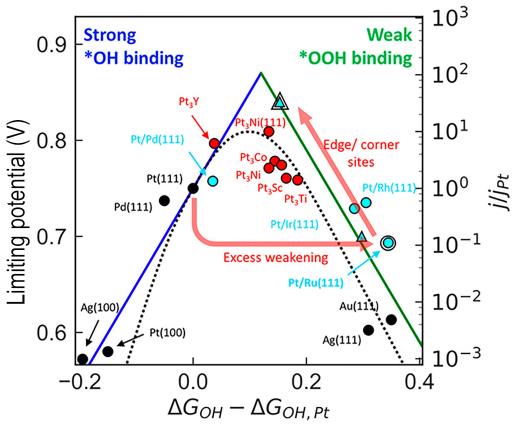
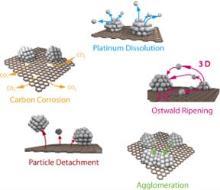
图3
燃料电池实际工况下造成Pt/C氧还原催化剂的衰减机理示意图[47]"
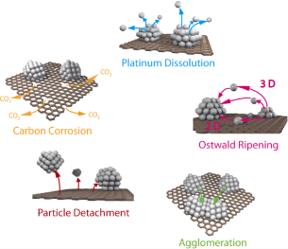
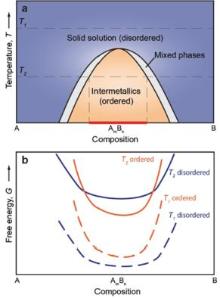
图4
二元体系金属间相(AmBn)形成的热力学平衡条件示意图[80]:(a)无序固溶体(蓝色)、有序金属间化合物(橙色)和混合相(灰色)之间平衡的相图;(b)无序相(蓝色)和有序相(橙色)在T1(虚线)和T2(实线)两种不同温度下的吉布斯自由能变"
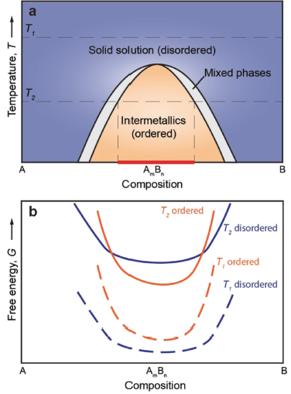
图5
(a)典型的有序Pt-过渡金属二元合金的晶体结构表征图[85];(b)MgO涂覆层可以被用于有序合金的制备以避免合金在高温热处理下的烧结[86];(c)改变制备条件能够实现对合金有序度的调控[84]"
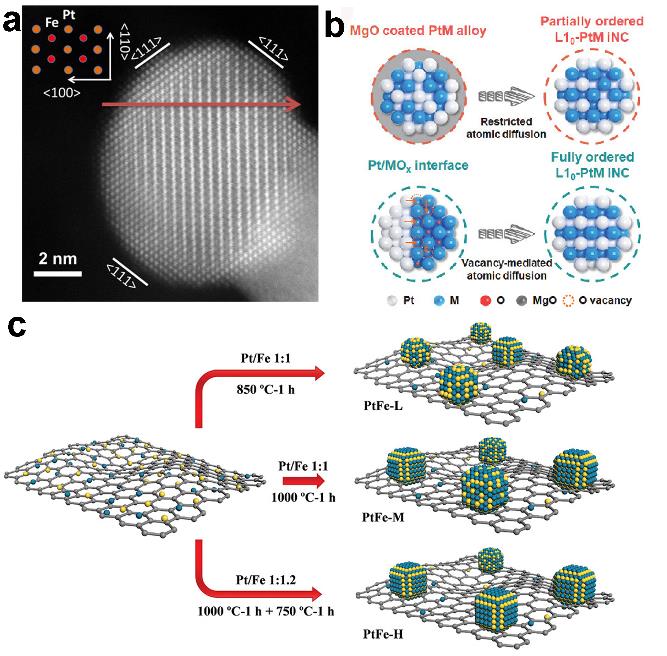
图6
(a)Pt单层核壳结构催化剂通过核层与壳层之间的应力作用改变Pt原子的电子结构,从而提升ORR催化活性和耐久性[95];(b)UPD电化学方法能够实现Pt单层的可控制备[96]"
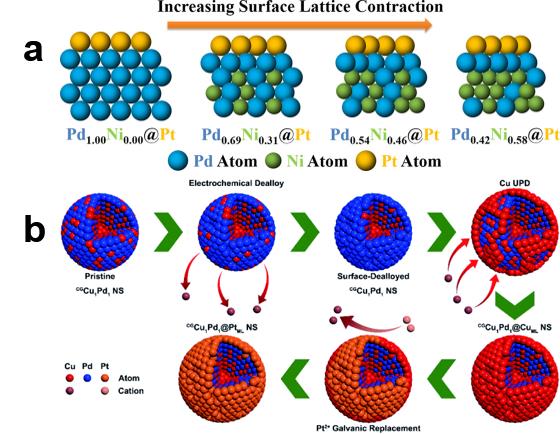
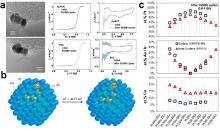
图7
(a)Au团簇修饰的Pt单晶表面能够有效提升ORR稳定性[106];(b)Au向表面偏析能够优先占据缺陷位点,从而提升Pt-过渡金属合金的稳定性[107];(c)Au在PtCo合金中的掺杂能够有效抑制Co的溶出[108]"
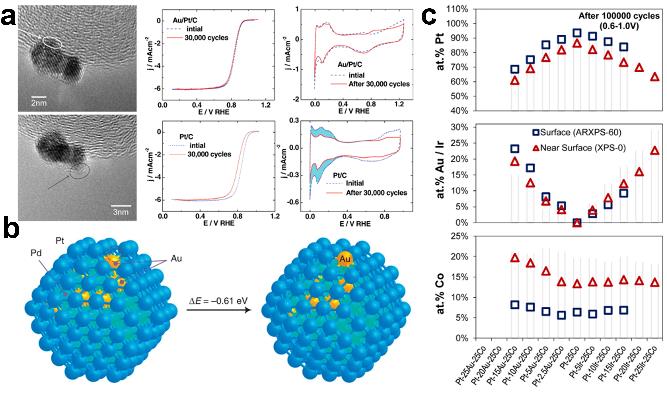
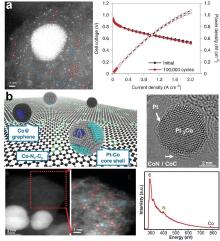
图8
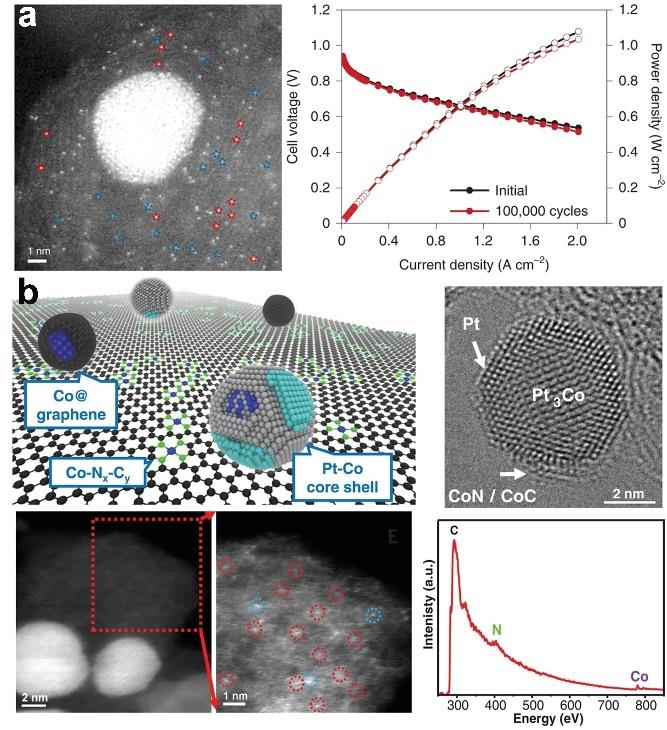
(a)Pt-Fe-N-C复合催化剂的晶体结构表征及100 000圈衰减测试前后电池极化曲线和功率密度曲线对比[119];(b)PtCo@Co-N-C复合催化剂的微观结构示意图及晶体结构表征[118]"
| [1] | TRATTNER A, KLELL M, RADNER F. Sustainable hydrogen society-vision, findings and development of a hydrogen economy using the example of Austria[J]. International Journal of Hydrogen Energy, 2022, 47(4): 2059-2079. |
| [2] | LIN R H, ZHAO Y Y, WU B D. Toward a hydrogen society: hydrogen and smart grid integration[J]. International Journal of Hydrogen Energy, 2020, 45(39): 20164-20175. |
| [3] | CHEN J, ZHANG Q, XU N, et al. Roadmap to hydrogen society of Tokyo: locating priority of hydrogen facilities based on multiple big data fusion[J]. Applied Energy, 2022, 313: 118688. |
| [4] | DOE. Hydrogen strategy enabling a low-carbon economy[R]. 2020. |
| [5] | STAFFELL I, SCAMMAN D, VELAZQUEZ ABAD A, et al. The role of hydrogen and fuel cells in the global energy system[J]. Energy & Environmental Science, 2019, 12(2): 463-491. |
| [6] | IGALAVITHANA A D, YOU S, ZHANG L, et al. Progress, barriers, and prospects for achieving a “hydrogen society” and opportunities for biochar technology[J]. ACS ES&T Engineering, 2022, 2(11): 1987-2001. |
| [7] | EAVES S, EAVES J. A cost comparison of fuel-cell and battery electric vehicles[J]. Journal of Power Sources, 2004, 130(1-2): 208-212. |
| [8] | JIAN L, YONGQIANG Z, LARSEN G N S, et al. Implications of road transport electrification: a long-term scenario-dependent analysis in China[J]. eTransportation, 2020, 6: 100072. |
| [9] | GARDNER R. The outlook for energy: a view to 2040[R]. 2015. |
| [10] | SEH Z W, KIBSGAARD J, DICKENS C F, et al. Combining theory and experiment in electrocatalysis: insights into materials design[J]. Science, 2017, 355(6321): eaad4998. |
| [11] | OFFER G J, HOWEY D, CONTESTABILE M, et al. Comparative analysis of battery electric, hydrogen fuel cell and hybrid vehicles in a future sustainable road transport system[J]. Energy Policy, 2010, 38(1): 24-29. |
| [12] | THOMAS C E. Fuel cell and battery electric vehicles compared[R]. 2008. |
| [13] | HELMERS E, MARX P. Electric cars: technical characteristics and environmental impacts[J]. Environmental Sciences Europe, 2012, 24(1): 14. |
| [14] | AJANOVIC A, HAAS R. An economic, ecological and energetic assessment of battery electric, hybrid and fuel cell cars[C]. 2013 IEEE PES Asia-Pacific Power and Energy Engineering Conference (APPEEC), 2013: 1-4. |
| [15] | JIAO K, XUAN J, DU Q, et al. Designing the next generation of proton-exchange membrane fuel cells[J]. Nature, 2021, 595(7867): 361-369. |
| [16] | BEKEL K, PAULIUK S. Prospective cost and environmental impact assessment of battery and fuel cell electric vehicles in Germany[J]. The International Journal of Life Cycle Assessment, 2019, 24(12): 2220-2237. |
| [17] | WANG Y, MOURA S J, ADVANI S G, et al. Optimization of powerplant component size on board a fuel cell/battery hybrid bus for fuel economy and system durability[J]. International Journal of Hydrogen Energy, 2019, 44(33): 18283-18292. |
| [18] | PRINCE-RICHARD S, WHALE M, DJILALI N. A techno-economic analysis of decentralized electrolytic hydrogen production for fuel cell vehicles[J]. International Journal of Hydrogen Energy, 2005, 30(11): 1159-1179. |
| [19] | LI H, CHAOUI H, GUALOUS H. Cost minimization strategy for fuel cell hybrid electric vehicles considering power sources degradation[J]. IEEE Transactions on Vehicular Technology, 2020, 69(11): 12832-12842. |
| [20] | SHEN P K. Electrochemical oxygen reduction: fundamental and applications[M]. Springer Nature Singapore Pte Ltd., 2020. |
| [21] | ADŽIC R R, WANG J X. Configuration and site of O2 adsorption on the Pt(111) electrode surface[J]. The Journal of Physical Chemistry B, 1998, 102(45): 8988-8993. |
| [22] | WANG J X, ZHANG J, ADZIC R R. Double-trap kinetic equation for the oxygen reduction reaction on Pt(111) in acidic media[J]. The Journal of Physical Chemistry A, 2007, 111(49): 12702-12710. |
| [23] | NØRSKOV J K, ROSSMEISL J, LOGADOTTIR A, et al. Origin of the overpotential for oxygen reduction at a fuel-cell cathode[J]. The Journal of Physical Chemistry B, 2004, 108(46): 17886-17892. |
| [24] | WANG Y, BALBUENA P B. Roles of proton and electric field in the electroreduction of O2 on Pt(111) surfaces: results of an ab-initio molecular dynamics study[J]. The Journal of Physical Chemistry B, 2004, 108(14): 4376-4384. |
| [25] | JANIK M J, TAYLOR C D, NEUROCK M. First-principles analysis of the initial electroreduction steps of oxygen over Pt(111)[J]. Journal of The Electrochemical Society, 2009, 156(1): B126. |
| [26] | DOE. Fuel cell cost and performance analysis[R]. 2022. |
| [27] | KONGKANAND A, MATHIAS M F. The priority and challenge of high-power performance of low-platinum proton-exchange membrane fuel cells[J]. The Journal of Physical Chemistry Letters, 2016, 7(7): 1127-1137. |
| [28] | FAN J, CHEN M, ZHAO Z, et al. Bridging the gap between highly active oxygen reduction reaction catalysts and effective catalyst layers for proton exchange membrane fuel cells[J]. Nature Energy, 2021, 6(5): 475-486. |
| [29] | VISWANATHAN V, HANSEN H A, ROSSMEISL J, et al. Unifying the 2e- and 4e- reduction of oxygen on metal surfaces[J]. The Journal of Physical Chemistry Letters, 2012, 3(20): 2948-2951. |
| [30] | STAMENKOVIC V, MUN B S, MAYRHOFER K J J, et al. Changing the activity of electrocatalysts for oxygen reduction by tuning the surface electronic structure[J]. Angewandte Chemie International Edition, 2006, 45(18): 2897-2901. |
| [31] | CHEN S, FERREIRA P J, SHENG W, et al. Enhanced activity for oxygen reduction reaction on “Pt3Co” nanoparticles: direct evidence of percolated and sandwich-segregation structures[J]. Journal of the American Chemical Society, 2008, 130(42): 13818-13819. |
| [32] | ZHAO Z, CHEN C, LIU Z, et al. Pt‐based nanocrystal for electrocatalytic oxygen reduction[J]. Advanced Materials, 2019, 31(31): 1808115. |
| [33] | ZHAO Y, ADIYERI SASEENDRAN D P, HUANG C, et al. Oxygen evolution/reduction reaction catalysts: from in situ monitoring and reaction mechanisms to rational design[J]. Chemical Reviews, 2023, 123(9): 6257-6358. |
| [34] | WANG X X, SWIHART M T, WU G. Achievements, challenges and perspectives on cathode catalysts in proton exchange membrane fuel cells for transportation[J]. Nature Catalysis, 2019, 2(7): 578-589. |
| [35] | WANG C, MARKOVIC N M, STAMENKOVIC V R. Advanced platinum alloy electrocatalysts for the oxygen reduction reaction[J]. ACS Catalysis, 2012, 2(5): 891-898. |
| [36] | TIAN X, LU X F, XIA B Y, et al. Advanced electrocatalysts for the oxygen reduction reaction in energy conversion technologies[J]. Joule, 2020, 4(1): 45-68. |
| [37] | SUN Y, POLANI S, LUO F, et al. Advancements in cathode catalyst and cathode layer design for proton exchange membrane fuel cells[J]. Nature Communications, 2021, 12(1): 5984. |
| [38] | KULKARNI A, SIAHROSTAMI S, PATEL A, et al. Understanding catalytic activity trends in the oxygen reduction reaction[J]. Chemical Reviews, 2018, 118(5): 2302-2312. |
| [39] | STAMENKOVIC V R, MUN B S, ARENZ M, et al. Trends in electrocatalysis on extended and nanoscale Pt-bimetallic alloy surfaces[J]. Nature Materials, 2007, 6(3): 241-247. |
| [40] | CAMPOS-ROLDÁN C A, JONES D J, ROZIÈRE J, et al. Platinum‐rare earth alloy electrocatalysts for the oxygen reduction reaction: a brief overview[J]. ChemCatChem, 2022, 14(19): e202200334. |
| [41] | GARLAND N, BENJAMIN T, KOPASZ J. DOE fuel cell program: durability technical targets and testing protocols[J]. ECS Transactions, 2007, 11(1): 923. |
| [42] | WANG J. System integration, durability and reliability of fuel cells: challenges and solutions[J]. Applied Energy, 2017, 189: 460-479. |
| [43] | TAKAHASHI T, IKEDA T, MURATA K, et al. Accelerated durability testing of fuel cell stacks for commercial automotive applications: a case study[J]. Journal of The Electrochemical Society, 2022, 169(4): 044523. |
| [44] | CHEN X, XU J, YANG C, et al. Thermodynamic and economic study of PEMFC stack considering degradation characteristic[J]. Energy Conversion and Management, 2021: 114016. |
| [45] | ZHANG S, YUAN X, WANG H, et al. A review of accelerated stress tests of MEA durability in PEM fuel cells[J]. International Journal of Hydrogen Energy, 2009, 34(1): 388-404. |
| [46] | BEZMALINOVIC D, SIMIC B, BARBIR F. Characterization of PEM fuel cell degradation by polarization change curves[J]. Journal of Power Sources, 2015, 294: 82-87. |
| [47] | MEIER J C, GALEANO C, KATSOUNAROS I, et al. Design criteria for stable Pt/C fuel cell catalysts[J]. Beilstein Journal of Nanotechnology, 2014, 5: 44-67. |
| [48] | GUÉTAZ L, ESCRIBANO S, SICARDY O. Study by electron microscopy of proton exchange membrane fuel cell membrane-electrode assembly degradation mechanisms: influence of local conditions[J]. Journal of Power Sources, 2012, 212: 169-178. |
| [49] | LABATA M F, LI G, OCON J, et al. Insights on platinum-carbon catalyst degradation mechanism for oxygen reduction reaction in acidic and alkaline media[J]. Journal of Power Sources, 2021, 487: 229356. |
| [50] | REN P, PEI P, LI Y, et al. Degradation mechanisms of proton exchange membrane fuel cell under typical automotive operating conditions[J]. Progress in Energy and Combustion Science, 2020, 80: 100859. |
| [51] | SUN C, WEN R, QIN Y, et al. Origin of Pt site poisoning by impurities for oxygen reduction reaction catalysis: tailored intrinsic activity of Pt sites[J]. ACS Applied Energy Materials, 2023, 6(11): 5700-5709. |
| [52] | TIMPERMAN L, FENG Y J, VOGEL W, et al. Substrate effect on oxygen reduction electrocatalysis[J]. Electrochimica Acta, 2010, 55(26): 7558-7563. |
| [53] | YOU J, ZHENG Z, CHENG X, et al. Insight into oxygen transport in solid and high-surface-area carbon supports of proton exchange membrane fuel cells[J]. ACS Applied Materials & Interfaces, 2023, 15(17): 21457-21466. |
| [54] | MOORE A D, HOLMES S M, ROBERTS E P L. Evaluation of porous carbon substrates as catalyst supports for the cathode of direct methanolfuel cells[J]. RSC Adv., 2012, 2(4): 1669-1674. |
| [55] | KAKAEI K. Electrochemical characteristics and performance of platinum nanoparticles supported by vulcan/polyaniline for oxygen reduction in PEMFC[J]. Fuel Cells, 2012, 12(6): 939-945. |
| [56] | YI P, LI X, YAO L, et al. A lifetime prediction model for coated metallic bipolar plates in proton exchange membrane fuel cells[J]. Energy Conversion and Management, 2019, 183: 65-72. |
| [57] | ZAMEL N, LI X. Effect of contaminants on polymer electrolyte membrane fuel cells[J]. Progress in Energy and Combustion Science, 2011, 37(3): 292-329. |
| [58] | SUGAWARA T, KAWASHIMA N, MURAKAMI T N. Kinetic study of Nafion degradation by Fenton reaction[J]. Journal of Power Sources, 2011, 196(5): 2615-2620. |
| [59] | LI H, TSAY K, WANG H, et al. Durability of PEM fuel cell cathode in the presence of Fe3+ and Al3+[J]. Journal of Power Sources, 2010, 195(24): 8089-8093. |
| [60] | WONG K H, KJEANG E. Mitigation of chemical membrane degradation in fuel cells: understanding the effect of cell voltage and iron ion redox cycle[J]. ChemSusChem, 2015, 8(6): 1072-1082. |
| [61] | ZHANG J, SHEN S. Low platinum fuel cell technologies[M]. Heidelberger Platz 3, 14197 Berlin, Germany: Springer-Verlag GmbH, DE part of Springer Nature, 2021. |
| [62] | ONO Y, MASHIO T, TAKAICHI S, et al. The analysis of performance loss with low platinum loaded cathode catalyst layers[J]. ECS Transactions, 2010, 28(27): 69. |
| [63] | BERNHART W, RIEDERLE S, YOON M, et al. Fuel cells-a realistic alternative for zero emission?[J]. Auto Tech Review, 2014, 3(3): 18-23. |
| [64] | GRESZLER T A, CAULK D, SINHA P. The impact of platinum loading on oxygen transport resistance[J]. Journal of The Electrochemical Society, 2012, 159(12): F831-F840. |
| [65] | STAMENKOVIC V R, MUN B S, MAYRHOFER K J J, et al. Effect of surface composition on electronic structure, stability, and electrocatalytic properties of Pt-transition metal alloys: Pt-skin versus Pt-skeleton surfaces[J]. Journal of the American Chemical Society, 2006, 128(27): 8813-8819. |
| [66] | JUNG N, CHUNG Y H, CHUNG D Y, et al. Chemical tuning of electrochemical properties of Pt-skin surfaces for highly active oxygen reduction reactions[J]. Physical Chemistry Chemical Physics, 2013, 15(40): 17079-17083. |
| [67] | WANG C, CHI M, LI D, et al. Design and synthesis of bimetallic electrocatalyst with multilayered Pt-skin surfaces[J]. Journal of the American Chemical Society, 2011, 133(36): 14396-14403. |
| [68] | GAN L, RUDI S, CUI C, et al. Size-controlled synthesis of sub-10 nm PtNi3Alloy nanoparticles and their unusual volcano-shaped size effect on ORR electrocatalysis[J]. Small, 2016, 12(23): 3189-3196. |
| [69] | XIN H L, MUNDY J A, LIU Z, et al. Atomic-resolution spectroscopic imaging of ensembles of nanocatalyst particles across the life of a fuel cell[J]. Nano Letters, 2011, 12(1): 490-497. |
| [70] | MAYRHOFER K J J, HARTL K, JUHART V, et al. Degradation of carbon-supported Pt bimetallic nanoparticles by surface segregation[J]. Journal of the American Chemical Society, 2009, 131(45): 16348-16349. |
| [71] | DAI S, HOU Y, ONOUE M, et al. Revealing surface elemental composition and dynamic processes involved in facet-dependent oxidation of Pt3Co nanoparticles via in situ transmission electron microscopy[J]. Nano Letters, 2017, 17(8): 4683-4688. |
| [72] | NONOYAMA N, OKAZAKI S, WEBER A Z, et al. Analysis of oxygen-transport diffusion resistance in proton-exchange-membrane fuel cells[J]. Journal of The Electrochemical Society, 2011, 158(4): B416-B423. |
| [73] | FANG S, LIU G, LI M, et al. Tailoring ionomer chemistry for improved oxygen transport in the cathode catalyst layer of proton exchange membrane fuel cells[J]. ACS Applied Energy Materials, 2023, 6(6): 3590-3598. |
| [74] | DOE. Fuel cell R&D overview[R]. 2019. |
| [75] | RÖßNER L, ARMBRÜSTER M. Electrochemical energy conversion on intermetallic compounds: a review[J]. ACS Catalysis, 2019, 9(3): 2018-2062. |
| [76] | ANTOLINI E. Alloy vs. intermetallic compounds: effect of the ordering on the electrocatalytic activity for oxygen reduction and the stability of low temperature fuel cell catalysts[J]. Applied Catalysis B: Environmental, 2017, 217: 201-213. |
| [77] | CHEN L, BOCK C, MERCIER P H J, et al. Ordered alloy formation for Pt3Fe/C, PtFe/C and Pt5.75Fe5.75Cuy/CO2-reduction electro-catalysts[J]. Electrochimica Acta, 2012, 77: 212-224. |
| [78] | ZHANG B W, LAI W H, SHENG T, et al. Ordered platinum-bismuth intermetallic clusters with Pt-skin for a highly efficient electrochemical ethanol oxidation reaction[J]. Journal of Materials Chemistry A, 2019, 7(10): 5214-5220. |
| [79] | ZHANG J, SHEN L, JIANG Y, et al. Random alloy and intermetallic nanocatalysts in fuel cell reactions[J]. Nanoscale, 2020, 12(38): 19557-19581. |
| [80] | YAN Y, DU J S, GILROY K D, et al. Intermetallic nanocrystals: syntheses and catalytic applications[J]. Advanced Materials, 2017, 29(14): 1605997. |
| [81] | CASADO-RIVERA E, VOLPE D J, ALDEN L, et al. Electrocatalytic activity of ordered intermetallic phases for fuel cell applications[J]. Journal of the American Chemical Society, 2004, 126(12): 4043-4049. |
| [82] | WEN Y H, HUANG R. Effect of chemical ordering on thermal stability of Pt-Co nanoparticles[J]. The Journal of Physical Chemistry C, 2019, 123(18): 12007-12014. |
| [83] | WANG Z, YAO X, KANG Y, et al. Structurally ordered low-Pt intermetallic electrocatalysts toward durably high oxygen reduction reaction activity[J]. Advanced Functional Materials, 2019, 29(35): 1902987. |
| [84] | SONG T W, CHEN M X, YIN P, et al. Intermetallic PtFe electrocatalysts for the oxygen reduction reaction: ordering degree-dependent performance[J]. Small, 2022, 18(31): 2202916. |
| [85] | LI Q, WU L, WU G, et al. New approach to fully ordered fct-fept nanoparticles for much enhanced electrocatalysis in acid[J]. Nano Letters, 2015, 15(4): 2468-2473. |
| [86] | LIU X, LIANG J, LI Q. Design principle and synthetic approach of intermetallic Pt-M alloy oxygen reduction catalysts for fuel cells[J]. Chinese Journal of Catalysis, 2023, 45: 17-26. |
| [87] | SUN S, MURRAY C B, WELLER D, et al. Monodisperse FePt nanoparticles and ferromagnetic FePt nanocrystal superlattices[J]. Science, 2000, 287(5460): 1989-1992. |
| [88] | LI Q, SUN S. Recent advances in the organic solution phase synthesis of metal nanoparticles and their electrocatalysis for energy conversion reactions[J]. Nano Energy, 2016, 29: 178-197. |
| [89] | LI J, SHARMA S, WEI K, et al. Anisotropic strain tuning of L10 ternary nanoparticles for oxygen reduction[J]. Journal of the American Chemical Society, 2020, 142(45): 19209-19216. |
| [90] | HU S, LI W X. Sabatier principle of metal-support interaction for design of ultrastable metal nanocatalysts[J]. Science, 2021, 374(6573): 1360-1365. |
| [91] | GAN L, RUDI S, CUI C, et al. Ni-catalyzed growth of graphene layers during thermal annealing: implications for the synthesis of carbon-supported Pt-Ni fuel-cell catalysts[J]. ChemCatChem, 2013, 5(9): 2691-2694. |
| [92] | KIM J, RONG C, LIU J P, et al. Dispersible ferromagnetic FePt nanoparticles[J]. Advanced Materials, 2009, 21(8): 906-909. |
| [93] | CHEN H, ZHENG T, HE Q, et al. Local coordination and ordering engineering to design efficient core-shell oxygen reduction catalysts[J]. Journal of The Electrochemical Society, 2020, 167(14): 144501. |
| [94] | VUKMIROVIC M B, ZHANG J, SASAKI K, et al. Platinum monolayer electrocatalysts for oxygen reduction[J]. Electrochimica Acta, 2007, 52(6): 2257-2263. |
| [95] | LUO L, ZHU F, TIAN R, et al. Composition-graded PdxNi1-x nanospheres with Pt monolayer shells as high-performance electrocatalysts for oxygen reduction reaction[J]. ACS Catalysis, 2017, 7(8): 5420-5430. |
| [96] | LUO L, FU C, SHEN S, et al. Probing structure-designed Cu-Pd nanospheres and their Pt-monolayer-shell derivatives as high-performance electrocatalysts for alkaline and acidic oxygen reduction reactions[J]. Journal of Materials Chemistry A, 2020, 8(42): 22389-22400. |
| [97] | WANG D, XIN H L, HOVDEN R, et al. Structurally ordered intermetallic platinum-cobalt core-shell nanoparticles with enhanced activity and stability as oxygen reduction electrocatalysts[J]. Nature Materials, 2012, 12(1): 81-87. |
| [98] | LUO L, FU C, WU A, et al. Hydrogen-assisted scalable preparation of ultrathin Pt shells onto surfactant-free and uniform Pd nanoparticles for highly efficient oxygen reduction reaction in practical fuel cells[J]. Nano Research, 2022, 15(3): 1892-1900. |
| [99] | CHOI S I, XIE S, SHAO M, et al. Synthesis and characterization of 9 nm Pt-Ni octahedra with a record high activity of 3.3 A/mgPt for the oxygen reduction reaction[J]. Nano Letters, 2013, 13(7): 3420-3425. |
| [100] | BARD A J, PARSONS R, JORDAN J. Standard potentials in aqueous solution[M]. New York: Taylor&Francis Group, 1985. |
| [101] | DUAN Z, HENKELMAN G. Atomic-scale mechanisms of electrochemical Pt dissolution[J]. ACS Catalysis, 2021, 11(23): 14439-14447. |
| [102] | LOPES P P, LI D, LV H, et al. Eliminating dissolution of platinum-based electrocatalysts at the atomic scale[J]. Nature Materials, 2020, 19(11): 1207-1214. |
| [103] | EHELEBE K, KNÖPPEL J, BIERLING M, et al. Platinum dissolution in realistic fuel cell catalyst layers[J]. Angewandte Chemie International Edition, 2021, 60(16): 8882-8888. |
| [104] | XING F, NAKAYA Y, YASUMURA S, et al. Ternary platinum-cobalt-indium nanoalloy on ceria as a highly efficient catalyst for the oxidative dehydrogenation of propane using CO2[J]. Nature Catalysis, 2022, 5(1): 55-65. |
| [105] | LIU F, SUN K, RUI Z, et al. Highly durable and active ternary Pt-Au-Ni electrocatalyst for oxygen reduction reaction[J]. ChemCatChem, 2018, 10(14): 3049-3056. |
| [106] | ZHANG J, SASAKI K, SUTTER E, et al. Stabilization of platinum oxygen-reduction electrocatalysts using gold clusters[J]. Science, 2007, 315(5809): 220-222. |
| [107] | SASAKI K, NAOHARA H, CHOI Y, et al. Highly stable Pt monolayer on PdAu nanoparticle electrocatalysts for the oxygen reduction reaction[J]. Nature Communications, 2012, 3(1): 1115. |
| [108] | TAN X, PRABHUDEV S, KOHANDEHGHAN A, et al. Pt-Au-Co alloy electrocatalysts demonstrating enhanced activity and durability toward the oxygen reduction reaction[J]. ACS Catalysis, 2015, 5(3): 1513-1524. |
| [109] | GATALO M, JOVANOVIČ P, POLYMEROS G, et al. Positive effect of surface doping with Au on the stability of Pt-based electrocatalysts[J]. ACS Catalysis, 2016, 6(3): 1630-1634. |
| [110] | SHI Q, ZHU C, FU S, et al. One-pot fabrication of mesoporous core-shell Au@PtNi ternary metallic nanoparticles and their enhanced efficiency for oxygen reduction reaction[J]. ACS Applied Materials & Interfaces, 2016, 8(7): 4739-4744. |
| [111] | MUNTEAN R, PASCAL D T, ROST U, et al. Synthesis and characterisation of platinum-cobalt-manganese ternary alloy catalysts supported on carbon nanofibers: an alternative catalyst for hydrogen evolution reaction[J]. International Journal of Hydrogen Energy, 2020, 45(49): 26217-26225. |
| [112] | LIU S, LI S, WANG R, et al. Preparation of high performance and ultra-low platinum loading membrane electrode assembly for PEMFC commercial application[J]. Journal of The Electrochemical Society, 2019, 166(16): F1308-F1313. |
| [113] | DEBE M K, ATANASOSKI R T, STEINBACH A J. Nanostructured thin film electrocatalysts - current status and future potential[J]. ECS Transactions, 2011, 41(1): 937. |
| [114] | DEBE M K, SCHMOECKEL A K, VERNSTROM G D, et al. High voltage stability of nanostructured thin film catalysts for PEM fuel cells[J]. Journal of Power Sources, 2006, 161(2): 1002-1011. |
| [115] | ISHIDA M, MATSUTANI K. Development of Pt-Co-Mn ternary alloy catalyst for PEFCs[J]. ECS Transactions, 2014, 64(3): 107. |
| [116] | ISHIDA M, MATSUTANI K. Investigation of stability reduction in PtCoMn ternary alloy catalyst for PEFCs[J]. ECS Transactions, 2015, 69(17): 651. |
| [117] | ISHIDA M, MATSUTANI K. Development of high durability PtCoMn catalyst for PEFCs[J]. ECS Transactions, 2017, 80(8): 725. |
| [118] | CHONG L, WEN J, KUBAL J, et al. Ultralow-loading platinum-cobalt fuel cell catalysts derived from imidazolate frameworks[J]. Science, 2018, 362(6420): 1276-1281. |
| [119] | XIAO F, WANG Q, XU G L, et al. Atomically dispersed Pt and Fe sites and Pt-Fe nanoparticles for durable proton exchange membrane fuel cells[J]. Nature Catalysis, 2022, 5(6): 503-512. |
| [120] | SHU Q, ZHANG J, HU B, et al. Rational design of a high-durability Pt-based ORR catalyst supported on Mn/N Codoped carbon sheets for PEMFCs[J]. Energy & Fuels, 2022, 36(3): 1707-1715. |
| [121] | ISLAM M N, MANSOOR BASHA A B, KOLLATH V O, et al. Designing fuel cell catalyst support for superior catalytic activity and low mass-transport resistance[J]. Nature Communications, 2022, 13(1): 6157. |
| [1] | 王聘玺,李立国,范伟,杨福源,欧阳明高,程毅,刘丹. 面向长途重载货运的氢能交通交能融合方案[J]. 汽车工程, 2025, 47(7): 1229-1237. |
| [2] | 陆继轩,郑伟波,李翔,王倩倩,李冰,明平文. 质子交换膜燃料电池氢气渗透研究进展及抑制措施概述[J]. 汽车工程, 2025, 47(7): 1238-1257. |
| [3] | 李楠,白雪宜,杨抖,李贵敬,马诗会. PEMFC金属泡沫流场全形态三维性能模拟及结构优化[J]. 汽车工程, 2025, 47(7): 1277-1284. |
| [4] | 常文,邵赓华,郭凤刚,张敬贵,吴永豪,赵宏建,刘尹,张健,姚东升. 实际道路工况下燃料电池寿命性能衰减研究[J]. 汽车工程, 2025, 47(7): 1296-1304. |
| [5] | 李飞宇,焦道宽,郝冬,侯永平. 运行工况对双极板腐蚀加速因子的量化研究[J]. 汽车工程, 2025, 47(12): 2346-2357. |
| [6] | 乔鹏宇,吴思远,包志铭,焦道宽,刘学良,朱凯歌,杜浩然,罗炜睿,杜青,焦魁. 多工况下质子交换膜燃料电池物理场分布均匀性与运行状态研究[J]. 汽车工程, 2025, 47(11): 2126-2140. |
| [7] | 曾升,岳美玲,李昕彤. 基于扩展状态观测的燃料电池空气供应系统容错控制研究[J]. 汽车工程, 2025, 47(11): 2159-2167. |
| [8] | 刘好年,蔡鑫,Harenbrock Michael,林瑞. 单原子催化剂赋能下一代燃料电池:从计算筛选到实际应用[J]. 汽车工程, 2025, 47(11): 2178-2186. |
| [9] | 张拴羊,徐洪涛,张国宾,陈晓平,袁泉,陈冠一. 海豚状肋片仿生流场的PEMFC性能研究[J]. 汽车工程, 2025, 47(10): 1953-1962. |
| [10] | 李光伟,韩雪,邢丹敏,明平文. 催化层/微孔层界面设计对PEMFC影响研究[J]. 汽车工程, 2025, 47(1): 77-84. |
| [11] | 任立海,陈黎黎,杨振华,蒋成约,赵清江,刘西,胡远志. 冲击载荷下PEMFC力-电耦合建模及电学响应研究[J]. 汽车工程, 2025, 47(1): 96-106. |
| [12] | 徐寅嵩,李文浩,杜常清,颜伏伍. 考虑运行参数可寻优范围的PEMFC系统净功率优化[J]. 汽车工程, 2024, 46(7): 1137-1146. |
| [13] | 余宾宴,马建,陈轶嵩,耿莉敏,王茜. 微孔间距和孔径对PEMFC气体扩散层表面液滴流动传输特性的影响[J]. 汽车工程, 2024, 46(6): 1025-1033. |
| [14] | 彭钰祥,余庆华,敖瑞,颜伏伍. 燃料电池废热驱动弹热制冷装置性能分析[J]. 汽车工程, 2024, 46(4): 662-668. |
| [15] | 孔维峰,方川,刘继红,李建秋,李飞强,黄圣涛,赵兴旺,石焱,袁殿,徐梁飞,孙鹏,周恩飞,欧阳明高. 基于单片阻抗一致性吹扫的燃料电池低温冷启动策略研究[J]. 汽车工程, 2024, 46(2): 260-268. |
|
||
