

汽车工程 ›› 2025, Vol. 47 ›› Issue (5): 859-874.doi: 10.19562/j.chinasae.qcgc.2025.05.007
付佩1,张化喜1,蔡旭2,兰子剑1,刘青山1,陈轶嵩1( )
)
收稿日期:2024-09-10
修回日期:2024-11-06
出版日期:2025-05-25
发布日期:2025-05-20
通讯作者:
陈轶嵩
E-mail:chenyisong_1988@163.com
基金资助:
Pei Fu1,Huaxi Zhang1,Xu Cai2,Zijian Lan1,Qingshan Liu1,Yisong Chen1()
Received:2024-09-10
Revised:2024-11-06
Online:2025-05-25
Published:2025-05-20
Contact:
Yisong Chen
E-mail:chenyisong_1988@163.com
摘要:
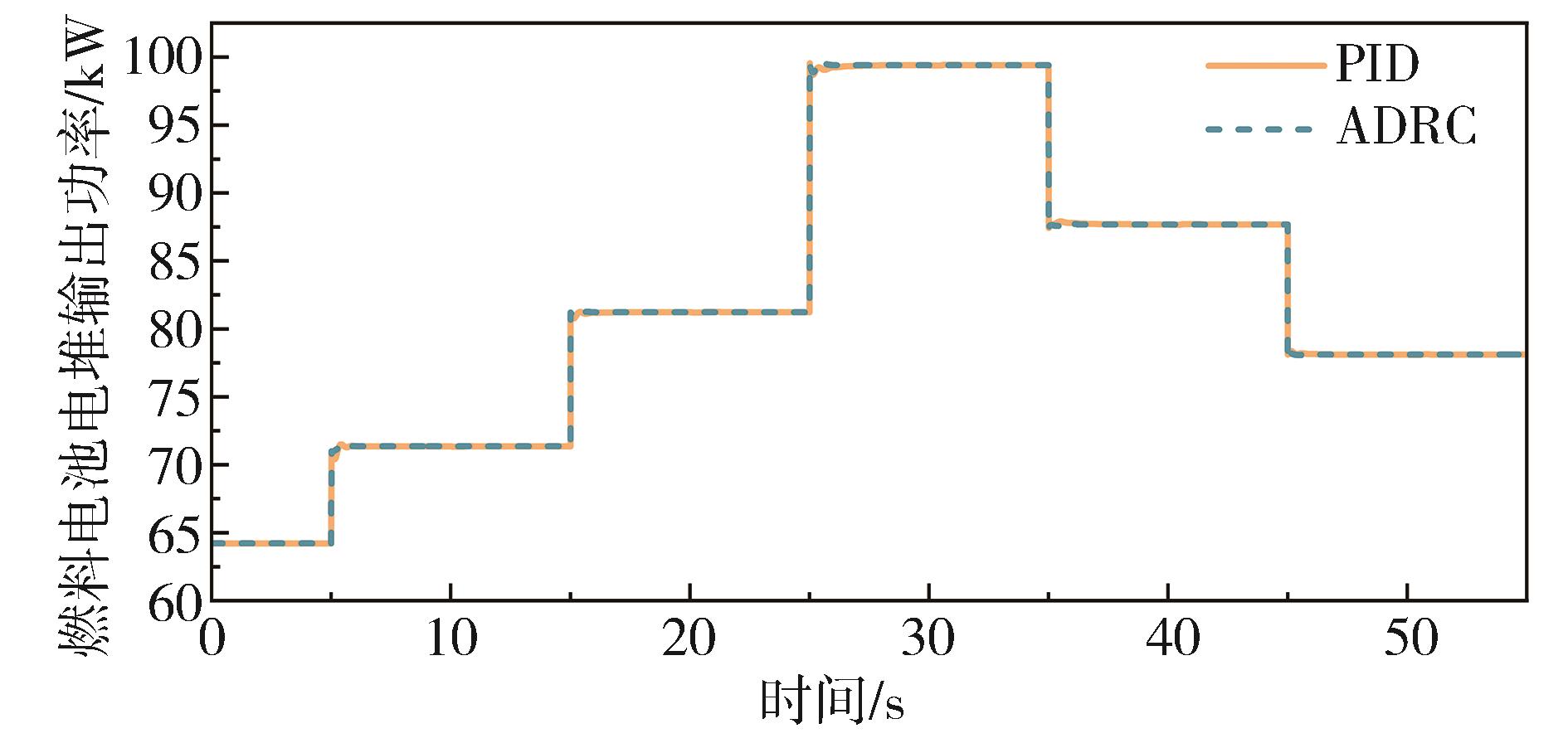
发展氢燃料电池汽车是我国推进“双碳”战略目标的关键举措之一。质子交换膜燃料电池 (PEMFC) 发动机系统,作为燃料电池汽车的核心动力源,展现出非线性、强耦合性和时滞性等复杂特性。这些特性使得 PEMFC 系统在应对汽车加速、爬坡等多变工况下的复杂功率需求时面临诸多挑战,特别是在系统气体供给的精准控制和系统响应的动态调节方面。气体供给的流量和压力对 PEMFC 的输出性能具有决定性影响,不当的气体供给不仅会降低电堆效率,甚至可能导致电堆损坏或失效,从而严重影响系统的整体性能和使用寿命。因此,优化气体供给系统,实现精准控制,是提升 PEMFC 系统性能和延长其使用寿命的关键所在。本文从建立 PEMFC 供气系统模型出发,深入分析氧气过量比、气体压力和气体压差等关键运行参数对于系统输出性能的影响;针对 PEMFC 系统氧气过量比、阴极压力以及两极气体压差采用非线性自抗扰控制算法 (ADRC) 进行三者协同控制研究,并将其与比例—积分—微分 (PID) 控制器进行对比。在PID控制下氧气过量比超调量最大可达1,而在ADRC控制下,氧气过量比超调量仅为0.2左右,达到稳态时间大约在0.1 s,PID控制下则在1 s 左右;PID 控制算法下的阴极气体压力在负载电流突变后,超调量在0.08 bar左右且波动较大,在2 s内达到稳定值,而在 ADRC 控制算法下,阴极气体压力能够在0.8 s内达到稳定值,且超调量远小于 PID 控制算法;在PID控制下两级气体压差超调量最大可达到0.15 bar且波动幅度较大,达到稳定时间较长,但在ADRC控制器下能够快速且稳定地达到设定值0.2 bar且波动幅度较小。结果表明,在负载电流和排氢动作等扰动因素下,ADRC 控制器具有更好的解耦性、鲁棒性和稳定性。
付佩,张化喜,蔡旭,兰子剑,刘青山,陈轶嵩. 基于自抗扰控制的燃料电池供气系统协同控制研究[J]. 汽车工程, 2025, 47(5): 859-874.
Pei Fu,Huaxi Zhang,Xu Cai,Zijian Lan,Qingshan Liu,Yisong Chen. Research on Collaborative Control of Fuel Cell Gas Supply System Based on Auto-disturbance Rejection Control[J]. Automotive Engineering, 2025, 47(5): 859-874.
图1
PEMFC 供气系统结构图"
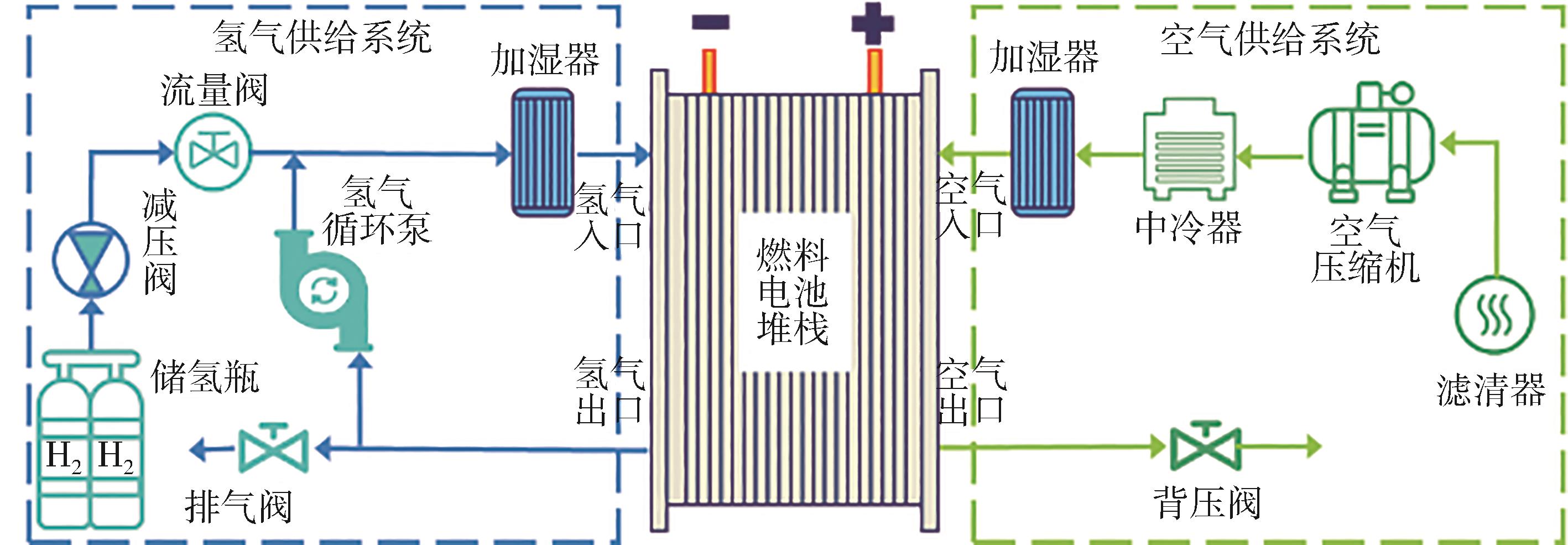
图2
空气压缩机压比-流量-转速Map图"
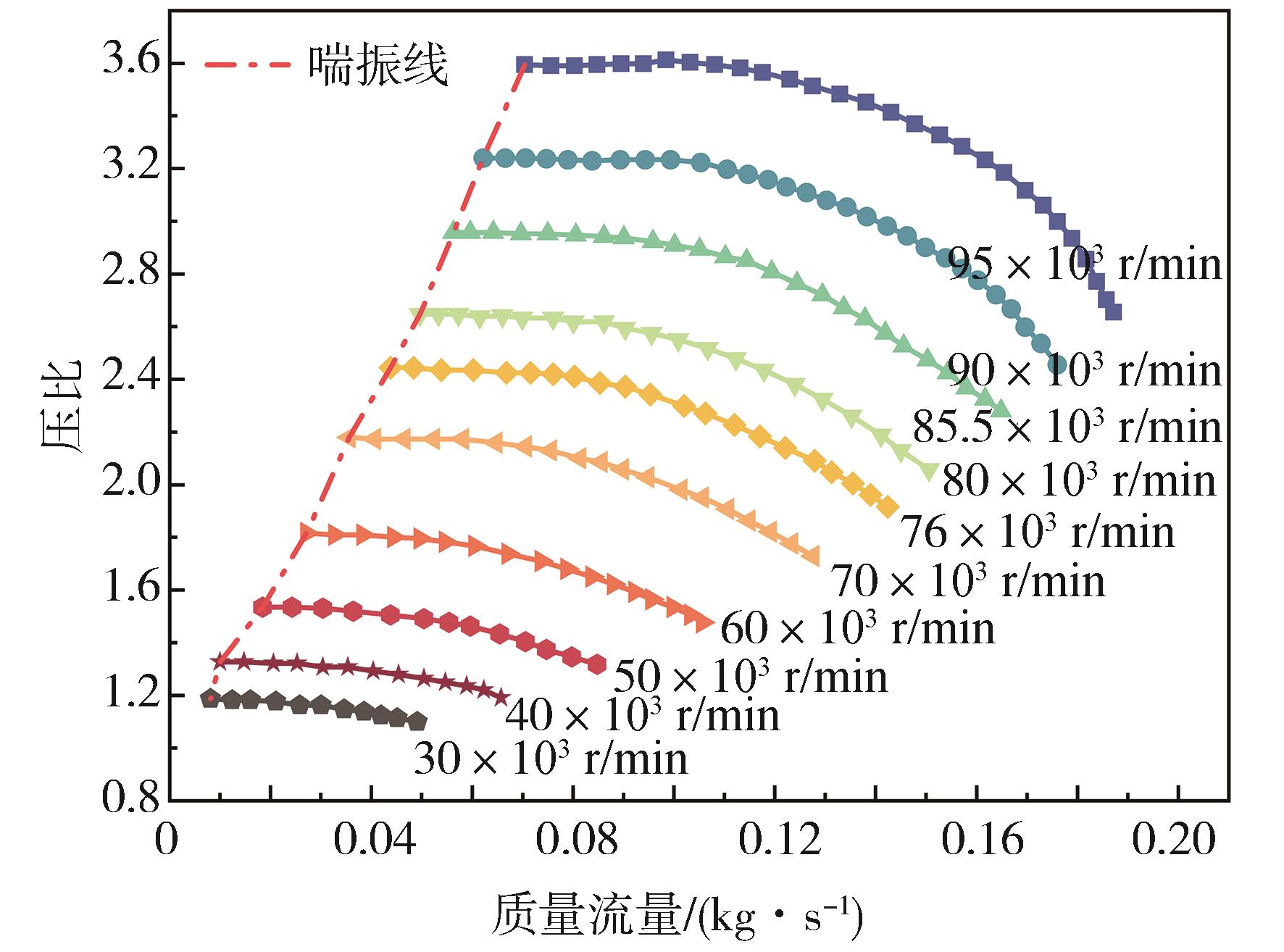
表 1
空气压缩机拟合多项式参数表"
| 参数 | 数值 |
|---|---|
| l00 | 1.606 |
| l10 | 2.212×10⁻⁴ |
| l01 | -5.992 |
| l11 | 2.201×10⁻³ |
| l20 | 3.521×10⁻⁸ |
| l02 | -88.53 |
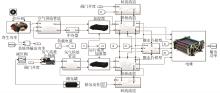
图3
燃料电池发动机系统 Matlab/Simulink 仿真模型"

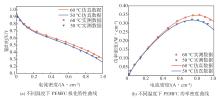
图4
不同温度下 PEMFC 特性曲线"
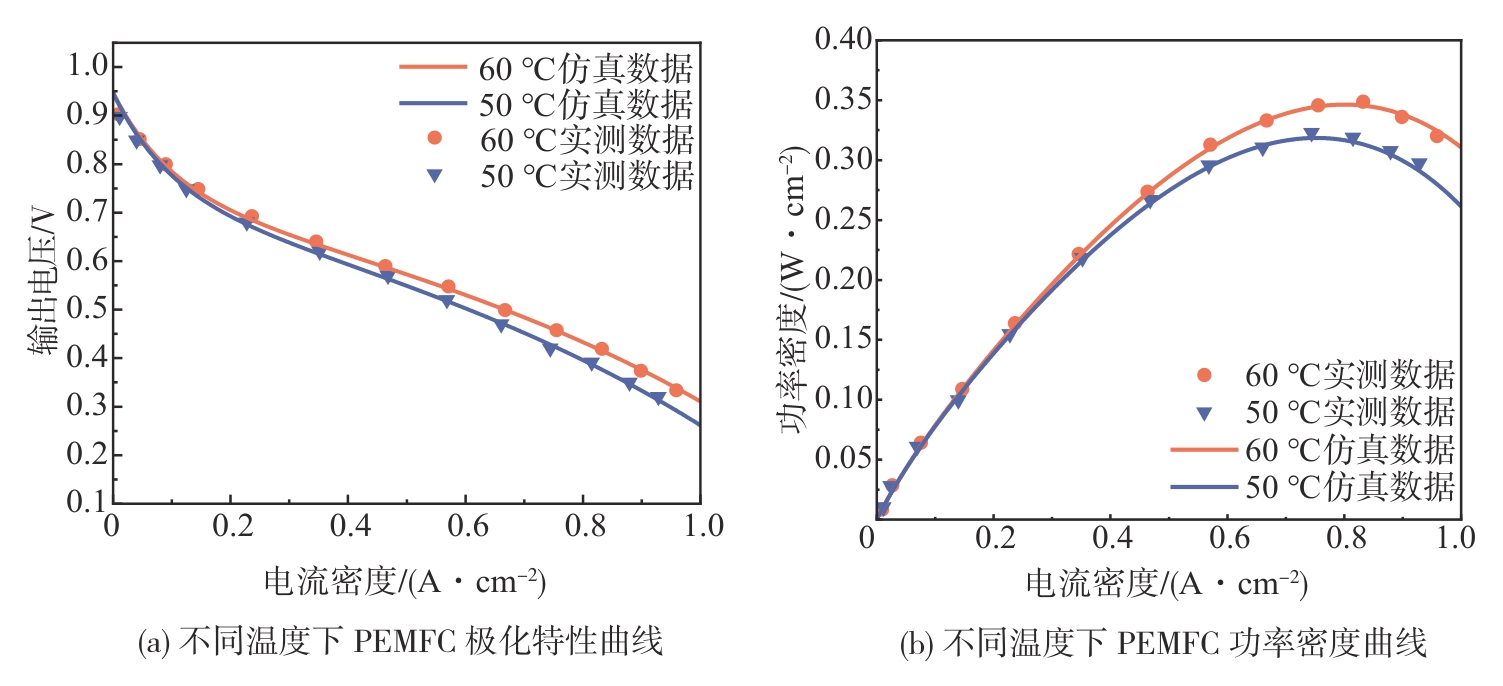
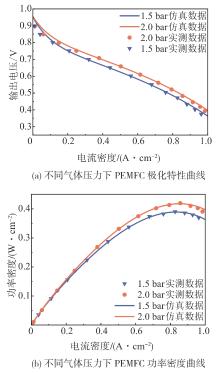
图5
不同气体压力下 PEMFC 特性曲线"
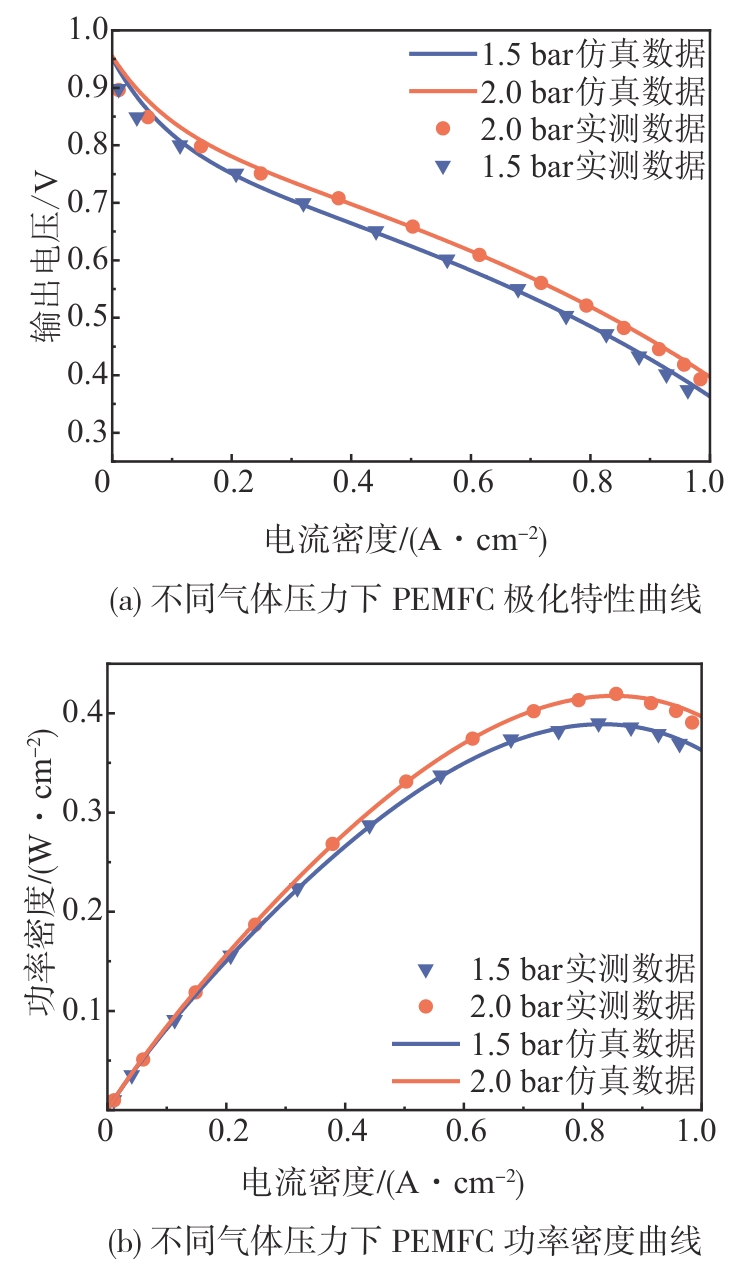
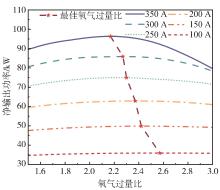
图6
不同氧气过量比下的净输出功率"
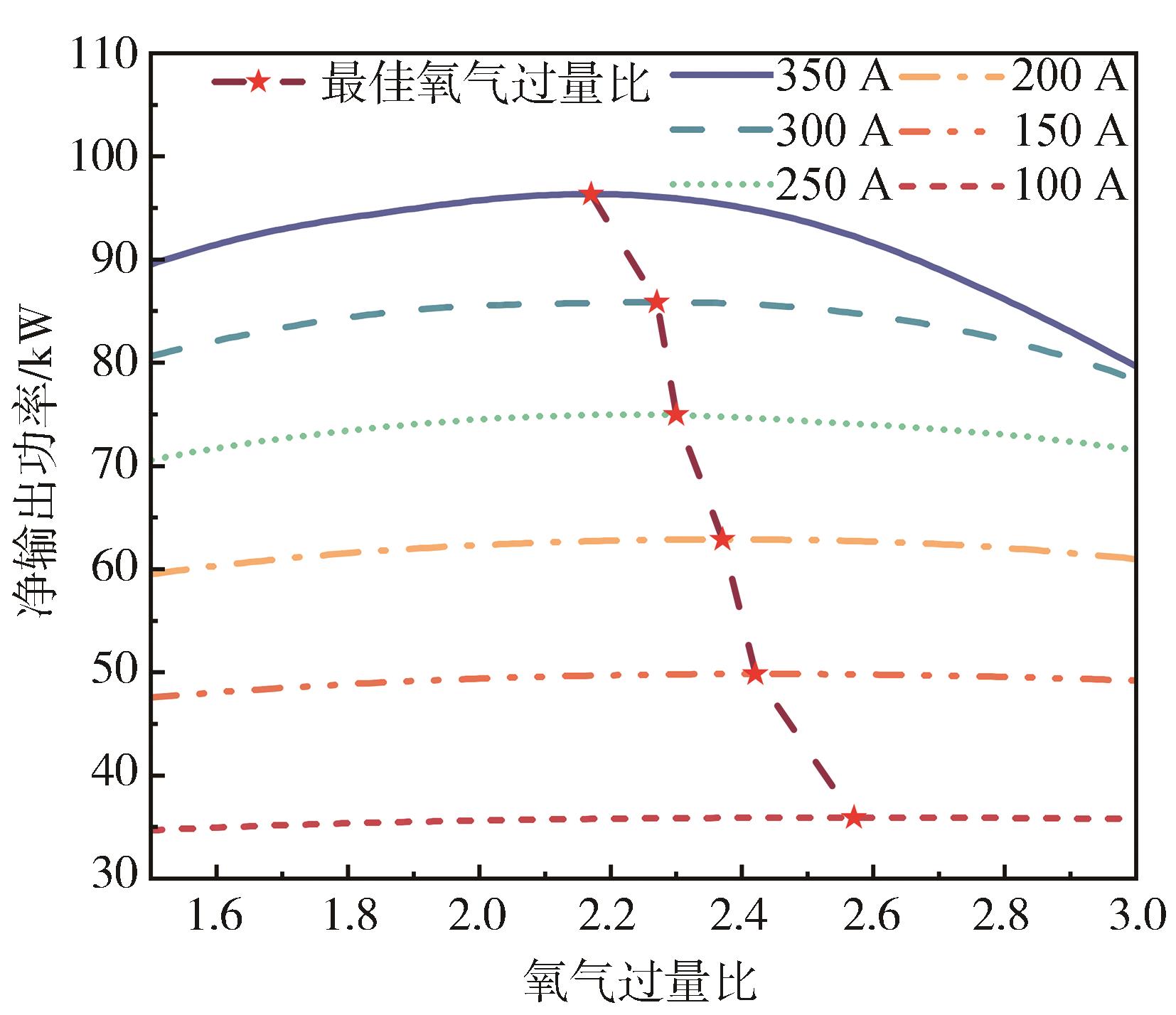
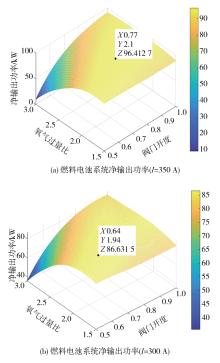
图7
不同氧气过量比背压阀阀门开度下的净输出功率"

表 2
不同负载电流下最优工作条件"
| 电流/A | 过氧量比λO2 | 阀门 开度θ | 供给管道 压力/bar | 阴极流道 压力/bar |
|---|---|---|---|---|
| 150 | 2.26 | 0.50 | 2.43 | 2.38 |
| 160 | 2.18 | 0.50 | 2.49 | 2.44 |
| 170 | 2.11 | 0.50 | 2.54 | 2.49 |
| 180 | 2.05 | 0.50 | 2.55 | 2.60 |
| 190 | 2.00 | 0.50 | 2.67 | 2.51 |
| 200 | 1.99 | 0.52 | 2.69 | 2.61 |
| 210 | 1.98 | 0.54 | 2.71 | 2.65 |
| 220 | 1.95 | 0.55 | 2.74 | 2.67 |
| 230 | 1.95 | 0.57 | 2.76 | 2.70 |
| 240 | 1.93 | 0.58 | 2.80 | 2.73 |
| 250 | 1.95 | 0.60 | 2.82 | 2.74 |
| 260 | 1.92 | 0.60 | 2.73 | 2.66 |
| 270 | 1.92 | 0.61 | 2.72 | 2.65 |
| 280 | 1.92 | 0.62 | 2.77 | 2.69 |
| 290 | 1.95 | 0.64 | 2.79 | 2.71 |
| 300 | 1.94 | 0.64 | 2.80 | 2.72 |
| 310 | 1.98 | 0.67 | 2.82 | 2.74 |
| 320 | 2.03 | 0.70 | 2.87 | 2.78 |
| 330 | 2.02 | 0.71 | 2.87 | 2.80 |
| 340 | 2.08 | 0.75 | 3.02 | 2.91 |
| 350 | 2.10 | 0.77 | 3.08 | 2.99 |
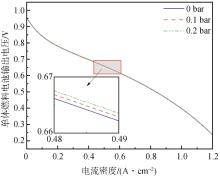
图8
不同气体压差下单体燃料电池输出性能"
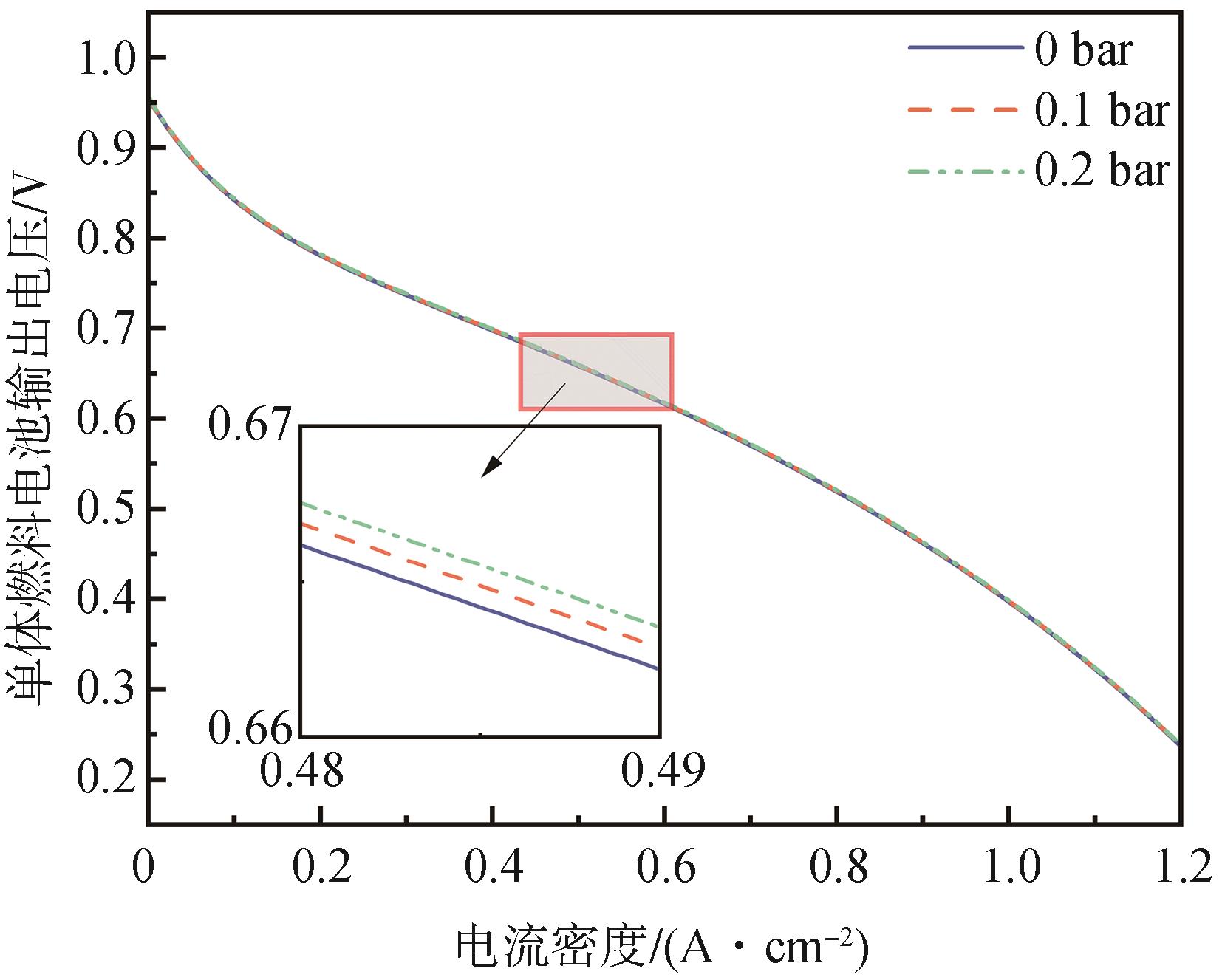
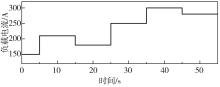
图9
负载电流变化情况"
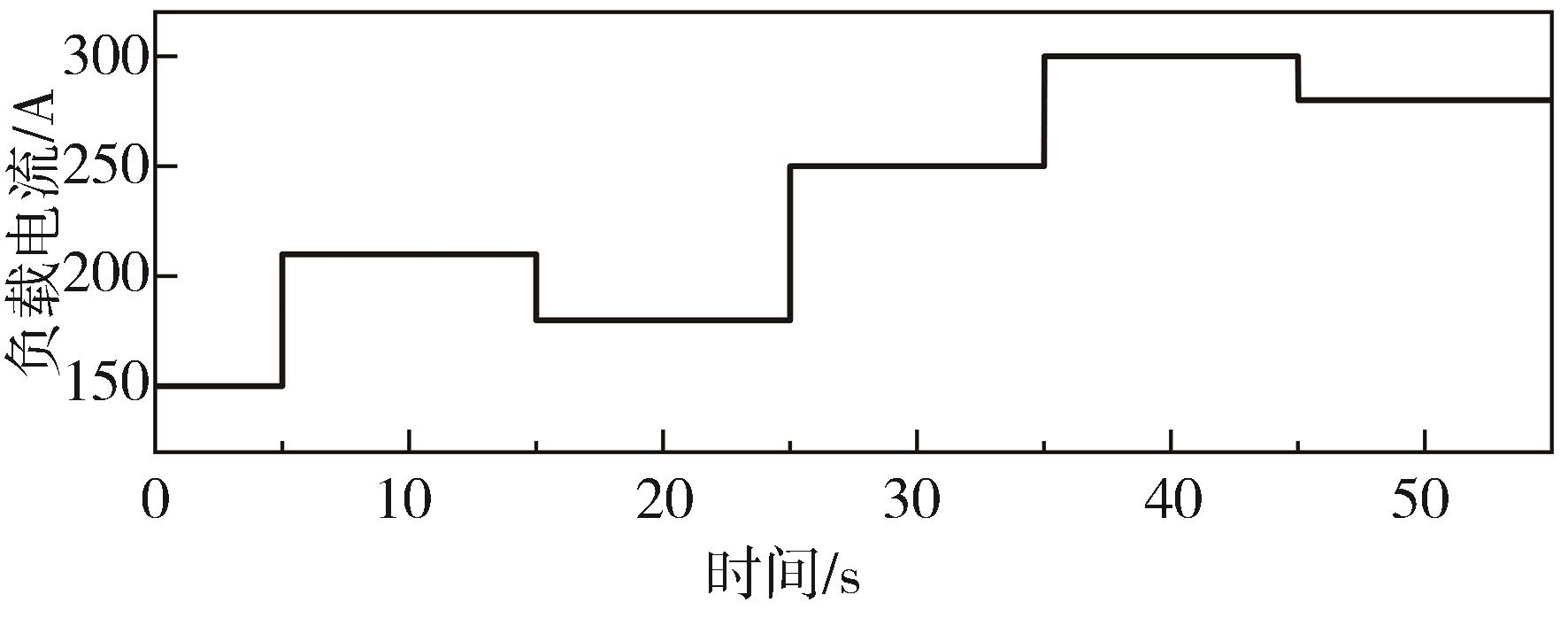
图10
阳极气体压力变化曲线"
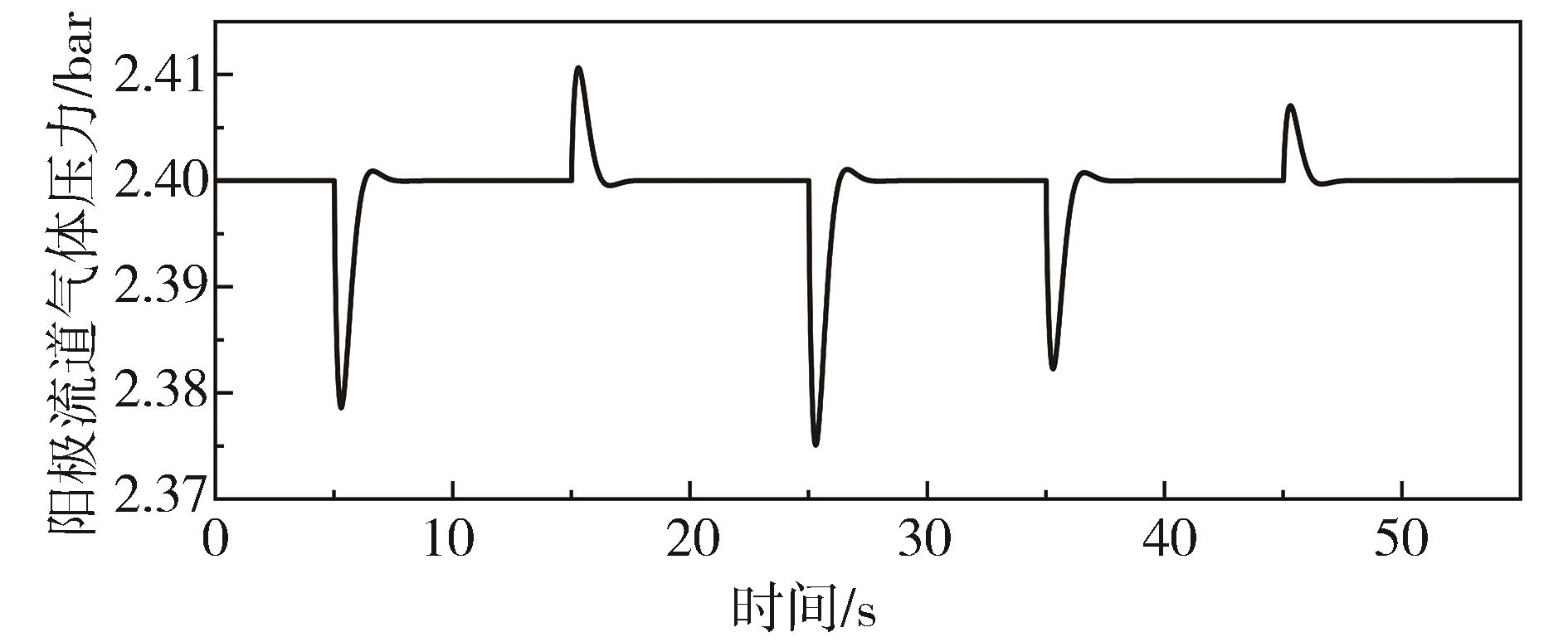
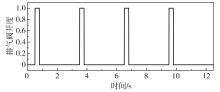
图11
PEMFC 发动机系统排氢信号"
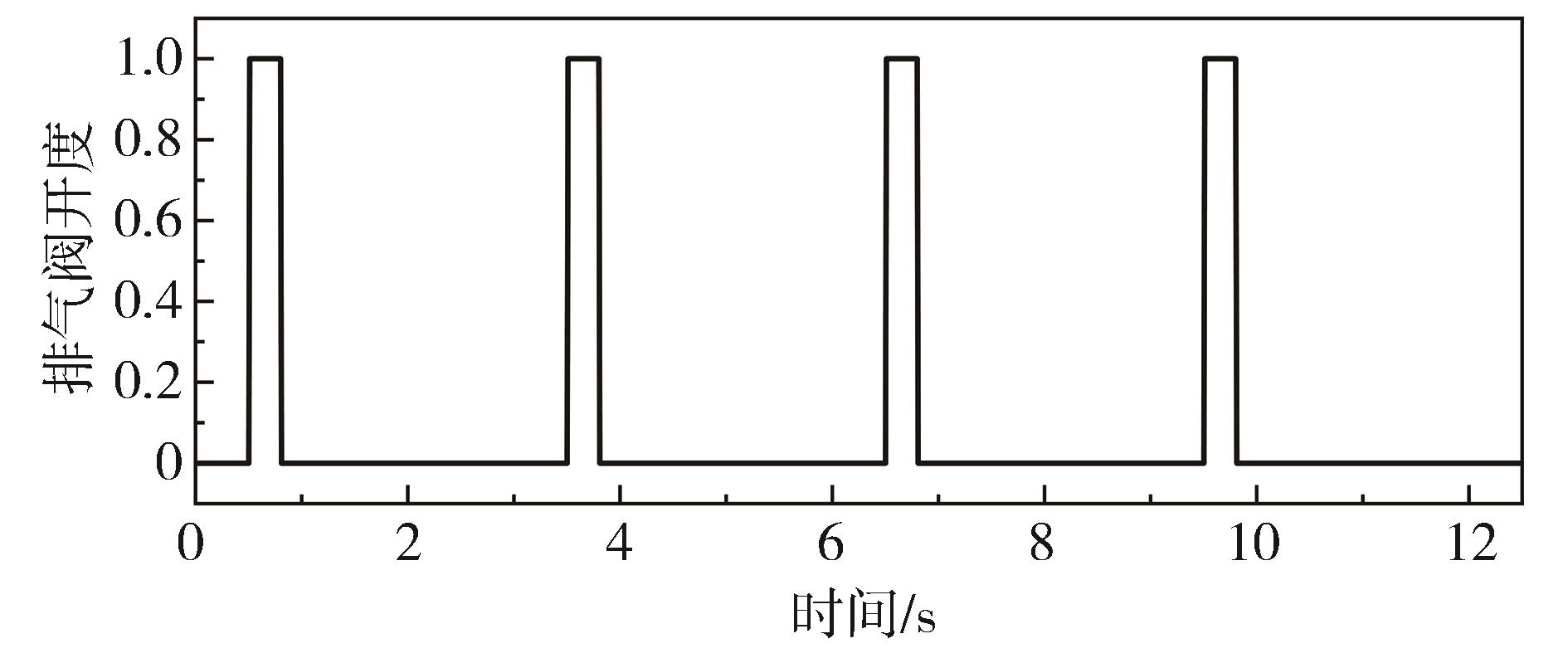
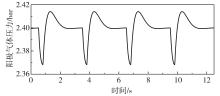
图12
排氢动作电堆阳极流道气体压力变化曲线"
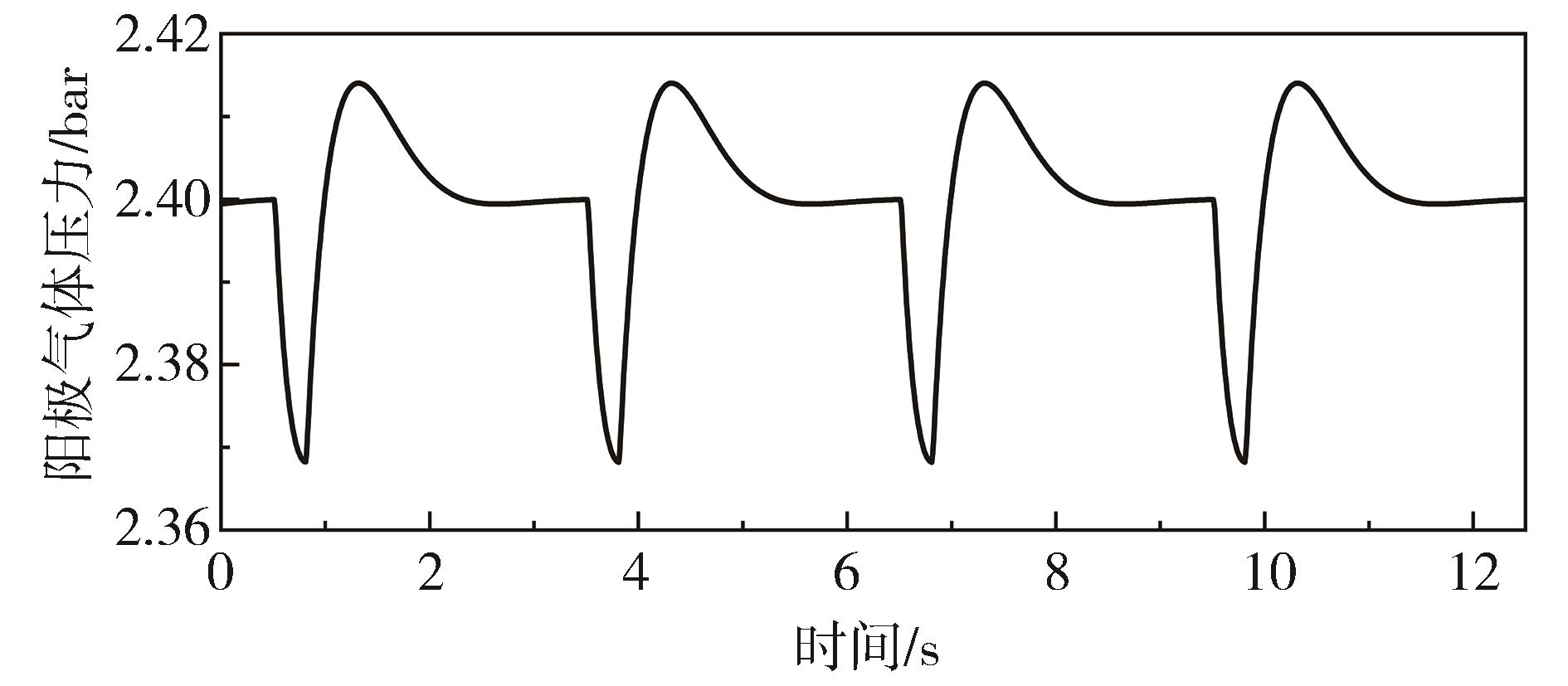
表 3
状态空间方程参数表"
| 参数 | 表达式 | 参数 | 表达式 | 参数 | 表达式 | 参数 | 表达式 |
|---|---|---|---|---|---|---|---|
| a1 | a2 | a3 | a4 | ||||
| a5 | a6 | a7 | a8 | ||||
| a9 | a10 | a11 | a12 | ||||
| a13 | a14 | a15 | a16 |
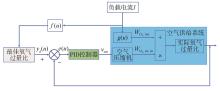
图13
空气供给系统 PID 控制器结构形式"
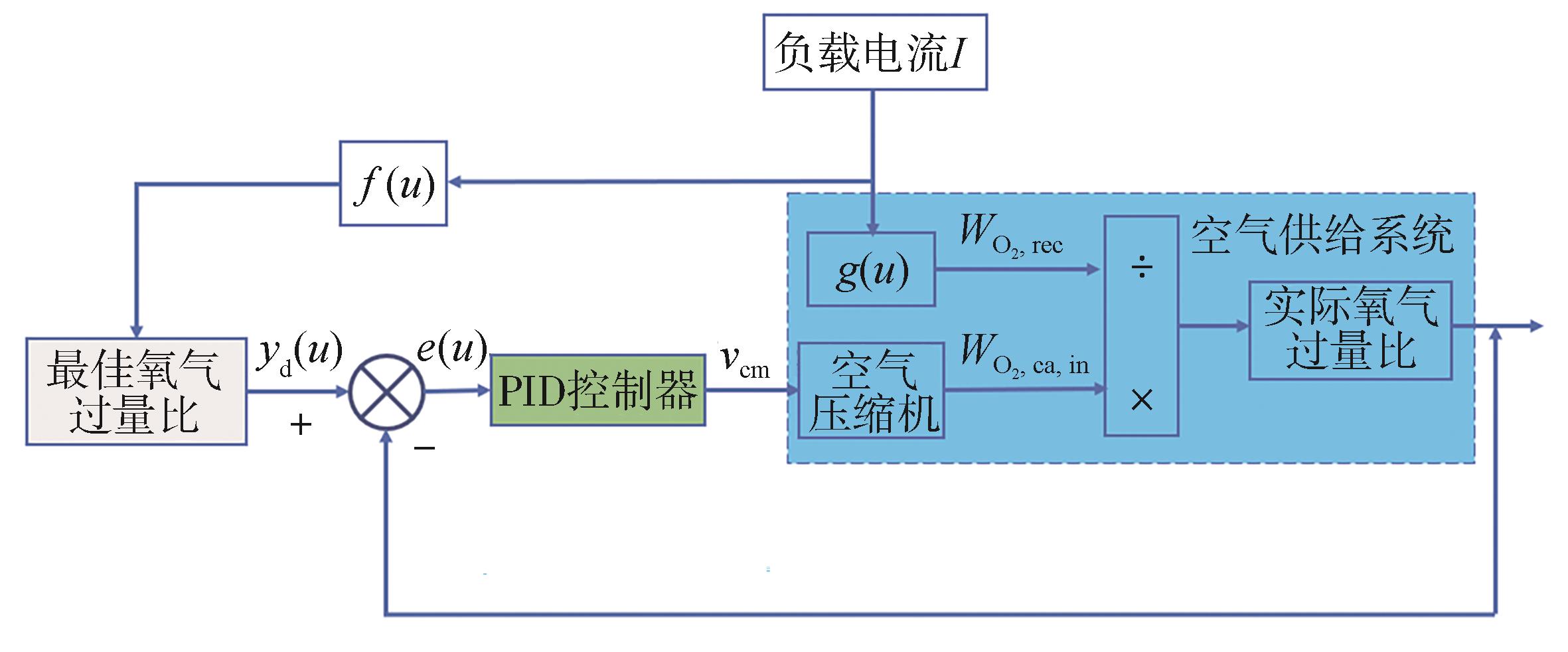
表 4
PID 控制参数表"
| 参数 | |||
|---|---|---|---|
| A组 | 20 | 300 | 20 |
| B组 | 30 | 400 | 50 |
| C组 | 50 | 600 | 40 |
图14
不同 PID 控制参数下氧气过量比控制曲线"
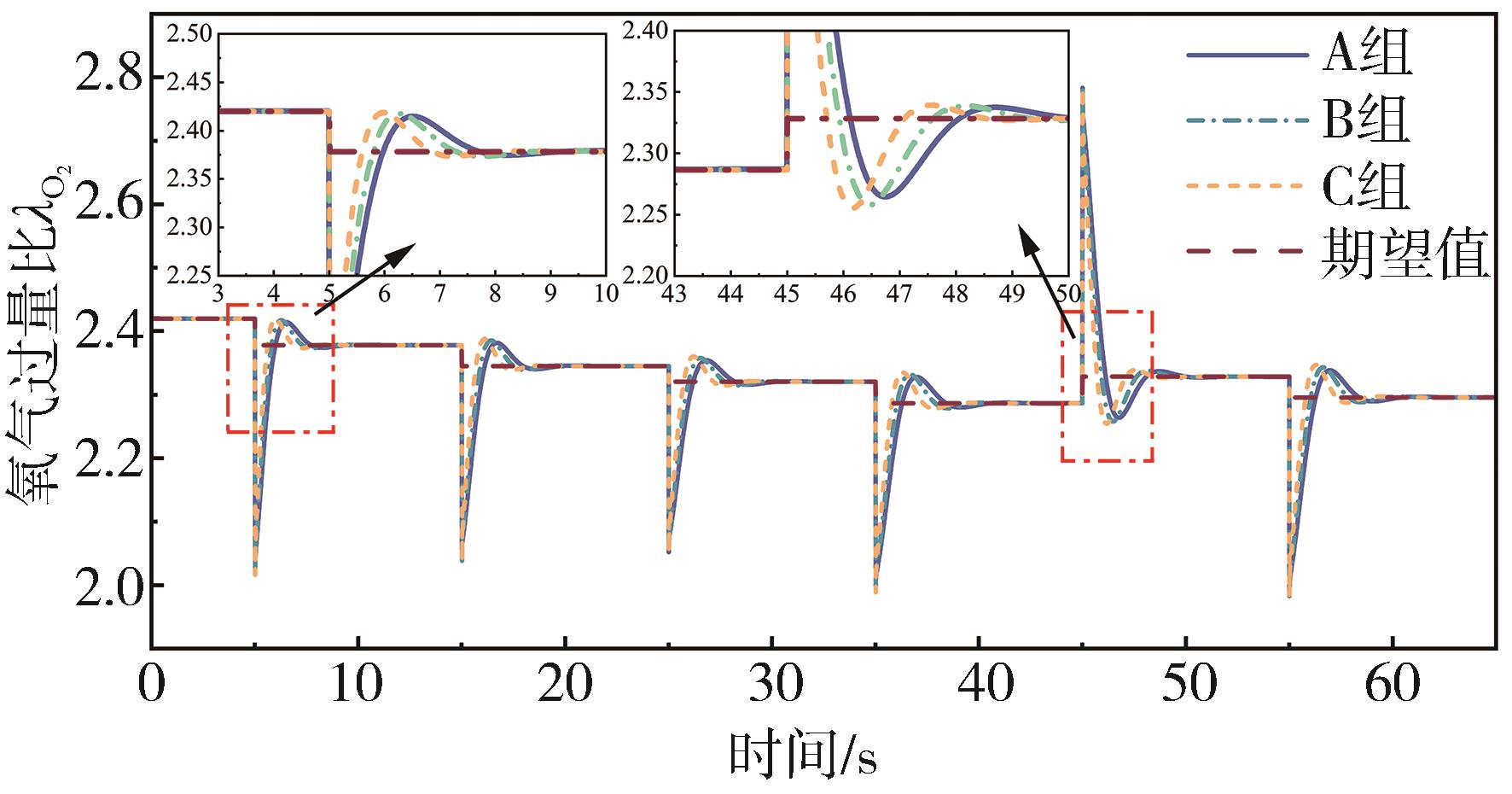
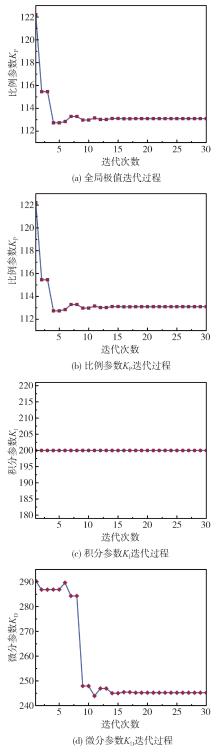
图15
粒子群算法寻优迭代收敛过程"
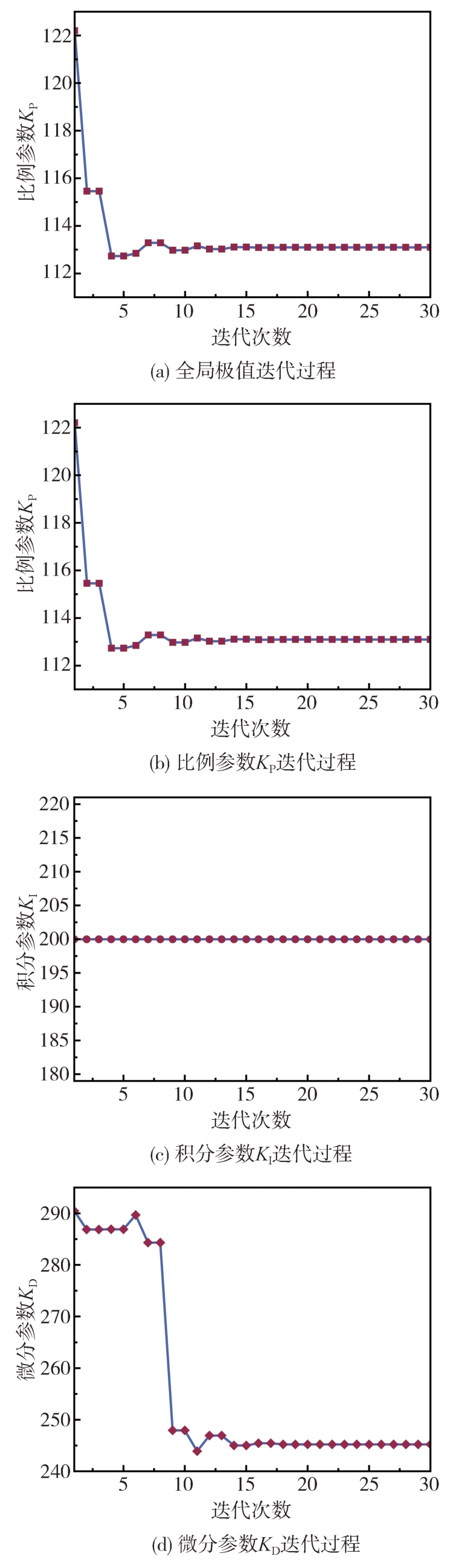
图16
PSO-PID 控制下氧气过量比变化曲线"
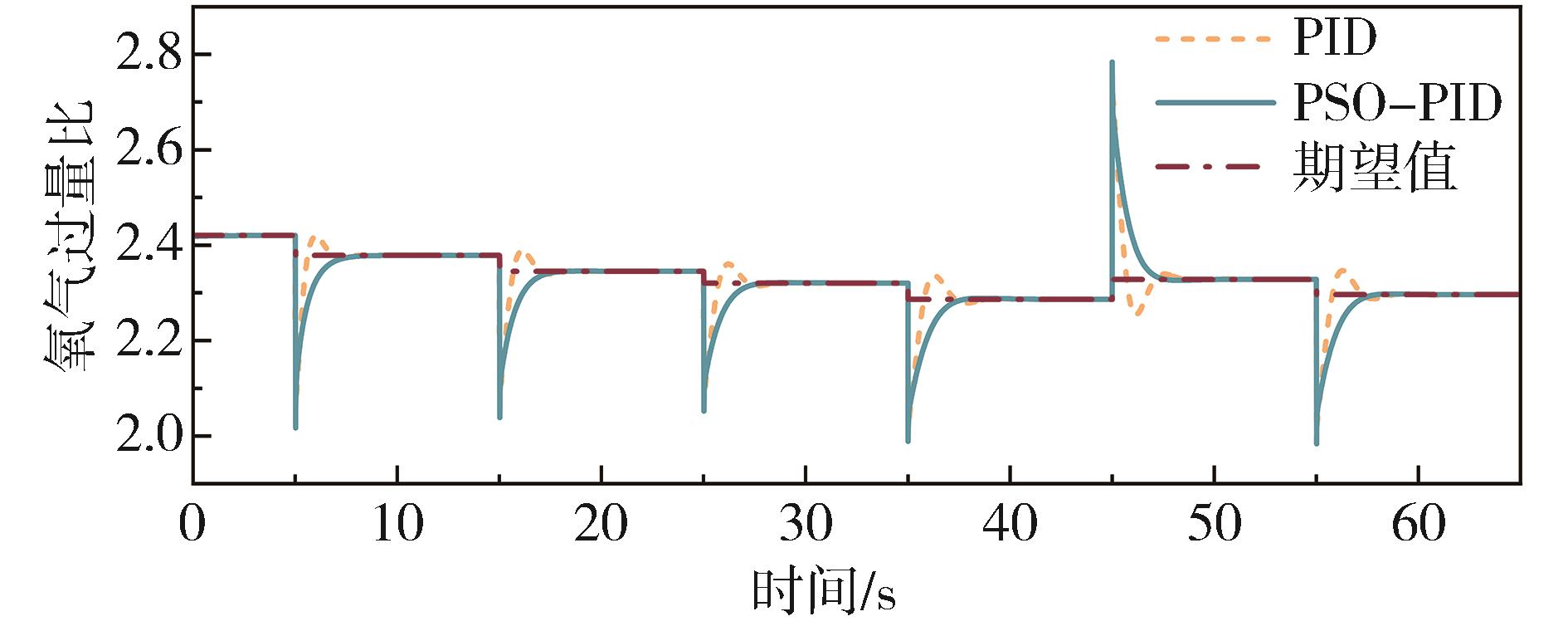
图17
空气供给系统 ADRC 控制器结构形式"
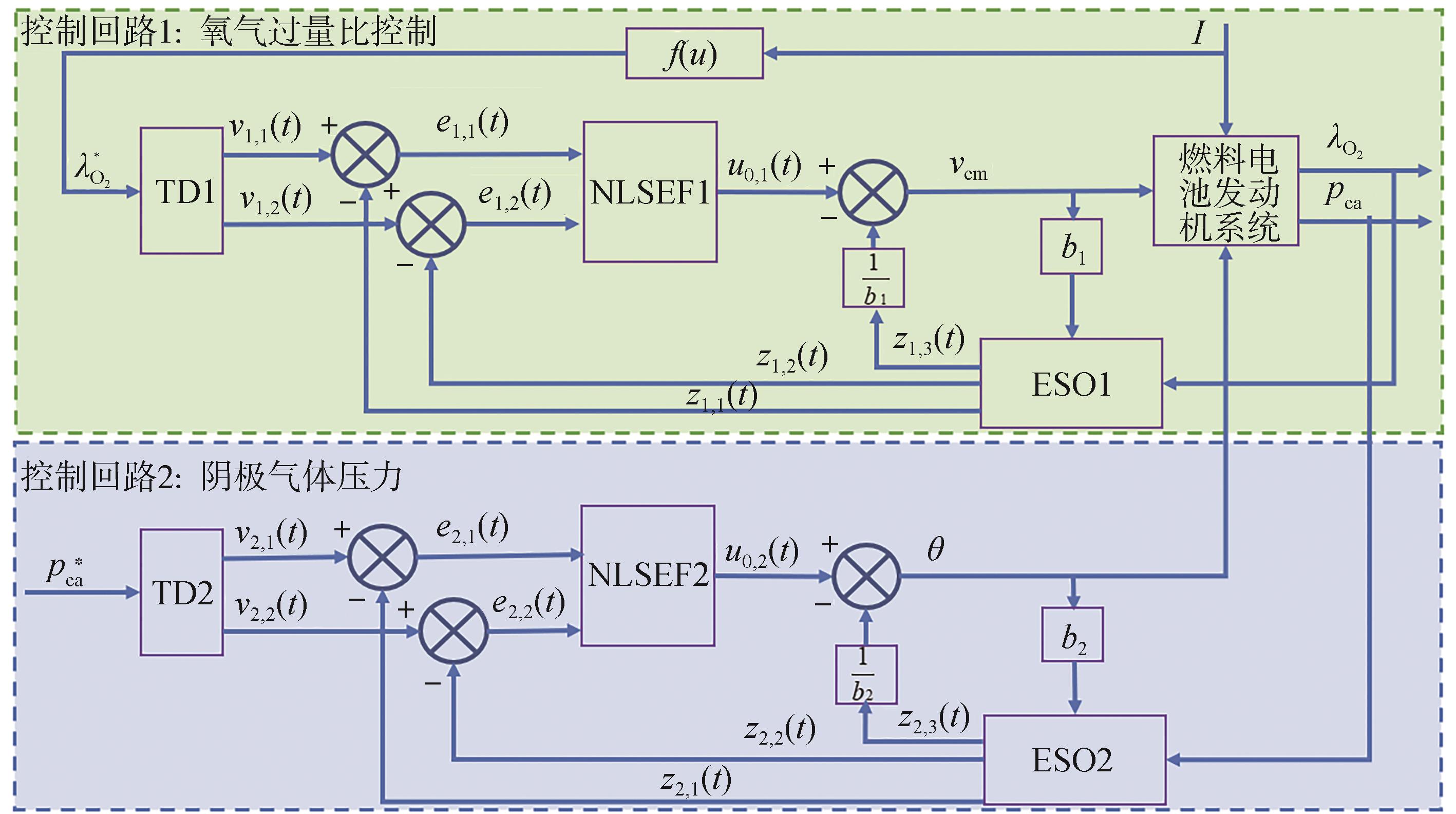
图18
负载电流变化情况"
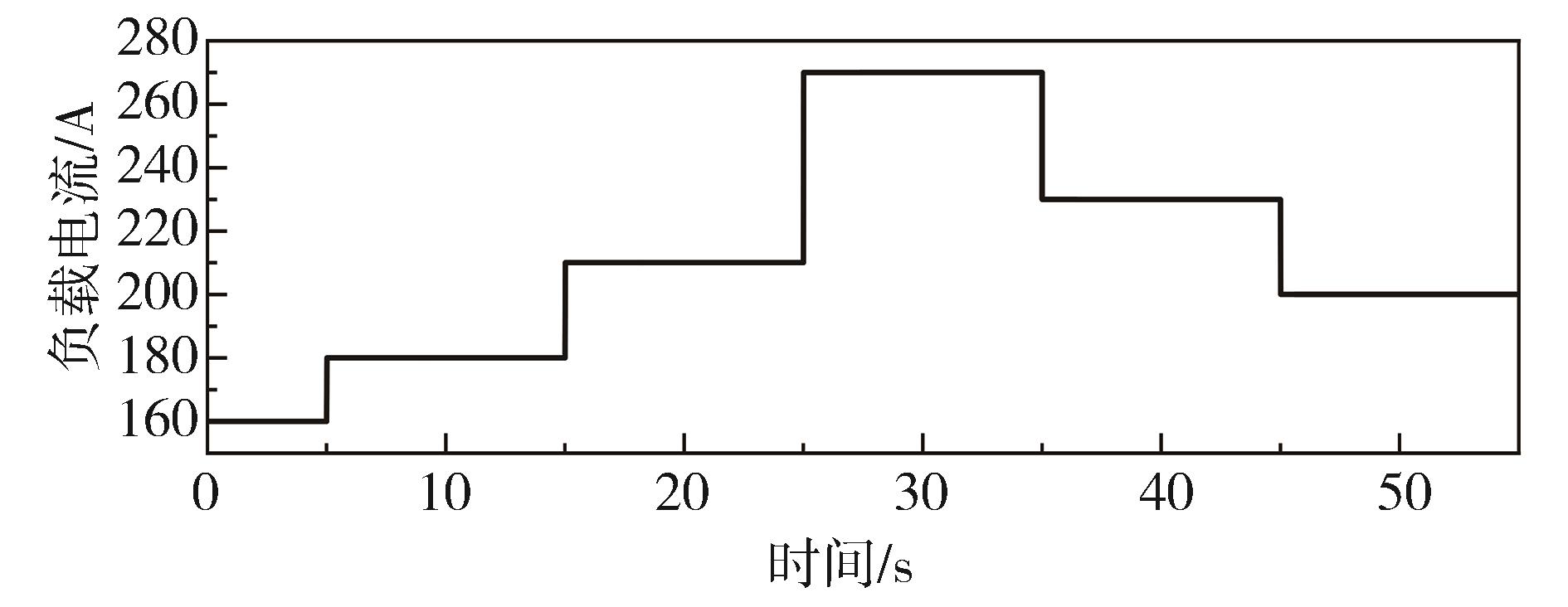
表 5
氢气供给系统控制器参数"
| 参数 | PID 控制器参数 | ADRC 控制器参数 | ||||||
|---|---|---|---|---|---|---|---|---|
| 回路1 | KP | KI | KD | r1 | h1 | c1 | r3 | h3 |
| 113 | 200 | 245 | 30 | 0.1 | 1 | 50 | 0.02 | |
| δ1 | β1,1 | β1,2 | β1,3 | b1 | ||||
| 0.01 | 400 | 800 | 1 500 | 0.25 | ||||
| 回路2 | KP | KI | KD | r2 | h2 | c2 | r4 | h4 |
| -1 | -30 | 0 | 100 | 0.1 | 0.1 | 300 | 0.05 | |
| δ2 | β2,1 | β2,2 | β2,3 | b2 | ||||
| 0.01 | 400 | 800 | 1 500 | 300 | ||||
| 回路3 | KP | KI | KD | r5 | h5 | c3 | r6 | h6 |
| 5 | 10 | 24 | 100 | 0.1 | 0.03 | 1 | 0.01 | |
| δ3 | β3,1 | β3,2 | β3,3 | b3 | ||||
| 0.01 | 400 | 800 | 1 500 | 30 | ||||
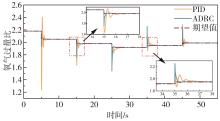
图19
PID和ADRC 控制下的氧气过量比变化曲线"
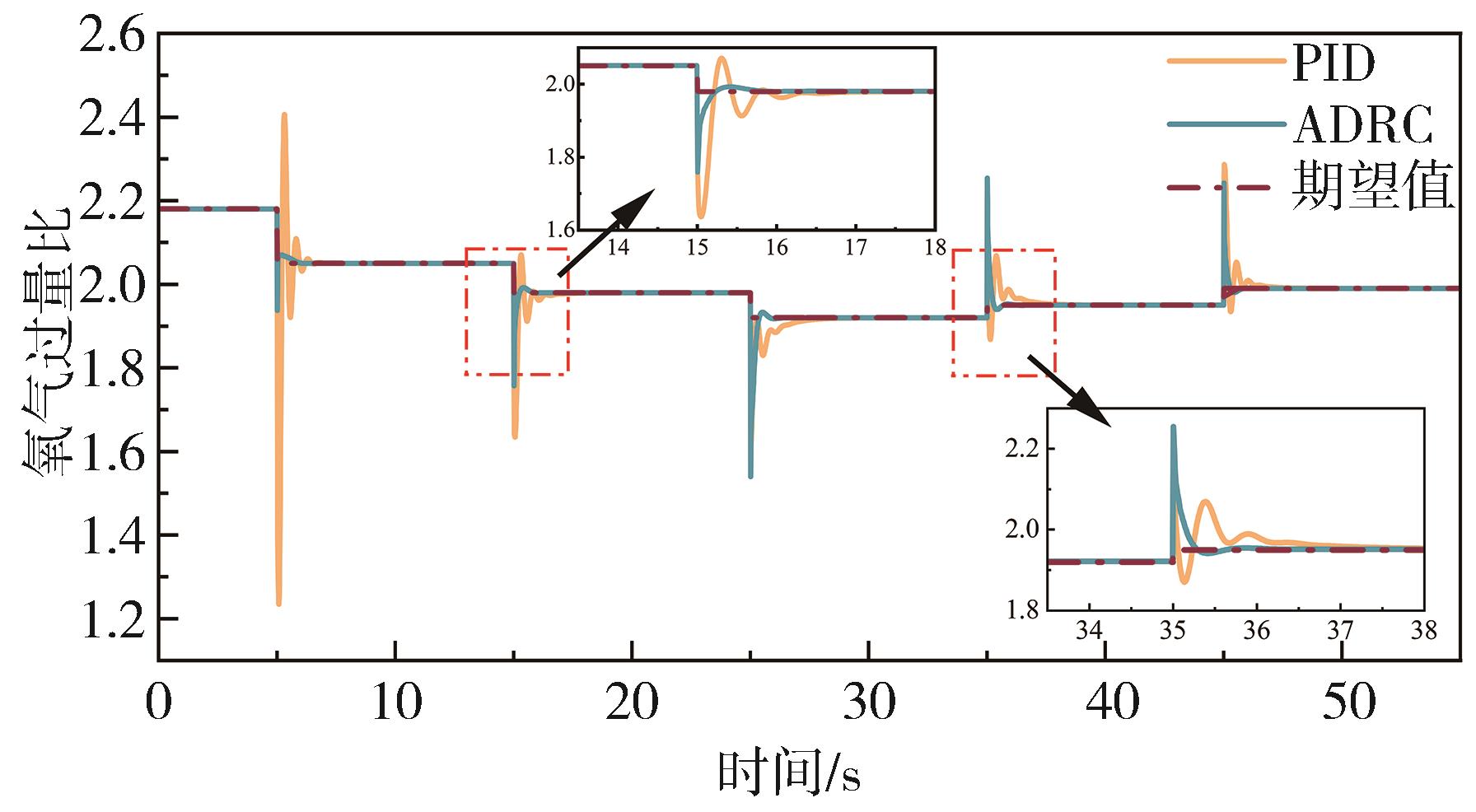
图20
PID和ADRC 控制下空气压缩机输入电压变化曲线"
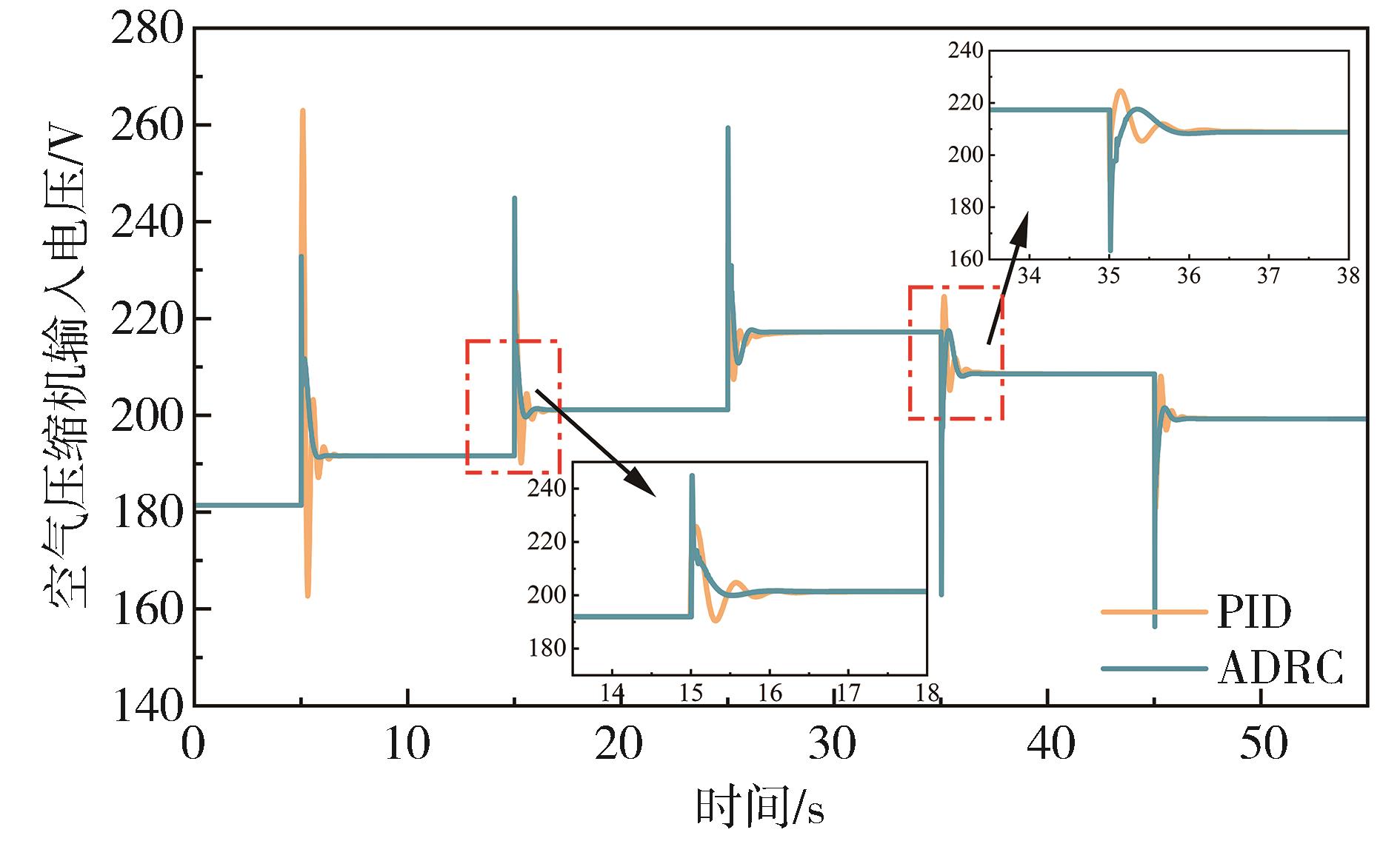
图21
PID和ADRC控制下阴极气体压力变化曲线"
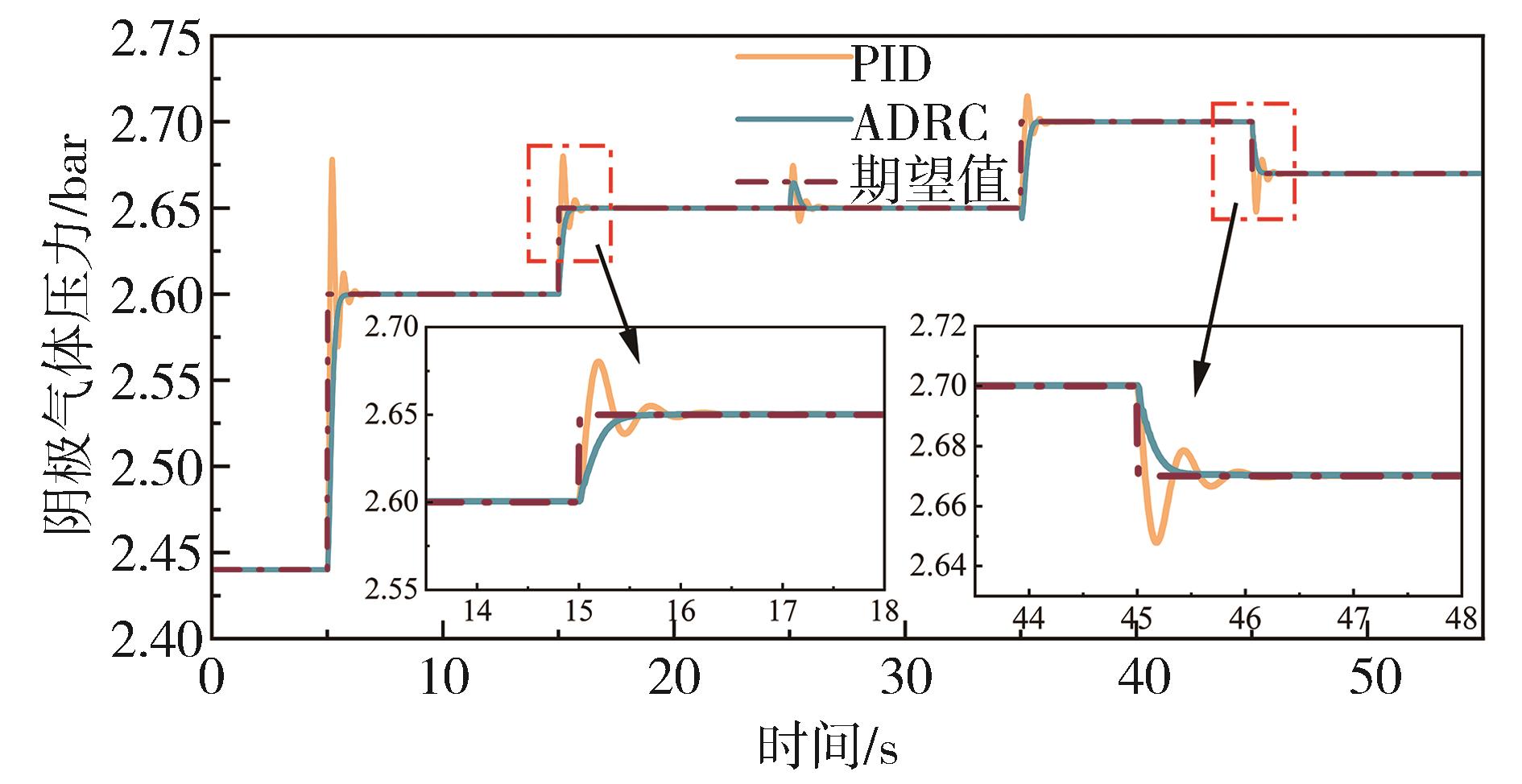
图22
PID和ADRC控制下的背压阀开度变化曲线"
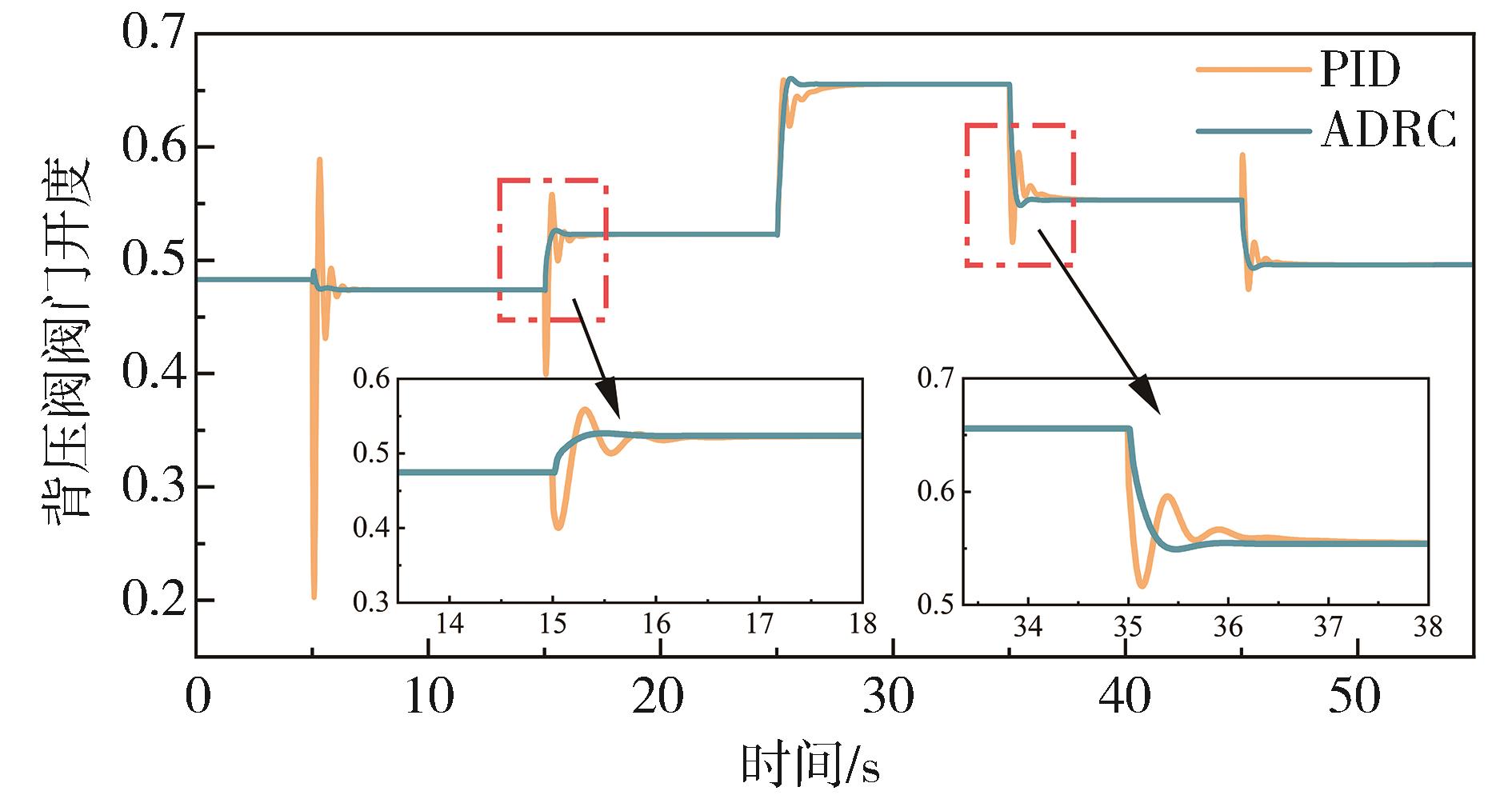
图23
氢气供给系统ADRC控制器结构形式"
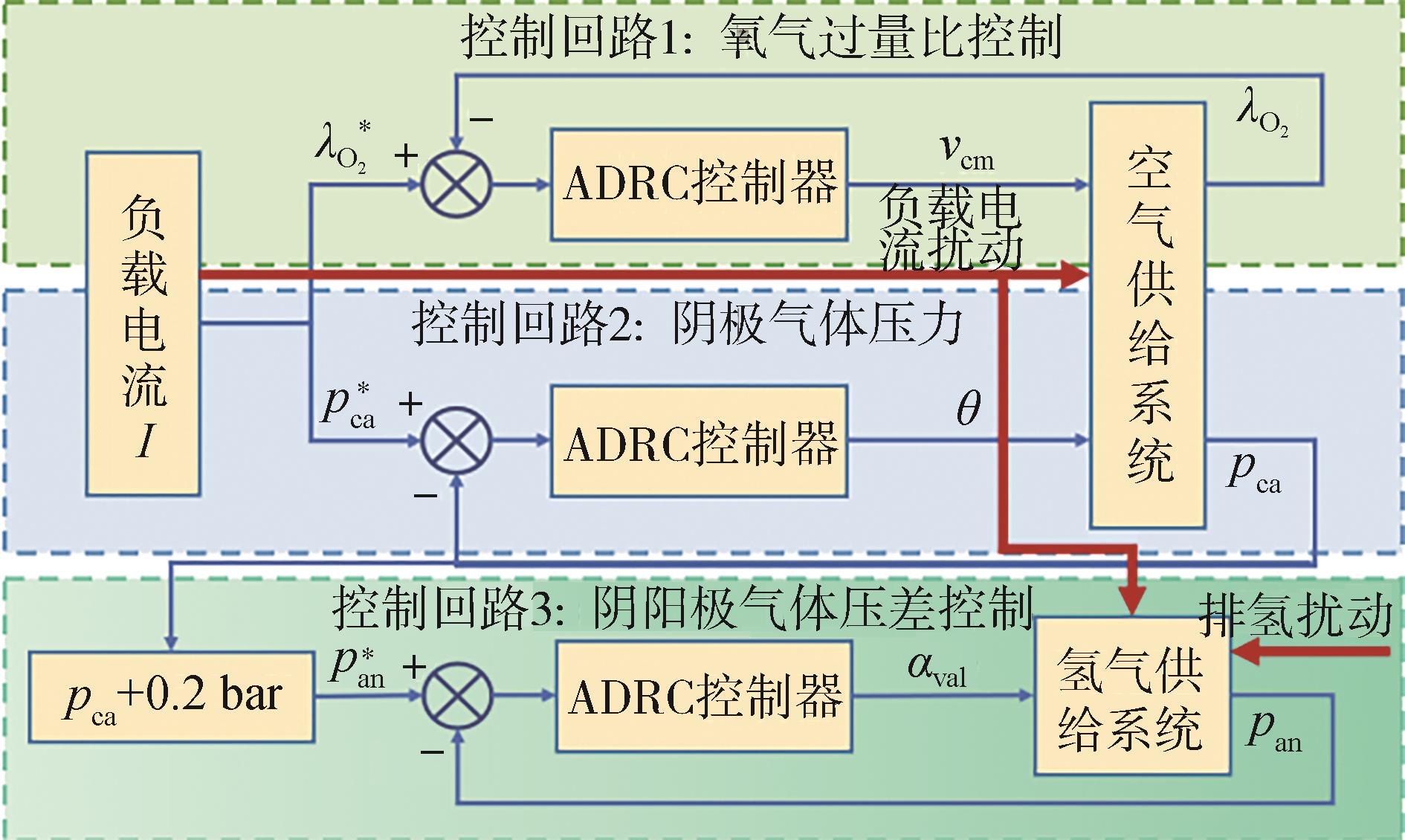
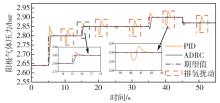
图24
PID 和 ADRC 控制下的阳极压力变化曲线"
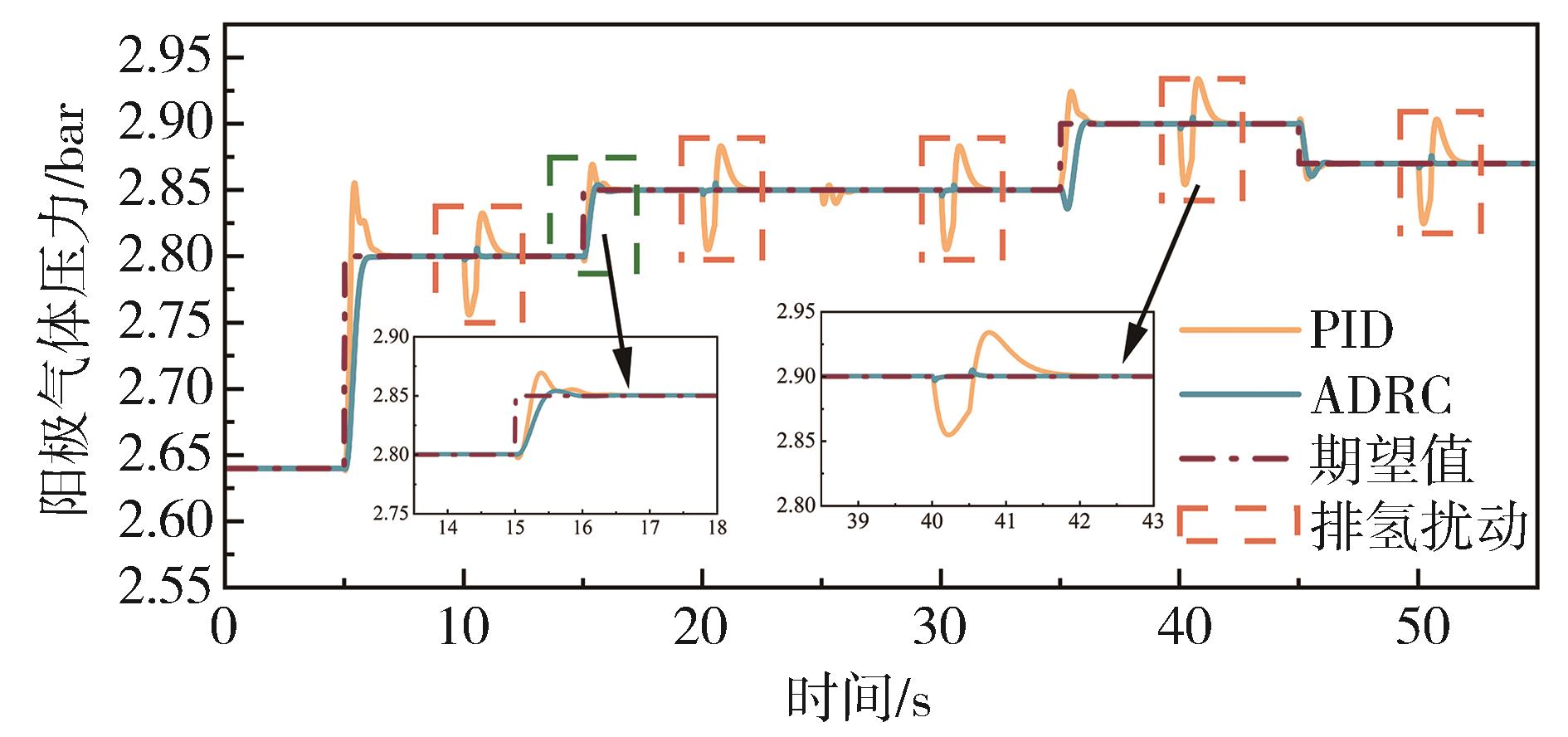
图25
PID 和 ADRC 控制下两极气体压差变化曲线"
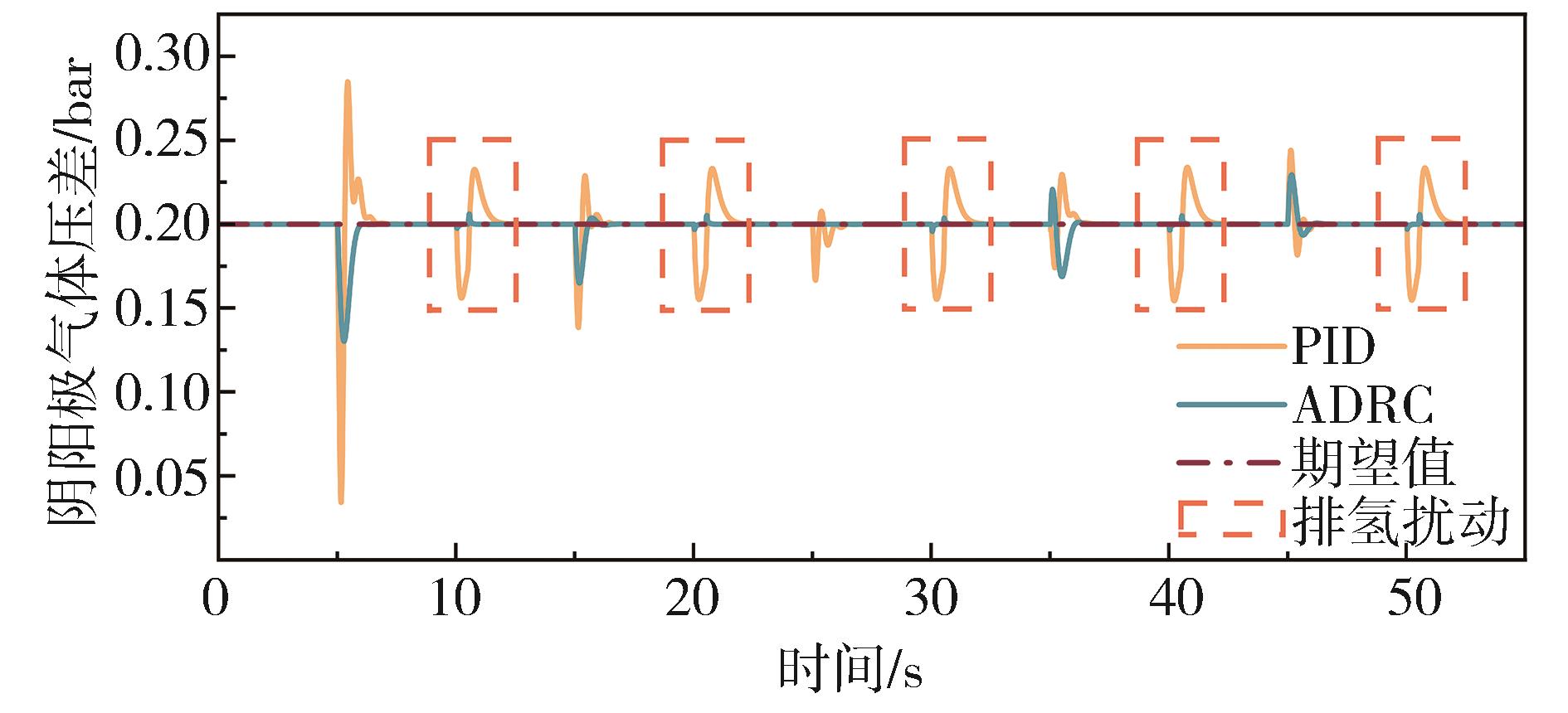
图26
PID 和 ADRC 控制下输出电压变化曲线"
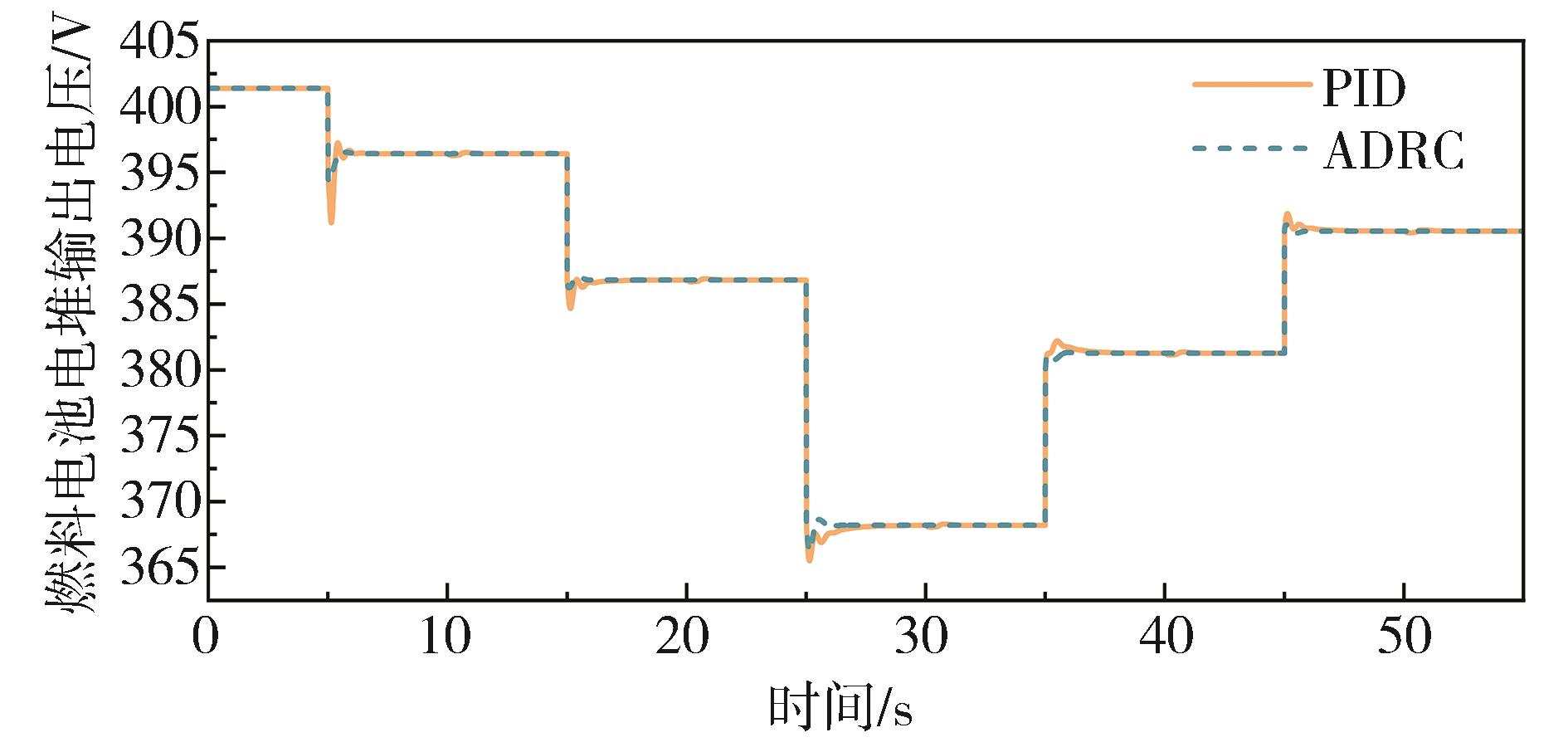
图27
PID 和 ADRC 控制下输出功率变化曲线"
| 1 | ZHANG H, WANG Y, WANG D, et al. Adaptive robust control of oxygen excess ratio for PEMFC system based on type-2 fuzzy logic system[J]. Information Sciences, 2020, 511: 1-17. |
| 2 | 刘秋秀. 燃料电池空气供给系统的调控策略研究[D]. 成都:电子科技大学, 2020. |
| LIU Q X. Study on control strategy of fuel cell air supply system[D]. Chengdu: University of Electronic Science and Technology,2020. | |
| 3 | 徐梓淦. 质子交换膜燃料电池系统建模与气体控制研究[D]. 武汉: 华中科技大学, 2022. |
| XU Z G. Modeling of proton exchange membrane fuel cell systems and gas control studies[D]. Wuhan: Huazhong University of Science and Technology, 2022. | |
| 4 | LIU Z, LI L, DING Y, et al. Modeling and control of an air supply system for a heavy duty PEMFC engine[J]. International Journal of Hydrogen Energy,2016,41(36): 16230-16239. |
| 5 | MATRAJI I, LAGHROUCHE S, JEMEI S, et al. Robust control of the PEM fuel cell air-feed system via sub-optimal second order sliding mode[J]. Applied Energy, 2013, 104: 945-957. |
| 6 | DENG H, LI Q, CUI Y, et al. Nonlinear controller design based on cascade adaptive sliding mode control for PEM fuel cell air supply systems[J]. International Journal of Hydrogen Energy, 2019, 44(35): 19357-19369. |
| 7 | HAN J, YU S, YI S. Oxygen excess ratio control for proton exchange membrane fuel cell using model reference adaptive control[J]. International Journal of Hydrogen Energy, 2019, 44(33): 18425-18437. |
| 8 | KIM B M, CHOIY Y H, YOO S J. Adaptive control of proton exchange membrane fuel cell air supply systems with asymmetric oxygen excess ratio constraints[J]. IEEE Access, 2019, 8: 5537-5549. |
| 9 | YANG D, PAN R, WANG Y, et al. Modeling and control of PEMFC air supply system based on TS fuzzy theory and predictive control[J]. Energy, 2019, 188: 116078. |
| 10 | 周苏, 胡哲, 谢非. 车用质子交换膜燃料电池空气供应系统自适应解耦控制方法研究[J]. 汽车工程, 2020, 42(2): 172-177. |
| ZHOU S, HU Z, XIE F. Study on adaptive decoupling control method for vehicle proton exchange membrane fuel cell air supply system[J]. Automotive Engineering, 2020,42(2): 172-177. | |
| 11 | DANZER M A, WILHELM J, ASCHEMANN H, et al. Model-based control of cathode pressure and oxygen excess ratio of a PEM fuel cell system[J]. Journal of Power Sources, 2008, 176(2): 515-522. |
| 12 | LI M, YIN H, DING T, et al. Air flow rate and pressure control approach for the air supply subsystems in PEMFCs[J]. ISA Transactions, 2022, 128: 624-634. |
| 13 | 杨朵. 燃料电池空气供给系统控制与故障诊断策略研究[D]. 合肥: 中国科学技术大学, 2021. |
| YANG D. Research on control and fault diagnosis strategy of fuel cell air supply system[D] . Hefei: University of Science and Technology of China, 2021. | |
| 14 | 王昭懿. 车用质子交换膜燃料电池空气供给系统建模及控制策略研究[D]. 长春: 吉林大学, 2022. |
| WANG Z Y. Study on modeling and control strategy of air supply system for vehicle proton exchange membrane fuel cell[D]. Changchun: Jilin University, 2022. | |
| 15 | 曾繁勇. 质子交换膜燃料电池系统空气供给回路控制研究[D]. 长春:吉林大学, 2022. |
| ZENG F Y. Study on air supply loop control of proton exchange membrane fuel cell system[D]. Changchun: Jilin University, 2022. | |
| 16 | KURNIA J C, SASMITO A P, SHAMIM T. Advances in proton exchange membrane fuel cell with dead-end anode operation: a review[J]. Applied Energy, 2019, 252: 113416. |
| 17 | FAN L, XING L, TU Z, et al. A breakthrough hydrogen and oxygen utilization in a H2-O2 PEMFC stack with dead-ended anode and cathode[J]. Energy Conversion and Management, 2021, 243: 114404. |
| 18 | 洪凌. 车用燃料电池发电系统氢气回路控制[D]. 杭州: 浙江大学, 2017. |
| HONG L. Hydrogen loop control of vehicle fuel cell power generation system[D]. Hangzhou: Zhejiang University, 2017. | |
| 19 | ZHANG Q, TONG Z, TONG S, et al. Modeling and dynamic performance research on proton exchange membrane fuel cell system with hydrogen cycle and dead-ended anode[J]. Energy, 2021, 218: 119476. |
| 20 | 吴智才. 燃料电池发动机的氢气循环及排放策略研究[D]. 成都: 电子科技大学,2020. |
| WU Z C. Study on hydrogen cycle and emission strategy of fuel cell engine[D]. Chengdu: University of Electronic Science and Technology, 2020. | |
| 21 | WANG Y, WANG Y. Pressure and oxygen excess ratio control of PEMFC air management system based on neural network and prescribed performance[J]. Engineering Applications of Artificial Intelligence, 2023, 121: 105850. |
| 22 | BAO C, OUYANG M G, YI B. Modeling and control of air stream and hydrogen flow with recirculation in a PEM fuel cell system—I. control-oriented modeling[J]. International Journal of Hydrogen Energy, 2006, 31(13): 1879-1896. |
| 23 | BAO C, OUYANG M G, YI B. Modeling and control of air stream and hydrogen flow with recirculation in a PEM fuel cell system—II. linear and adaptive nonlinear control[J]. International Journal of Hydrogen Energy, 2006, 31(13): 1897-1913. |
| 24 | 朱云. 质子交换膜燃料电池阴阳极供气系统优化控制研究 [D]. 成都: 电子科技大学, 2023. |
| ZHU Y. Study on optimal control of proton exchange membrane fuel cell gas supply system[D]. Chengdu: University of Electronic Science and Technology, 2023. | |
| 25 | 周炳杰. 燃料电池动力系统阴阳极压力平衡控制策略研究[D]. 成都: 电子科技大学, 2022. |
| ZHOU B J. Study on control strategy of cathode-anode pressure balance in fuel cell power system[D]. Chengdu: University of Electronic Science and Technology, 2022. | |
| 26 | PUKRUSHPAN J T. Modeling and control of fuel cell systems and fuel processors [D]. University of Michigan, 2003. |
| [1] | 王志红,曾嘉荣,胡杰,张志凌,杨东浩,纪越丰. 基于P-PP的轻型商用车路径跟踪控制[J]. 汽车工程, 2025, 47(4): 669-679. |
| [2] | 李光伟,韩雪,邢丹敏,明平文. 催化层/微孔层界面设计对PEMFC影响研究[J]. 汽车工程, 2025, 47(1): 77-84. |
| [3] | 朱仲文,程谭龙,江维海,周定华,李丞,季传龙. 燃料电池氢气系统自适应滑模解耦控制研究[J]. 汽车工程, 2025, 47(1): 85-95. |
| [4] | 任立海,陈黎黎,杨振华,蒋成约,赵清江,刘西,胡远志. 冲击载荷下PEMFC力-电耦合建模及电学响应研究[J]. 汽车工程, 2025, 47(1): 96-106. |
| [5] | 贺伯林,陈勇,代青林. 基于LADRC的纯电动汽车双离合变速器换挡控制[J]. 汽车工程, 2024, 46(9): 1668-1677. |
| [6] | 徐寅嵩,李文浩,杜常清,颜伏伍. 考虑运行参数可寻优范围的PEMFC系统净功率优化[J]. 汽车工程, 2024, 46(7): 1137-1146. |
| [7] | 张思龙,梁满志,孙珩凯,陈继成,张辉. 燃料电池氢气供应系统多功能测试平台设计[J]. 汽车工程, 2024, 46(7): 1147-1156. |
| [8] | 余宾宴,马建,陈轶嵩,耿莉敏,王茜. 微孔间距和孔径对PEMFC气体扩散层表面液滴流动传输特性的影响[J]. 汽车工程, 2024, 46(6): 1025-1033. |
| [9] | 张维东,蒋三青,郭文军,葛晓成,胡发跃,刘瑶. 车用燃料电池引射器设计及测试评价方法研究[J]. 汽车工程, 2024, 46(6): 1054-1061. |
| [10] | 胡宾飞,周雅夫,连静,李琳辉. 车用燃料电池空气系统供气协同控制策略研究[J]. 汽车工程, 2024, 46(5): 842-851. |
| [11] | 王国栋,王丽芳,吴艳,张俊智. 计及参数摄动的EMB电机改进型高阶线性自抗扰控制[J]. 汽车工程, 2024, 46(5): 923-934. |
| [12] | 彭钰祥,余庆华,敖瑞,颜伏伍. 燃料电池废热驱动弹热制冷装置性能分析[J]. 汽车工程, 2024, 46(4): 662-668. |
| [13] | 吴杰,张辉. 遗传算法优化的双线圈磁流变制动器模糊PID控制[J]. 汽车工程, 2024, 46(3): 526-535. |
| [14] | 孔维峰,方川,刘继红,李建秋,李飞强,黄圣涛,赵兴旺,石焱,袁殿,徐梁飞,孙鹏,周恩飞,欧阳明高. 基于单片阻抗一致性吹扫的燃料电池低温冷启动策略研究[J]. 汽车工程, 2024, 46(2): 260-268. |
| [15] | 陶阿邦,陶建建,魏学哲. PEMFC冷启动过程阻抗谱及特征频率分析[J]. 汽车工程, 2024, 46(2): 269-280. |
|
||
