汽车工程 ›› 2025, Vol. 47 ›› Issue (7): 1335-1343.doi: 10.19562/j.chinasae.qcgc.2025.07.011

• • 上一篇    

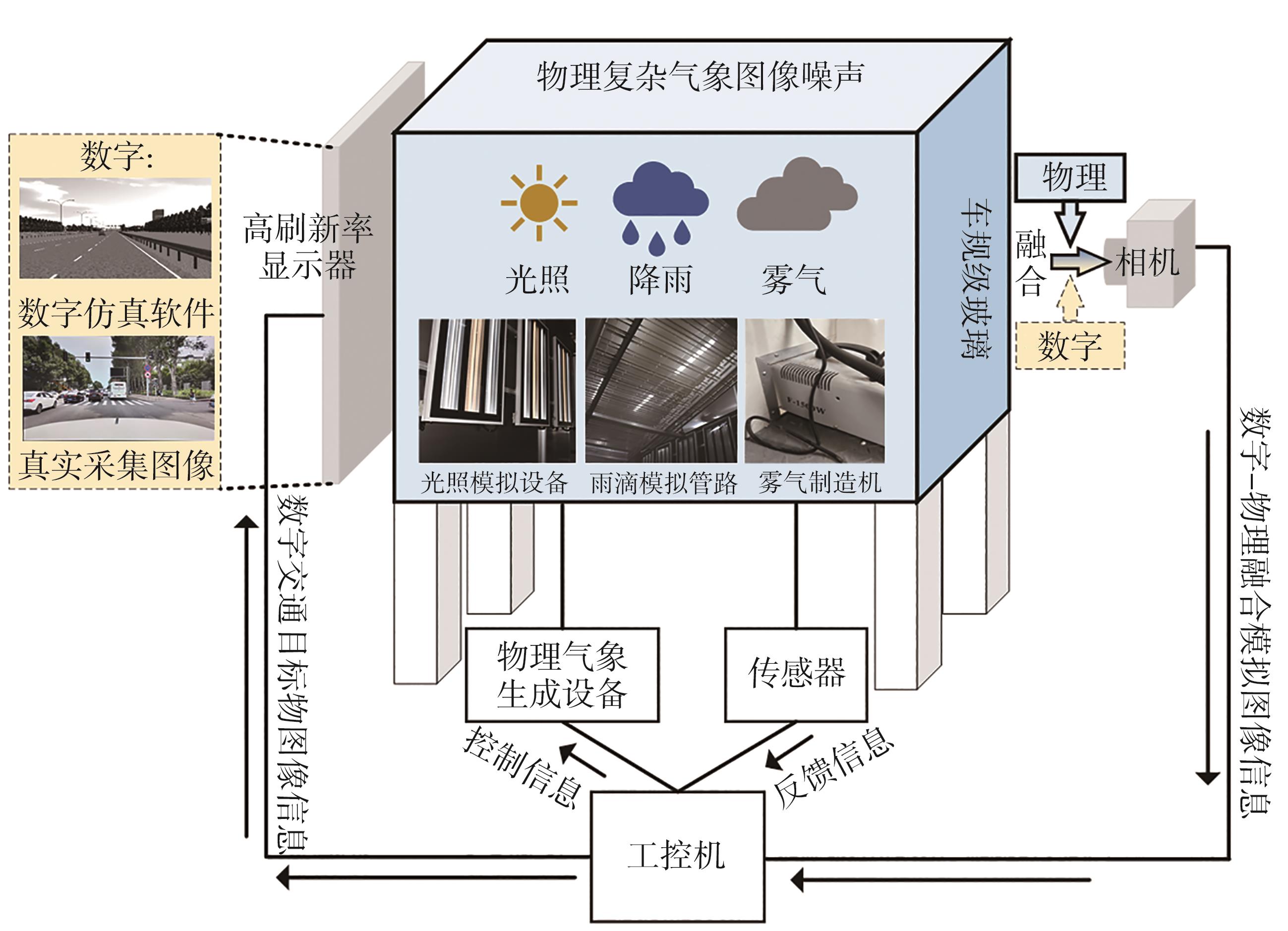
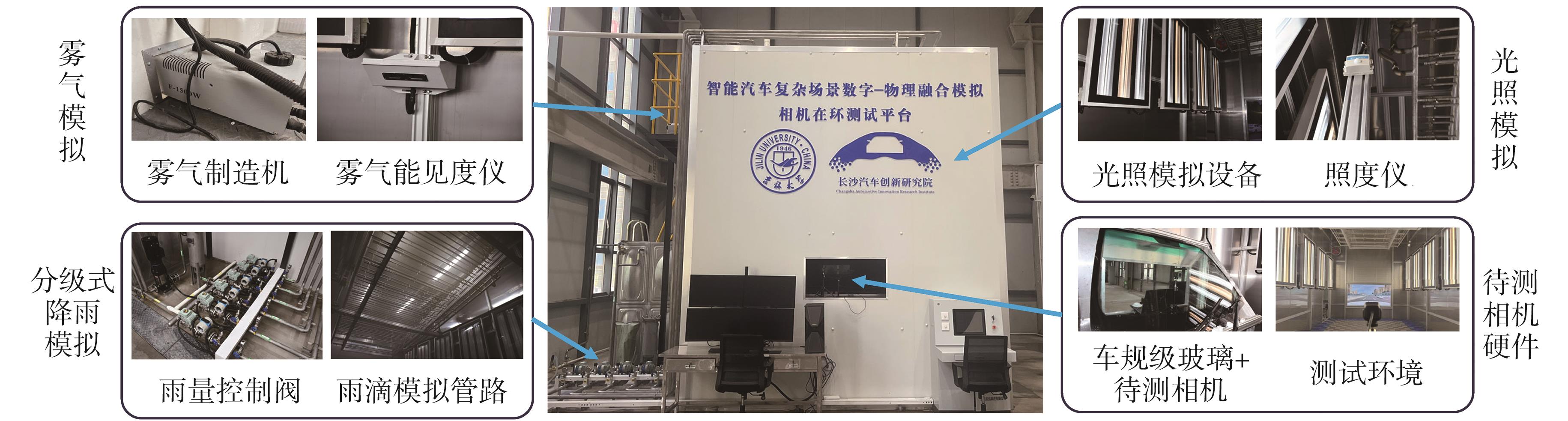
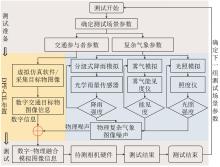
基于复杂气象数字-物理融合模拟的智能汽车相机在环测试

朱冰,黄殷梓,赵健(),张培兴,高质桐,薛经纬   

  1. 吉林大学,汽车底盘集成与仿生全国重点实验室,长春 130022
  • 收稿日期:2024-05-20 修回日期:2024-07-25 出版日期:2025-07-25 发布日期:2025-07-18
  • 通讯作者: 赵健 E-mail:zhaojian@jlu.edu.cn
  • 基金资助:
    国家重点研发计划项目(2022YFB2503402);国家自然科学基金(U22A20247);国家自然科学基金(52172386);中国博士后面上项目(2023M741354)

Adverse Weather Condition Digital-Physical Fusion Simulation Based Intelligent Vehicle Camera-in-the-loop Test

Bing Zhu,Yinzi Huang,Jian Zhao(),Peixing Zhang,Zhitong Gao,Jingwei Xue   

  1. Jilin University,State Key Laboratory of Automotive Chassis Integration and Bionics,Changchun 130022
  • Received:2024-05-20 Revised:2024-07-25 Online:2025-07-25 Published:2025-07-18
  • Contact: Jian Zhao E-mail:zhaojian@jlu.edu.cn

摘要:

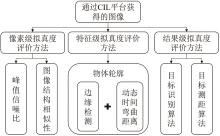
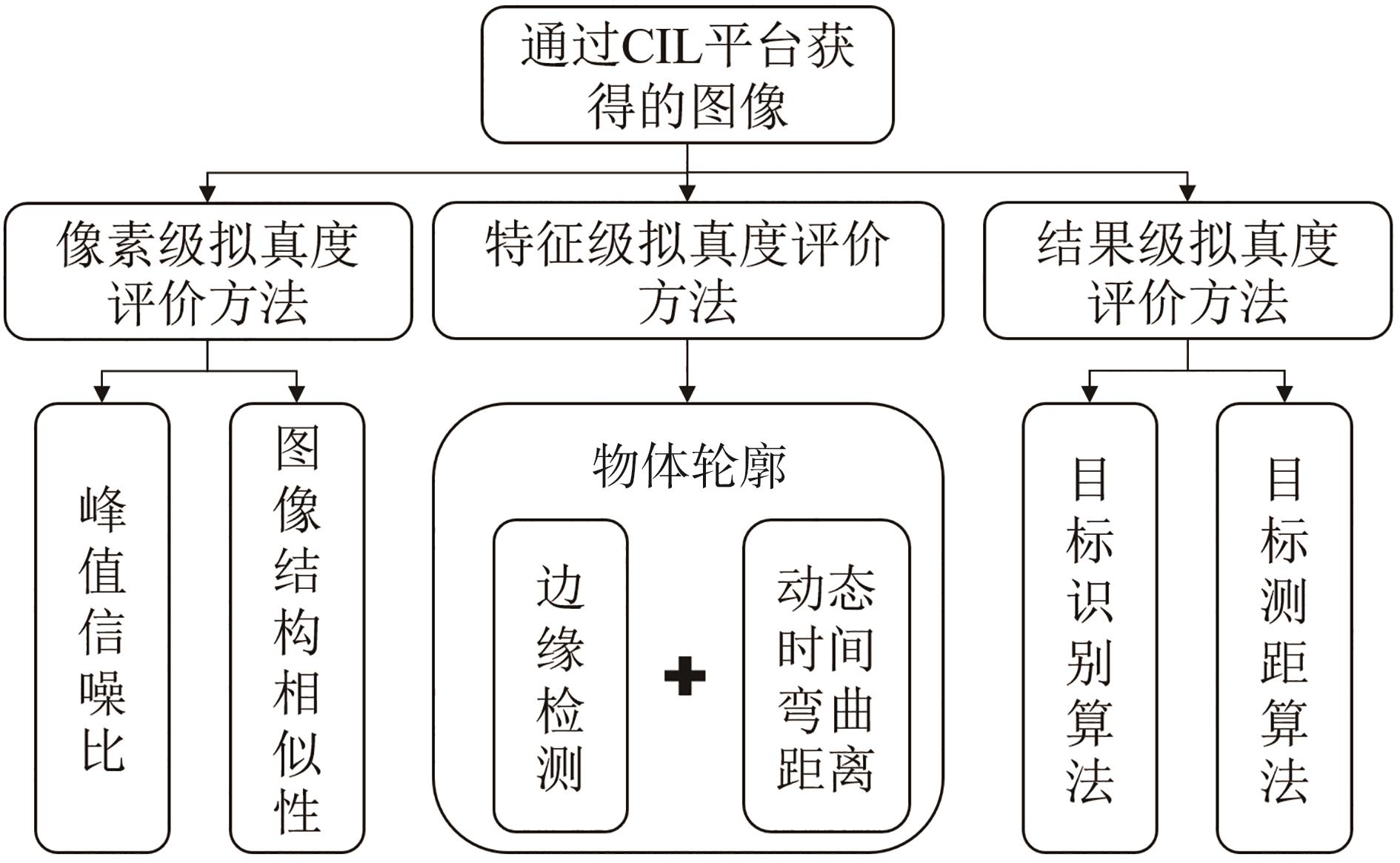
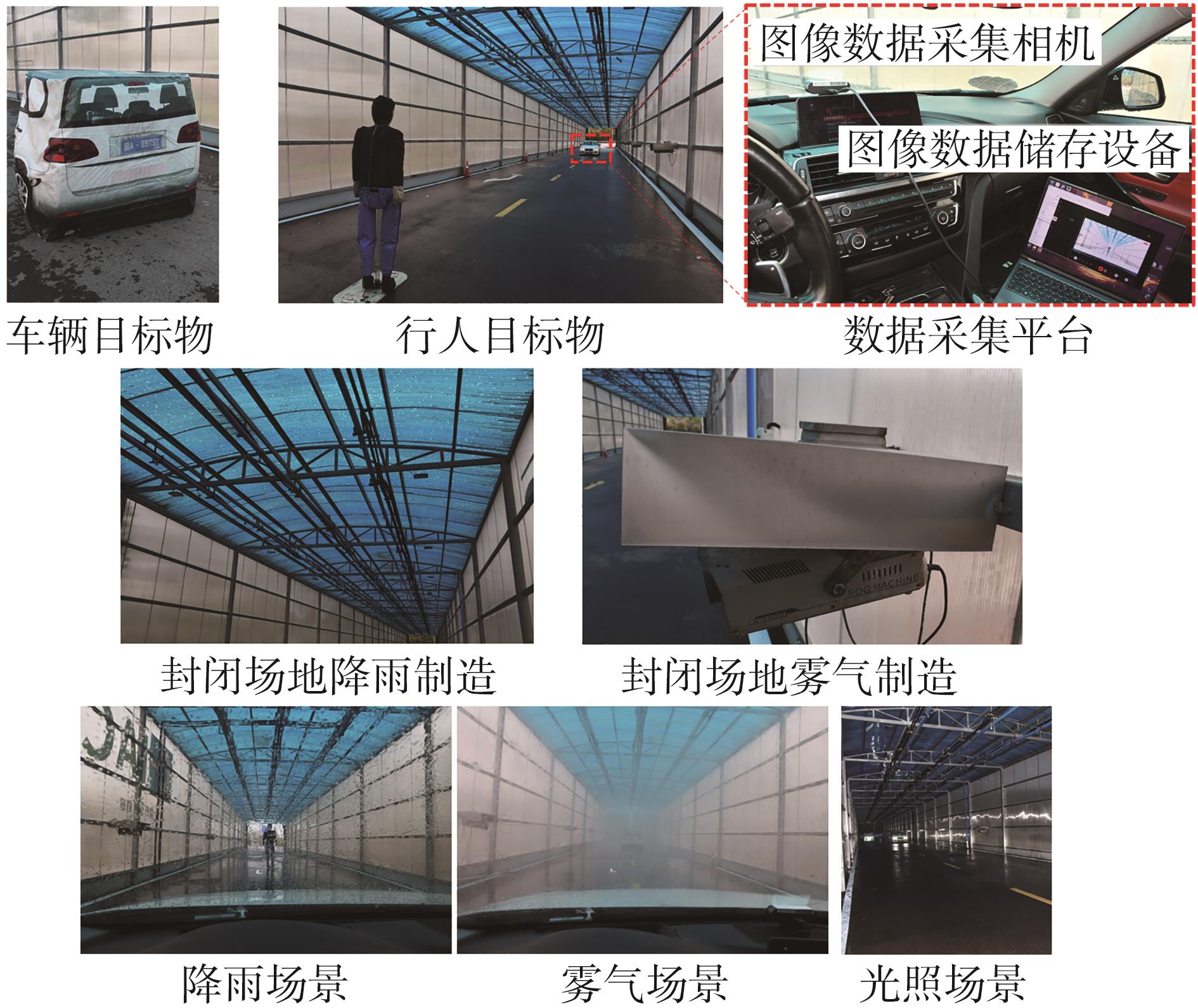
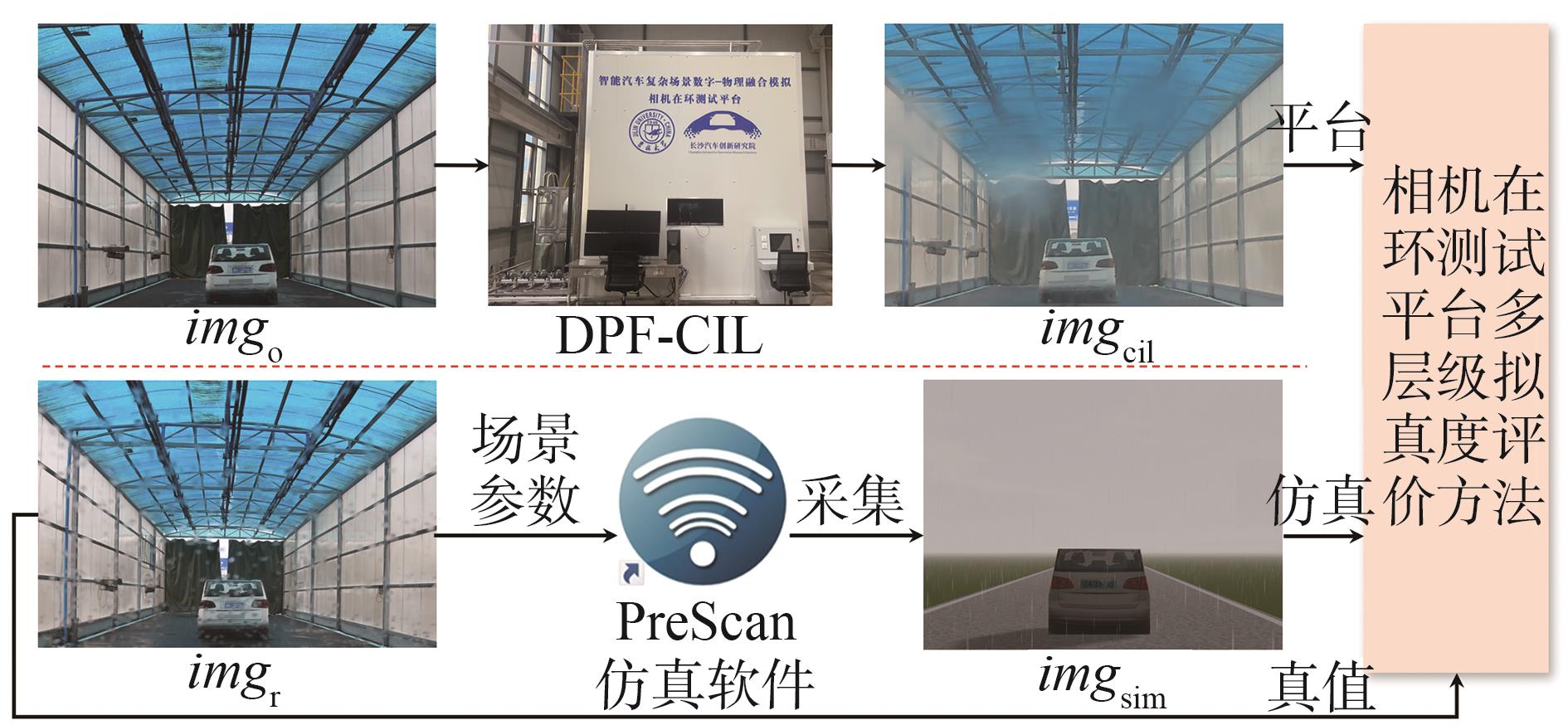
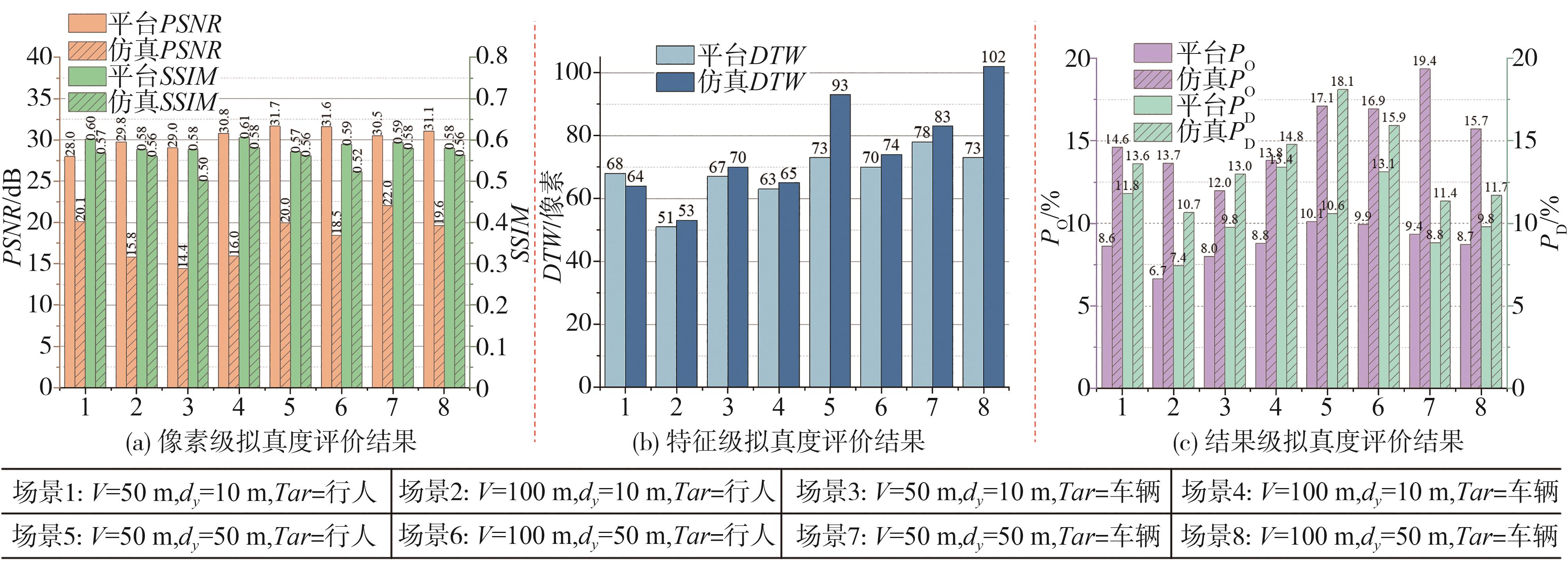
测试相机在复杂气象场景下的性能对提高智能汽车环境适应性具有重要意义。然而,利用数字仿真软件对相机进行测试时存在图像拟真度差的问题,而物理实景测试存在测试成本高、周期长且场景难以精准可控复现的缺点。对此,本文提出一种基于复杂气象数字-物理融合模拟的智能汽车相机在环测试方法,将相机硬件嵌入到数字仿真目标物与物理复杂气象实体共同构成的虚实融合测试环境中对智能汽车相机进行测试。首先,设计并构建复杂气象数字-物理融合模拟相机在环测试平台;其次,从像素级、特征级和结果级3个层级建立面向相机在环测试平台的多层级拟真度评价方法;结果表明,在雨、雾和光照等复杂气象场景的测试中本文提出的相机在环测试方法能够模拟的图像结构最小相似性和峰值信噪比分别为0.571 1和27.991 1 dB,所能够保留目标物体的轮廓信息与真实环境相比最大差距为88像素。在测试目标识别和测距功能时,最大结果差异分别为10.10%和13.39%。多层级拟真度评价结果表明,该测试方法在同等场景条件下优于纯数字仿真方法;相较于物理实景测试,该测试方法具有测试成本低、效率高以及复杂气象场景参数精准可控等优势。

关键词: 智能汽车, 相机在环测试, 复杂气象数字-物理融合模拟, 多层级拟真度评价

Abstract:

Testing performances of camera in adverse weather conditions (AWCs) is significant for improving intelligent vehicles adaptability. However, when using digital simulation to test cameras, there is the problem of poor fidelity, while physical testing suffers from high cost, long cycles, and difficulty in accurately and controllably reproducing scenarios. Therefor, in this paper, adverse weather condition Digital-Physical Fusion Simulation Camera-in-the-loop Simulation Test (DPF-CIL) method is proposed. The camera is embedded into a digital-physical fusion test environment composed of digital simulation targets and physical weather entities. Firstly, DPF-CIL platform is designed and constructed. Secondly, multi-level fidelity evaluation method for CIL platform is established at pixel, feature, and result level. The results show that when testing in AWCs such as rain, fog, and glare, the DPF-CIL is able to simulate the minimum Structural Similarity Index and Peak Signal-to-Noise Ratio of 0.571 1 and 27.991 1 dB, respectively, and retains the target object's contour information and the real environment with the maximum gap of 88 pixels. In addition, when testing the target recognition and ranging functions, the results vary the most at 10.10% and 13.39%, respectively. The comprehensive multi-level fidelity evaluation results are better than the pure digital simulation method under the same scenario conditions. Compared to physical testing DPF-CIL has advantages of lower cost, higher efficiency, and precise control over AWCs parameters.

Key words: intelligent vehicle, camera-in-the-loop test, adverse weather condition digital-physical fusion simulation, multi-level fidelity evaluation